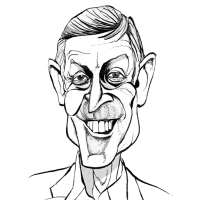
Matthew Parris

Matthew Parris

Matthew Parris is a columnist for The Spectator and The Times.

Witness for the prosecution

From our UK edition

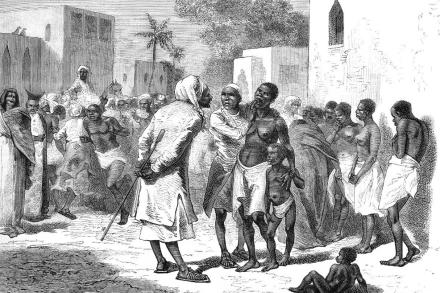
This is a humdinger of a tale. You might have thought that journeys into the heart of the Dark Continent with David Livingstone, Henry Morton Stanley and the likes of Richard Burton had already inspired so vast and breathless a literature that there were few surprises left to report. But that’s the miracle of this story. Alastair Hazell’s genius has been to plough through the huge and well-documented archive, follow his nose, and tell a tale from an entirely new perspective: the life of Dr John Kirk, an early companion to Dr Livingstone, and afterwards a humble Scottish medical officer and Acting British Consul in Zanzibar.

Whose revolution is it anyway?

From our UK edition

It is no criticism of our redoubtable corps of foreign correspondents to remark that once an arena goes (in the modern military jargon) ‘kinetic’, sociology goes out of the window. It is no criticism of our redoubtable corps of foreign correspondents to remark that once an arena goes (in the modern military jargon) ‘kinetic’, sociology goes out of the window. When there are battles to report, a correspondent’s instinct is to find the action and describe it. News is what good journalists do, first and foremost. In the claimed Arab Spring this year, therefore, the ebb and flow of conflict is at the centre of media reports. And of course the ebb and flow of conflict matters, urgently. But (for me at least) the urgency becomes a problem.

Revenge is not a sin, it’s a public service

From our UK edition

It was never likely that Chris Huhne’s agonies over what will sooner or later be called Penaltypointsgate would arrive unaccompanied by a rash of commentary about revenge. It was never likely that Chris Huhne’s agonies over what will sooner or later be called Penaltypointsgate would arrive unaccompanied by a rash of commentary about revenge. All of three hours elapsed before ‘Hell hath no fury…’ — now so over-used that we have to tail off into a sheepish ellipsis after the first few words — appeared in a Fleet Street headline.

The pathology of the politician

From our UK edition

Politicians are not normal people. They are weird. It isn’t politics that has made them weird: it’s their weirdness that has impelled them into politics. Whenever another high-profile minister teeters or falls, the mistake everyone makes is to ask what it is about the nature of their job, the environment they work in and the hours they work, that has made them take such stupid risks. This is the wrong question. We should ask a different one: what is it about these men and women that has attracted them to politics? Politicians are not normal people. They are weird. It isn’t politics that has made them weird: it’s their weirdness that has impelled them into politics.

Is there any hope in politics for pointy-headed intellectuals?

From our UK edition

When the Alabama governor George Wallace described intellectuals as ‘pointy-heads who couldn’t ride a bicycle straight’, he coupled two insults. When the Alabama governor George Wallace described intellectuals as ‘pointy-heads who couldn’t ride a bicycle straight’, he coupled two insults. The first — ‘pointy-heads’ — went straight into the legend and remains there, though I’d always thought intellectuals had domed heads. Less remembered is the second barrel of Wallace’s revolver. But in five words it contains a potent argument.

Precious little warmth

From our UK edition

There’s something wrong with these diaries. There’s something wrong with these diaries. This is not to disparage the scholarly efforts of their editor, Dr Catterall, nor the skill with which he seems to have pruned the original papers (twice the length) into the greatest coherence achievable, nor his helpful contextualisation and calmly rational explanatory notes. Nor is it to question the importance for modern historians of the whole painstaking enterprise, to observe that the general reader will plough onward from summit, to cabinet, to dinner party, to pheasant shoot, to bilateral meeting, with a half-formed question growing in his mind. Who was Harold Macmillan writing all this for? For himself? For friends and family? For history? To answer questions? To settle scores?

Rage, rage against the dying of the lightbulb

From our UK edition

When I was young, all the traffic lights in central London had black iron flambeaux, about the size of your forearm, at the top of each pole. I doubt many people even noticed the decoration consciously, but it lent a faintly monumental touch to otherwise utilitarian ironwork – like those magnificent bronze fish wrapped around the streetlights along the Thames Embankment. In however small a way the flambeaux gave our metropolis the air of an imperial city. Ornamentation in the stone of buildings or the steel of street furniture does this: because, and precisely because, it serves no purpose but to beautify or dignify. Because it is (strictly speaking) useless and extravagant, it elevates the scene.

A tradition of fine writing is on the way out – and that may not be a bad thing

From our UK edition

I know it’s absurd, I know it’s juvenile, I know that awards ceremonies are perfectly ludicrous occasions for everyone except the winners and their mothers, but I am what I am, competitive, and there’s no point pretending otherwise. I know it’s absurd, I know it’s juvenile, I know that awards ceremonies are perfectly ludicrous occasions for everyone except the winners and their mothers, but I am what I am, competitive, and there’s no point pretending otherwise. So I will not pretend that receiving the Best Columnist award at the Society of Editors Press Awards dinner at the Savoy last week was anything less than heavenly. But there are other things there’s no point pretending.

For happy travel across Europe, avoid the black hole of Paris

From our UK edition

This week I narrowly failed to reach the Mediterranean coast of Spain from the north of England by train, within the daylight hours of a single day. The problem was Paris. Train buffs (and rail service planners) read on. Let’s begin at the end. High-speed rail from France has until this month always hit the wall at the Pyrenees. From Paris you set out on the TGV at a tremendous lick until Avignon, as high-speed track yields to something more sedate. And in the Languedoc, where the Pyrenees totter into the Mediterranean, everything used to slow down further. From Perpignan to the Spanish border the old line squeezes and sidles painfully slowly the long way around a bulge of coast, by way of dreary Portbou. The motorway, meanwhile, punches a huge short-cut through the range.

The Arab world deserves our pity, not our fear

From our UK edition

The Spectator of March 2030 will wonder how the immense, mature, formidable, intelligent, capable, rational western society of 2011 got itself into such a tizz about the Arab world. Why ever (our successors will ask) did we think we had anything really big to fear from the 21st century’s most spectacularly unsuccessful regional culture? Last weekend news reached us that Arab League leaders had approved the idea of a (presumably) US-led and UN-flagged imposition of a no-fly zone over Libya. ‘Great news,’ cry the muddle-headed advocates of such a plan — as though what the Arab League leaders think is of any serious importance, even in their own countries.

What luck to spend the night on a Victorian coal steamer on Lake Titicaca

From our UK edition

Dawn on Tuesday last week found me bobbing around in a small sailing boat in Sydney Harbour, yards from the wash of two of the world’s greatest liners: Cunard’s ocean liner Queen Mary 2, and the company’s enormous new cruise ship, the Queen Elizabeth. Dawn on Tuesday last week found me bobbing around in a small sailing boat in Sydney Harbour, yards from the wash of two of the world’s greatest liners: Cunard’s ocean liner Queen Mary 2, and the company’s enormous new cruise ship, the Queen Elizabeth. They were entering the harbour together, and we’d sailed under Sydney Harbour Bridge to watch what the local papers called the Royal Rendezvous. The occasion, which I wanted to write about for the Times, was breathtaking.

Sharp wit and soppy endings – it’s the American way

From our UK edition

Here’s something that continues to perplex me. Here’s something that continues to perplex me. How is it that the best of American cinema and theatre is so often simultaneously sharp, sophisticated — and trite? I’ve just been to see a tremendous new play at the Almeida in Islington, whose run ends this week. Becky Shaw has been a hit on Broadway and has enjoyed instant appeal in London too. It certainly appealed to me. Gina Gionfriddo has written a mordant, mostly cruel comedy of modern American manners, and the action and the repartee rattle along, intense, quickfire and merciless, with a brutality that leaves you breathless.

The death of the private conversation

From our UK edition

‘Trying to determine what is going on in the world by reading the newspapers,’ said the American writer Ben Hecht, ‘is like trying to tell the time by watching the second hand of a clock.’ This is as true of commentary as of news, and presents a Fleet Street commentator with a dilemma. ‘Trying to determine what is going on in the world by reading the newspapers,’ said the American writer Ben Hecht, ‘is like trying to tell the time by watching the second hand of a clock.’ This is as true of commentary as of news, and presents a Fleet Street commentator with a dilemma. Useful commentary needs perspective. Perspective is gained by standing back. A good way to stand back is to wait until the hullabaloo has died down.

The terror of being on Any Questions without any easy answers

From our UK edition

I enjoy BBC Radio 4’s Any Questions and feel privileged when I am asked to join Jonathan Dimbleby’s panel. I enjoy BBC Radio 4’s Any Questions and feel privileged when I am asked to join Jonathan Dimbleby’s panel. But like (I suspect) any other panellist when the On Air light goes on, I’m conscious of a temptation to play to the gallery and adjust my opinions and the force with which I express them to maximise either cheers or boos — or at least elicit a strong reaction. The reaction one most fears is the bored or baffled silence that may follow too nuanced or uncertain an answer. This is not a modern tendency, or the peculiar influence of Any Questions. It’s the way an open democracy pushes those who seek public approval.

A new page in an old friendship

From our UK edition

Before we sit an exam, we revise. Before we appear on Any Questions we get ourselves up to speed on the latest news. Before we dine with some grand personage previously unknown to us, we find out about them in Who’s Who. But before we go to stay with a friend we’ve known for more than 20 years, would we expect to read a book on them? A curious assignment; but that has been my task in the first few days of 2011 — and it has proved a moving one. I first met Allegra Huston in about 1988, when she was an editor at the publishers Weidenfeld & Nicolson.

With a shrug of the shoulders, England is becoming a nation once again

From our UK edition

The presenter on BBC Radio 4’s Today programme was doing a quick round-up of the weather on a freezing December morning, just before signing off at 9 a.m. Very cold all over Britain, he said. Later there would be ‘snow in the north of the country’. ‘Which country?’ I thought. It was an immediate and unconsidered reaction; and of course on reflection context often does make clear. But not in this case. I still don’t know which country Today meant. If the country they were referring to was Great Britain then they must have meant snow in Scotland. If it was England they were talking about then we in the north Midlands were due for snow too. A small confusion, and slight enough. But faintly it troubled me.

Of course diplomats are frank in private – but not, I fear, for much longer

From our UK edition

It can be a diplomat’s duty to be undiplomatic. It can be a diplomat’s duty to be undiplomatic. When asked for a candid assessment by senior colleagues or by his political masters, the murmured ambiguity and the Ferrero Rocher are for the birds. Diplomacy is for dealing publicly with the other side, not privately with your own. Within weeks of joining the Foreign Office as a young man, I learned that senior diplomats are routinely breathtakingly candid with each other in their confidential assessments of people, nations and situations. We should expect no less of them. Senior diplomats — American no less than British — express themselves undiplomatically when they don’t expect their reports to be published. This too we should expect.

America’s satnav monopoly must be broken – even if it takes the EU to do it

From our UK edition

Debates between columnists can be tiresome, but Douglas Murray writes so well that when he is wrong he is dangerous. I think he may be wrong about the European Union’s ‘Galileo’ project (‘Costs in space’, 13 November), and though bereft of his certainties, I should not let the other side to this argument go by default. Galileo is the EU’s answer to the Americans’ Global Positioning System (GPS). It aims to do the same thing: to enable any receiver to pinpoint its position in the world very precisely. It is fair to say (as Mr Murray does) that Galileo is behind schedule and over budget. It’s also fair to say (as Mr Murray does) that when it comes to delays and overruns, the EU has a poor record.

Take it from a former MP – popular outrage is wrecking parliament

From our UK edition

Paradoxical I know, but I must first explain that there’s little point in my writing this, and somebody else should. Paradoxical I know, but I must first explain that there’s little point in my writing this, and somebody else should. The column it’s futile for me to write sounds a warning about the mess we’re making of MPs’ pay and allowances; and the danger not only that we discourage capable men and women from considering a political career, but that we relegate the status of politics and its practitioners in a way that may reverberate through generations to come. The Independent Parliamentary Standards Authority (IPSA), paralysed by the hysteria over MPs’ expenses that gave birth to it, is behaving with bone-headed insensitivity.

Toddlers know what ‘fair’ means. Do politicians?

From our UK edition

Two words have been everywhere touted during this political season: ‘fairness’ and ‘equality’. Two words have been everywhere touted during this political season: ‘fairness’ and ‘equality’. By the time you read this, after Wednesday’s comprehensive spending review, occurrences of the first will have reached epidemic proportions. Let us examine both. Among Western nations an understanding has dawned that our long-established global economic preponderance is floundering; so we can afford less of the luxury of concern for the weakest in society, a drag on economic competitiveness. From the French revolution’s trio of goals, égalité is being quietly dropped.