Matthew Parris

Matthew Parris

Matthew Parris is a columnist for The Spectator and The Times.

To reform the NHS, use the politics of envy | 6 February 2015

From our UK edition

‘Let’s make the rich pay more.’ Does that sound so right-wing? To me it has a positively socialist ring. It should appeal to egalitarians: to those who call themselves socially concerned and seek new ways to redistribute wealth. So why not apply it for the NHS? Let’s make the rich pay more for health care. I’m no health policy wonk. I chip in with just this one small suggestion, which is not really about market-based reform of our health service, but about how to sell the idea to a deeply reactionary electorate. The British are positively neuralgic on health. They shudder at the use of words like ‘profit’. Expressions such as ‘privatise’, ‘charge’ or ‘insurance’ are incendiary in our health politics.

To reform the NHS, use the politics of envy

From our UK edition

‘Let’s make the rich pay more.’ Does that sound so right-wing? To me it has a positively socialist ring. It should appeal to egalitarians: to those who call themselves socially concerned and seek new ways to redistribute wealth. So why not apply it for the NHS? Let’s make the rich pay more for health care. I’m no health policy wonk. I chip in with just this one small suggestion, which is not really about market-based reform of our health service, but about how to sell the idea to a deeply reactionary electorate. The British are positively neuralgic on health. They shudder at the use of words like ‘profit’. Expressions such as ‘privatise’, ‘charge’ or ‘insurance’ are incendiary in our health politics.

The Stonewall dinner left me with one question: why are volunteers so horrible to one another?

From our UK edition

I watched the video with some trepidation. Stonewall (the campaigning gay and lesbian equality organisation) had just sent me the YouTube link. This was to a short film of the dinner that Stonewall’s founders attended last year to celebrate the quarter-century anniversary of our existence; and most of us had been there. Now we were but wrinkled reminders of the young revolutionaries we had once been. So this could have been a rather mellow occasion. We had started the organisation as a defiant response to what came to be known as ‘Section 28’: a small measure that was part of a sprawling local government bill and intended to stop the ‘promotion’ of homosexuality in schools and by local authorities.

When did we become a nation of police informers?

From our UK edition

There’s a danger that in what follows your columnist may seem to be recommending an attitude. Please don’t think that. It’s true that I would never shop a friend for drink-driving — but frankly I doubt I’d shop a friend for murder. This column isn’t about what we should do if we know a friend drink-drives — responses will be various and variously arguable — but about shock at my own serious misreading of my countrymen. I was tooling along in our Mini on the first Saturday of the year, with BBC Radio 2 playing. It was Graham Norton’s fizzy and engaging morning show, where a regular feature is his ‘Grill Graham’ slot in which listeners contact him with personal, social or moral dilemmas.

Why it’s time to revive the commonplace book

From our UK edition

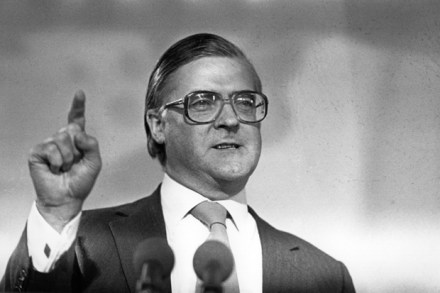
Among the gifts that have come my way this Christmas season, none has given me pleasure more immediate or more lasting than Kenneth Baker’s new commonplace book, More Rags of Time. I dislike the title. It sounds precious, as does Lord Wavell’s famous and wonderful poetry anthology Other Men’s Flowers; or Palgrave’s Golden Treasury. Perhaps it’s inherently difficult to find a name that personalises what, by definition, isn’t yours. Scrapbooks are collections of things that are unrelated except by being regarded as delights by their collector.

Matthew Parris: the barbarism of the Twitter mob

From our UK edition

Are we heading for a new barbarism? Is this the return of the 18th-century mob? Here are more questions than answers. I ask because when all the fuss about Emily Thornberry and her photo tweet from Rochester has died down, we shall be left with something more disturbing than whatever sin she may or may not have committed. We’ve just seen demonstrated the speed, the destructiveness, the sheer violence of the modern tempest that information technology can create. In the world of opinion, climate change has arrived already. As a workaday columnist, I reflect that I could equally easily write a spirited defence of Ms Thornberry; or a spirited attack; or I could attack Ed Miliband for publicly laying into her; or for privately agreeing with her.

Spectator books of the year: Matthew Parris on his growing fear that Owen Jones might be right

From our UK edition

As the year unwinds I’m rebuked by hints all around me that a book I comprehensively panned in Literary Review is basically true. The Establishment and How They Get Away With It by Owen Jones (Allen Lane, £16.99) is an intellectual mess, paranoid, partial and partisan; and its central thesis — that we are unwitting slaves of a grand, overarching conspiracy, all cooked up by wicked right-wing forces — is bollocks. Jones is a brave and brilliant voice in danger of trapping himself in a leftist niche. His book’s tone is shouty and its analysis shallow.

What you’re missing now that you don’t read this in print

From our UK edition

Liverpool airport is a curiously unreal place in the half-light before dawn on a cold November morning. Out across the Mersey at high tide, raindrops turn the silver to lead, and at the easyJet departures gate people in tracksuit bottoms brush against the occasional tweed and Remembrance Day poppy. Intending stag-weekenders, and the set who have a little place in the Pyrenees, coincide but do not mingle. A young woman is trying to buy rosé wine, and an elderly gent is trying to find a copy of that morning’s Times. The elderly gent is me, flying to Barcelona for the day for my sister’s 60th birthday lunch, to return that night to Manchester.

Help me become an addict

From our UK edition

When the White Queen told Alice she had sometimes believed as many as six contradictory things before breakfast, she spoke for us all. But our irrationality goes further than a simple after-the-event report. Even while we’re believing it, we can know that something we’re believing contradicts something else we believe. Take, in my case, addiction. I believe that addicts lack self-discipline and willpower. Yet I know that this cannot really be the explanation. I feel a faint but ineradicable disapproval of people who can’t stop eating, smoking, drinking or injecting themselves with heroin, while knowing that this reaction is not only harsh, but must be ignorant.

Reading the comments on my Ukip columns, I finally understand the Nazis

From our UK edition

[audioplayer src="http://traffic.libsyn.com/spectator/TheViewFrom22_16_Oct_2014_v4.mp3" title="Lord Pearson and Damian Green discuss Ukip and the Tories" startat=81] Listen [/audioplayer]Like many, I’ve always been a bit baffled by the story of the rise of Nazism. The Germans I’ve met have appeared to be human beings like any other: in no signal way a different breed from my own countrymen. Yet these are the great-grandchildren, grandchildren and children of a generation that was taken in by Adolf Hitler; or, worse, carried him forward; who supported (many of them) the Nazis; who knew or guessed what was happening to Jews, homosexuals and other minorities; who must either have turned a blind eye or positively encouraged what was happening. How could they have?

Must MPs always vote before we go to war?

From our UK edition

Jesse Norman was permitted three minutes for his speech to the Commons in last Friday’s debate. But the contribution from the Conservative MP for Hereford & South Herefordshire was one of the more important backbench interventions — and no less important for being wide of the debate’s focus. The House was being invited to support British intervention against the Islamic State. Mr Norman’s speech was about whether the invitation was even appropriate. As he put it, ‘A convention has started to develop that, except in an emergency, major foreign policy interventions must be pre-approved by a vote in Parliament.’ The MP thought this unwise. I disagree. Or half-disagree. But ­Norman’s case was powerful, and I shall give you the gist.

Yes or no, I’ll never feel the same about the Scots

From our UK edition

I doubt I’m alone among English readers of this magazine in having felt uncomfortable with our last issue. ‘Please stay with us’ was a plea I found faintly offensive to us English. Not only did it have a plaintive ring, but there seemed to be something grovelling, almost self-abasing, in the pitch. Why beg? A great many Scots have wanted to leave the Union; and by arranging a referendum Westminster has asked Scotland to make up her mind. Let her, then. When did England become a petitioner in this affair? ‘Please stay’ implied that the Scots were minded to go and we were pleading with them to relent of their intention. Yet I haven’t thought of this referendum as a bid to change Scotland’s mind, but as an exercise to discover a nation’s wishes.

If Scotland leave, we don’t owe them anything. But it’s no great favour if they stay

From our UK edition

I doubt I’m alone among English readers of this magazine in having felt uncomfortable with our last issue. ‘Please stay with us’ was a plea I found faintly offensive to us English. Not only did it have a plaintive ring, but there seemed to be something grovelling, almost self-abasing, in the pitch. Why beg? A great many Scots have wanted to leave the Union; and by arranging a referendum Westminster has asked Scotland to make up her mind. Let her, then. When did England become a petitioner in this affair? ‘Please stay’ implied that the Scots were minded to go and we were pleading with them to relent of their intention.

‘Rape is rape’ serves no one well, least of all rape victims

From our UK edition

When Mary Jane Mowat remarked recently that rape conviction statistics would not improve ‘until women stop getting so drunk,’ the retired Crown Court judge knew there would be a row. It followed. The judge, knowing that only 60 per cent of rape charges that reach court end in conviction, was making a narrow point. There are big evidential difficulties in pitting the claimed recollection of someone who says she was too drunk to know what she was doing against the claimed recollection of someone who plainly wasn’t. But the row spread wider, as it keeps doing, into the moral status of taking advantage of an inebriated woman.

The surer we are that machines can think, the less sure we’ll be about people

From our UK edition

Having written (for a Times diary) a few sentences about consciousness in robots, I settled back to study readers’ responses in the online commentary section. They added little. I was claiming there had been no progress since Descartes and Berkeley in the classic philosophical debate about how we know ‘Other Minds’ exist; and that there never would be. A correspondent on the letters page referred me to Wittgenstein’s treatment of the subject and so I studied his remarks. I have to confess they are, to me, unintelligible. But I cannot let the matter rest. My earlier thoughts had been prompted by newspaper reports of the adventures of a talking, hitchhiking Canadian robot called Hitchbot. Every time such a ‘Whatever will robots learn to do next?

I found my inner fascist in a letterbox

From our UK edition

There’s a little bit of a fascist in all of us. For some, the tragedy of human want may provoke an impatient urge to expropriate and centralise for the more efficient use of economic resources. Others, alarmed at the world’s exploding population, may be attracted by calls for a programme of mass compulsory sterilisation. But for me it’s letter boxes and street numbering. I want order. I want consistency. I want standards. And I want eye-watering penalties for property owners who try their fellow Britons’ patience and waste our time by making their addresses impossible to find.

Why I’m against posthumous pardons, even for Alan Turing

From our UK edition

Ross Clark is a columnist I try to read because he is never trite. So I was sorry to miss performances of his musical play staged earlier this month. Shot at Dawn is about a sister’s quest for a recognition (after his death) of her brother, Harry Briggs, a soldier in the Great War who was executed for desertion. The play is sympathetic to the idea of posthumous pardon; coupled with this, it’s a lament that society punishes people without trying to understand why they do what they did. A second theme emerges: homosexuality, and the difficulty (then) of living with this in a world that does not understand. I suppose you could say that Ross’s play is about looking back not in anger but in sympathy. Here’s a heresy, then.

What kind of idiot tries to stand in the way of a national child abuse panic? I do

From our UK edition

[audioplayer src="http://traffic.libsyn.com/spectator/TheViewFrom22_10_July_2014_v4.mp3" title="Matthew Parris and Dr Liz Davies discuss the child abuse enquiry" startat=48] Listen [/audioplayer]As essay titles go, ‘On losing an argument with Tim Loughton MP’ may fail to catch the imagination; but there we are: I don’t need to be re-elected. You know before you start when you’re on a losing wicket, and I had fully expected to lose this argument, which was on live television with Adam Boulton. But I thought the attempt might be interesting. I’d been inspired by a thoroughly sensible contribution to the subject on the Today programme, by Peter Bottomley MP.

Ed Miliband’s problem isn’t his image. It’s us

From our UK edition

[audioplayer src="http://traffic.libsyn.com/spectator/TheViewFrom22_26_June_2014_v4.mp3" title="Fraser Nelson and Isabel Hardman discuss whether Labour should let Miliband be Miliband" startat=934] Listen [/audioplayer]That bacon bap earlier this month was not the cause of Ed Miliband’s unpopularity. Ed Miliband’s unpopularity was the cause of the bacon bap. Scant comfort this will give the Labour leader and his fabled ‘advisers’, but they can stop worrying about food-related photographic gaffes because once the world is out to get you, the world will get you, and if they don’t get you one way they’ll get you another. Sooner or later Mr Miliband will have to eat, and sooner or later a shutter will click as he opens his mouth.

The Birmingham ‘Trojan Horse plot’ is — like WMD — a neocon fantasy

From our UK edition

[audioplayer src="http://traffic.libsyn.com/spectator/TheViewFrom22_12_June_2014_v4.mp3" title="Matthew Parris vs Douglas Murray on the Birmingham Trojan Horse plot" startat=55] Listen [/audioplayer]I can remember where I was when Colin Powell presented to the United Nations his evidence for the existence of Saddam’s weapons of mass destruction. I was taking a friend to an emergency medical consultation at Victoria station in London and while she saw the doctor I settled down in the waiting room to watch the presentation on TV. I found it compelling.