Matthew Parris

Matthew Parris

Matthew Parris is a columnist for The Spectator and The Times.

Soon we will accept that useless lives should end

From our UK edition

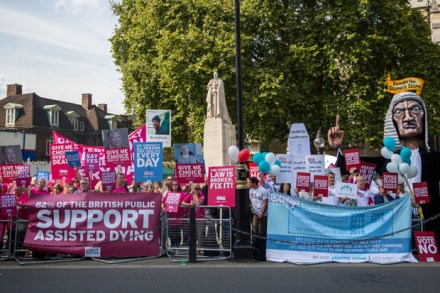
[audioplayer src="http://rss.acast.com/viewfrom22/thedeathoftheleft/media.mp3" title="Matthew Parris and Freddy Gray debate whether assisted dying will ever become accepted" startat=1781] Listen [/audioplayer]Throughout the short life of the Assisted Dying Bill which failed last week in the Commons, the ‘faith community’ (a quaint term for that category of human beings who throughout history have been more assiduous than any other in trying to kill each other) have with skill and persistence deployed an argument of great potency. Such is the argument’s intuitive appeal that the pro-assisted-dying brigade never found a way of countering it. They have resorted simply to denying that what the faith squad say would happen, could happen. But it could.

Christianity is silent on my great moral dilemma

From our UK edition

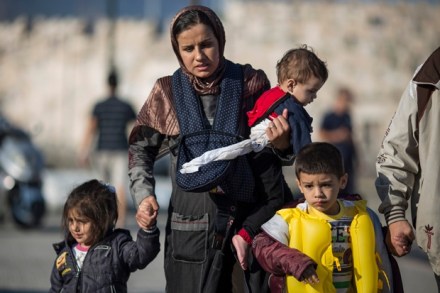
[audioplayer src="http://rss.acast.com/viewfrom22/jeremycorbynsbritain/media.mp3" title="Matthew Parris and Theo Hobson debate the role Christianity in the migrant crisis" startat=1383] Listen [/audioplayer]Proximity shouldn’t make a difference — should it? We were on a beach on the European side of the Mediterranean, it was a beautiful late August day, and I felt so happy. The sea was fresh, the sky was clear and a stiff breeze was whipping white horses out past the headland. ‘Rough weather for migrants,’ I thought, then checked myself. What an awful thing to think.

The welcome return of the valedictory dispatch

From our UK edition

'All I ever tried to do was hold a mirror up and show you how beautiful you really are. Shine on, you crazy diamond.’ I have just read one of the finest ambassadors’ ‘valedictory’ dispatches ever composed, except it isn’t one: it had to be posted on the internet, and was, last month. What was essentially a sometimes-exasperated love letter to Lebanon will never see the Foreign and Commonwealth Office’s printers. The valedictory died in 2006. So Tom Fletcher, who after four years as ambassador in Beirut had come to the end of his posting (‘Unlike your politicians,’ he tells Lebanon, ‘I can’t extend my own term’) had to write his loving, infuriated, despairing and hopeful tribute to the country as a personal blogpost.

If Corbyn wins, he could split the Tories too

From our UK edition

‘Why this sudden restlessness, this confusion?’ asked C.P. Cavafy in his poem ‘Waiting for the Barbarians’: Because night has fallen and the barbarians have not come. And some who have just returned from the border say there are no barbarians any longer. And now, what’s going to happen to us without barbarians? They were, those people, a kind of solution. All through your and my life the Labour party have been at the gates of Downing Street, and often enough stormed them, only to be beaten back at a subsequent election. What might happen to the Conservative party if those barbarians disappear? We must not assume that Jeremy Corbyn will take the Labour leadership.

William Waldegrave: too nice ever to have been PM

From our UK edition

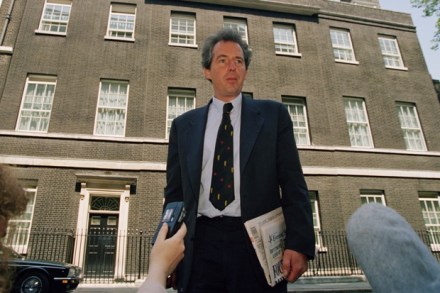
‘Lobbying,’ writes William Waldegrave in this extraordinary memoir, ‘takes many forms.’ But he has surely reported a variant hitherto unrecorded in the annals of politics. The Cardinal Archbishop of Cardiff (‘splendidly robed and well supported by priests and other attendants’) had come to lobby him (then an education minister) against the closure of a Catholic teacher-training college. After discussion the archbishop suggested their respective entourages leave the room. Face to face and alone with Waldegrave, the archbishop told him he had a distinguished 16th-century ancestor, who was a candidate for beatification. The unspoken implication was left hanging.

Building this lay-by is all I can think about now

From our UK edition

Many years ago I was encouraged to read Roger Hutchinson’s Calum’s Road. The small and quirky book made a deep impression on me: deeper, perhaps, than I realised at the time. Since then the story has always been there in the back of my mind. It began a story of my own. As there is unlikely to be a book, Matthew’s Lay-By, I shall tell the tale myself. The late Calum MacLeod’s story deserved its book. One of the last inhabitants of Arnish in the north of the island of Raasay in the Western Isles, the crofter campaigned with others to persuade the local authorities to connect Arnish to the rest of the island with something better than their footpath. They got nowhere. So he decided to build the road himself.

From Major to minor

From our UK edition

‘Lobbying,’ writes William Waldegrave in this extraordinary memoir, ‘takes many forms.’ But he has surely reported a variant hitherto unrecorded in the annals of politics. The Cardinal Archbishop of Cardiff (‘splendidly robed and well supported by priests and other attendants’) had come to lobby him (then an education minister) against the closure of a Catholic teacher-training college. After discussion the archbishop suggested their respective entourages leave the room. Face to face and alone with Waldegrave, the archbishop told him he had a distinguished 16th-century ancestor, who was a candidate for beatification. The unspoken implication was left hanging.

Greeks just want to keep what they’ve got

From our UK edition

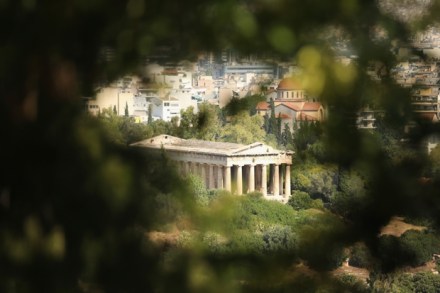
We were breakfasting outside on the morning of the Greek referendum. The result could only be guessed at and all the polls were saying it was neck-and-neck. I thought ‘yes’ would win because surely Greek people believe in membership of the EU. Our friend Marie, however, who is French, announced that it would be a decisive ‘no’. Marie is neither a left-winger nor a Europhobe. ‘Why?’ her husband asked, ‘how do you know?’ ‘Avantage acquis,’ she said. Few of us were fluent French speakers, but I made a guess: ‘You mean people’s sense of continuing entitlement to something they have already got?’ Yes, she said, such things are very hard to take away.

You’ll never understand Greece from a God’s eye view

From our UK edition

We were breakfasting outside on the morning of the Greek referendum. The result could only be guessed at and all the polls were saying it was neck-and-neck. I thought ‘yes’ would win because surely Greek people believe in membership of the EU. Our friend Marie, however, who is French, announced that it would be a decisive ‘no’. Marie is neither a left-winger nor a Europhobe. ‘Why?’ her husband asked, ‘how do you know?’ ‘Avantage acquis,’ she said. Few of us were fluent French speakers, but I made a guess: ‘You mean people’s sense of continuing entitlement to something they have already got?’ Yes, she said, such things are very hard to take away.

Spy if you must, but don’t give the game away

From our UK edition

The Snoopers’ Charter. I ought to care about this. I’m a sort of libertarian. I believe in personal freedom. I’m a trustee of Index on Censorship. The state as Big Brother is everything I’ve always fought in politics. So why can’t I quite summon the requisite indignation? Why do I find all this Edward Snowden stuff vaguely irritating? Why does the crusading column for the Times, railing against state surveillance, somehow keep failing me, though time and again I’ve opened my laptop and tried to make a start?

Ed’s campaign was fine. The problem is his party

From our UK edition

Patrick Wintour is one of the best political editors around. For the Guardian he’s been for decades a cool and well-sourced voice: even-handed, informed, interesting but in the best sense dry. So when I heard he’d written the most comprehensive behind-the-scenes account yet of Labour’s failed general election campaign I hurried to read it. I was not disappointed. ‘The undoing of Ed Miliband, and how Labour lost the election’ is an insider account of a chapter of accidents, starting with Mr Miliband’s memory lapse about the deficit during Labour’s last party conference. Apparently he shut himself in his hotel room afterwards and wouldn’t come out.

In today’s church, it seems, God can be outvoted

From our UK edition

I see. So now we have the result of the Irish referendum on gay marriage, and now we’ve heard the Roman Catholic Church’s chastened response, we shall have to rewrite Exodus 32, which (you may remember) reports Moses’ (and God’s) furious reaction to the nude dancing and heretical worship of Moloch in the form of a golden calf: the Sin of the Calf in the Hebrew literature. Moses had come down from Mount Sinai bringing God’s commandments written on two tablets of stone.

As a gay atheist, I want to see the church oppose same-sex marriage

From our UK edition

I see. So now we have the result of the Irish referendum on gay marriage, and now we’ve heard the Roman Catholic Church’s chastened response, we shall have to rewrite Exodus 32, which (you may remember) reports Moses’ (and God’s) furious reaction to the nude dancing and heretical worship of Moloch in the form of a golden calf: the Sin of the Calf in the Hebrew literature. Moses had come down from Mount Sinai bringing God’s commandments written on two tablets of stone.

We columnists have never been more useless

From our UK edition

It takes some agility to shoot yourself in the foot and saw off the branch you’re sitting on, while hoisting yourself with your own petard, all at the same time; but that is what I shall now attempt. In this analysis of general election commentary I shall argue that over the last two months Britain has been all but choked by a surfeit of comment and analysis on the general election. Can any reader remember when there was an election that produced so much? Or, in the end, produced it to so little useful purpose?

The British public is about to make a big mistake

From our UK edition

On the weekend of 25 April 2015 I started to believe that the party I supported might not win an impending general election. I’m used to that. But I started to believe, too, that my fellow citizens might be about to make a stupid and unfathomable mistake. I’m not used to that at all. It has come as an awful shock. For the first time in my life I have understood how it must have felt to be a convinced socialist in Britain these past 36 years since 1979: to live in and love a country whose people had got it completely wrong. ‘Well, diddums,’ I can hear left-wing friends reply: ‘Welcome to our world.’ In the general election of 1979, as a parliamentary candidate, I knew the voters would return me and believed they would return a Conservative government led by Margaret Thatcher.

The power of collective grievance

From our UK edition

When last Sunday Pope Francis took the brave step of acknowledging the Armenian tragedy as the ‘first genocide of the 20th century’, he knew he was entering a minefield. On 24 April Armenians will commemorate the 100th anniversary of their genocide. There can be no single date for a genocide but that was the day the entire leadership of the Armenian people was arrested by the Ottoman government in Constantinople, now Istanbul, whose successors are the modern Turkish state. The Ottomans had never trusted Armenians, who were Christians, and had long suspected them of being a fifth column within the empire. There had already been pogroms. But now began a sustained campaign of massacre, eviction and cultural suppression at the end of which somewhere between 600,000 and 1.

Peru’s Indians are repressed with more efficiency than blacks ever were in South Africa

From our UK edition

In The Spectator of 21 March a column by Toby Young caught my eye. Discussing the pros and cons of selective schools, Toby found it hard to reach an emphatic conclusion; and for what it’s worth I find it hard too — but, then again, what do I know? It was his international comparisons that engaged me. It was not the point he was trying to make, but Toby quoted a statistic which speaks volumes about the continuing oppression of the indigenous peoples of South America. In educational attainment tests, Peru has the world’s worst ‘variance’ explicable by the children’s backgrounds, or so the OECD have found. ‘Variance’ means departure from the average.

Was ‘Je Suis Charlie’ just an example of people venting their hatred towards Muslims?

From our UK edition

Something dangerous is brewing beneath the surface in our country, and it worries me that warning lights are not flashing in the minds of many of those I respect most. After the discrediting of anti-Semitism, after the discrediting of discrimination against black people, after the discrediting of prejudice towards the Irish, I hadn’t expected to live to see a powerful generalised antipathy against any race or religion gather popular force here without stirring at least the more liberal of my fellow citizens into resistance. I expected a sense of alarm. There is none.

Skunk has changed me. But art has changed me, too

From our UK edition

Two recent preoccupations have led me to the same reflection. The first is a Channel 4 programme on the effects of the super-strength cannabis known as ‘skunk’, in which I’ve been participating: about to be broadcast as I write. The second is the artist inmate of Dachau, Zoran Mušic, whose life my guest for one of my Great Lives programmes on BBC Radio chose to celebrate. We recorded that discussion some weeks ago for transmission later. Both have led me to reflect on the nature of templates, and the theory of Gestalt.

Of course you can choose to get up early (and maybe you can choose to be gay)

From our UK edition

‘Oh, I’m an owl,’ said my friend Nick. ‘You’re probably a lark.’ I raised an eyebrow. He explained. Apparently all human beings are either owls or larks, being genetically predisposed to stay up late or get up early, and to be at their best after sundown or dawn. Nonsense, of course, complete nonsense. Nick just likes partying and his career does not demand his availability much before ten in the morning. The woman friend he had just consigned to the larks section of the human aviary has land and horses, needs to be up before dawn, and not unnaturally begins to flake out after about 9p.m. None of this has anything to do with genes.