Matthew Parris

Matthew Parris

Matthew Parris is a columnist for The Spectator and The Times.

Lessons from the plague village that isolated from the world

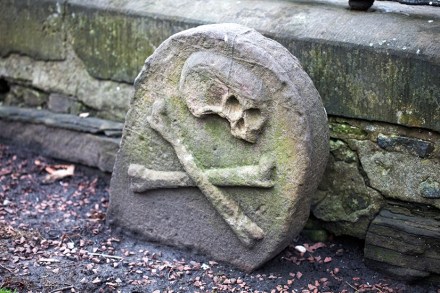
Locked contentedly into the rhythms of farming life and digging for lead on its Derbyshire Peak District slopes, the village of Eyam lay blissfully unaware of what was about to hit it, and propel it into the history books for ever. The Viccars family, the Reverend William Mompesson and his family, Elizabeth Hancock and her six children, 350 villagers at least… none had any inkling. London existed in most minds only through talk in the public house, stories from travelling merchants and perhaps the first periodicals beginning to circulate in England. The metropolis was half a world away, a foreign place, a foreign culture. News of the plague we now call bubonic will at first have been more of a curiosity than a concern.

The difficult balance of public vs political agony

Fear is the politician’s friend. When terror grips the public, an opportunity arises for those in power to step forward as the people’s guide and protector in dangerous times. One sees this in wars. One sees it whenever the public suspects hostile conspiracies, networks of spies or mischief-makers. We likewise cleave to leaders who will confound predatory foreign powers, terrorist plots or the danger of being swamped by waves of immigrants. In fear or anxiety the people will hug their leaders closer, and their leaders know this as surely as every priest knows that despair and anxiety are his faith’s most reliable draw.

We’re all guilty of recruiting this virus to our cause

There must be a quote from Shakespeare for this, but so far I haven’t found it. It’s the way we all of us contrive to see in cosmic events the evidence, the signs and portents, for what we already believed even before the cataclysm had occurred. These are the days of miracle and wonder, sang Paul Simon… The way we look to a distant constellationThat’s dying in a corner of the skyThese are the days of miracle and wonderAnd don’t cry, baby, don’t cry, don’t cry… Somehow there never was a plague, earthquake, flood or epidemic that was not also a sign that the human race must mend its ways according to wisdom we had long recommended, even during less extraordinary times.

Don’t let anyone tell you there’s a war on

‘Shut up — don’t you know there’s a war on?’ Strong hints of that attitude have emerged in recent weeks, and the hints are getting stronger. The attitude is mistaken. The right answer to any enquiry about whether we know there’s a war on is that there isn’t a war on. Nobody with sensible questions to ask about the current strategy or its implementation should be abashed to ask them. Hitler’s spies are not listening, Lord Haw-Haw will not be broadcasting them, and a grown-up citizenry does not confuse intelligent questioning with unpatriotic breaking of the ranks.

The secret excitement that lurks beneath our distress

Something about the word ‘bomb’ has always thrilled me, and I know why. No school today. In the 1950s we lived in Nicosia, Cyprus, when the island was a British colony and Greek Cypriot terrorists were trying to kill us. Our house was near a big army camp and our Cypriot neighbours were friendly, so home felt protected. It never occurred to me, just starting school, that proximity to the military was not a guarantee of security; and it never occurred to Mum and Dad that our neighbours had a small bomb factory, later discovered underneath their chicken house; so indoors seemed safe. But outdoors was different.

The unbearable lightness of Boris Johnson

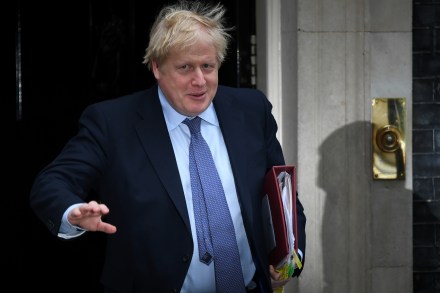
Months ago, not long after Boris Johnson’s 2019 general election triumph, I wrote a Times column of a cautiously hopeful nature about his prospects in Downing Street. The column was in reaction to well-sourced reports that Mr Johnson’s management philosophy was to encourage ministers to get their heads down and get on with the job, to avoid the TV sofas and broadcasting studios unless there was something important to get across, and not to suppose that media exposure should be equated with career success.

The concept of Evil is an evasion

A week of remembrance marking the 75th anniversary of the liberation of Auschwitz last month had me thinking hard about what we mean by Evil. ‘Evil’, that is, when used with a real or metaphorical capital letter. You cannot join discussion of the Holocaust without hearing the word again and again. And indeed, what other words are available when we want to express complete horror? ‘Regrettable’? ‘Immoral’? Such vocabulary won’t do the job. Only ‘wicked’ and ‘sinful’ come anywhere near, and all are allied with what Evil, as a proper noun, tries to capture. ‘Evil’ eschews any notion of understanding or explaining, and sits uneasily with the idea of rectification, compensation or apology.

Vegans are brave – and they have a point

It was a clear and icy night at home in Derbyshire last week. I love these times and, before bed, stepped outside to stand on the lawn in the moonless pitch-black and take it in. All at once the dark was pierced with an awful scream. I was not greatly alarmed — the rural night is full of strange noises — but stood there, puzzling out what it might be. The scream, almost human, was repeated, and its provenance seemed to be moving from one side to the other of the field adjacent to ours. Could it be a fox? Vixens do make some blood-curdling cries during the mating season but does that start as early as January? Or might it be a fox’s victim — a hare or rabbit, perhaps, fighting back as the poor creature was carried off — or even an owl’s prey?

My fellow Remainers should not aim for a ‘soft Brexit’

‘I like to write when I’m feeling spiteful,’ remarked D.H. Lawrence. ‘It’s like having a good sneeze.’ A perennial challenge for a Fleet Street columnist is how to walk the fine line between writing as though your opinion mattered, and writing as though it were just an entertaining sneeze. My fellow Spectator columnist, Rod Liddle, has developed a very marketable pitch in the columnar sneeze. I perhaps err on the other side: writing with the implicit suggestion that the nation waits upon my verdict.

Coffee House Top 10: The fact no one likes to admit: many gay men could just have easily been straight

We’re closing 2019 by republishing our ten most-read articles of the year. Here’s No. 4: Matthew Parris on sexuality and gender: Long-suffering Spectator readers deserve a seasonal break from yet another Remoaner diatribe from me. My last on this page, making the outrageous suggestion that the populace may sometimes be wrong, is now being brandished by online Leaver-readers of my Times column as proof that I am in fact a fascist; so there isn’t anywhere much to go from there. Instead, I turn to sex. There is little time left for me to write about sex as the thoughts of a septuagenarian on this subject (I turn 70 this year) may soon meet only a shudder. But I have a theory which I have the audacity to think important.

Labour’s failure isn’t necessarily the Tories’ success

A moment arrives when one does just have to admit defeat. We shall leave the European Union and there isn’t a lot of point going on about it any more. I’m still sure it’s a mistake, but there we are. In a democracy the majority is entitled to make a mistake, just as the minority is entitled to say so. I say so. I’d hoped we could change people’s minds but we haven’t, so enough from me on that. A general election is a different matter. Here too, of course, the majority is entitled to make a mistake, but resistance remains possible and legitimate because there’s always the opportunity at the next election to reverse the electorate’s previous decision. The trouble is, however, that I don’t want to.

I’m calling it: the Tories will win a majority

It’s time to stick my neck out. What follows is anecdotal and my hunches have often been wrong. But I think that though Boris Johnson will get his overall majority, Tory strategists’ hopes of surfing a tidal wave of new support from ‘tribal’ Labour voters in the English Midlands and the North will not be fulfilled. Mr Johnson will win this time, but there will be no substantial and enduring shift northwards of Tory support. I live in the north Midlands. The two closest constituencies to that (safe) Conservative seat of Derbyshire Dales neatly fit the description political pundits offer of the sometimes struggling Midlands and northern seats where Johnson’s Tories hope to make huge, game-changing advances on 12 December.

What on earth are the Lib Dems up to?

Jo Swinson is right. Most of the gains that it’s worth her party aiming for would be made at the expense of the Conservatives. There are three reasons. First, glance at the 29 seats where the Liberal Democrats came second in 2017. Some 22 produced a ‘close’ result. Sixteen of these are held by the Tories, and only four by Labour. As my Times colleague Oliver Wright explains: ‘Even quite a dramatic swing from any of the other parties towards the Lib Dems could still reap very little reward.’ Secondly, Conservative and Lib Dem ideologies are not diametrically opposed. Anyone who’d even consider voting Tory would be fiercely resistant to Jeremy Corbyn. Lib Dems strike us, the Conservative--inclined, as comparatively harmless.

I’ll vote Lib Dem – but I can’t join them

I don’t believe that before last week I’ve ever quit any organisation on an issue of principle. I tend to find people tiresome who make a song and dance about doing so. I never thought that one day I’d be ‘making an exhibition of myself’ (as my father used to say) and certainly not so late in my life. But in my Times column on Saturday that’s what I did. And it’s futile to deny I was attention-seeking. Of course I was. A columnist earns his bread by drawing attention to himself and his opinions. Quitting the party you joined 50 years ago is just a rather theatrical way of doing that. But I haven’t enjoyed the attention much. A sadness has hung over me since: the sadness, really, of parting from an old friend.

The question a second referendum must ask | 26 October 2019

Mostly I stay confident the Prime Minister’s team are playing a weak hand badly, but my confidence does occasionally falter. Then Downing Street does something really stupid (like expelling 21 of its own parliamentary party) and I’m reassured that these people aren’t clever at all. This happened last weekend when I opened my Sunday Times to find there a personal attack on Sir Oliver Letwin by ‘senior sources’. These sources had scoffed to journalists that when, before the Commons vote on his amendment, Letwin was at Downing Street to discuss it, he was taking ‘conspiratorial phone calls’ on his mobile phone, giving him ‘instructions’ from David Pannick.

The question a second referendum must ask

Mostly I stay confident the Prime Minister’s team are playing a weak hand badly, but my confidence does occasionally falter. Then Downing Street does something really stupid (like expelling 21 of its own parliamentary party) and I’m reassured that these people aren’t clever at all. This happened last weekend when I opened my Sunday Times to find there a personal attack on Sir Oliver Letwin by ‘senior sources’. These sources had scoffed to journalists that when, before the Commons vote on his amendment, Letwin was at Downing Street to discuss it, he was taking ‘conspiratorial phone calls’ on his mobile phone, giving him ‘instructions’ from David Pannick.

All ages are gullible – including our own

In the great days of the Daily Telegraph’s Peter Simple column, when I was a youth, that acid but hilarious satire on contemporary Britain had a cast of imaginary characters of whom one of my favourites was the Very Reverend Dr Spacely-Trellis, the ‘go-ahead Bishop of Bevindon’. Spacely-Trellis was a ‘modern’ Anglican of the sort disposed to question the Virgin Birth, the divinity of Christ, and quite possibly the existence of a deity. Most of those interludes featuring the left-of-centre bishop ended with him in the pulpit and in full cry about the evils of the hour, concluding ‘We are all guilty!’ as his despairing flock dived for the nearest door or window.

All ages are gullible – including our own

In the great days of the Daily Telegraph’s Peter Simple column, when I was a youth, that acid but hilarious satire on contemporary Britain had a cast of imaginary characters of whom one of my favourites was the Very Reverend Dr Spacely-Trellis, the ‘go-ahead Bishop of Bevindon’. Spacely-Trellis was a ‘modern’ Anglican of the sort disposed to question the Virgin Birth, the divinity of Christ, and quite possibly the existence of a deity. Most of those interludes featuring the left-of-centre bishop ended with him in the pulpit and in full cry about the evils of the hour, concluding ‘We are all guilty!’ as his despairing flock dived for the nearest door or window.