Matthew Lynn

Matthew Lynn is a financial columnist and author of ‘Bust: Greece, The Euro and The Sovereign Debt Crisis’ and ‘The Long Depression: The Slump of 2008 to 2031’

The real ‘Super Thursday’ will be when interest rates rise

From our UK edition

Turn-up. Eat lunch. Swap a few pleasantries with the other people in the room, leave interest rates on hold, and then collect a cheque on the way out. I am starting to wonder why I can’t have a job on the Bank of England’s Monetary Policy Committee. It certainly doesn’t look terribly difficult. This week, the Bank is making a change to its usual routine. Instead of just announcing the latest monthly decision on rates, it is also releasing a vast amount of fresh information on the economy, in a move that the media have already dubbed ‘Super Thursday’, presumably on the grounds that unlike plain old ordinary Thursdays, City journalists and economic pundits will have lots of new data and forecasts to play around with.

The sooner Greece leaves the euro, the better

From our UK edition

Ten years ago, the Greek minister Yainnos Papantoniou came to London to give a talk at the London School of Economic on the country’s first four years as a member of the euro. A skilled, pro European technocrat, Papantoniou had, more than anyone else, steered his country through dogged German resistance into the single currency. Papantoniou boasted that a history of weak growth and chaotic government had been swept aside, and that Greece was now the equal of Germany and France. What lay ahead, he argued was 'a new dynamic phase for the Greek economy, based on knowledge and modern structures'. A 'bolstering of national self-confidence' would be the natural result. It was an articulate exposition of the view of a whole generation of Mediterranean politicians, eurocrats and bankers.

How to Ed-proof your portfolio

From our UK edition

It was 2 May 1997. Not only was most of the country celebrating the election of a bright young Kennedy-esque Prime Minister called Tony Blair, so too, perhaps more surprisingly, were the champagne-swilling Thatcherites of the City of London. As the government took office, the FTSE 100 index climbed up to 4,455, and it was to carry on rising over the next few months, reaching 5,193 by the year’s end. Indeed, for much of its first term, Britain’s last Labour government was accompanied by a raging bull market, as the dotcom bubble reached its peak. Will history repeat itself? In May, we may well see another newly elected Labour prime minister, Ed Miliband. Unlike his predecessor Blair, Red Ed seems rather more committed to old-fashioned socialism.

Why education is no longer the best way to invest in your child’s future

From our UK edition

Teenagers have never exactly been short of things to complain about to their parents. You didn’t give them enough support, sent them to the wrong schools, stopped them going to the right parties, or didn’t get them the latest iPhone. But Generation Rent, perhaps stirred up by too much time spent reading Ed Miliband’s Twitter feed, are likely to be especially aggrieved. To add to the traditional litany of charges from the younger generation against the older can be added one that might even have a kernel of truth in it — you stole our future. There is a case to be made that the big divide in British society, as indeed in most developed economies, is not between classes, races, religions or regions, but between generations.

The bull market is five years old. Does that mean it’s nearly over?

From our UK edition

There were no fireworks, and not much champagne. Indeed, it wasn’t an anniversary that many people noticed. But on 9 March, the bull market in equities was five years old. It was on that day back in 2009 that the Dow Jones Industrial Average, the key global benchmark for stocks, edged down another 80 points to close at 6,547, its lowest level since 1997. Although no one knew at the time, that was the bottom, and it was to go no lower. From then onwards, the recovery was under way. In London, our own low point came three days earlier, on 6 March 2009, when the FTSE100 index touched 3,530. There is an old saying among traders that ‘nobody rings a bell at the bottom of the market’.

You, too, can be a shale profiteer

From our UK edition

It might not be something you want to mention in the Half Moon Inn in Balcombe, or around any of the other communities where people are getting anxious about shale gas explorers ripping up the countryside with their drills and pipelines. But if shale is the tremendous source of wealth that David Cameron insists it can be for this country, how do you go about investing it? After all, if there are fortunes to be made, there is no reason not to claim your share. There is no longer any question that shale gas is a major industry. In the US, where it is most advanced, it is already worth $76 billion annually, according to its trade association, and by the end of next year that will have grown to $118 billion.

How mansion taxes will make us all poorer

From our UK edition

There are few things most of us enjoy more than watching the value of our houses rocket. Every homeowner will have felt the pulse of excitement that comes from a mental calculation of how much has been added to their net worth by the latest bulletin from Rightmove or the Halifax. Yet fast forward two or three years and the same news could make our hearts sink — because by then a mansion tax could well have been introduced, and rising prices will take many middle-class owners over the threshold. The mansion tax bandwagon has been rolling for several years, pushed enthusiastically by business secretary Vince Cable and his Lib Dem colleagues. The idea is that any home worth more than £2 million would be taxed at an annual rate of 1 per cent of its value above the threshold.

Why Britain’s economy will overtake Germany’s

From our UK edition

What’s the most surprising thing that could come out of the current economic upturn? A rapid revival in northern manufacturing? The City really getting behind small British businesses? Ed Balls admitting higher public spending wasn’t always the best way to promote growth? Any of these eventualities would be fairly amazing. But the biggest surprise would perhaps be this: a gradual realisation that the UK is on track to become the largest economy in Europe. In the 19th century, at the height of the industrial revolution, the UK outproduced all of its European competitors. It steadily lost that position, however, ceding industrial leadership to the Germans and the French. In the next couple of decades that pattern will start to reverse.

Investment: Why does so much always go wrong in August?

From our UK edition

The weather might not be what it once was, and the football season might start so quickly it feels like it has hardly been away, but there is one thing everyone can surely agree on about August. Nothing of any importance happens. As we head into the dog days of summer, everyone can sling their feet up on the desk and relax. All the people who really matter — the ones running the big corporations, the banks or the government — are off sunning themselves by a pool somewhere. As for the office, it’s about as busy as a job centre in downtown Athens. The only people left are the post boy and the interns busy updating their Facebook pages. It’s impossible to imagine anything of significance happening.

Why Mark Carney’s Canadian success story may be about to fall apart

From our UK edition

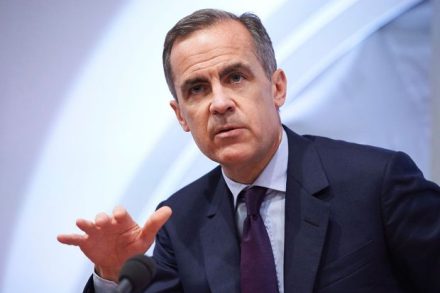
No Bank of England governor has ever been installed in office with quite so much advance hype as Mark Carney. When he moves from running to the Bank of Canada to his new office in Threadneedle Street, expectations will be running high. Carney arrives with a reputation as a master of economic strategy, a man who can single-handedly steer an economy through the most treacherous of waters, and get a country growing again with a few deft strokes of monetary magic. Certainly, George Osborne has invested his hopes in him. During Carney’s time as governor in Canada, the country was ‘acknowledged to have weathered the economic storm better than any other major western economy’, he said on announcing the appointment.

The rules of thriller writing are leading authors to the Arctic

From our UK edition

The Cold War produced some of the great classics of British spy fiction. From the gadgets and babes with exotic Eastern European accents of the James Bond books, to the non-stop action of Alistair MacLean or the dark treachery of John Le Carré and the intricate office politics of Len Deighton, it served as the perfect vehicle for just about every type of story a writer could imagine. More scenes were set in the few yards around Checkpoint Charlie than anyone could keep track of. But now there is a new type of cold war — one that is more literal than metaphorical. The Arctic is perhaps the most compelling region in the world to set a thriller in 2012 — which is why I chose to set my new novel Ice Force in the frozen wastelands around the North Pole.

Forty years of funny money

From our UK edition

The Standard & Poor’s headquarters, inside one of the biggest skyscrapers in New York’s financial district, houses just about every kind of brainiac that Wall Street money can buy. Mathematicians, computer modellers, economists and market strategists pooled their collective wisdom before making last Friday’s decision to strip the United States of its triple-A credit rating. It is a shame, however, that the ratings agency didn’t have a historian with a sense of irony on its team. If they had, S&P might have postponed the announcement, and the market turmoil it inevitably unleashed, for just a few days. The 15th of August would have been the perfect moment to unleash this particular bombshell. Why?

Sister act | 26 February 2011

From our UK edition

Josef Ackermann is something of a rarity in big business these days. Speculating last month on the possibility of a woman one day joining his board, the Deutsche Bank chief executive remarked that she might make it ‘more colourful and prettier’. Despite howls of outrage from the sisterhood — or the Schwesternschaft, as they are somewhat scarily called in Germany — what was interesting about the banker’s casual sexism was how odd it sounded rather than how ordinary. Most CEOs these days would rather boast about how their factories pumped millions of tonnes of CO2 into the atmosphere than make any remark that could be construed as disparaging to women.

Bust and boom

From our UK edition

Iceland is recovering from its financial shock – without the aid of a bank bailout It’s been a good week for the admittedly small band of people who get excited about the decisions made by central banks. In America, the Federal Reserve embarked on a second great round of printing money. In this country, the Bank of England abandoned any idea of controlling inflation, leaving interest rates at a three-century low despite having missed its inflation target for seven months. But by far the most interesting decision was made a long way to the north, in a country which people usually only pay attention to when its banks or volcanoes blow up, bringing either the financial or air traffic system grinding to a halt.

The death of the male working class

From our UK edition

This recession is a global ‘mancession’, says Matthew Lynn, with male-dominated industries collapsing and women getting a greater share of new jobs. But if work is turning into a female domain, what are we going to do with all the redundant men? Remember the feminist slogans of the 1970s? Phrases such as ‘A woman needs a man like a fish needs a bicycle’ and ‘Adam and Even’ sounded comic at the time. Now, 40 years on, they seem less like the absurd hopes of the dungaree-clad sisterhood, and more like shrewd insights into the economic future. The once preposterous-sounding idea that women would outnumber men in the workplace is now a reality. It has just happened in America and, if current trends persist, it will happen in Britain in four years time.

Let Greece go bust

From our UK edition

The Greeks lied and cheated their way into the eurozone, says Matthew Lynn — and letting them get away with it through a bailout threatens the euro with collapse When Greece officially replaced the drachma with the euro on 1 January 2001, nobody was in the mood to mourn the world’s oldest currency. A public holiday was declared for 2 January, ushering in a week of celebrations as the country joined the club of rich European countries. Whatever regrets people might have had about losing a currency with which Alexander the Great was familiar were drowned out by the promise of future prosperity.

The mother of all market crashes

From our UK edition

Matthew Lynn marks the 20th anniversary of the peak of the Nikkei and asks whether we’ve learned any lessons Twenty years ago this month, as we’ve been reminded by countless documentaries, the Berlin Wall was coming down. Eastern Europe was convulsed by the revolutions from which communism never recovered. But much further east, something else was happening which arguably has had just as profound an impact on how the global economy has developed since then. The rampant bull market in Japanese equities was heading for its final, frenzied peak. For stockmarket historians, 29 December 1989 will always be a key date.

Santander: the bank that escaped the credit crunch

From our UK edition

Matthew Lynn investigates the rise and rise of the family-run Spanish bank that now has 24 million British customers — and wonders whether its story is too good to be true If ever a banking deal came with the curse of the black spot, it was the takeover of Dutch bank ABN Amro at the height of the last boom in 2007. Three European banks teamed up to launch a hostile £49 billion raid, the largest financial takeover in European history. Two of them went to a horrible fate: our own Royal Bank of Scotland, which dreamed up the deal, had to be rescued by Gordon Brown, while the Belgium-Dutch group Fortis was itself nationalised soon afterwards.

The quiet agony of the recession generation

From our UK edition

It’s easy to spot a member of the recession generation. They’re the sober, thoughtful young people. They’re our sons, daughters, nieces, nephews and friends aged between about 18 and 23 and beginning their adult lives at a time when six million are on benefits. Like the generation above, they love iPods and TopShop. But they’re not as brash or confident as their older siblings. And this is because they have just taken an almighty knock at an early stage in their young lives. They feel that someone has stolen their future. Generation Recession are confused and cross because they’ve been sold a pup by the government, their teachers and even their parents.

Investment: stock markets

From our UK edition

We’re all Shanghai gamblers now You might think yourself a fairly cautious investor. Maybe you dabble in a few shares and unit trusts, probably in major, well-established markets such as the US, Japan or Germany, as well as London. Emerging markets, and in particular the wild frontier that is China, you might reckon best left to professionals. And if you do occasionally take a few exotic punts, you’re very likely to restrict them to 10 per cent or so of your portfolio. But if you believe your exposure to the great Eastern dragon is modest or negligible, you’re wrong. It turns out that we’re all playing the Shanghai market now.