Matthew Lynn

Matthew Lynn is a financial columnist and author of ‘Bust: Greece, The Euro and The Sovereign Debt Crisis’ and ‘The Long Depression: The Slump of 2008 to 2031’

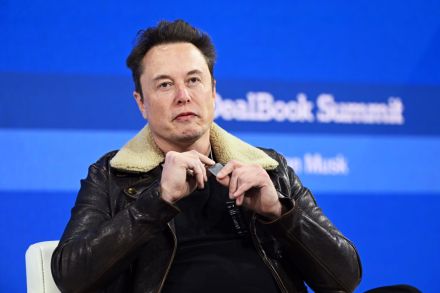
Elon Musk doesn’t know how to turn Tesla around

From our UK edition

The share price is in freefall. Sales are sliding at an accelerating rate as customers lose interest. The Chinese are moving in, and the brand is tarnished. When Elon Musk unveils the quarterly results for Tesla later today, he will need to convince his shareholders he has a plan to turn the company around. The only trouble is, right now there is not much sign Musk has a clue what to do. Musk is a brilliant entrepreneur. There is no question of that. But he has also spread himself too thinly Tesla’s results this week are expected to be its worst in years. Sales have already fallen by 8 per cent in the first three months of this year, ending a decade of rapid expansion. Profit margins are getting squeezed.
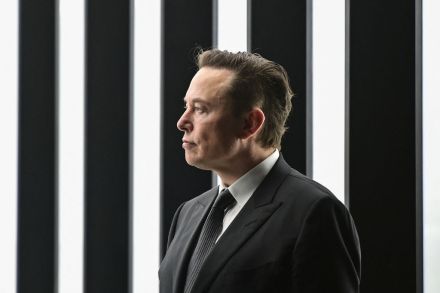

Elon Musk (Photo: Getty)

If Apple loses against China so will the West

From our UK edition

It has been a long time since the West dominated shipbuilding, or steel making. We are already aware that we are losing ground in consumer goods, as well as in finance and transport. Add it all up, and we no longer expect the US, Europe or its allies to control the global market in most major industries. Still, even as other industries lost ground there was one thing most economists and industrial experts would have felt sure we could rely on: Apple. Whatever else happened, nothing would knock its world-beating iPhone – without question the world’s most profitable product – off its well-secured perch. But hold on. Apple’s market share is now falling at an accelerating pace, and its Chinese rivals are rising fast.

The Bank of England can’t blame IT for its dodgy forecasts

From our UK edition

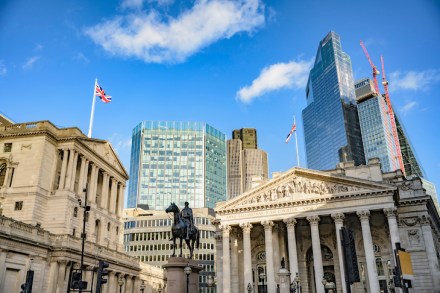
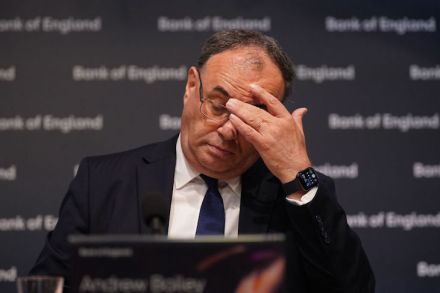
It hires the cleverest young graduates every year. It brings in talent from around the world. And it has the budget to acquire all the resources it needs. With all this at its disposal, you would think the Bank of England could at least come up with a better excuse for its dismal record on forecasting how the economy works than blaming it all on a creaking IT system. Its response to the review published today by the former Federal Reserve chairman Ben Bernanke is not going to wash – and sooner or later the Bank will need an honest reckoning with its failings over the last decade.

It’s hard to be proud of the FTSE 100

From our UK edition

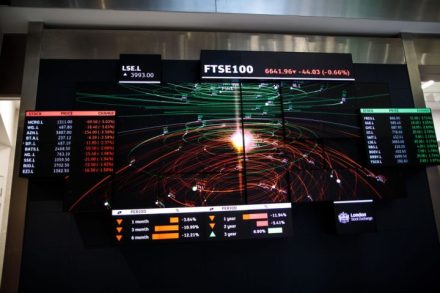
It has finally happened. In trading on Tuesday afternoon, the UK’s FTSE 100 index finally closed in on an all-time high. It hit 8,015 points, itching above the previous record closing level of 8,014 set in February 2023 – even if it was still a whisker below the intra-day trading record of 8,043, also from February last year. With stock markets rising around the world, at some point this week or perhaps next, the FTSE 100 will be setting fresh records daily. We may even be treated to one of those self-congratulatory tweets the Prime Minister, Rishi Sunak, specialises in. The trouble is, there is nothing to celebrate. In reality, the FTSE has been a dismal disappointment. Nothing will change that soon.  With inflation, record highs are inevitable.

The Swiss are cutting interest rates. Why can’t we?

From our UK edition

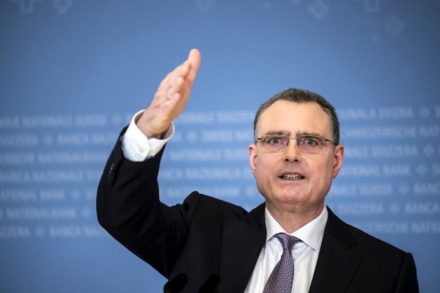
Mortgage rates will finally start to come down again. Consumers will have a little more money in their pockets. And companies will find it cheaper to invest. Today’s cut in interest rates was a much needed boost for the economy. Oh, but hold on. That was over in Switzerland, where the central bank this morning cut rates by 0.25 per cent. By contrast, the Bank of England has today kept them on hold. This raises the question of whether the Swiss or British central banks have a better record of managing monetary policy. If most people in the markets had to put money on it they would probably place a franc or two on Switzerland.  The Bank of England has blundered all over again – and the price for that will be a high one This may well prove to be just the beginning.

Rachel Reeves will regret promising growth

From our UK edition

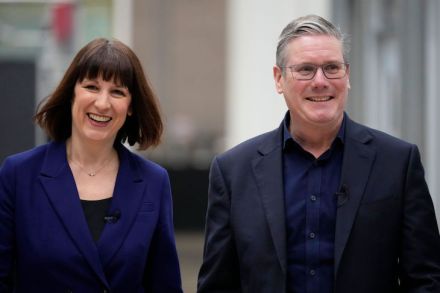
Growth will be turbo-charged, animal spirits will be unleashed, and foreign investment will flood back into Britain. Shadow chancellor Rachel Reeves is promising a Thatcher-style revival of the British economy if Labour wins power. But there's a problem with the pitch that she will deliver in her keynote Mais lecture on the economy today: a Labour government isn't going to deliver this promised growth. Reeves is setting herself up for failure.  Labour's proposals are painfully thin With at most only a few months left before she takes charge of the Treasury, as she inevitably will, Reeves is making it clear that she expects the UK to return to the 2.5 per cent annual rate of expansion that were normal in the 1980s and 1990s.

Cutting National Insurance won’t save the Tories

From our UK edition

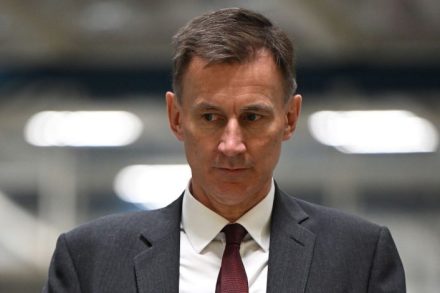
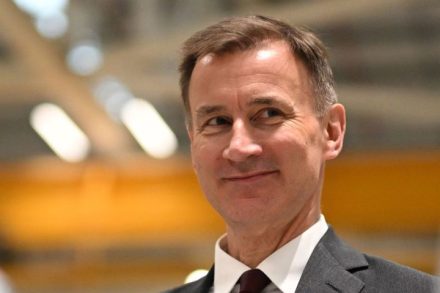
It will put more money in people’s pockets. It will improve the incentives to work. And it will put down a marker that the party does still believe taxes can occasionally be cut. The Chancellor Jeremy Hunt is not the world’s finest speech-maker, but he will probably attempt a few rhetorical flourishes when he cuts 2 per cent off the rate of National Insurance in his Budget later today. The trouble is, it is going to prove a damp squib, and not least because it has been widely trailed in advance. In reality, a modest reduction in National Insurance is not going to save the Conservative party from defeat at the looming election. It is too late for that now.

Nissan is setting an alarming trend with their electric cars

From our UK edition

At a certain point, your smartphone may no longer accept the latest software update from Apple or Google. Your laptop could get so cranky after four or five years that it is easier to replace it with a new one than spend hours staring at the blue screen of death. Even your toaster or your iron is not going to run forever. We are all used to the idea of built-in-obsolescence. Even so, the news that it can now extend to our cars, with Nissan switching off software for older models, is alarming – and will make selling more battery-powered vehicles even harder. There won’t be any vintage market in old electric cars because the software has been turned off The Nissan Leaf was one of the pioneers of electric vehicles (EV) in the UK, selling thousands to early adopters.

Apple is right to steer clear of the electric car market

From our UK edition

Apple's much-hyped electric car appears to have been killed off before it ever hit the road. For years, the tech firm's plan to branch out into developing an electric, semi-autonomous car have been the subject of much excitement. Codenamed Project Titan, fans speculated that Apple would turn its magic to designing a car that would revolutionise driving. The template of a square box with four wheels underneath that has dominated auto design for more than a hundred years would become a thing of the past. Over the last decade, as rumours emerged about the project – which was never officially announced – Apple nerds, who admittedly have a tendency to be somewhat obsessive, have been busy speculating on what an 'iCar' might look like.

Javier Milei’s Argentine revolution seems to be working

From our UK edition

The currency would collapse. Output would go into freefall. Unemployment would soar, and the IMF would be back in charge quicker than you could say ‘chainsaw’. When Argentina voted into power its libertarian new president Javier Milei there were predictions that his radical free market reforms would quickly plunge the country into chaos. But hold on. In fact, it is not quite going according to the script – instead there are signs that Milei’s harsh medicine might be working.  The Hayek-quoting Milei represents a decisive break from a century of big-state Argentinian politics that turned what used to be one of the world’s richest countries into a synonym for chaos and mismanagement.

The valuable lesson learnt from Japan’s stock market recovery

From our UK edition

A lot has happened over the past 34 years: the Cold War ended, several wars have taken place in the Middle East, a banking collapse occurred, and a global pandemic left millions stuck inside their homes. But one thing remained constant throughout: the bear market – a price drop of 20 per cent or more from the most recent high – in Japanese equities ground on and on relentlessly. After hitting an all time high of 39,915 points on 29 December 1989, the Nikkei 225 which covers the country’s major companies slumped and slumped again. Today, it finally recovered all those losses, setting a fresh all time high. There is a lesson in that for investors everywhere. All bear markets end eventually, even Japan’s.

London has France to thank for its Brexit win

From our UK edition

The City of London would be hollowed out. Bankers would have to retrain as burger chefs. And Paris and Frankfurt would emerge as the twin centres of the European financial markets, leaving London as little more than a backwater. Of all the predictions made by some Remainers during Brexit, there was one that kept re-emerging: that financial trading would inevitably move to the other side of the Channel.  It's clear that this doom mongering was overblown. A deal has finally been struck between EU chiefs and the bloc’s member states that will keep the City of London in business for several years to come.

Does the EU’s tech ‘enforcer’ know what he’s talking about?

From our UK edition

Thierry Breton is, on the face of it, well qualified to regulate Europe's tech industry. After a brief spell as French finance minister, from 2009 to 2019 he ran the computing giant Atos, one of the champions of France's IT industry. Yet Atos is now in deep trouble. Shares have plunged more than 90 per cent in the past five years; an issue of new shares to raise fresh capital has been cancelled. Whether the company will survive without a bailout is far from clear. It is, of course, a while since Breton left Atos for Brussels, where he works as the European Union’s internal market commissioner. A lot may well have changed since Breton's departure. Yet it is hard to shake the feeling that Atos's woes go further back than the last few months.

Jeremy Hunt should ignore the IMF’s tax cut warning

From our UK edition

Government borrowing is lower than had been forecast. The economy needs some form of a boost. And perhaps most of all there is an election within a few months. There are plenty of reasons why Chancellor Jeremy Hunt might want to cut taxes slightly in his spring Budget, and perhaps even once more by the autumn. But hold on. The International Monetary Fund (IMF) has just said it would be ‘fiscally irresponsible’. Well, perhaps. And yet, the IMF’s record on forecasting is very poor, and it is also very committed to a high-tax, big-state economic model. On that basis, Hunt should just ignore it, and cut taxes anyway.

Christine Lagarde is failing again

From our UK edition

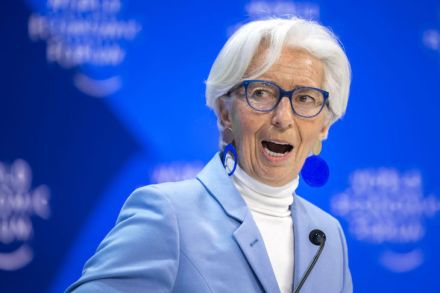
Christine Lagarde, the president of the European Central Bank, has one of the most glittering CVs in European politics. The ex finance minister of France, and former managing director of the International Monetary Fund, earns £365,000 a year for running the show at the ECB. But is she any good? An internal poll of staff at the Bank, leaked to the press, suggests not. It found that more than half of employees rated her leadership of the organisation as either ‘poor’ or ‘very poor’. Her own people reckoned she put self-promotion ahead of the institution (‘Quelle surprise’ as they would say in her native country), pushed an irrelevant political agenda, and had little knowledge of the markets or the economy. 'Lagarde is generally reported as being an autocratic leader.

What’s wrong with trillionaires?

From our UK edition

Why is Oxfam so concerned about the coming possibility of the world’s first trillionaire? The charity has this week released a report with an apocalyptic warning that one is likely within the next decade. Yet surely people only get that rich by making something that people want. That should be celebrated instead of condemned.  In a report published for the start of Davos, the annual event where very rich people gather at an expensive resort in Switzerland to worry about being rich, Oxfam said the world’s first trillionaire could come soon. Apparently, that showed we are entering a ‘decade of division’. ‘We have the top five billionaires, they have doubled their wealth’, said Oxfam’s executive director Amitabh Behar.

The EU is paying a high price for its Brexit pettiness

From our UK edition

It has formidable negotiating skills, at least according to its cheerleaders. It has huge economic clout. And it can impose its will on companies and rival governments. Given that we have heard so much over the last few years about the immense influence of the European Union you might have thought that a small matter like renting out an office block in London would be simple. But hold on. It turns out the EU will be stuck with a bill for hundreds of millions of euros for the buildings it abandoned in the UK – and its own pettiness is entirely to blame.

Bitcoin’s bounce back has proved its critics wrong again

From our UK edition

The charlatans had been exposed. Its flimsiness had been confirmed. And the bubble had finally burst. Rewind to just over a year ago, and with the collapse of the crypto exchange FTX and the arrest of its billionaire founder Sam Bankman-Fried it seemed as if the legions of skeptics of the digital currency Bitcoin had been proved completely right. But hold on. Over the last few months, its price has soared again. In reality, Bitcoin has made fools of its critics once again.  In the wake of the FTX scandal, Bitcoin, along with its digital imitators, seem headed for history’s dustbin. After all, the collapse seemed to confirm all the accusations levelled against it. It was over-hyped, fraudulent, and unreliable.

Does falling inflation show that interest rates are too high?

From our UK edition

Well that was a surprise. At just 3.9 per cent, down from 4.7 per cent, the latest inflation figure published today came as a shock for many. The figures are far lower than the consensus forecasts, and even low enough to allow the Prime Minister Rishi Sunak to meet his forecast to halve the rate by the end of the year. But should we really be surprised that inflation has fallen so rapidly? Monetarists – who noticed that the money supply has been contracting since the start of the year – won't be taken aback by the inflation figures. They said all along that the flow of money is the key to inflation – and they've been proven right.

Will Javier Milei’s ‘shock therapy’ work?

From our UK edition

The Argentinian peso has been devalued by 50 per cent overnight. Controls on exports have been scrapped, and the country's ministry of culture is to be closed down. The health, labour, social development and education departments are also facing the chop. Argentina’s president Javier Milei – who vowed to deliver economic 'shock treatment' in his first speech on Sunday after formally taking office – has started a radical overhaul of the economy and begun what is by far the most interesting experiment in economics in the world right now.  True, Milei may not have gone as far as some people might have expected. The plan to replace the peso completely with the American dollar has been shelved for now.