Matthew Fraser

Matthew Fraser is a professor at the American University of Paris. He is the author of six books.

Paris’s Left Bank is dying

From our UK edition

In the heart of Paris’s Left Bank, the Café de Cluny has witnessed many tumultuous events in modern French history. During the liberation of Paris in 1944, it was surrounded by barricades. In May 1968, the café’s terrace was on the front lines of the student riots that nearly toppled the French government.  Today, the old café is closed and boarded up. For the past three years the corner location on Boulevard Saint-Michel has resembled a desolate urban ruin in a Latin Quarter once famous for its vibrant bohemian culture. The prime Rive Gauche address may finally have a new tenant, though not everyone is happy. The location may soon sport the bright red storefront logo of the fast-food chain Five Guys.

What will become of Paris’s ugliest building?

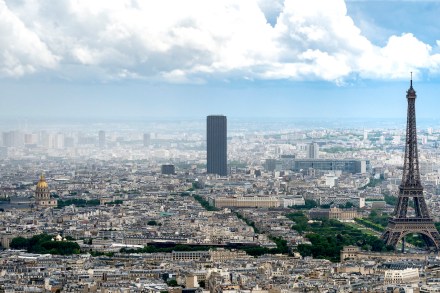
Parisians were recently treated to the impromptu spectacle of a shirtless 26-year-old man scaling bare-handed the 59-storey Montparnasse office tower. For many in the French capital, news reports of the vertiginous feat were another reminder – if they needed one – of how much they loathed the chocolate-brown skyscraper looming incongruously over the burnished boulevards of the Left Bank. The spiderman exploit was not witnessed by anyone inside the 210-metre skyscraper. The Montparnasse tower was empty. The city’s most unloved building has been vacant since March. More than a half-century after its inauguration, it’s awaiting a long-overdue facelift. The wait may be long. The Montparnasse is despised by Parisians as an eyesore, but it has also failed functionally.

The glorious revival of Paris’s English bookshop

From our UK edition

Stepping into Smith & Son bookshop across from the Tuileries, my first instinct is to look for signs of change. A regular customer for decades, this is my first time here since its rebranding. The ground floor storeroom is brightly lit and pleasantly appointed. On the front-of-store table display, I recognise several titles, including Deborah Levy’s My Year in Paris with Gertrude Stein, John of John by Douglas Stuart, and Jennette McCurdy’s Half His Age. Immediately to the left, a cozy nook decorated with William Morris wallpaper is furnished with a soft purple sofa for customers to sit down with a book. Queen Elizabeth II looks down regally from an official portrait on the wall.

What happened to Provence?

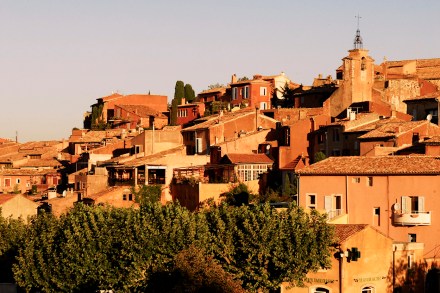
The best time to visit Provence, I always advise when asked, is in the spring before the scorching heat and summer crowds. I have been spending time in the south of France since the early 1990s. Provence was fashionable in those days. Peter Mayle’s massively successful book, A Year in Provence, inspired thousands to pull up stakes and move to southern France to emulate his idyllic life in the Luberon hills. Some settled farther west in the Dordogne, famously called ‘Dordogneshire’ for its concentration of British expats. Mayle became a one-man publishing industry, following up with sequels including Toujours Provence and Encore Provence.

The intertwined lives and deaths of Jean Genet and Simone de Beauvoir

From our UK edition

A strange literary coincidence occurred in Paris exactly 40 years ago, on 14 April, 1986.  In the small hours of the morning, Jean Genet, enfant terrible of French literature, tripped on a step leading to the toilet in his tiny Left Bank hotel room. He fell forward and fatally smashed his head on the tile floor. Several hours later, feminist icon Simone de Beauvoir expired in a Paris hospital only a few blocks away. Two French literary legends were dead. They had died within hours of each other in the same district of Paris.  Jean Genet and Simone de Beauvoir were bonded by more than the dramatic unity of their final act. They had been close friends for more than four decades. Their connection was Jean-Paul Sartre.