Young Hamlet
Hamnet by Maggie O’Farrell reviewed
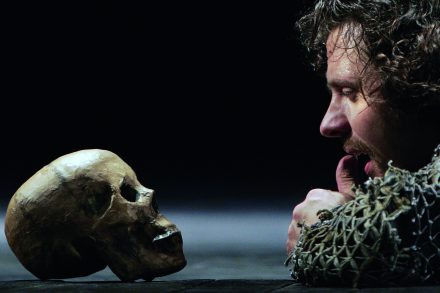
Hamnet by Maggie O’Farrell reviewed
From our UK edition
Matthew Kneale is much drawn to people of the past. In his award-winning English Passengers, he captured the sensibilities of a group of 19th-century seafarers bound for Tasmania in search of the Garden of Eden by chronicling their voyage in 21 singular, vibrant voices, and by weaving into their journey a heavy thread of racist
From our UK edition
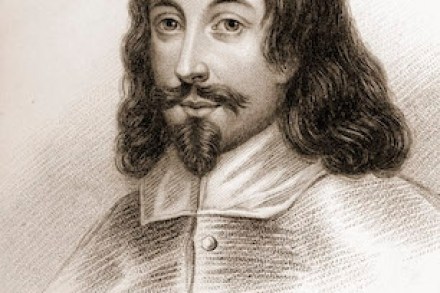
On the evening of 10 March 1804, Samuel Taylor Coleridge settled at a desk in an effort to articulate what he found so appealing about the 17th-century English polymath Sir Thomas Browne, the man he numbered among his ‘first favourites’ of English prose. He mentions Browne’s formal qualities, of course: he is ‘great and magnificent
From our UK edition
It is winter in north Yorkshire. On the brink of New Year, Jake, a laconic, isolated former farmhand in his seventies, stands alone on the moors with no idea where to go or what to do. Traumatised by the death of his wife and consumed by thoughts of a child he knows cannot be his,
From our UK edition
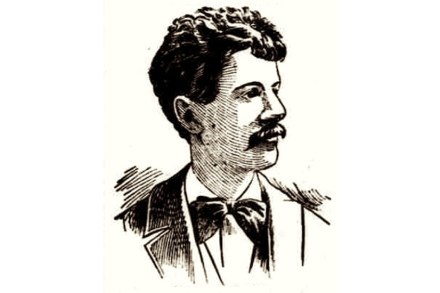
In 1886 the British mathematician and schoolmaster Charles Howard Hinton presented himself to the police at Bow Street, London to confess to bigamy. A theorist of the fourth dimension, he had looked destined to forge a career that would align him with the most renowned academic figures of the age. Now, with a conviction, a
From our UK edition
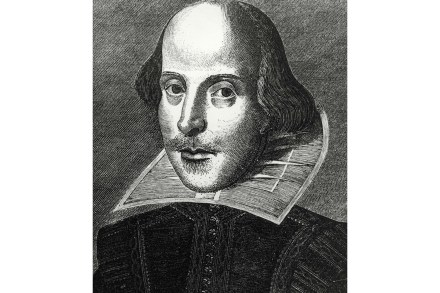
Maggie O’Farrell is much possessed by death. Her first novel, After You’d Gone (2000), chronicled the inner life of a young woman who finds herself comatose following a near-fatal car accident. And a recent piece of non-fiction, I Am, I Am, I Am (2017), gave an account of O’Farrell’s own numerous brushes with mortality. Her
From our UK edition
Meet Deen Datta, a nervous, practical and cautious man, born and brought up in Calcutta, who now lives in Brooklyn, where he works as a dealer in rare books. Recently and unceremoniously ditched by a woman with whom he had been in a once promising relationship, and with his sixties ‘looming in the not-too-distant-future’, he

From our UK edition
Martin Amis once said that the writer’s life is half ambition and half anxiety. While one part of your brain is jabbering away to the effect that, with proper application, you might be the next Jane Austen, George Eliot, Virginia Woolf, a larger part — almost always more tenacious and assertive — is busy insisting

From our UK edition
James Lasdun’s latest novel, billed as a psychological thriller, opens in Brooklyn in the summer of 2012. Charlie and his cousin Matthew are about to leave New York to spend the season in Charlie’s mountain-top residence in the Catskills, where they are to unite with Charlie’s wife, Chloe. The relationship between Charlie and Matthew is
From our UK edition
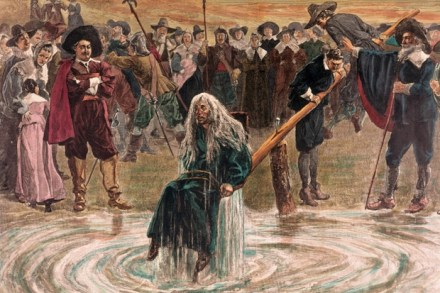
Richard Francis’s new novel covers ostensibly familiar ground. Set in and around Boston in the 1690s, it tells the story of the Salem trials, which resulted in the execution of 20 people (14 of them women), and which are sometimes regarded as a hinge event in the evolution of American secularism. As the historian George
From our UK edition
Mark Lawson’s latest novel, set in Britain in the recent past, presents us with a nation in the grip of ‘moral fever’. Here, the ‘giving offence to anyone at all over anything’ is considered ‘a capital crime’; the ‘post-Savile sexual witch hunt’ has trained people to ‘reinterpret heartbreak as violation’; and retribution comes not just
From our UK edition
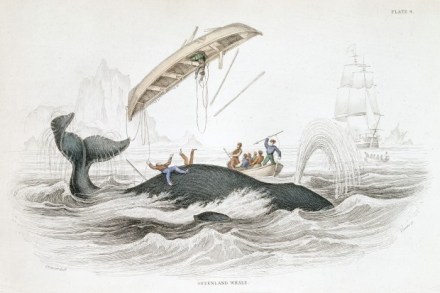
Ian McGuire’s second novel is an exercise in extremes: extremes of suffering, violence, environment, language and character. It tells the story of Henry Drax and Patrick Sumner, who we first encounter on the streets of Hull in March 1859. The two men have joined the crew of a whaling vessel, the Volunteer, about to set
From our UK edition
When Philip Larkin went up to St John’s College, Oxford, in the early 1940s, he found himself in a world of deprivation and departures. The arrival of war had ruined any hope he might have had of living the sybaritic student life mythologised by Evelyn Waugh; the majority of the younger dons had departed to
From our UK edition
A few weeks ago, I was wandering with a friend around West London when our conversation turned to the reliable and inexhaustible topic of Morrissey. We were discussing his gestures, in particular when he augments the percussive spondee that opens ‘Sheila Take a Bow’ with two magnificent jabs of his right elbow. So back we

From our UK edition
A few months before he passed away, responding to a question about his doubts and beliefs, Jorge Luis Borges offered a rapt and potted account of the many cultural and religious registers in which human beings have for centuries been telling themselves stories about their own deaths. He then posed the following question: ‘Where does
From our UK edition
When Vladimir Nabokov’s unfinished book (not quite a novel, not quite a novella) The Original of Laura was posthumously released in 2009, consternation over whether it was right to publish the work at all — Nabokov had instructed that it be destroyed after his death — swiftly gave way to consternation over what the work
From our UK edition
I met up with Christopher Hitchens in the smaller hours of a warm morning in May, at Heathrow airport. (This was Christopher’s idea. ‘See you at Heathrow,’ he had told me.) From Heathrow we were to drive together to Bath, where he had a speaking engagement that evening to promote his new (and great) memoir,