Don’t blame the pandemic on deforestation
From our US edition
Dismantling the environmental theory for Covid’s origins
Matt Ridley is the author of How Innovation Works: And Why It Flourishes in Freedom (2020), and co-author of Viral: The Search for the Origin of Covid-19 (2021)
From our US edition
Dismantling the environmental theory for Covid’s origins
Two years in, there is no doubt the Covid pandemic began in the Chinese city of Wuhan. But there is also little doubt that the bat carrying the progenitor of the virus lived somewhere else. Central to the mystery of Covid’s origin is how a virus normally found in horseshoe bats in caves in the
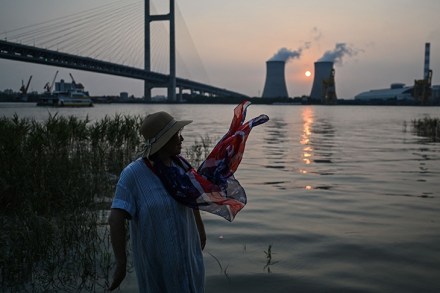
China’s President Xi Jinping has apparently not yet decided whether to travel to Glasgow next month for the big climate conference known as COP26. That is no doubt partly because he’s heard about the weather in Glasgow in November, and partly because he knows the whole thing will be a waste of his time. After
With a laboratory leak in Wuhan looking more and more likely as the source of the pandemic, the Chinese authorities are not the only ones dismayed. Western environmentalists had been hoping to turn the pandemic into a fable about humankind’s brutal rape of Gaia. Even if ‘wet’ wildlife markets and smuggled pangolins were exonerated in
Sir Jeremy Farrar, the head of the Wellcome Trust, writes that ‘the last year has been an eye-opener for me. I thought, probably like most people, that the world works through official or formal channels, but much of it operates through private phone calls or messaging apps’. Hence his book, written with the journalist Anjana
It is mystifying to me that organic food is still widely seen as healthier, more sustainable and, most absurdly, safer than non-organic food. Following the publication of part two of Henry Dimbleby’s National Food Strategy last week, the organic movement was quick to suggest that organic food and farming offer a way to achieve the
38 min listen
We’re still none the wiser about the origins of coronavirus, but has the lab leak theory just got more credible (00:55) Also on the podcast: are English tourists welcome in Scotland (15:25)? And is being rude the secret to success? With author Matt Ridley, virologist Dr Dennis Carroll, deputy political editor Katy Balls, hotelier Gordon
In March last year, it was widely agreed by everybody sensible, me included, that talk of the pandemic originating in a laboratory was pseudoscientific nonsense almost on a par with UFOs and the Loch Ness monster. My own reasoning was that Mother Nature is a better genetic engineer than we will ever be, so something
From our US edition
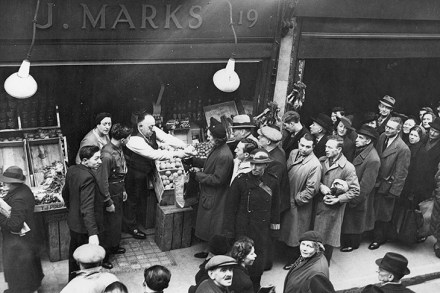
In search of wisdom about how an officious government reluctantly relaxes its grip after an emergency, I stumbled on a 1948 newsreel clip of Harold Wilson when he was president of the Board of Trade. It’s a glimpse of long-forgotten and brain-boggling complexity in the rationing system. ‘We have taken some clothing off the ration
24 min listen
On this week’s episode, Emma Thompson explains why Church of England cuts could lead to the devastation of the parish network. (00:55) Then, Matt Ridley explains why lockdown could have led to more deadly coronavirus variants. (10:15) And finally, Toby Young asks why he hasn’t got a peerage. (18:10)
In the genetic diaspora of an epidemic, there is ferocious competition between strains of virus to get to the next victim first. That leads to apparently purposeful outcomes, as if the virus had a mind. One of the things people find hardest to grasp about evolution is that it appears purposeful but the mutations on
35 min listen
For the Christmas triple issue, there are four authors in this week’s Spectator Out Loud. Fraser Nelson reads the leading article in our Christmas edition; Matt Ridley talks about how mRNA vaccines could revolutionise medicine; Ian Rankin reads his short story; and Cressida Bonas reflects on what it was like to have a lockdown wedding.
49 min listen
How will the UK’s economy recover from Covid-19, and what has the pandemic revealed about the West? (01:20) Was 2020 the year we dealt a mortal blow to future viruses? (15:05) And finally, what makes Mary Gaitskill a brilliant writer, and why does Elif Shafak work to heavy metal music? (29:25) With The Spectator‘s political
Almost 60 years ago, in February 1961, two teams of scientists stumbled on a discovery at the same time. Sydney Brenner in Cambridge and Jim Watson at Harvard independently spotted that genes send short-lived RNA copies of themselves to little machines called ribosomes where they are translated into proteins. ‘Sydney got most of the credit,
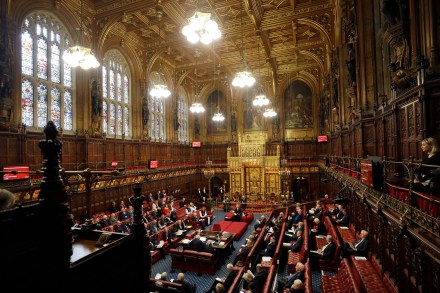
‘I don’t think that word means what you think it means,’ says the Spaniard Inigo Montoya in the film The Princess Bride, when Vizzini keeps saying it is ‘inconceivable’ that the Dread Pirate Roberts is still on their tail. I muttered those words to myself during a parliamentary debate just before the start of the
Ever since Giacomo Pylarini, a physician working in the Ottoman Empire, sent a report to the Royal Society in 1701 that Turkish women believed pus from a smallpox survivor could induce immunity in a healthy person – and was dismissed as a dangerous quack – inoculation has been as much an art as a science.
It is counterintuitive but the current spread of Covid may on balance be the least worst thing that could happen now. In the absence of a vaccine, and with no real prospect of eradicating the disease, the virus spreading among younger people, mostly without hitting the vulnerable, is creating immunity that will eventually slow the
24 min listen
In the last episode of this miniseries on climate change, Bjorn Lomborg argues that climate change is important, but solving it shouldn’t come above all else. So what are the trade offs involved with a green agenda, especially when it comes to lifting the poorest in the world out of poverty? Kate Andrews discusses with
20 min listen
Can human innovation stop climate change, or will it simply manage and delay the challenges it poses? In the second of this mini podcast series featuring Bjorn Lomborg and Matt Ridley, host Kate Andrews discusses with Bjorn and Matt whether their optimism is misplaced.
23 min listen
Can the conversation around climate change all too often get heated, hysterical, and panicked? Should we be appealing for more calm in the climate debate? In the first of this mini podcast series featuring Bjorn Lomborg and Matt Ridley, host Kate Andrews challenges Bjorn and Matt on their views over the best way to conduct