Mathew Lyons

The pedants’ revolt

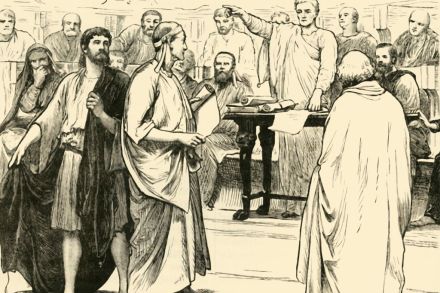
The scene is the imperial palace on the Palatine Hill in Rome in the 2nd century. The philosopher Favorinus is waiting to greet the emperor Hadrian when a grammarian corners him and launches into a lecture on the grammatical qualities of the word penus, meaning “provision.” “Well and good, master, whatever your name is,” Favorinus
Intellectuals pedants

How Hans Holbein brought portraiture to England

From our UK edition

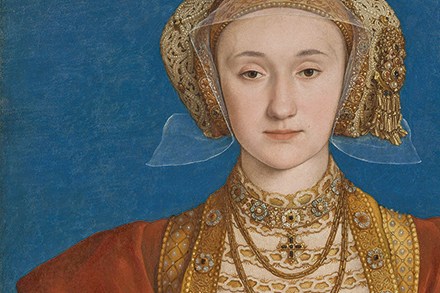
On the evening of 6 May 1527, Henry VIII entertained an embassy from France at a lavish party in Greenwich. The festivities took place in a banqueting house and a theatre, both built for the occasion. At the feast’s end, Henry led his guests out through a great archway. After a moment, he invited the

End of the rainbow, rising illiteracy & swimming pool etiquette

From our UK edition

50 min listen

End of the rainbow: Pride’s fall What ‘started half a century ago as an afternoon’s little march for lesbians and gay men’, argues Gareth Roberts, became ‘a jamboree not only of boring homosexuality’ but ‘anything else that its purveyors consider unconventional’. Yet now Reform-led councils are taking down Pride flags, Pride events are being cancelled

The awful calamity of Stalin being a music lover

From our UK edition

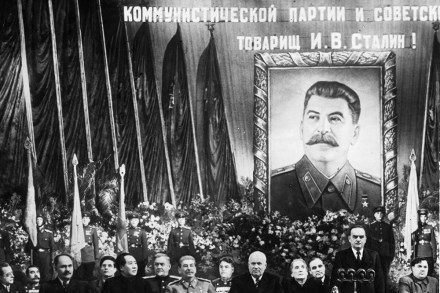
At around 9 p.m. on 5 March 1953 Sergei Prokofiev died of a brain haemorrhage on the sofa of his Moscow flat. He was 61, and had struggled for years with ill health. He had long complained of pain in his soul. Less than an hour later, the source of that pain, Joseph Stalin, died

The complexities of our colonial legacy

From our UK edition

It happened by accident. In 1829 the naturalist Nathaniel Bagshaw Ward was trying to hatch a moth pupa. He placed it in a sealed glass container, along with some soil and dried leaves, and set it aside. Sometime later he was surprised to find that a fern and some grass had taken root in the

Downhill all the way: the decline of the British Empire after 1923

From our UK edition

The British Empire, the East African Chronicle wrote in 1921, was a ‘wonderful conglomeration of races and creeds and nations’. It offered ‘the only solution to the great problem of mankind – the problem of brotherhood. If the British Empire fails, then all else fails.’ Stirring words – and not those of some sentimental Colonel

What Shakespeare meant to the Bloomsbury Group

From our UK edition

In November 1935, Virginia Woolf saw a production of Romeo and Juliet. She was not overly impressed. ‘Acting it,’ she wrote, ‘they spoil the poetry.’ Harsh words, you might think, for a cast that included John Gielgud, Laurence Olivier, Peggy Ashcroft, Edith Evans and Alec Guinness. But Shakespeare on the stage was something of a

An obituarist’s search for the soul

From our UK edition

‘“Deep breath”, says the doctor. I take one and hold it.’ Thus begins the fourth chapter of Ann Wroe’s Lifescapes. It is apt because, although the book is part memoir, part essay on the art of biography, it is really about the breath of life itself. Wroe’s writing is intense and visionary, at times almost

Is human migration really a normal activity?

From our UK edition

Halfway up the high street in Totnes, a small town on the river Dart in Devon, a modest stone is set into the edge of the road. It claims to mark the point at which Brutus, legendary founder of Britain, first set foot on this island. The grandson of the equally legendary Trojan hero Aeneas,

The squeeze: how long will the pain last?

From our UK edition

40 min listen

This week: How long will the pain last? The Spectator’s economics editor Kate Andrews asks this in her cover piece this week, reflecting on Rishi Sunak and Jeremy Hunt’s autumn statement. She joins the podcast with Professor David Miles, economy expert at the Office for Budget Responsibility, to discuss the new age of austerity (00:58). Also

The bleak brilliance of Peanuts

From our UK edition

The numbers are extraordinary. Charles M. Schulz, whose centenary falls next week, spent nearly 50 years of his life producing daily comic strips for Peanuts. Between 2 October 1950 and his death in February 2000, he drew a staggering 17,897 of them. He retired in December 1999 after a series of strokes and a cancer

Why Twitter was right to mock Craig Raine’s poem

From our UK edition

Yesterday was a strange day on Twitter. For most of it, a living poet was trending. Unfortunately for Craig Raine, the poet in question, he was trending because a poem of his entitled ‘Gatwick’ had appeared in the LRB and Twitter didn’t like it. Most comments ranged from amused contempt to, well, just plain old