Mary Wakefield

Mary Wakefield

Mary Wakefield is commissioning editor of The Spectator.

Adventures in La-la land

From our UK edition

As the Coalition forces prepare to pull out, other Brits commit to real ‘nation-building’ — educating the next generation. Mary Wakefield reports from rural Afghanistan Snow melts in the Hindu Kush, trickles through the foothills, sluices across flood plains scattered with pink anemones then runs noisily through Worsaj district down to the village of Qanduz, where it is drowned out by the sound of children shouting, ‘I love you!’ They’re either side of a dirt track, the children, throwing glitter, clapping, waving plastic flowers. In front of me, Sarah Fane, the object of their devotion, shakes hands and accepts so many garlands that soon only her eyes are showing above the frills.

A woman of substance

From our UK edition

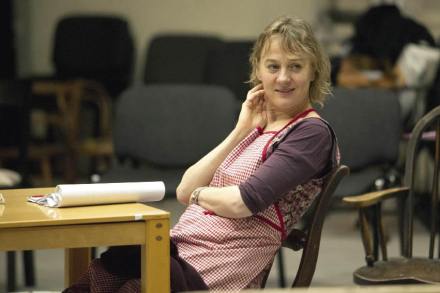
Felicity Kendal tells a surprised Mary Wakefield of her admiration for Mrs Warren From the moment Mrs Warren bustles in halfway through Act I of Mrs Warren’s Profession, she’s clearly an excellent sort. ‘A genial and presentable old blackguard of a woman,’ says George Bernard Shaw fondly of his heroine. And she is a heroine, though she’s also a brothel-keeper as compromised as St Joan is righteous. I’ve only read the play, not seen it, but I’m also very fond of Mrs Warren, and, as I walk to the Comedy Theatre to meet Felicity Kendal, I begin to worry. Kendal playing Mrs Warren in the West End? The more I think about it, the less suitable it seems. Surely Felicity is winsome and twee; Mrs W is a business-like old pimp. How can that work?

Keeper of the treasure

From our UK edition

It’s lovely here in the Art Fund director’s office, both elegant and cosy. Windows sweep from floor to ceiling, an Iznik bowl on a low table reflects the glow from a gas fire. But, even so, Stephen Deuchar doesn’t seem quite settled. It’s the way he moves warily across the room; turns to stare at his computer when it makes a noise. Do you feel at home here yet? I ask. ‘No, not yet. But, actually, being uncomfortable isn’t a bad thing.’ Deuchar sits down on a sofa opposite me and grins. ‘I know from having spent 11 years in my last job [he was founding director of Tate Britain] that it’s much easier to see things clearly when you’re uncomfortable and new.’ So what does Dr Deuchar see? Well, the Art Fund is a curious place.

Whipping up a storm

From our UK edition

Mary Wakefield talks to Angus Jackson about directing David Hare’s latest play If I’m never quite content with a glass of water in an interview again, it’s Angus Jackson’s fault. There we were in a soundproofed meeting room on Friday evening, the National Theatre a whirl around us: jazz in the foyer, gossip in the restaurant, Bertolt Brecht in the Olivier. Jackson and I in our box of calm, a black-and-white still of John Gielgud and Ralph Richardson for company. PR enters stage right: ‘Anything to drink?’ I think: if I’m lucky, there might be tea. Jackson says, ‘A large glass of white? Perhaps...’ — he cocks his head — ‘a Sancerre?

The space age isn’t over. It hasn’t yet begun

From our UK edition

The evening is laid out above the houses, behind Mr X’s head. Pinkish clouds collide then slide apart, exposing jigsaw shapes of darkening sky. A thumb smudge of moon appears over Westminster as Mr X gets to the point: ‘A new space age is about to begin,’ he says. ‘The question is not “will it happen?” — it will. The question is whether we want to be part of it.’ The light fades. The shadows on Mr X’s face deepen and his mood swings between elation and resignation. Mr X is a brilliant rocket scientist, excited about the dawning of a new era. But he also knows that there’s only a brief window of opportunity for us to get involved. ‘It’ll soon be too late,’ he says sadly. But we all love the moon landings, I say.

The serious business of theatre

From our UK edition

Even at 78 and from a distance, Sir Peter Hall has the look of an alpha male. There he is about 100 or so feet away, advancing towards me across the polished boards of his rehearsal room; head forward, bear-like, with the lonely charisma of a boxing champ. As he passes, the younger members of the Peter Hall Company fall back smiling, deferring. He’s king here, a Lear (act one). He pauses to pat a gamine young beauty on the arm, stroke his beard, pull his plump lips into a roguish grin — then moves on to the table where his lunch and I are waiting. One small sandwich, one large pile of lettuce. The great director sits, examines first me, then his lunch, then gives both of us a look of terrible, bored disappointment. Sir Peter Hall is a great connoisseur of life, a sensualist.

‘Let’s melt down the railings to make bicycles’

From our UK edition

I met Boris Johnson in his office in City Hall overlooking the Thames and Tower Bridge. Our former editor seemed a more thoughtful and sensible character than the man who used to practise cycling with no hands down Doughty Street at lunchtime, but there were signs of the old Boris tucked around his mayoral office: ping pong bats (the Mayor likes to unwind by trying and failing to beat his personal assistant, Ann Sindall); a book of love poems by the late Woodrow Wyatt; a bust of Pericles in the corner, looking out over this 21st-century Athens. Do you identify with Pericles?


 It would be absurd to say that I identify with Pericles.

Meet Gordon’s Pet Shop persecutors

From our UK edition

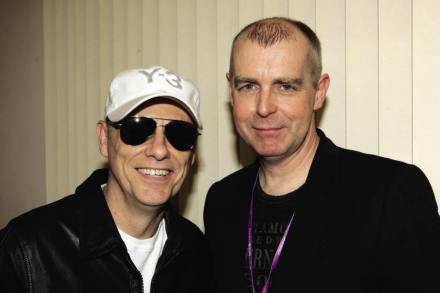
Mary Wakefield meets the successful pop duo the Pet Shop Boys, and finds them eloquent critics of New Labour, staunch defenders of civil liberties — and fans of Vince Cable Through the woods, the trees And further on the sea We lived in the shadow of the war Sand in the sandwiches Wasps in the tea It was a free country In a West End town in a dead end world — OK, no: in a nice Georgian townhouse in central London, on the top floor where once boot boys bedded down, the Pet Shop Boys are revisiting their past. ‘The Britain of my childhood?’ Neil Tennant, the singing half of the most successful pop duo of all time reclines on a chaise longue and thinks his way back to North Shields (near Newcastle) in the late Fifties.

The decision to let abortion clinics advertise on TV is wrong on every level

From our UK edition

The news that abortion clinics are to be allowed, for the first time, to advertise on TV and radio strikes me as utterly grim: a bad idea and a deeply sad one to boot. The Broadcast Committee of Advertising Practise say they're responding to Government calls to combat rising teenage pregnancy but if so they're going about it exactly the wrong way. To start with it'll be counterproductive. To advertise abortion is to suggest that it is a legitimate form of birth control—and the simpler and more painless the ad makes it look the more it'll encourage young girls not to take sex seriously; or to worry about protection. So abortion ads may well increase the number of pregnant teens.

‘Those who’ve suffered least compromise least’

From our UK edition

Mary Wakefield takes a postwar tour through Gaza and surveys a psychological landscape warped by conflict and suffering — and hear whispers of a further Israeli incursion The border control at Erez, separating Israel from Gaza, was built in a happier age. It looks more like an airport than a checkpoint, a vast glass hangar designed with streams of Palestinian commuters in mind. Only a handful have made it through in the two years since Hamas took over. Now, two months after Israel’s 22-day war (Operation Cast Lead), there’s barely a soul in sight. One vicar outside, perspiring in the car park; one girl soldier inside checking passports. After that, just an eerie unmanned security process. Wait. Proceed to a steel holding pen. Wait.

‘The family didn’t approve of acting’

From our UK edition

Mary Wakefield meets Niamh Cusack and finds an actress full of contradictions It’s oddly exciting, upstairs at the Old Vic: there are actresses rushing to rehearsal; the burble of PR ladies schmoozing the press; the sense of a curtain about to rise. A bright new play. I smile, look around hopefully for my interviewee-to-be, the actress Niamh Cusack, but instead a handsome bearded chap appears in front of me. ‘Oh, hi there, I’m Finbar Lynch [Niamh’s husband and co-star in Dancing at Lughnasa]. I’ll come back and take proper care of you in a second.’ What’s he talking about? Take care of me, how? I have no idea. I later find out that he thought I was an understudy, but though confused I feel also warm and included — a co-dancer at Lughnasa.

‘I decided to give it a go’

From our UK edition

It’s a little awkward, standing nose to nose with strangers. Here, inside a lift the size of a train loo, are two young actresses, a PR man, one actor on the brink of proper stardom (Rory Kinnear) and me, all inching down through the body of the bustling, gossipy National Theatre. We’ve been silent for two floors and there’s a hint of desperation in the air, so Rory, being a pro, steps into the breach. ‘Did you hear about the reading they sent me to last week?’ he asks. PR man says no. ‘I was told to bring along my favourite book to read a chapter to an audience, but when I got there all I could see were children. There was literally no one over ten. And as I waited for the kids to leave, I gradually realised that this was my audience.

Cameron needs to avoid being a one-idea pony

From our UK edition

Cameron's little talk to Demos today (to launch their Progressive Conservatism Project) was full of pleasant abstract stuff about de-centralisation as a means to fairness. But what was most interesting was how dangerous the Tory schools policy suddenly seemed. Why? Because when education came up during the Q and A (after an hour of generalised and fairly soporific Burkean rhetoric) Cameron's whole demeanor changed. He had actual, even workable, policies to communicate (courtesy of the excellent Gove) and he was suddenly charismatic, believable -- even a little Obama-ish?

Mary Poppins’s carpet bag in Deptford

From our UK edition

Alice looks down from her perch on top of the rocking horse, bright-eyed behind big specs, says: ‘Catch me!’ then propels herself into the air. I catch, hug, then prop her back up again, ready for another go. ‘Ooh, she likes you,’ says Iris, director of the 999 Club and uncrowned queen of Deptford. ‘She doesn’t normally take to people that quick.’ I am ridiculously, disproportionately happy. Alice has a squint, is five but looks three. I love her. So where’s her mum? I ask Iris. Why isn’t she here? ‘Oh, her mum!’ Iris snorts. ‘She spends all day online chatting. She ignores Alice — leaves her sitting on her own, so her gran brings her here most days.

After Baby P: the crisis in child foster care

From our UK edition

Mary Wakefield talks to a courageous woman who blew the whistle on the deep systemic failures in the foster care service — and whose only reward was to be hounded and vilified I spotted Sarah immediately, though I’d never seen her before and she was tucked in among the commuter crowds ebbing and flowing through Marylebone station. She walked differently from the rest, less preoccupied, more determined, and she carried, as she had said she would, a big black folder under her arm.

The Debbie Purdy question

From our UK edition

Should Debbie Purdy's husband be allowed to kill her? I'm keen to know what you think, because - for me - both instinct and reason say: no. Absolutely not. Debbie, who has a particularly nasty form of MS, is considering going to the Dignitas clinic in Switzerland to be killed, but wants to be sure that her husband would not be prosecuted on his return. The High Court has just refused her a guarantee and I think they're absolutely right. What does it say about the value of a human life if it's ok to kill disabled people? What about suicidal depressives who may change their minds? Are they in a fit state to decide their own futures? When people talk about a desire to die, what they're really often talking about is a desire to be free from suffering.

A pilgrim’s progress for the 21st century

From our UK edition

Because I spoke to him on the phone, not in person, you’ll have to share my mental picture of William P. Young. There he is in a hotel room in Texas: 53, balding, with bright eyes and a greying goatee. He’s ironing as he talks (he says so), his sleeves rolled up (I reckon), with a snowy pile of pressed shirts beside him. On the table beside his bed is a photo of his wife, Kim, and the six young Youngs back home in Gresham, Oregon. On the floor: piles of his extraordinary book The Shack. It’s extraordinary because of the subject matter — a man called Mack meets God in a shed — and also because of its phenomenal, inexplicable success in the face of what should have been certain book death. Though it was much loved by his friends, William P.

Miliband needs coaching

From our UK edition

When David Miliband's team get together this afternoon to talk through his performance on the Jeremy Vine show, I hope they realise they've got to do something about his voice. There's the embarrassing 'mockney' accent (not shared by brother Ed). And worse -- his recent attempt to widen his appeal and stop dropping his t's: "Grea', sorry I mean GreaT" "Vo'ers, I mean voTers". Then there's the fact that DM's attempts at a Blairish matey-ness end up sounding not just patronising, but slightly psychotic. It's as if he's convinced we're all brain-dead cretins, so he's putting on his special slow, patient voice in the hope that it helps us get the point: "If you bother to think about it, it's really quite simple, Terry.

Good news for women killers

From our UK edition

The one fact that screams out of the proposed murder law shake-up, is that it's great news for girls. Reform is overdue -- there hasn't been any change in the law for 50 years -- but the picture that emerges from all the crunchy details is especially cheering for chicks. That centuries-old defence of 'provocation' will be binned, which puts paid to the classic male excuse: "But she cheated on me!" And however sympathetic a judge, neither 'constant nagging' nor 'she flirted with other blokes' will cut any ice. There are, on the other hand, about 30 women killers every year who claim that ongoing domestic brutality drove them to it. In the past they've had no defence, but they will now be able to plead: 'fear of serious violence'. Are the changes fair? Do they discriminate against men?

Welcome to the United States of Amnesia

From our UK edition

Gore Vidal tells Mary Wakefield that America has forgotten its constitutional roots, and explains why Bobby Kennedy was ‘the biggest son of a bitch in politics’ To kill time, as I wait for Gore Vidal by the reception desk in Claridge’s, I leaf through the pages of his memoirs, looking at the photographs. One in particular takes my fancy: Gore aged three, in the garden of his grandfather’s house in Washington DC — a dapper little chap in shorts and a smart round-collared shirt, tending what seem to be cabbages. He’s glancing up at the camera half-amused, entirely self-possessed. He’s so unusually composed for a toddler, that I squint at the pic up close, peering at his eyes. ‘Are you waiting for me?