Mary Wakefield

Mary Wakefield

Mary Wakefield is commissioning editor of The Spectator.

The perfectionist builder I always wanted

From our UK edition

I have a friend who is perhaps best described by that old-fashioned phrase ‘ladies’ man’. He’s not a cad or a bounder — quite the opposite, in fact. He’d never leave a lady in the lurch, or lie to her, he simply enjoys the company of women — quite a lot of women — and they seem to enjoy him too. He knows all the hottest spots in town, and somehow all the barmen and doormen too. More important, he’s a listener, and as any girl will tell you, a man who listens is a rare and miraculous thing. But of all the cards up his sleeve, there’s one that trumps the rest: he’s friends with Artur, one of the best head builder/decorators in London, and for any home-owning thirtysomething woman, that’s catnip.

Revealed: why paramedics are fleeing the NHS

From our UK edition

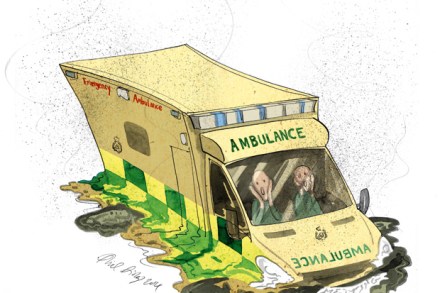
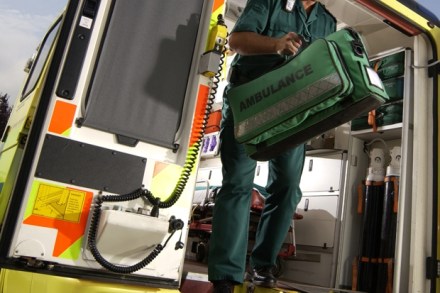
I can't blame bigwigs in the NHS for the meltdown of our 999 service. It's fundamentally our own fault that the service we depend on to save our lives is breaking down. We call 999 at the slightest sniffle, which means paramedics and ambulance drivers find it impossible to keep up. They're run ragged trying both to respond to every call and hit the government's response time targets. What I can blame the bigwigs for (by which I mean senior management in the NHS London Ambulance Services) and do in this week's Spectator cover story, is that they have responded to the crisis in a catastrophically counterproductive way, with the result that their paramedics are fleeing the service.

Revealed: The hidden crisis in Britain’s ambulance services

From our UK edition

[audioplayer src="http://traffic.libsyn.com/spectator/TheViewFrom22_28_August_2014_v4.mp3" title="Mary Wakefield and Julia Manning discuss the ambulance crisis" startat=63] Listen [/audioplayer]Last month I wrote about the weird exodus of paramedics from London’s ambulance service. Flies would blanch at the rate they’re dropping, and so I was curious — and also anxious. Everyone who lives in this heaving city relies upon 999, and 999 relies upon paramedics. The official reason, given to me by Mr Jason Killens, the tough-sounding director of operations at the London Ambulance Service (LAS), was that they’re leaving because they’re underpaid. But as I wrote back then, I wasn’t convinced.

Libya is imploding. Why doesn’t Cameron care?

From our UK edition

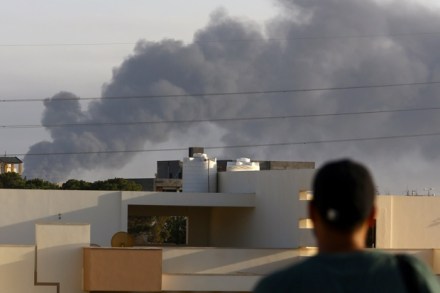
The US has said it has temporarily evacuated its staff from the Libyan capital Tripoli over security concerns. Earlier this year Mary Wakefield discussed in The Spectator how David Cameron wasn't paying due attention to the troubles in Libya: A few days ago I went to a talk about Syria; one of those events for the concerned layman, in which a panel of experts give a briefing. Everything sounded depressingly familiar until expert number three piped up: I hear people blame Saudi Arabia and Qatar for the Islamists in Syria, he said, but in fact, they more often come from Libya. The crowd shifted in discomfort. Isn’t Libya done and dusted? Oh no, said the expert, it’s full of al-Qa’eda training camps now, especially in Benghazi.

The incredible, inspiring story of the man who ran ‘the greatest race of all time’

From our UK edition

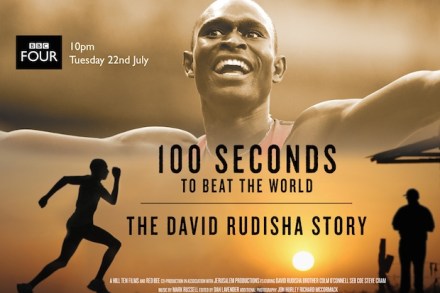
In the middle of a troubled and brawling world: some hope and inspiration. In last week's edition of The Spectator we ran a piece by Jim de Zoete about the incredible story of David Rudisha, the Masai warrior and 800 metres world champion who ran what Sebastian Coe has described as ‘the greatest race of all time’ at the London 2012 Olympics. Rudisha has spent the last few years recovering from injury, but he'll be running again in the Commonwealth games next week. Watch him then, but tonight, watch Jim de Zoete's documentary about Rudisha and his coach, an Irish missionary called Brother Colm. 10pm BBC4. It'll give you faith in the world again. 100 Seconds to Beat the World: The David Rudisha Story is on BBC Four at 10pm tonight (22 July).

The ambulance service is in a state of emergency

From our UK edition

Tom leant back against the bathroom wall, his face streaked with blood from the nosebleed, eyes half shut like an owl. ‘I’m passing out,’ he said. Then his legs gave way and he slumped to the floor. ‘Tom? Tom?’ I shook him but — nothing, no response. His hands began an awful looping tremor. Five minutes before, I hadn’t been much worried, a little bossy even, enjoying playing nursemaid to a friend. It’s only a nosebleed T. Now. Don’t tip your head back, you’ll choke. Lean forward over the sink, pinch your nose. Like this. Here. As Tom lost consciousness, so my reality changed. This was a different world — one in which T might be having a fit, or dying. My thoughts moved at different speeds.

A pundit for a PM

From our UK edition

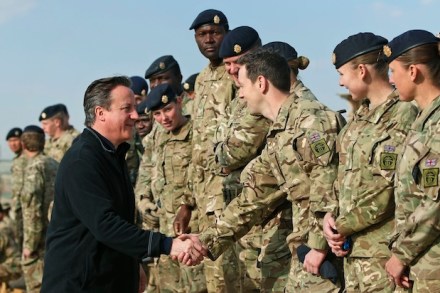
A new Coffee House competition: who can identify the most pointless comment on events made by our PM? You'll be spoilt for choice. Cameron has become, these days, Britain's uber-pundit. No celebrity death goes unlamented by the PM; no news story is too trivial, or too serious for him to spit out a soundbite, grandstanding, passing judgment, or passing the buck. ‘I am determined that lessons will be learnt,’ ‘This must never happen again’ etc etc. Here's a recent one that's irritated me. After an announcement that airports are to tighten security, DC announced with great gravitas: ‘The safety of passengers must come first.’ Well, yes, thanks PM. First before what? The safety of Islamists?

The voice of Big Mother does more for women than any Twitter feminist

From our UK edition

Feminism in modern Britain is not for the faint-hearted. Only the smartest, mouthiest girls on the social media scene dare join the fray — in print, in blogs, on Twitter — where they yell silently at each other in front of a mute but poisonous audience. It often seems not so much a fight for ladies’ rights as for territory: Caitlin Moran, Lily Allen, Laurie Penny, all jostling to own each particular piece of feminist turf. So it pleases me, secretly, that quite unnoticed by the Twitter girls, another woman’s voice, one that speaks aloud to millions every day, has done more (I suspect) to advance equality than the whole shouty lot of them. I noticed her first when I answered a phone call from an anonymous number not so long ago.

Please, Cameron – no moral grandstanding over Iraq

From our UK edition

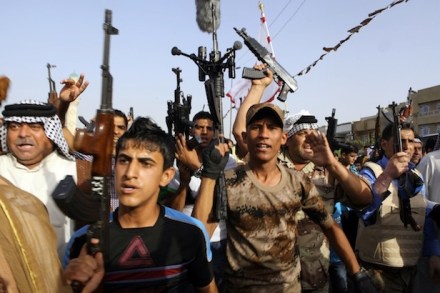
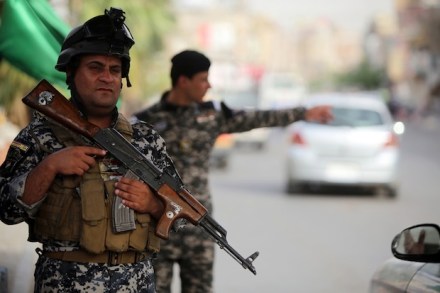
If there’s a bright spot in the murky mess of Iraq, it’s that finally we have a war that it is impossible to paint in simple terms, as a battle of good against evil. This time, even our PM, the self-appointed heir to Blair, can’t grandstand about defeating ‘terror’ or protecting ‘innocent civilians’ because there’s terror and innocence on every side. He can’t pose as world policeman; stand side by side with Obama and say ‘we must not let this evil happen’, because clearly we already have. Take ISIS, the Islamist group once affiliated to al-Qa’eda who’ve become the world’s new public enemy number one. ISIS have captured parts of northeast Syria and Iraq, and have begun to eye up Baghdad.

Please David Cameron, no moral grandstanding over Iraq this time

From our UK edition

A preview of Mary Wakefield's column in this week's Spectator... If there’s a bright spot in the murky mess of Iraq, it’s that finally we have a war that it is impossible to paint in simple terms, as a battle of good against evil. This time, even our PM, the self-appointed heir to Blair, can’t grandstand about defeating ‘terror’ or protecting ‘innocent civilians’ because there’s terror and innocence on every side. He can’t pose as world policeman; stand side by side with Obama and say ‘we must not let this evil happen’, because clearly we already have. Take ISIS, the Islamist group once affiliated to al-Qa’eda who’ve become the world’s new public enemy number one.

How ISIS took Mosul

From our UK edition

How did ISIS, the blackest-hearted and most dangerous of Islamist groups take Iraq's second city, Mosul, so easily? The lesson of their success in Raqqa province, Syria, is that they thrive on existing incompetence. In Syria the relative uselessness of the other rebel groups, especially any affiliated with the official Free Syrian Army, made ISIS an attractive proposition for young radicalised Muslims. Paul Wood, who has written for us brilliantly on ISIS over the years, has pointed out that it was disgust over the venal corruption of the FSA that turned young men to ISIS. In al-Maliki's Iraq the conditions were, are perfect for ISIS. Unemployment has risen leaving young men desperate  and directionless; corruption is rife and public services are disintegrating.

Why don’t my generation care if Britain fails?

From our UK edition

In my late thirties, I have become patriotic. It’s one of those things that’s happened with age, like cooking to freeze, plumping cushions and thinking policemen look too young. My heart stirs at the sound of a marching band and at the thought of great British inventions: the London sewer system, steam engines, float glass. On the slimmest pretext I’ll start lamenting the decline of our great industries and tell you that too often our brightest ideas are developed abroad. On most subjects, as we get older, my friends and I agree. On marriage and mortgages; grey hair and aching knees, but on Britain and its place in the world I am alone. Just a squeak from me in support of Britain, or British business, and my friends look taken aback, then almost appalled.

How the Suzuki method changed my life

From our UK edition

Do you ever wonder, as your little darling balks at doing her violin or piano practice again, what all the pain is for? All those battles, and then when she escapes your clutches she’ll give it up. In later life the blanket of amnesia will fall over those childhood years and it might be as if she’d never played at all. I learnt the violin by the Suzuki method from the age of three until about 14. It was a newish fad back then in London, although Shinichi Suzuki, the movement’s founder, was in his eighties and had been teaching in Japan since the war. Suzuki’s idea was simple and had come to him as he watched toddlers learn to speak: start a child young enough and he will learn music the way he does language — naturally and easily.

Being rich makes you mean: here’s proof

From our UK edition

It’s all the rage these days to worry about the growing gap between rich and poor. Our fretting was fuelled by Capital in the 21st Century, by the French economist Thomas Piketty, which claims to show that over time this gap will grow inexorably. But we’ve been agonising about equality for aeons, and for aeons arriving at the same stand-off between rich and (relatively) poor. Here’s how the argument goes: those who don’t feel rich begin by saying that it’s disgusting how much of the world’s total wealth is owned by a small minority. Globally, the richest 10 per cent hold close to 90 per cent of the world’s assets. It’s just wrong, they say. To which the rich, aggrieved, reply: ‘Why? What’s wrong per se with being wealthy?

Is there any part of human life that hasn’t been turned into a medical condition?

From our UK edition

When Greg, my old uni pal, came to stay from NYC he brought with him an extra bag for his pills: vitamins A, B, C, D, zinc, magnesium, selenium, ginseng. They decamped to the kitchen, the pills, and stood in rows beside the kettle awaiting their morning ritual. They were bigger than British versions, I noticed, and more violently coloured. Come breakfast, Greg requested pomegranate juice, not for taste but for antioxidants, and orange juice for electrolytes. Then there was lunch. We’d be nearing the end of a trek round some royal palace when suddenly Greg’s voice would flatten: ‘You know, I think my blood sugar’s getting low?’ Then, in a dangerous monotone: ‘I need to eat.’ At first I didn’t take much notice.

Theresa May’s right: the police need radical reform. Here’s why

From our UK edition

One fine morning early this year I had tea with Stephen Greenhalgh, Boris’s pleasant if perspiring deputy mayor for policing, and discussed the two great crime mysteries of the 21st century. First: the weird fall in crime. For the past 15 years, all manner of crimes have been on the wane, even violent ones: carjacking, vandalism, burglary, murder — but why? Mr Greenhalgh was admirably quick to credit the Met, but given that it’s a global phenomenon, stretching across Europe and America, that seems unlikely. The truth is probably prosaic: better security and cheaper goods mean young thugs can’t be fished. It’s almost disappointing how apathetic evil turns out to be.

In defence of self-deprecation

From our UK edition

I think the ancient English art of self--deprecation may be dying. I don’t mean self-deprecation in its distorted and most exported form: pug-eyed rogues like Hugh Grant getting away with murder — more usually infidelity — by grinning and rubbing their hair. That’s different. That’s ‘bogus self-deprecation’, as my friend Stuart Reid used to say. What I mean is the assumption that you shouldn’t swank or push yourself forward; that in conversation it’s more polite, civilised, to downplay your own achievements, even and especially if you’re a great success. I began to worry at a conference I was invited to last week: a day of lectures and advice for young people wanting to get ahead.

I never thought I’d write about wallpaper. But I’d never seen wallpaper like Marthe Armitage’s

From our UK edition

Every night, while my husband reads by screen-light, my mind runs like an invisible rat two miles north to the house we’re rebuilding in Islington. And there it scurries from room to room, around the rotten skirting boards, up walls, into corners: testing, considering, fretting. Carpets or wooden boards? Which doorknobs, latches, hinges? Which white for the walls? What will look best, and what (hang your head, o rat) will your friends envy and admire? Towards 1 a.m., the rat gets ideas, starts thinking: hmm, polished concrete floors? Maybe a hot tub? And I hear my mother’s voice: Oh darling, no. That won’t do. Tiles, mirrors, rails, plugs.

Tony Benn 1925 – 2014: a politician who actually believed in people

From our UK edition

The former Labour Cabinet Minister, author and long-serving MP Tony Benn has passed away today, aged 88. In 2009, our deputy editor Mary Wakefield interviewed Benn about the financial crisis and the basic decency at the heart of all human beings. Here is the article in full. I’m standing in Tony Benn’s front garden, on my way out but dawdling, reluctant to leave. Once I’m back on my bike I’ll be in Broken Britain again, snarling at the buses. But right now I’m still in Benn-land, where all people are kindly and the future is bright with mutual concern. Even the outside of Benn’s house reflects the decency within.

Libya is imploding. Why doesn’t David Cameron care?

From our UK edition

A few days ago I went to a talk about Syria; one of those events for the concerned layman, in which a panel of experts give a briefing. Everything sounded depressingly familiar until expert number three piped up: I hear people blame Saudi Arabia and Qatar for the Islamists in Syria, he said, but in fact, they more often come from Libya. The crowd shifted in discomfort. Isn’t Libya done and dusted? Oh no, said the expert, it’s full of al-Qa’eda training camps now, especially in Benghazi. My first thought, unusually, was to feel sorry for David Cameron. Remember how proud he was on his victory visit to Tripoli at the end of the Libyan war? There he stood in the five-star Corinthia hotel, by Sarko’s side, his arms full of flowers, his cheeks pink with pleasure.