Mary Wakefield

Mary Wakefield

Mary Wakefield is commissioning editor of The Spectator.

Isis bombs have exiled the Vicar of Baghdad to Surrey… but he’s itching to go back to the Middle East

From our UK edition

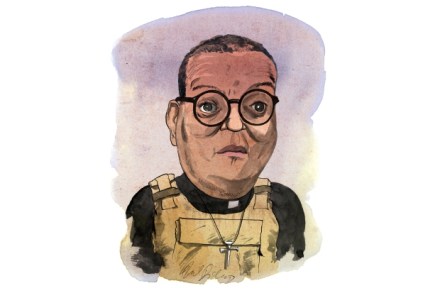
Canon Andrew White, the vicar of Baghdad, is not, in person, at all as I’d imagined him. His memoir, about life as first a medic, then a cleric, is chock-a-block with famous friends. Pope John Paul II was a pal, the Grand Ayatollah of Baghdad, General David Petraeus. ‘Oh, Andrew knows everyone,’ I was told when I asked anyone about him, and I’m afraid my heart hardened. I arrived in the rain at his house in Liphook, Hampshire, preparing myself for a vain man, full of his own derring-do. More fool me. Canon White is instantly, unusually lovable. He greets me wearing a sweatshirt with the caption ‘Real men become vicars’. ‘Look!’ he says delightedly. ‘Look at my hoodie!

Isis takes its British schoolgirl jihadis seriously. Why don’t we?

From our UK edition

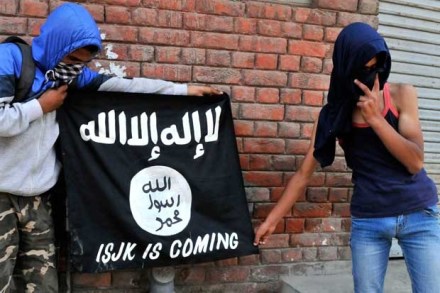
When the first schoolgirls ran away to Isis I had some sympathy for them — at least, I could see how they’d been suckered in. The girls were young, daft, desperate for a cause. They’d nosed about online, and found the Twitter feeds of jihadi wives who sell Syria as a teenage paradise: all fast food, deathless love, martyrdom and shopping. Because I felt for those first schoolgirls, I kept following their progress, checking for them online as they set up in Syria, married, and began to tweet themselves. But as I followed them on social media, my sympathy soon turned to disgust. ‘Happy #9/11’ wrote young Zahra Halane, one of the twins from Manchester who fled to Isis last year. ‘Happiest day of my life. Hopefully more to come. InSha Allah #Is.

Is my only choice to be a cynic or a sucker?

From our UK edition

It’s all the rage to mistrust the powerful these days, to say politicians are scum, or all bankers are selfish. Journalists are considered particularly disgusting post-Corbyn, which encourages all manner of needling on Twitter: ‘I’m sorry, but if you’re a journalist you should get a better job.’ This from a Corbynite. ‘I’m sorry, but…’ — are there three more irritating words? All this sticking it to The Man. All this talk of real, kindly people versus the shifty elite. I think it’s bogus.

The contagious madness of the new PC

From our UK edition

It’s becoming pretty clear, as the year rolls on, that some of our brightest youngsters have gone round the bend. It’s as if they’ve caught a virus, a mental one, a set of thoughts and ideas that might loosely be called political correctness, but seem to me weirder and more damaging than that. Back in the 1990s, PC students would stamp about with placards demanding equal rights for minorities and talking about Foucault. This new PC doesn’t seem to be about protecting minorities so much as everyone, everywhere from ever having their feelings hurt. It came from America, this virus, incubated in the closed minds of the Land of the Free, but it’s here now, and contagious.

Machetes and the middle classes

From our UK edition

Another stabbing in my new neighbourhood, not with an axe or with a samurai sword this time, but a machete. The samurai sword incident was back in the spring. The magnolia was in bloom and the citizens of London N1 were about their innocent business, reading for book club and baking (wheat-free). At 3 p.m., a terrible screaming was heard coming from Englefield Road and when police arrived they found a teenage boy lying bleeding, sword on one side, meat cleaver on the other. The machete killing which followed was worse. Daylight, but this time the crime scene was a playground. Children were goofing about after school, including the soon-to-be victim’s sister. Witnesses said two teenagers appeared on a scooter.

Are schoolgirls fair game for teachers?

From our UK edition

Mr Malcolm Layfield, the former violin teacher at Chetham’s music school, will have been celebrating this week after being found not guilty of raping a former pupil. Malcolm admitted to getting young (though over-age) girls drunk and to having sex with them in the back of his car. But he and his lawyer, Ben Myers QC, were keen to stress that the girls were all up for it. The one who cried rape even wore fishnet tights in his presence, for heaven’s sake. So no harm done, eh, Malcolm? All’s well that ends well. Raise a glass of that cheap Scotch you kept in the glove compartment for the kids. Perhaps it’ll help you sleep. But if it doesn’t, there’s something I’d like you to think about, in the small hours perhaps.

Migrants face many dangers. Are we one of them?

From our UK edition

A few weeks ago someone very dear to me passed on a question about The Spectator, asked them by a friend. The friend, who I know and like, had read Douglas Murray’s recent report from Lampedusa about the poor Med-faring migrants, and her question was this: ‘Is everyone at The Spectator a racist?’ Some insults brush past without leaving a mark, others pierce the skin and sink in. This one sunk like a splinter, and like a splinter I’ve been worrying away at it ever since, turning what was a small injury into a painful, bloody mess. I can dismiss the accusation easily enough — the Spectator office is multi-racial, the magazine’s editorial line consistently pro-immigration. It’s the questioner who haunts me.

In praise of the pit bull

From our UK edition

Last night I saw a woman dancing with a pit bull terrier. It was about 9 p.m. and her curtains were open, lights on. Music must have been playing, though I couldn’t hear it through the glass, because she was singing as she danced the dog about, leaning back to balance his considerable weight. Her arms made a seat for him, as you might carry a child, his paws on her shoulders. The woman gazed down lovingly at the dog, who looked embarrassed but patient, as if this wasn’t his first dance and wouldn’t be his last. I watched them for a while, standing unseen in the street, half-wondering whether to take a photo — not for fun or for Facebook, but to show to all the crosspatch busybodies who support the ban on ‘devil dogs’.

Patriotism isn’t uncivilised – it’s what makes civilisation possible | 23 April 2015

From our UK edition

Is it racist to be patriotic? Is patriotism, by definition, small-minded and exclusive? When you strip away the onion layers of sentiment about history and hymns, Shakespeare and lawn clippings, does it have a hateful heart? I ask because, as I’ve written before, I feel patriotic, and until recently I’ve considered this to be a good thing. I felt particularly patriotic at a service in Ravenstonedale, Cumbria, last week. I slid in late and guilty, amid snippy Sunday stares. After the sermon we trooped outside and in the suddenly sunlit graveyard the vicar whipped a trumpet from his cassock and began to play. A pair of starlings began their electric warble, the motes and midges were bright against the dark church wall.

Original sin makes us better people. I wish Muslims believed in it

From our UK edition

These days, on the subject of Islam, non-Muslims have mostly divided into two camps — though there’s a little wandering about between the tents. Camp one says Islam is a religion of peace, and points for proof to the millions of non-violent Muslims around the world. Warlike Muslims are an anomaly, they say, and fight not because they are religious but because they are politicised. Bad guys like Isis aren’t Muslims so much as Islamists, which is different. Most politicians and public figures belong to this camp, including the Archbishop of Canterbury. Camp two is more furtive. Members look around before they speak.

How do bright schoolgirls fall for jihadis? The same way they fall for Justin Bieber

From our UK edition

How could they? How could girls brought up in the wealthy West abandon their families and their own bright futures to join Isis, a gang of vicious thugs? It’s not just our girls, either, they’re sneaking off to Syria from across Europe and America too, teenagers, bright ones typically, set on becoming sex slaves in a war zone. London’s latest runaways — Shamima, Amira, Kadiza — were pupils at Bethnal Green Academy and the headmaster there, a Mr Keary, echoed most people’s reaction when he shook his head and said: ‘I don’t understand it. It doesn’t make sense.’ But Mr Keary’s wrong, most people are wrong. It does make sense. Let your outrage subside and it’s pitifully easy to see what draws these idiots to Islamism.

Do I really care about Ebola? Do you? Does Oxfam?

From our UK edition

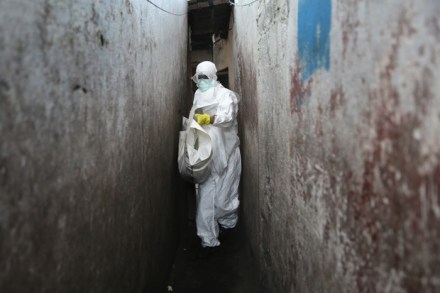
It’s strange how quickly we all forgot about Ebola. Speak for yourself, you might say — and I will. Until a friend sent me a report this week on the progress of the epidemic, Ebola had, I’m sorry to say, almost faded from my mind. The report contains good news: where the outbreak was worst, in Liberia, there are now just five cases left. Ebola treatment centres are shutting down, unneeded — and I was delighted but also ashamed. I have been to Liberia and written about it and I had thought last year that I cared tremendously about its fate, more than others, perhaps. My heart bled even as my mind ran rat-like to my kitchen to make an inventory of canned goods. I thought I cared — but did I?

The real reason GPs are grumpy: the robots are coming for them | 15 January 2015

From our UK edition

There’s something wrong with the relationship between patients and their GPs. I’ve spent much of this winter in my local surgery, what with one thing and another, sitting among the stoic and snivelling, drifting between different doctors. They’re pleasant, if perfunctory, but with each visit I became more sure that something fundamental is awry. The docs seem ill at ease, as if their collective nose is out of joint, and I don’t think it’s overstretching or underfunding that’s the problem. My unprofessional diagnosis is that there’s a change under way in the balance of power between patients and medics; the status of GP as unimpeachable oracle is under threat, he feels the first tremors of what may be a seismic shift, and he doesn’t like it.

The real reason GPs are grumpy: the robots are coming for them

From our UK edition

There’s something wrong with the relationship between patients and their GPs. I’ve spent much of this winter in my local surgery, what with one thing and another, sitting among the stoic and snivelling, drifting between different doctors. They’re pleasant, if perfunctory, but with each visit I became more sure that something fundamental is awry. The docs seem ill at ease, as if their collective nose is out of joint, and I don’t think it’s overstretching or underfunding that’s the problem. My unprofessional diagnosis is that there’s a change under way in the balance of power between patients and medics; the status of GP as unimpeachable oracle is under threat, he feels the first tremors of what may be a seismic shift, and he doesn’t like it.

This is how you can fight the Taleban

From our UK edition

The murder of over a hundred children by the Taleban in Peshawar left people furious but also frustrated. What can we do to stop the Taleban? Troops are leaving Afghanistan, combat mission over; we've no stomach for army casualties and drone strikes too often backfire. Every innocent farmer killed by a drone galvanises local support for the Taleban. There's a Pashto saying which gets to the point: 'Be afraid of those who do not fear death.' If we're not prepared to risk much, and we're not, it's near impossible to defeat an enemy prepared to risk everything. So, should we despair, shop for Christmas presents, forget about the Peshawar dead? No.

Are old fairy stories too scary for kids?

From our UK edition

Moving house, stacking books in boxes, I came across a clutch of fairy books, Andrew Lang’s folk tales from around the world in their coloured cloth covers: yellow, brown, red, grey, blue. I picked up ‘yellow’, opened the cover and fell down a wormhole, away from 2014 into the past. My mother, as a child, had coloured in some of the book’s etched illustrations and I could see her kneeling, perhaps fireside, sawing away at the mournful knights in blue crayon. Then there was my own pre-teen self, mid-1980s, feeling strongly the injustice of being forbidden any further colouring in.

Patriotism isn’t uncivilised – it’s what makes civilisation possible

From our UK edition

Is it racist to be patriotic? Is patriotism, by definition, small-minded and exclusive? When you strip away the onion layers of sentiment about history and hymns, Shakespeare and lawn clippings, does it have a hateful heart? I ask because, as I’ve written before, I feel patriotic, and until recently I’ve considered this to be a good thing. I felt particularly patriotic at a service in Ravenstonedale, Cumbria, last week. I slid in late and guilty, amid snippy Sunday stares. After the sermon we trooped outside and in the suddenly sunlit graveyard the vicar whipped a trumpet from his cassock and began to play. A pair of starlings began their electric warble, the motes and midges were bright against the dark church wall.

What are 16-year-olds supposed to learn by making posters?

From our UK edition

My niece, Lara, 15, has a mind like a surgical blade. On any subject, from calculus to The X Factor, she finds the heart of the issue and dissects it with alarming ease. Lara makes mincemeat of homework, trailing A grades, which is why it was so odd to find her stumped two weeks ago. The trouble was with her English language GCSE. As part of her coursework (controlled assessment) she had to comment on a pamphlet, produced by a charity, about volunteering. On the cover of the pamphlet was a slogan in a pink circle, and Lara’s dilemma was this. She said: I’ll get points if I write that the circle symbolises something, an unbroken ring of trust, or the fullness of life. But I mean, the truth is, someone at the charity just chose a circle at random, didn’t they? So what should I say?

Why there’s no such thing as an Etonian

From our UK edition

Finally, just in the last few years I’d say, we’ve all begun to accept the role of nature in the great nature/nurture debate. Though we’ve squirmed and baulked, we mostly now do accept that genes inform (to a greater or lesser extent) not just our height and eye-colour, but our personalities: our intelligence, our disposition. We’re more like our parents than we are like strangers — and what, after all, was so very controversial about that? So now we’re at peace with our genes, here’s another mental challenge, a curious discovery by geneticists that’s even more at odds with our intuition.

Is forgiveness a weapon in the war on terror?

From our UK edition

Could you ever torture someone? Could you, under different circumstances, in a different world (I hope) than the one which led you to this Spectator, be as brutal as the fighters of the Islamic State? Your answer, I reckon, is most likely to be no. Most people these days talk of IS jihadis as if they’re unnaturally evil, an aberration — and you can see why. If the IS are uniquely bad, it means we don’t have to re-evaluate the species, and to boot, it gives us licence to stamp them out. It is tempting to think of them as an anomaly, but on this point I’m with Toby Young, who earlier this month wrote that the Catholic notion of original sin explains brutality best. The seeds of cruelty are in all of us — not just IS, or young men, but girls and grandparents too.