Mary Wakefield

Mary Wakefield

Mary Wakefield is commissioning editor of The Spectator.

Why do we care so little about child abuse?

From our UK edition

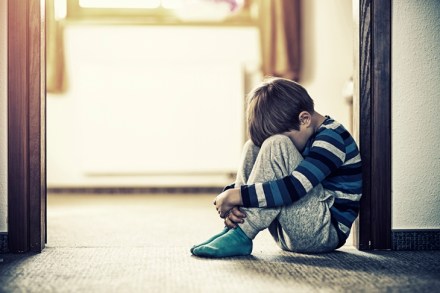
Abusing children is one of the most terrible things men do. We all agree about that. And I think we’re all aware, as Sajid Javid announced on Monday, that it’s a growing problem. The same technology that allows millions to share videos of romping kittens has created an awful, expanding market for images of children — mostly very young girls. There has been a 700 per cent rise in reports of child abuse images since 2012, said Javid: an average of 400 arrests a month. Police think that there are now 80,000 people in the UK who pose a serious threat to kids. Javid is shocked by the scale of it, he says, but what has surprised me over the past few years is how little people really seem to care. Consider Facebook.

It’s time to take on the paedophiles

From our UK edition

Abusing children is one of the most terrible things men do. We all agree about that. And I think we’re all aware, as Sajid Javid announced on Monday, that it’s a growing problem. The same technology that allows millions to share videos of romping kittens has created an awful, expanding market for images of children — mostly very young girls. There has been a 700 per cent rise in reports of child abuse images since 2012, said Javid: an average of 400 arrests a month. Police think that there are now 80,000 people in the UK who pose a serious threat to kids. Javid is shocked by the scale of it, he says, but what has surprised me over the past few years is how little people really seem to care.  Consider Facebook.

Why dismiss a Catholic priest for being Catholic?

From our UK edition

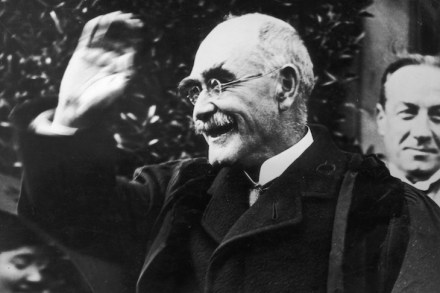
They’re just kids! What’s your problem? This has become the default reaction of a whole raft of clever people to anyone who gets hot under the collar about the fashion for students banning things in universities: speakers, ideas, books. It was ever this way, they say, and besides, sometimes the kids are right. The little episode of righteous vandalism at Manchester last week was a case in point. Students painted over a mural of Kipling’s ‘If’ in the newly renovated union building, on the grounds that he ‘dehumanised people of colour’. Kipling was a racist, they insisted, a man of Empire. Out came the whitewash and on top of it went ‘Still I Rise’ by the American civil-rights activist Maya Angelou. Newspaper columnists raged.

How pleasing to find out that most cave art was made by women

From our UK edition

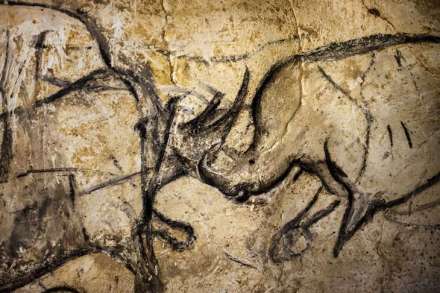
Why do so many women feel such a strong urge to paint? It has been troubling me for years now. There are hundreds of thousands of us up and down the country, not pros but dedicated nonetheless. We pay for classes, huddle around artists we admire; we head to the coast on holiday to try, and fail, to capture the wash of sky and sea. On weekday evenings we congregate in art schools and stare in a demented fashion at naked men and women, determined to master the human form. All around the world, there are women with watercolours locked in battle with household objects: flowers, lemons, bowls. People talk of us as hobbyists or housewives filling the hours between lunch and gin.

Antony Gormley

From our UK edition

Antony Gormley has replicated again. Every year or so a new army of his other selves — cast, or these days 3-D fabricated, in bronze, iron, steel — emerge from his workshop. Some lucky clones find themselves in wild and beautiful places; others are trapped in private collections. The latest clutch, generation 2018, find themselves in the new galleries at Kettle’s Yard, Cambridge (until 27 August), one sticking out horizontally from a wall, another, an airy stack of steel bars, staring down through a window into town. It’s called ‘Subject’, this work (also the title of the exhibition), and Gormley’s intention is that it acts as an invitation to each gallery-goer to pause; to become aware of themselves as subjects too.

The secret segregation of state schools

From our UK edition

Is it all right for the Muslim parents of children at British state schools to prevent their sons and daughters from being friends with non-Muslim kids? And is it sensible? These questions have been knocking around my head like a pair of trapped moths, unable to find a way out. Quite by coincidence and on separate occasions, in the past month I’ve met two (non-Muslim) women whose children have had trouble at Muslim-dominated state schools. The kids made friends easily in their first term, said the mothers, but as the months went by it became harder to stay pals. Their schoolmates never invited them home, nor would they come round for playdates or parties. The friendships faded away and the kids were left confused.

Is it ‘Brexity’ to feel you belong to a particular place?

From our UK edition

As I get older, and particularly after having a child, I feel myself unexpectedly drawn back to the countryside I grew up in. I nose about, late at night, on the websites of estate agents specialising in the north-east, hopping down the coast from barn conversion to barn conversion, pausing sometimes to inspect the odd terraced house looking out to the grey North Sea. I had thought that working in the city for 20 years would make any sense of being from a particular place fade. I had thought talk of belonging a bit naff. But the feeling only grows. The further away from the north I am, the more sure I am that grass should be coarse not lush, that hills should have heather and that any sea which doesn’t induce hypothermia isn’t worth its salt. I don’t plan to move.

An odd new feeling has crept up on me: sympathy for the police

From our UK edition

Spring has come to my local park in its usual way. First the magnolias, then the cherry blossom, then the little silver ampules which once held nitrous oxide scattered in the grass. On Sunday the kids appeared, not a gang exactly, more a swarm of teens, angry and unstable. A boy of about 14 raced a moped at breakneck speed around the toddler playground. ‘Can you stop?’ said a brave father. ‘You might run over a child.’ ‘Fuck you,’ said the boy. ‘And I’ll fuck your mother too.’ On the way home, another spring staple: a police helicopter hovering over the Essex Road and below it the remnants of a raid: five vans, six cars, 30-odd coppers in body armour and two BBC cameramen just packing up. Once I might have made fun of them.

The gang in our park have united us… in impotence

From our UK edition

The baby, unbothered by diesel fumes, enjoys an outing down the main road through London N1. Each passing bus is marked by a fat and pointing finger: ‘There!’ On the way to our local park last Thursday, we had just begun to cross the road, pointing up at the green ‘walk’ man, when a scooter tore straight through a red light and cut across in front of the pram. ‘What the hell?!’ I shouted and raised an angry hand. To my surprise, instead of speeding off, the driver jammed on his brakes and skidded round to face me. He was a boy of about 15 or 16, black, slight, and snarling with fury. He said: ‘You want to start? You really wanna start this?’ The baby and I were mid-road.

The deranged world of Virgin trains

From our UK edition

Twelve minutes till the train. That had seemed like quite enough time as I approached the Virgin ticket machine. Two tickets, London King’s Cross to Durham: a 40-second job, then perhaps a coffee. I had felt, as I so often don’t, like a responsible mother and wife, comfortably in charge of logistics. Screen one set me back a bit. Virgin had changed the layout. Where was Durham? On screen two I felt the first rising bubbles of panic. Where was the option to buy an open return? The minutes floated by. Nothing became clearer. I felt the sort of lonely despair the old must feel when technology overtakes them. I said to my husband: ‘You do it.’ But after a while he said: ‘I can’t!

Girls should be taught how to spot a wrong ’un

From our UK edition

We are becoming a nation of older mothers. The average age at which a woman has her first child is now 30, a fifth reach 45 without having a baby and the usual busybodies are in a flap. The government, which had anyway decided on compulsory relationship classes, thinks the answer lies in more of the same. If we only explain to 11-year-olds how hard it is to conceive at 40, the creep towards geriatric motherhood can be reversed. Expect your small daughter to bring home fertility awareness posters designed in PSHE, perhaps papier-mâché models of a deteriorating human egg. The busybodies aren’t wrong to worry. I first set about trying for a family just as youth was crumbling into middle-age and it was a very boring business.

The dark side of charity

From our UK edition

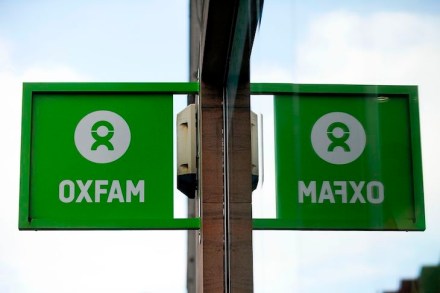
One of the oddest things about the Oxfam sex scandal is how little we all seem to care. Even now, the talking heads on TV find it hard to summon much outrage. On Facebook and on Twitter, the Presidents Club exposé caused a far greater fuss. Much was made of the way the Club’s entitled fat cats abused their power over hostesses. But the imbalance of power between a starving child and an aid worker with access to food and cash is immeasurably greater. And what of a charity’s duty of care? I’ve been half hopeful that progressive millennials might adopt the aid world fiasco as a cause. No generation in history has been more alive to the problem of privilege and the rights of the vulnerable. So where are the woke? Are they sharing the Oxfam story?

Oxfam isn’t alone: UN peacekeepers also exploit women in their care

From our UK edition

A Times investigation has uncovered the terrible fact that women and possibly young girls in Haiti have been exploited by the very people paid to keep them safe: the staff of Oxfam, which sucks up £300 million a year from us in public and private money.  It’s a shock — and it’s not. Under the cover of moral superiority, out of sight and out of the media, all manner of NGOs, charities, and the saintly UN have committed some of the most disgusting crimes against the world’s most vulnerable women and children, and got away scot free. Not even the hyper-sensitive  #MeToo movement seems to give the shadow of a damn.

‘Peacekeepers’ abuse the girls in their care, yet no one is ever punished

From our UK edition

Last week, women working for the UN became the latest to join the #MeToo gang, and for all the eye-rolling silliness of some of #MeToo, I was pleased. The UN is in many ways a seedy closed shop. It spends zillions promoting gender equality worldwide but in practice it’s a very different story. The women of the UN described (to the Guardian) a culture of abuse (including rape) after which victims are silenced and then sidelined, often sacked. I’m delighted they spoke out, but what puzzles me is why it stopped there. On Saturday, thousands marched around New York City to draw attention to the unjust treatment of women.

When therapy does more harm than good

From our UK edition

In the churchyard by the church near my grandmother’s house, there’s a tombstone with an inscription that’s haunted me since I was a child. It marks the grave of a woman called Elizabeth who died, as I remember, in the 1920s. Elizabeth married young, had five babies in five years, then died well before she reached 30. The epitaph on her stone: ‘She did her duty.’ I often find myself thinking about Elizabeth and how different her cold and stoic age was to ours. I thought of her late last year as a slew of research revealed that an astonishing number of women, more than one in ten, screen positive for PTSD (post-traumatic stress disorder).

How can any intelligent person have faith?

From our UK edition

Ten years ago, I had a strange debate about faith with a famous Jesuit and an agnostic psychoanalyst in a monastery on a cliff-top in Syria. At the time I thought I’d made some valuable additions to the discussion. The notes I took then record my own contributions with horrible precision. Looking back on it, I was just an observer. The main players were Father Paolo Dall’Oglio, an Italian priest who’d made his life in the Middle East, and Bernard S., a highly regarded Jungian analyst: neat, Swiss, troubled. The scene of this chat was Deir Mar Musa, a 6th-century monastery that Fr Paolo had restored, perched high on a ridge in the foothills of the Anti-Lebanon Mountains.

Animal attraction | 30 November 2017

From our UK edition

There are times when our national passion for cutting people down to size is a little tiring. I left Brett Morgen’s new documentary about Jane Goodall, the chimpanzee expert, in a rare flush of excited enthusiasm. ‘You’ve got to see it!’ I said to everyone. Most replied along these lines: ‘Goodall, didn’t she turn out to be a fraud?’ Or: ‘Wasn’t it all Leakey’s work she took credit for?’ ‘Yeah, what’s with that?’ says Brett Morgen hunched over his toast in a very hipster Soho hotel. ‘In the Times of London today, in the review, it says Jane can’t hold a candle to David Attenborough. I’m like, he’s a fucking TV presenter!

The iciness at the heart of the #metoo movement

From our UK edition

On rolls the Harvey Weinstein horror show with no finale in sight. The next episode looks likely to star Uma Thurman, who’s waiting for the right moment, she says, to tell her own Harvey story. Hollywood waits for Uma and I wait for Robert De Niro, who said of Donald Trump: ‘He’s a dog, he’s a pig, a mutt.’ If groping makes you mad, Rob, why so silent about friend Harvey? Weinstein is clearly a slimeball predator. I hope the great wave of feminist outrage washes all the Harveys clean away, out of Tinseltown, out of Washington, out of Westminster. But running alongside the Weinstein drama is another trickier case — one I think the credibility of the whole #metoo movement rests on.

The #metoo movement has an icy heart

From our UK edition

On rolls the Harvey Weinstein horror show with no finale in sight. The next episode looks likely to star Uma Thurman, who’s waiting for the right moment, she says, to tell her own Harvey story. Hollywood waits for Uma and I wait for Robert De Niro, who said of Donald Trump: ‘He’s a dog, he’s a pig, a mutt.’ If groping makes you mad, Rob, why so silent about friend Harvey? Weinstein is clearly a slimeball predator. I hope the great wave of feminist outrage washes all the Harveys clean away, out of Tinseltown, out of Washington, out of Westminster. But running alongside the Weinstein drama is another trickier case — one I think the credibility of the whole #metoo movement rests on.

The universal credit crunch

From our UK edition

It only dawned on me in late summer just how terrible our new benefits system, universal credit, might be both for the poor souls who depend on it and for the bedraggled Conservative party. An old friend, Terry, alerted me to the depth of the problem. Terry is 70-odd and has learning difficulties, though he’s astute in many ways and quite startlingly kind. He has a room in a shared house, but like many in precarious or temporary housing, he’s a regular on the homeless scene: part of a growing drift of men and women who move around London morning till night, from the St Martin-in-the-Fields day centre to the Hare Krishna food vans in Lincoln’s Inn Fields.