Mary Dejevsky

Mary Dejevsky is a writer, broadcaster, and former foreign correspondent in Moscow, Paris and Washington.

Ten fateful forks in the road to Crimea

From our UK edition

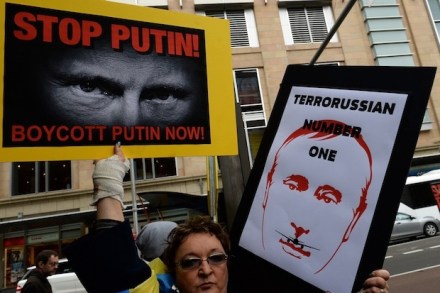
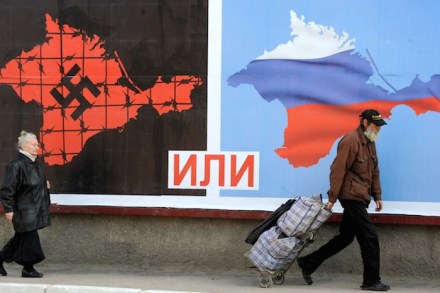
Regret suffuses the post mortem on many a conflict, with hindsight recommending alternatives that were far less obvious at the time. Crimea is different. Rarely can the fateful choices — those critical forks in the road — have been so evident as those that have led Russia, Ukraine and the West into this conflict. A different choice at any one of these 10 junctures could have averted immediate danger and indicated a route back to safety: 1. Last summer it became apparent that Russia and the EU were increasingly at loggerheads over Ukraine It was Vladimir Putin’s Eurasian Union vs the association agreement on offer from Brussels.

Why doesn’t Russia have a Yad Vashem for the gulag?

From our UK edition

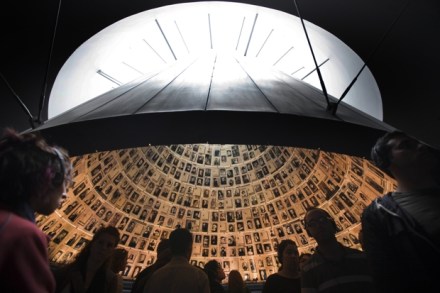
Yad Vashem, Israel’s vast Holocaust memorial complex, dominates a hillside above Jerusalem, surrounded by bare rock and pines. Vast though it is, it manages to be both harrowing and restrained; both rooted in the times it commemorates and thoroughly modern — not just in style, but in the way it harnesses the most advanced technology to its cause. As an enterprise, let alone a monument, it is impressive: a testament to the commitment of Israel and the survivors of Europe’s Jewry to ensure that what happened is never forgotten. But it aspires to more: to convey a sense of the communities that were destroyed and to memorialise, so far as possible, every last individual.

Super-heads are a super-huge mistake

From our UK edition

Another month, so it seems, another super-head rolls. Not that many would have noticed the latest. Greg Wallace’s resignation as executive head teacher of five schools in the east London borough of Hackney was drowned out by the hubbub surrounding the Revd Paul Flowers. Yet the departure of Wallace — much lamented by pupils and their parents, according to tributes in the local newspaper — deserves a closer look. For Wallace was not just any top teacher.

Has Germany confronted its Nazi past? Not where art is concerned

From our UK edition

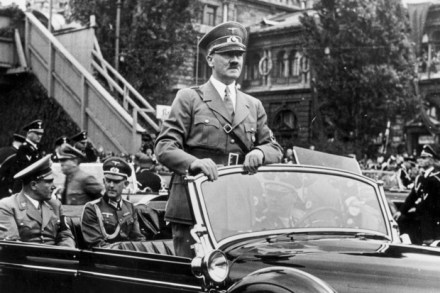
From repentance to restitution, Germany has done an exemplary job of facing up to its Nazi past — with a little help, it might waspishly be said, from the victorious Allies. Every aspect of life, from education and philosophy, to science, politics, music and the law, was held up to the light early on and thoroughly cleansed. There has, though, been one puzzling exception; a place where shadows linger. That is the art world. The discovery, announced this week, of almost 1,400 paintings stashed away in a Munich apartment, lifts the curtain a fraction, but only a fraction, on this hidden realm.

The Lampedusa hypocrisy: Italy prefers its migrants dead on arrival

From our UK edition

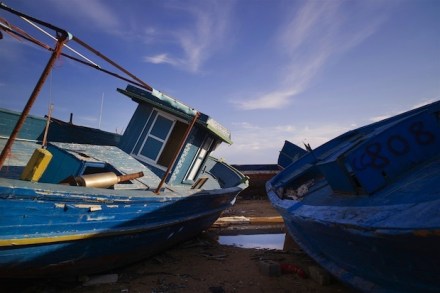
Italy has held a day of national mourning in memory of those who died in the 3 October disaster off Lampedusa. The victims - mostly from Eritrea, Somalia and Syria - were given Italian citizenship posthumously and are now - it was announced yesterday - to be honoured at a state funeral. The desire of the Italian government to salve its conscience following the fire and shipwreck that cost an estimated 250 lives is understandable. But such measures are grotesque and will only reinforce the idea, among would-be refugees and their advocates, that a dead migrant is preferable - at least in the eyes of the receiving country - to a live one. Will the Italian authorities, I wonder, be so keen to grant the survivors citizenship?

If nurses are really ‘at breaking point’, they should stop working 12-hour shifts

From our UK edition

Scarcely a month goes by, or so it seems, without one or other representative body of the medical profession complaining about how dangerously overworked and generally unappreciated its members are. The latest is the Royal College of Nursing — still smarting, perhaps, from the Francis report into the fatal negligence at Stafford Hospital — which found that nurses today are frequently stressed out and ‘forced to choose between the health of their patients and their own’. Forgive me, but they would say that, wouldn’t they? The preamble notes that morale has deteriorated since a similar RCN survey eight years ago published under the same self-fulfilling title, At Breaking Point.

Why Russia’s diplomats should learn swimming-pool etiquette

From our UK edition

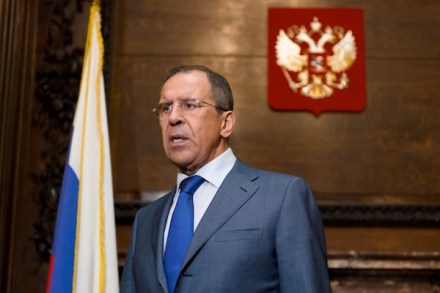
The first couple of evenings there was just me and a middle-aged couple swimming decorously up and down. On the third day it changed. There were three more people, spread out at the shallow end. You would not have thought that an extra three people in a decent-sized pool could have caused such irritation and havoc. They contrived to occupy an inordinate amount of space and move around in a way that caused maximum disruption. Sometimes they swam widths; sometimes diagonals. They would stop and change direction without warning. Sometimes they floated with their toes under the rail, or disappeared under water and surfaced far too close for comfort. And when they swam, they swam splashily, in a clumsy, improvised way. The two other length-swimmers generally left before I did.