Mary Dejevsky

Mary Dejevsky is a writer, broadcaster, and former foreign correspondent in Moscow, Paris and Washington.

The real reason Biden was prepared to let Kabul fall

From our UK edition

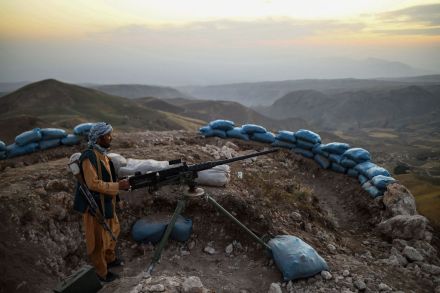
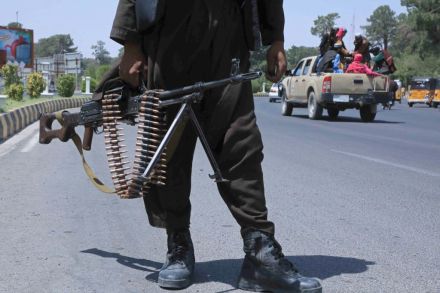
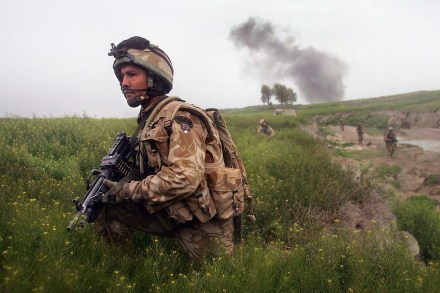
The speed of the Taliban’s advance, culminating in Sunday’s capture of Kabul, has been widely put forward as proof that Joe Biden was wrong: that his decision to end the 20 year-old Afghan mission was a historic mistake that will blight his presidency. For all that, as he himself has said, he was the fourth president to preside over the war and he would not hand it over to a fifth, he could go down only as the president who lost Afghanistan. Maybe. But is this really how the United States — and allied — flight from Afghanistan will be seen with the benefit of even a little hindsight? Much, of course, depends on what happens next. How much bloodshed accompanies the Taliban takeover.

Should locals be allowed to work at British embassies?

From our UK edition

It is just short of 30 years since the collapse of the Soviet Union and suddenly there comes a reminder of how the world used to be. A member of staff at the British Embassy in Berlin has been arrested in Germany on suspicion of spying for Russia. The arrest took place in Potsdam, which used to be in East Germany, and the Glienecke Bridge separating the town from Berlin proper is where Cold War spies used to be exchanged. The suspect has been identified only as David S, and it is believed he worked in a security role at the embassy. Two details that are known, however, are that he is a British citizen and that he was what is known as a 'local hire'.

Is London being ‘levelled down’ already?

From our UK edition

In his ‘levelling up’ speech in Coventry this week, the Prime Minister insisted time and again that this was no ‘zero sum’ game. Improving the fortunes of the poorer parts of the country would not entail levelling richer parts of the country down, he said: ‘Levelling up is not a jam-spreading operation. It's not robbing Peter to pay Paul.... It's win-win.’ Well, maybe. But there was good cause for his defensiveness. One reason advanced for the Conservatives’ dramatic defeat in last month’s Chesham and Amersham by-election was apprehension that such places would have to help pay the bill for, say, regenerating Hartlepool.

Why voters should have to show photo ID

From our UK edition

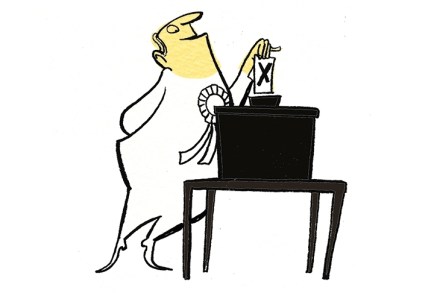
This week’s publication of the Elections Bill has given pressure groups and others a fresh opportunity to complain about what they see as the latest manifestation of this government’s illiberalism: a requirement for people to produce photo ID when they go to vote. Forgive me, but I fail to see what is so terrible, so undemocratic, about that. The arguments go like this. First of all, opponents say, any change is unnecessary, as the UK simply doesn’t have a problem with voter fraud – with impersonation, say, or multiple voting. Trust in the UK electoral process is high and the instances of fraud are infinitesimal compared with the numbers of votes cast.

Biden and Putin have left Britain out in the cold

From our UK edition

It would probably be wrong to say that Joe Biden and Vladimir Putin got on like a house on fire. But the results of the Geneva summit, which observed all the rules of Cold-War era summitry – from the venue to the formality of the arms-control and confidence-building agenda – far exceeded the deliberately doom-laden forecasts. In the space of around four hours at the Villa La Grange, the leaders of the United States and Russia effectively normalised relations that for the best part of four years had been bouncing around at rock-bottom, and dangerously so.

Is it time to end the G7 spouse circus?

From our UK edition

Turn on any television news broadcast and peruse any news stand on the eve of the G7 summit, and what was the favourite picture? Carrie and Jill take a barefoot walk along the Cornish sand beside the blue Cornish sea, and enjoy a frolic with little Wilfred (just past his first birthday).  Ahhhh. Isn’t that lovely, so natural, so normal, you say. Melania (snarl) would never have done that. Oh, and by the way, Jill’s jacket said 'Love' on the back, contrast with Melania’s during a visit to a migrant detention centre, which said (if you have already forgotten) 'I really don’t care, do U?' Well, you might care. Then again – like me – you might not. And in a moment I will explain why.

In defence of the foreign aid cut

From our UK edition

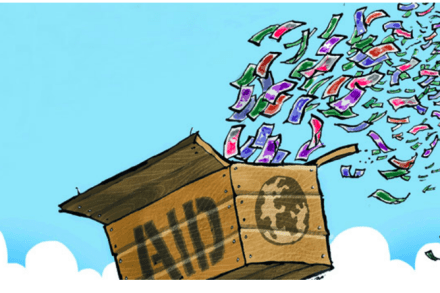
It says something for the persuasive powers of former international development secretary, Andrew Mitchell, that he mustered enough potential votes to inflict defeat on Boris Johnson’s government, if only his amendment had been permitted and a vote had been held. Mitchell’s consolation prize, awarded by the Speaker in recognition of the strength of feeling in the Commons, is an emergency debate on what would have been the substance of his amendment: to reinstate foreign aid at 0.7 per cent of GDP from next year, rather than the reduction to 0.5 per cent that was set in the Budget.  The rift this row has exposed among Conservative MPs could embarrass the Prime Minister as he prepares to host G7 leaders in Cornwall.

Liz Cheney has lost her fight against Trump but might win the war

From our UK edition

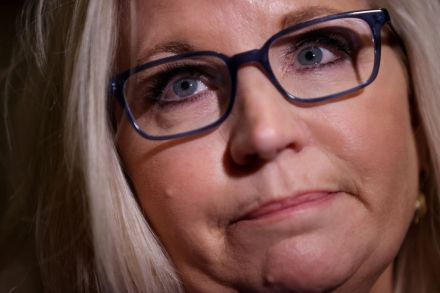
When Liz Cheney, the single US House Representative for the state of Wyoming, was sacked as chair of the Republican party conference, there were broadly two views of what that signified, for her and for the Republican party. The more popular view by far was that her dismissal from the third most important post in the party had confirmed and strengthened Donald Trump as crucial to the future of the Republican cause and that her political career was pretty much over. The other view was that being down at this particular juncture did not mean she was out. And the huge coverage – and speculation – her dismissal has attracted in the United States in the days since, even when she is being written off, would seem only to confirm this.

The UK’s very American political realignment

From our UK edition

The speed and scale with which voters, mainly but not exclusively in the north of England, have switched their allegiance from traditional Labour to Conservative has been described as unprecedented. Professor Tony Travers of the LSE called it ‘amazing’ and spoke of ‘a massive shift of tectonic plates’. Nor can the results of last week’s elections be dismissed as a one-off. The breaches in the so-called ‘Red Wall’ began well before the Conservative landslide in the 2019 General Election and what happened last Thursday is unlikely to be the end.

The rise of the female ambassador

From our UK edition

It is, of course, an excellent thing and a mark of social progress when an institutional bastion falls to woman-power. If the days are gone when the upper echelons of UK diplomacy were closed to women then so much the better, when a woman who married had to leave the service, and when female diplomats — with the honourable exception of Pauline (now Baroness) Neville-Jones, who resigned after being passed over for Paris — knew better than to hope for the top postings. The 21st century requires no less: entry on equal terms to the men, progression on equal terms to the men, and access to the most senior jobs on equal terms to the men.

George Floyd was a victim of American gun culture

From our UK edition

The triple guilty verdict on Derek Chauvin for the murder of George Floyd was greeted with general relief across the United States. The massed ranks of police and National Guard waiting in the wings for possible disturbances were mostly stood down, and President Biden said that Chauvin’s conviction 'can be a giant step forward in the march toward justice in America' while insisting 'we can’t stop here'. The point has been made that a white police officer being found guilty of murdering an unarmed black man is a rarity in the United States. But it is also worth noting that the conviction, indeed, the fact that anyone was tried at all, was largely a result of the unequivocal evidence recorded by a passer-by.

What the withdrawal from Afghanistan says about the UK

From our UK edition

When the Secretary General of Nato announced last week that all alliance troops were to be withdrawn from Afghanistan, it was made to look like a nice, clean, enunciation of a joint decision. The end date was set for 11 September, 2021 – 20 years after the terrorist attacks on New York and Washington – and it was in line with the oft-repeated alliance maxim: we went in together; we will come out together. Except that, on closer examination, it was all rather messier. This was partly because the withdrawal from Afghanistan had actually been Trump’s policy, so here was Joe Biden, the anti-Trump, co-opting a policy from his predecessor (a policy Trump had been so keen on that he tried to accelerate the withdrawal after he lost the election).

Could the Sputnik vaccine end Russia’s rift with the West?

From our UK edition

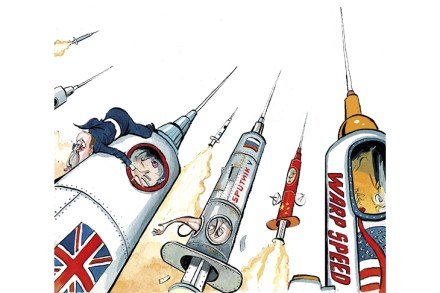
Accounts differ. But it would appear that during a wide-ranging conference call earlier this week, the leaders of France and Germany broached the possibility of – wait for it – buying some of Russia’s pandemic pride and joy: its Sputnik V vaccine. If a deal is struck this would be a huge boost to Russia at home and abroad, and by extension to President Putin, who has spent months trying to dispel widespread Western suspicions about the Russian vaccine, from its Soviet-era name to the breakneck speed of its development. Any deal would also represent quite a turnaround for France and Germany, whose leaders have spearheaded a Continental European reluctance to accept what many regard as ‘foreign’ vaccines in general and the Russian vaccine in particular.

Why NHS workers shouldn’t get a pay rise

From our UK edition

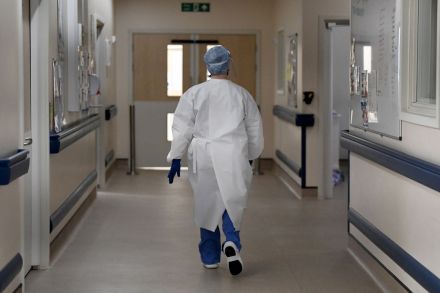
The Government in the person of Rishi Sunak won a surprisingly positive public response to what was essentially a tax-raising Budget this week. Within 24 hours though, the same government had spectacularly lost the PR contest by recommending a 1 per cent pay rise for NHS staff across the board. The outcry was universal: mean, measly, an insult, a slap in the face, not a way to treat ‘our heroes’ – or, more personally, those who saved the Prime Minister’s life. The rise – and it is currently just a recommendation to the NHS pay review body – is indeed a mistake. In fact, it is a double mistake, but not in the way it is being presented. The first error is diplomatic and tactical.

Bring back Boris Island

From our UK edition

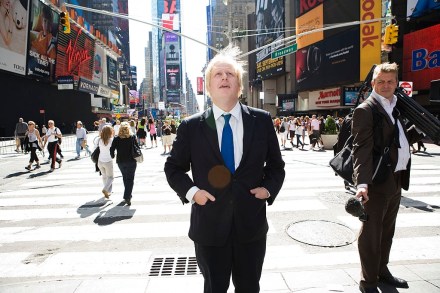
Much ridicule has been directed at reports that Boris Johnson is eyeing not just one tunnel to link Scotland and Northern Ireland, but another three, which would converge in a giant roundabout under the Isle of Man. Comparisons have been made to Hitler moving around imaginary armies in the last days of the Third Reich. Such scorn, though, contains a risk: that all drafts for Johnsonian infrastructure projects will be consigned to the cutting-room floor, just because the PM envisaged a few tunnels too far. I happen to be a supporter – sometimes, it feels, rather a lone one – of national infrastructure projects. Their lacklustre reputation in the UK may be in part because we have so often been really bad at them (HS2 anyone? Crossrail?

‘Smart’ motorways are an accident waiting to happen

From our UK edition

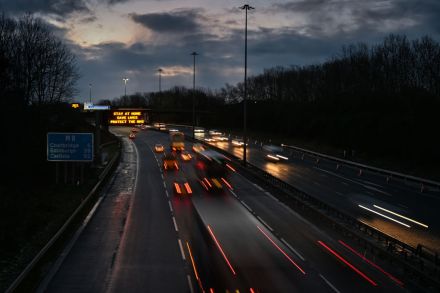
If I could wave a wand and reverse just one government policy it would be the expansion of so-called 'smart motorways' in the face of what seems the iron determination of the Department for Transport to press ahead with them. These are motorways where the hard shoulder is incorporated into the motorway to create an extra lane – a loss supposedly compensated for with periodic refuges for breakdowns. If you wondered why stretches of the M4 are shut most weekends for works, this is what they are doing. The consequences of such supposed 'improvements' can be lethal.

Is Joe Biden’s administration fit for the 2020s?

From our UK edition

Joe Biden’s Cabinet nominees have been warmly received by the massed ranks of anti-Trumpists in Washington. But the warmth stateside is nothing compared with the rave notices the incoming administration is receiving in much of Europe. There is particular delight in the UK, where the special Boris-Donald relationship evaporated within seconds of Biden’s election victory. The enthusiasm derives partly from a sense that, as some have put it, the adults are back in the room. The image of Trump as ‘toddler-in-chief’ was projected on to his whole volatile administration. Now the line-up announced by the incoming President looks and sounds serious, sober and a lot more like US administrations are supposed to be.

Has Covid changed the English language forever?

From our UK edition

It was Nervtag that did it for me. The New and Emerging Respiratory Virus Threats Advisory Group (NERVTAG) was responsible for reviewing, and then delivering, the bad tidings to the government about a new variant of the Covid-19 in the UK. So much more easily transmitted did the group judge it to be that, within hours, a Prime Minister who had said he wanted to protect Christmas at almost any cost had cancelled it, and France led what became a procession of more than 40 countries curbing travel with the UK.

Why does Britain refuse to swap hostages?

From our UK edition

In the last days of November, Dr Kylie Moore-Gilbert was released from Tehran’s Evin prison and flown back to a welcome in Australia. A dual Australian-UK national, she had served two years of a ten-year sentence for espionage — pronounced after a secret trial. She had been in Iran for a conference and was detained as she was about to leave. She had strongly protested her innocence. So why, many Britons might ask, is the Australian-British academic suddenly free after two years in which the Iranian security services tried in vain to 'turn' her — while the UK-Iranian dual national, Nazanin Zaghari-Ratcliffe, remains under house arrest in Tehran, with the prospect of another trial and a return to prison.

Covid has killed spontaneity for good

From our UK edition

Maybe it had to come: a note on my local (London) message-board said that the two Marks & Spencer food halls where I have taken to shopping since the first pandemic lockdown are now offering – toot the bugle, as the Prime Minister might say – a booking system. Of course, this is presented as a big improvement, 'part of our efforts to make shopping easier for our customers,' according to M&S. It’s called 'express access', the idea being that, following the introduction of Lockdown II, you will be able to 'book a slot' to avoid queuing. True, the system is voluntary.