Mary Dejevsky

Mary Dejevsky is a writer, broadcaster, and former foreign correspondent in Moscow, Paris and Washington.

Boris, Zelensky and Britain’s new special relationship

From our UK edition

Boris Johnson has been accused of shamelessly using the war in Ukraine for his own political ends. The timing of his contacts with president Volodymyr Zelensky suggests there is plenty of evidence to support this claim. At the end of last week, within hours of his ethics adviser’s resignation, Johnson ducked out of a planned meeting with Northern MPs in favour of a day-trip to Kyiv. The timing of Johnson's conversations with the Ukrainian president, Volodymyr Zelensky, have certainly rung alarm bells.

The fall of Westminster Council

From our UK edition

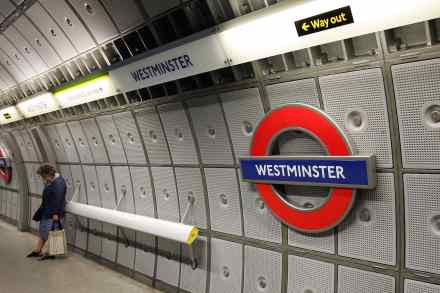
Of all the setbacks for the Conservatives in London, the loss of Westminster Council was probably the least expected and the most emblematic. To be sure, as in much of the capital, the Conservative vote had been declining, but the prospect that control would actually change this year seemed unlikely. But it did, and as a resident of south Westminster for more than 20 years, I was an infinitesimal part of the reason. In 2000, contemplating the move back to the UK from the United States, we bought a flat within the echo (on a quiet day) of Big Ben. That the local authority was Westminister was a consideration. The council drew high praise not only for some of the lowest council tax rates in the country but for running high-quality and efficient services. And so it seemed.

What’s behind Russia’s new Z symbol?

From our UK edition

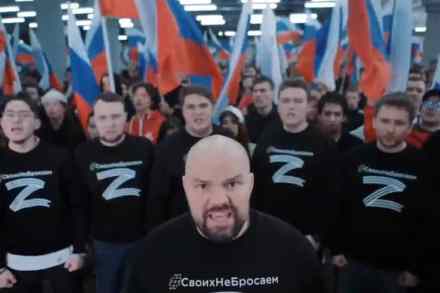
National symbols are usually proudly emblazoned for all to see. That’s the point of them. One, though, seems rather to have crept up on us in recent weeks, being flashed almost like a secret tattoo and then quickly covered up again. It is the letter ‘Z’ that Russians have started using to denote national solidarity and support for their country in the war in Ukraine. The Z came to international notice when a Russian gymnast, Ivan Kuliak, displayed it prominently on his strip two weeks ago while standing next to a Ukrainian competitor at a tournament in Qatar. He now faces a disciplinary inquiry as under the rules such symbols must not be worn.

How close is Russia to collapse?

From our UK edition

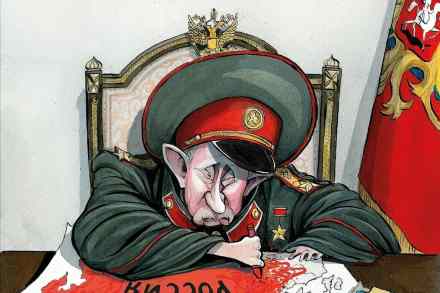
Russia is now as closed off to the world as the Soviet Union was before Mikhail Gorbachev made his first tentative steps towards glasnost more than 40 years ago. Pretty much all the progress that post-Soviet Russia had made towards becoming a 'normal' country has been reversed within the space of two weeks. Vladimir Putin’s presumed legacy – of stability, predictability and hugely improved living standards for the vast majority of Russians – is vanishing before their eyes. In recent days, Netflix and TikTok have joined what had already become a mass western boycott of Russia. American Express followed Barclaycard and Mastercard in leaving the Russian market.

Are we cheering on Ukraine to destruction?

From our UK edition

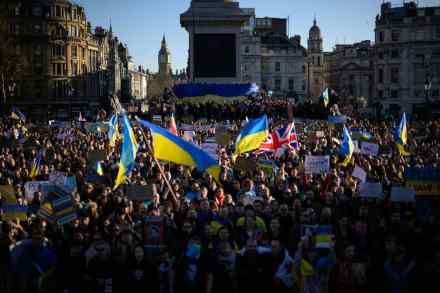
We’re just ten days into Russia’s assault on Ukraine and the western world has painted itself in Ukraine’s colours. Cities and towns have hung out Ukrainian flags and lit their public buildings in blue and gold. The BBC has changed the pronunciation of the Ukrainian capital from Kiev to Kyiv. Tesco is driving the supermarkets’ charge to rename chicken Kiev. And leading the cheers for Ukraine’s heroes have been the legislatures, from London to Brussels to Washington DC. MEPs watched a video message from Ukraine’s president, Volodymyr Zelensky, in respectful silence before erupting in applause and tears. The US Congress gave the blue-and-gold clad Ukrainian ambassador a prolonged standing ovation at Joe Biden’s State of the Union address.

Are Russians turning against Putin?

From our UK edition

One of the reasons why I judged — wrongly — that Vladimir Putin would not order an all-out invasion of Ukraine was the likelihood of a protracted war. But another was the possibility of popular protest in Russia, which could have potentially destabilising effects on the Kremlin. After sporadic protests in the hours immediately after the invasion, all of them ending in arrests or dispersal by police — citing Covid restrictions — Thursday evening sprang a surprise. Young people came out in their hundreds with homemade placards saying 'nyet voine', no to war, not just in Moscow and St Petersburg, where political engagement tends to be higher, but in nearly 50 towns and cities across Russia. https://twitter.com/ragipsoylu/status/1496905869983768581?

Vlad the Invader

From our UK edition

35 min listen

In this week’s episode: What does Putin really want for Russia?For this week’s cover story, Niall Ferguson writes about how Putin seems to be trying to recreate the Russia of the Past, while this week's diary by Timothy Garton Ash says the West has misunderstood his intentions, Niall and Timothy join the podcast along with Mary Dejevsky a columnist for the Independent. (00:48)Also this week: Should there be women-only spaces on trains? Jeremy Corbyn suggested it when he was Labour party leader and now Scotland seems to be flirting with the idea. Mary Wakefield says in this week’s Spectator that although she enjoys the idea of lady carriage, it doesn’t make much sense.

The West is doing Putin’s work for him

From our UK edition

Ukraine, as is periodically observed, means borderland. Geography will forever influence its destiny as an independent state. With tensions between East and West again rising, however, Kiev might well conclude that Ukraine is more accurately translated as 'on the margins'. Foreign leaders and ministers have, to be sure, been punctilious in making courtesy visits to President Zelensky and his team before or after paying court to President Putin in Moscow. But it must now be crystal clear to Kiev that — in a conflict essentially centred on Ukraine, though actually about much more — its western champions have at best considered Ukraine’s interests as secondary to the pursuit of the main quarrel with Russia, often not considering them at all.

5,000 helmets and Germany’s dark history in Ukraine

From our UK edition

If anyone produces a ‘history in 100 objects’ for the first half of the 21st century, one of those objects could well be a German helmet from the consignment of 5,000 dispatched to Ukraine, as the Russians seemed about to invade. The donation was noteworthy because it was met not with gratitude but with ridicule, not only from Ukrainians on social media – will it be pillows or duvets next time? – but from Germans themselves. There were reasons, of course, why the Germans sent helmets, while the British made great play of airlifting 2,000 shoulder-launched anti-tank missiles and the Americans sent Javelin anti-tank and Stinger anti-air missiles, as part of 80 tonnes of what was described as ‘lethal aid’.

Bloodshed in Kazakhstan could spell trouble for Putin

From our UK edition

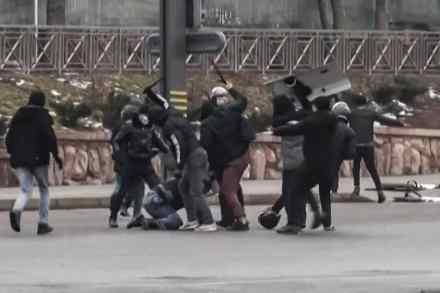
Russian troops have now arrived in Kazakhstan in a desperate bid to halt the tide of violence that has swept the country. Their arrival is a last resort for the country's president Kassym-Jomart Tokayev as he fights to maintain his grip on power. But he isn't the only leader who is eager to quell this unrest: Vladimir Putin will be deeply troubled by what events in Kazakhstan mean for his own leadership. Fuel price rises were the immediate trigger for the unrest in Kazakhstan, but the rapid spread of these protests – from the west of the country, close to Kazakhstan's oil fields, to numerous towns and cities – shows that something much more fundamental is to blame for the disturbances that could well topple the regime of president Tokayev.

Why Britain should not extradite Julian Assange

From our UK edition

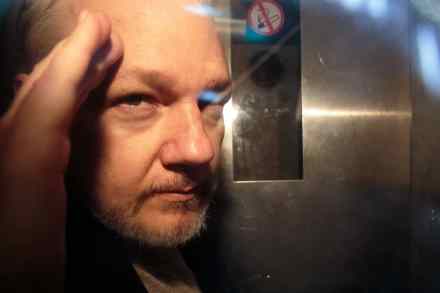
Julian Assange is facing extradition after the high court ruled there is no legal impediment to him facing espionage charges in the United States. The decision would seem to justify the fears that the WikiLeaks founder and his supporters have long harboured: that the UK has essentially served as a holding pen until such time as a legal mechanism could be found to enable his dispatch to the US.  Assange has always believed that the US would not stop until it had exacted retribution. His former lawyer and now fiancee, Stella Morris, said after the latest ruling that they would appeal, if possible, to the UK Supreme Court. The extradition case now returns to Westminster Magistrates’ Court where it began.

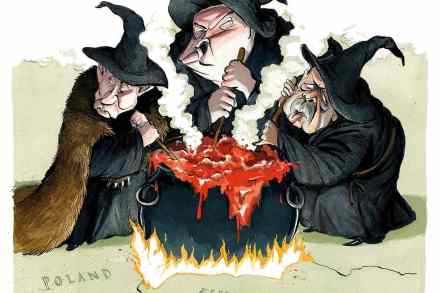
Toil and trouble: Europe faces a new form of warfare

From our UK edition

37 min listen

In this week’s episode: Are migrants the new munitions? In our cover story this week, our political editor James Forsyth looks at the growing troubles in Eastern Europe and how this small part of the world stage could end up splintering the scaffolding of global peace. He is joined on the podcast by Mary Dejevsky, a columnist for the Independent. (00:42) Also this week: Will the monarchy survive past Elizabeth II? The royal family is not in a good way, with the Queen missing multiple appearances due to ill health, a prince under investigation, and the continuing cold war between William and Harry, will the monarchy survive past Elizabeth II? That’s the question Freddy Gray asks in this week’s Spectator.

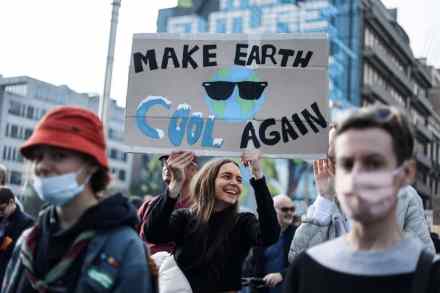
Don’t blame boomers for destroying the planet

From our UK edition

A new charge has been added to the long list of ways in which we baby-boomers have supposedly blighted the prospects of the millennials. Along with our reluctance to downsize (despite the lack of decent retirement homes), the gold-plated pensions in our bank accounts (hollow laughter to that), and the future bequests we are squandering (less on cruises than on extortionate 'social care'), is now this: 'we' trashed 'their' planet. At least as infuriating as the charge itself is how many of my fellow boomers go along with it. This is in spite of recent research, from King’s College London, showing that older people are just as concerned about climate change as the young. It also ignores the reality of what we have actually done to look after the planet.

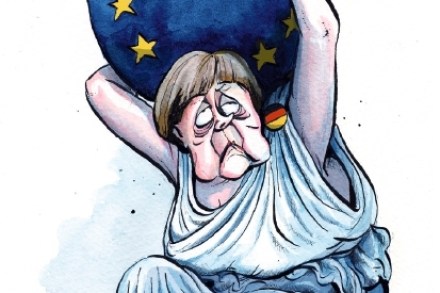
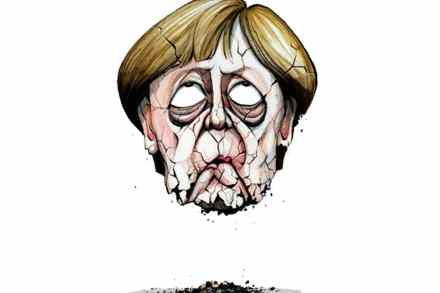
Feted abroad, dismissed at home: will Germans really miss Merkel?

From our UK edition

As Angela Merkel finally steps down, the verdict on her leadership – at least from overseas – appears to be unanimous: she is a safe pair of hands who will be greatly missed. Her departure is a big loss for Europe. But is that right? Many Germans, it seems, are much less favourable about Mutti. There have been dissenting voices outside Germany to be sure, arguing that her achievements and historical importance have been exaggerated. Her overseas critics point out that she failed to make the most of the considerable authority she acquired and that her interventions in the European Union only made its divisions worse. The inflexibility of Merkel (or rather the misjudgements of David Cameron) could even be seen as a key reason why Brexit took place.

Why won’t German politicians talk about migration?

From our UK edition

For a country with a reputation for being staid and predictable, the election campaign that closes the Merkel era in Germany has not been without its dramas.  The opening of the campaign coincided with a flood disaster in the north-west of the country, which propelled climate change to the top of the agenda. Then favourite and assumed Merkel-successor, Armin Laschet, was undone when he was caught on camera joshing with colleagues amid the human misery. Then, earlier this month, police raided the offices of the finance and justice ministries as part of a money-laundering investigation that could harm the prospects of the current front-runner, the deputy chancellor, finance minister and Social-Democrat contender, Olaf Scholz.

Hurricane Ida exposes the dire state of American infrastructure

From our UK edition

Watching coverage of Hurricane Ida on both sides of the Atlantic, it was hard to escape the impression that politicians and reporters were almost hoping that the worst would happen: that New Orleans would be drowned in a new Katrina. The 'fifth largest hurricane on record' and a protracted power outage affecting one million people were bad, but hardly the human catastrophe some had anticipated. In the event, the doom mongers had to be satisfied with the heaviest ever rainfall in New York and New Jersey, some crippling flood damage and as many as 50 deaths. This did not, of course, prevent commentators up to and including the US President seizing on climate change as the arch-culprit. What had happened, said Joe Biden from the White House, was 'yet another reminder that...

The descent of Afghanistan

From our UK edition

The bomb attacks at Kabul airport were what US and allied commanders overseeing the mass evacuation had most feared. In so far as they could be, they were prepared. They had, it appears, received very specific intelligence — perhaps based on a trial run by the bombers — that such attacks were in the offing. They warned people to stay away from the airport. Guards were doubtless on extra-high alert. And yet the perpetrators got through. More than 60 civilians were killed along with 13 US marines. Dozens more were injured and taken to already overburdened hospitals in Kabul. The carnage of 26 August was the costliest day in the last stages of the West’s Afghan war.

Afghanistan and our amnesia about the horrors of war

From our UK edition

Of the many harrowing images coming out of Afghanistan, one commandeered public attention for longer than most. It showed a small child being handed to an American soldier over the wall of Kabul airport and demonstrated, shocked viewers were told, the desperation of parents to save their children, even if it meant entrusting them to strangers. Now two observations might be made about this. The first is that it was not quite as it seemed. It was later reported that the child was ill and was being passed for treatment at a Norwegian medical facility on the other side of the wall. The family were subsequently reunited.

How did US intelligence get Afghanistan so wrong?

From our UK edition

It may well go down as the understatement of the year. In a quite extraordinary address to the nation after the fall of Kabul to the Taliban, the US President made this admission: ‘The truth is this did unfold more quickly than we had anticipated. So what’s happened? Afghanistan’s political leaders gave up and fled the country. The Afghan military collapsed, sometimes without trying to fight.’ https://www.youtube.com/watch?v=OUrivUGaATM If this were the only intelligence failing of recent years, then maybe a little indulgence could be shown More quickly? Than we had anticipated? As recently as 10 August, US intelligence said that it would take the Taliban up to 90 days to take Kabul.