Mary Dejevsky

Mary Dejevsky is a writer, broadcaster, and former foreign correspondent in Moscow, Paris and Washington.

The days of ‘our’ NHS are over

From our UK edition

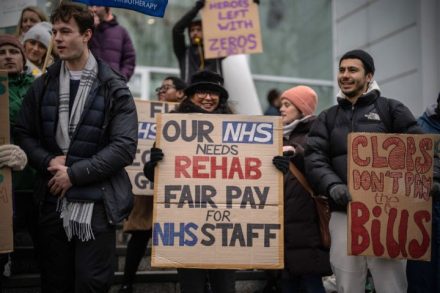
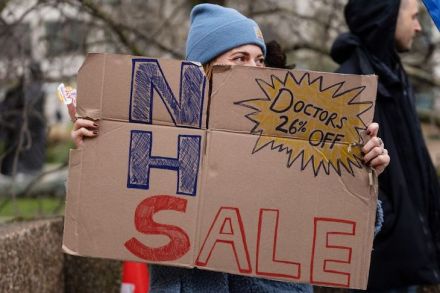
Have you noticed something? Whether it is the nurses, who are no longer striking, the junior doctors, about to spend three days on the picket line in pursuit of their 35 per cent pay claim, or the consultants, threatening a two-day walk-out which they may choose to spend topping up their income in the private sector rather than shouting slogans outside their hospital – it’s all about them.  They are exhausted, they are suffering from 'burn-out', their work brings on mental health issues. Their pay has – hardly uniquely – lagged way behind inflation, their working conditions are intolerable. No one respects them or their hard work, they’re threatening to follow their zillions of colleagues who have left for a better work-life balance by an Australian beach.

Rishi Sunak is a hit on the world stage

From our UK edition

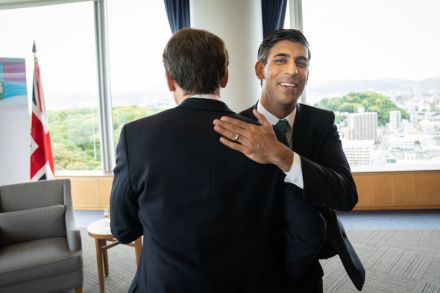
Voters will have learned several things about Rishi Sunak in recent days: that he thinks he can win the next election; that he and his wife have fallen 50-plus places on the annual Sunday Times Rich List, and that he can emerge from a punishing flight schedule – London to Hiroshima via Reykjavik and Tokyo – with little overt trace of jet-lag.  But there is something else, which may in time prove to be more significant: the UK’s youngest Prime Minister of modern times is increasingly being treated as an equal and congenial colleague by his counterparts abroad. This weekend marked his first appearance at what is still thought of – though who knows for how long – as the global top table.

Move over Help to Buy – we really need Help to Sell

From our UK edition

When I learned that the Prime Minister was thinking of launching a new Help to Buy scheme, my first response was ‘Oh no’. My second response was the same, with the caveat that we are in the last days of campaigning for local council elections, with a general election a year or so down the line, so anything that looks like a political promise now may not actually happen.If it does though, my objections will be the same as when David Cameron and George Osborne launched the first version – except there is now more evidence of Help to Buy’s deleterious effects. ‘Help to Buy Mark I’ mostly assisted those with the means to buy anyway. For everyone else it pushed up house prices, then kept them higher than they might otherwise have been.

We shouldn’t rest until all ‘smart’ motorways are axed

From our UK edition

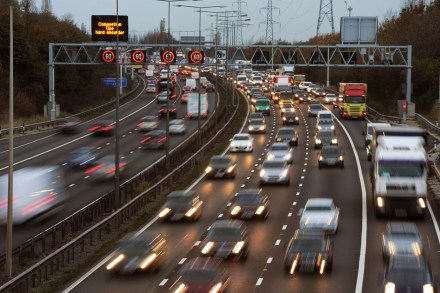
Six months after he became Prime Minister, Rishi Sunak has finally honoured one of the smaller, but more eye-catching, promises he made during his party leadership campaign. He has announced an end to the building of so-called ‘smart’ motorways, citing the economic cost and safety concerns. In doing so, Sunak has halted a near 20-year policy that has been increasingly distinguished not only by its unpopularity among the car-driving public, but by its toll in lives. Thirty-eight people died in the five years to 2020 on ‘smart’ motorways, even though they only make up a small proportion of the road network. If the cost of smart motorways has been judged to be too high, what makes those already built any different?

In defence of Rishi Sunak’s crackdown on beggars

From our UK edition

When Rishi Sunak presented the latest attempt by a prime minister to get tough on anti-social behaviour, it wasn’t the graffiti-cleaning or the ‘gotcha’ fly-tip cameras or the labelled jumpsuits that caught my eye. It was the inclusion of begging. Admittedly, you had to go pretty far down his pledge list before you found it. Perhaps someone with a longer institutional memory than the current Cabinet Secretary, Simon Case, had warned him of the drubbing John Major received from the great and the good – and many well-meaning liberals – when he launched his drive against ‘aggressive’ begging in 1994. It will be made an offence for criminal gangs to organise begging networks for extra cash, which is often used to facilitate illegal activities.

Does it matter if Putin uses a body double?

From our UK edition

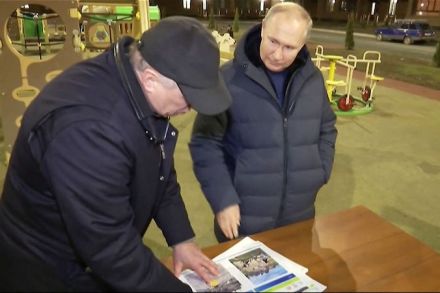
Was it Vladimir Putin or wasn’t it? ‘Vladimir Putin’ was certainly shown on television being helicoptered into Crimea this week, meeting ‘the people’ and driving himself around reconstruction sites in the devastated city of Mariupol.In the wider world, though, there was widespread scepticism that it was the real Russian President. Clips were posted on social media showing the supposedly different chin-line and puffier cheeks of the latest ‘Putin’, while even the BBC injected a note of doubt into some of its despatches, using words like ‘reportedly’ to qualify his (potential) visit.There have long been rumours that Putin uses a body-double – although it is also possible that his apparently different facial features are because of medical treatment.

What striking doctors don’t like to admit

From our UK edition

The more junior doctors have tried to justify their three-day withdrawal of labour over the past week, the more damage, or so it seems to me, they have done to their cause – whatever that cause may be. On the final day of their strike – in pursuit of a 35 per cent pay rise – reports are piling up of cancelled operations, postponed cancer treatments and more people pushed towards the private health sector.  Some of the striking doctors’ work is apparently being covered by consultants – to which I, and no doubt many others, would say: bring it on. For years, consultants have delegated far too much of their responsibility to junior doctors, including plenty of after-hours and weekend work.

Cyclists have been given a licence to ride on the pavement

From our UK edition

Let me confess: when I learned that a woman pedestrian had been sent to prison for causing the death of a cyclist she had forced off the pavement, only my second thought turned to the horror experienced by the victim and sympathy for her family. My first, entirely selfish, thought was: there but for the grace of God go I. For I, too, have shouted at cyclists who occupy pavement space when I think they should be cycling on the road (though school ma-am rather than swearing is more my register). I, too, have a tendency to put my hand out to keep an intruding cyclist at bay. I have even been known, by standing my ground, to force a cyclist to dismount at the barriers designed to stop them slaloming through narrow pedestrian passageways.

How the Manchester Arena bombing inquiry failed

From our UK edition

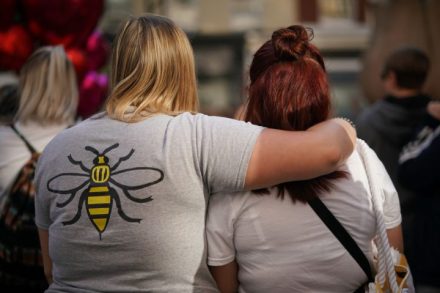
Responding to Sir John Saunders’ third and final report on the bombing at Manchester Arena, Suella Braverman, the Home Secretary called it a 'difficult day' for the Home Office. In saying so, she was clearly referring not just to the general failure of the authorities to prevent the attack, which cost 22 lives, but specifically to the failures of the security service, MI5, which comes under the aegis of the Home Office. In his report, Sir John concluded that the bombing might have been prevented had MI5 responded differently to the information they had. He noted that one officer in particular had contributed to the failure by not passing on information promptly.

Should teachers really be going on strike?

From our UK edition

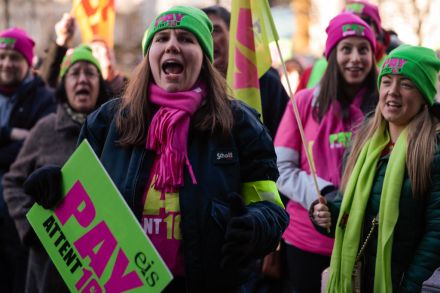
It had to happen, didn’t it? After the railway workers, the train drivers, the nurses, the ambulance crews, the civil servants, and in all likelihood the junior doctors, here come the teachers – although not quite as enthusiastically as their union leaders might have wished.The National Education Union, representing 300,000 teaching staff has announced strikes through February and March, in pursuit of an above-inflation pay rise, saying that the 5 per cent offered amounts to a pay cut, given the double-digit inflation rate. Teachers are now set to join their Scottish colleagues, who have begun a series of ‘rolling strikes’.

Alireza Akbar’s execution is a tragedy

From our UK edition

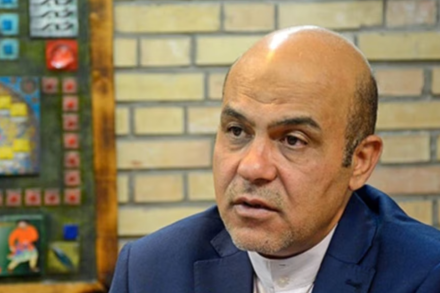
UK officials from the Prime Minister downwards have condemned the execution of Iran’s former deputy defence minister, a dual British-Iranian national, in the strongest of terms. The Prime Minister, Rishi Sunak, has described it as ‘a callous and cowardly act, carried out by a barbaric regime’. The chair of the Commons Foreign Affairs Committee, Alicia Kearns, said it was ‘another horrifying example of the Iranian regime... weaponising British nationals and industrialising hostage taking,’ And the Foreign Secretary, James Cleverly, warned of consequences, saying it would ‘not stand unchallenged’. There will doubtless be a lot more condemnation from London in the hours and days to come.

Striking railway workers are fighting a losing battle

From our UK edition

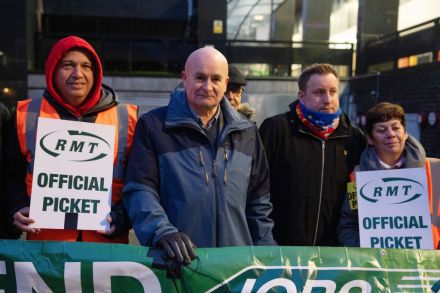
The greatest danger presented by the rail strikes – for the Government, that is – has passed. The trade unions, chief among them the RMT, fronted by the alternately reasonable and hectoring Mick Lynch, threw everything they could at ministers in the run-up to the holidays. It did not work.  Much the same applies, to a greater or lesser degree, to other public sector strikes. There was a cynical – and concerted – attempt to use the Christmas and New Year break as an emotive deadline. This was apparently based on a gamble that enough of the public would blame the Government for 'ruining Christmas' to force a generous settlement. There were times when this looked set to become a general strike in all but name and it seemed the gamble could pay off.

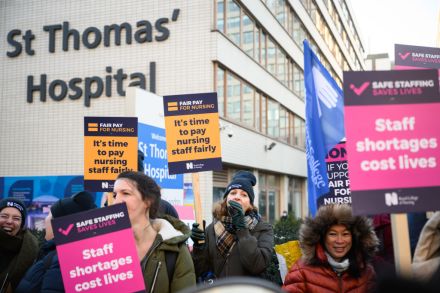
Striking nurses don’t deserve a bumper pay rise

From our UK edition

Today’s strike by nurses may indeed be the biggest action – or inaction – of its kind in NHS history. But there is a distinct sense of having been here before. The nurses’ grievances been a daily theme of news broadcasts for weeks, as though, as a group, they are uniquely affected by the double-digit inflation rate, and uniquely deserving of a commensurate pay rise. Not only that but their complaints about low wages, long hours, intolerable working conditions and the general hardheartedness of government replicate many of those heard back in the spring of 2021, when the then-Chancellor (a certain Rishi Sunak) drew their ire.

It’s no surprise Britain can’t cope with snow

From our UK edition

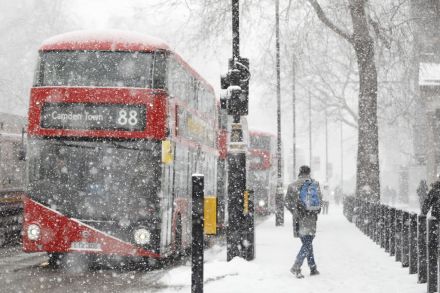
If you've managed to avoid the dimly-lit pictures of people's back gardens, count yourself lucky. Yes: snow has arrived in the capital. The Foreign Secretary made a point of thanking London-based diplomats for showing up to his speech in Westminster yesterday – or, as he put it, ‘battling through’ two or three inches of snow to get there. James Cleverly had a point: St James’s Park next door was a veritable winter wonderland; Whitehall was now clear, but had received a generous covering of the white stuff the evening before, while the capital’s transport was as disrupted as it inevitably is during a 'snow event'. This morning, the snow continues to cause chaos. For readers outside London, let me apologise.

Why Britain should welcome Russians fleeing Putin’s war

From our UK edition

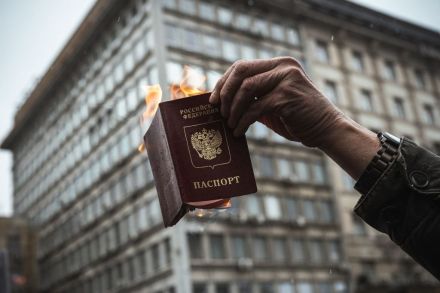
As if Russia’s invasion of Ukraine had not already presented quite enough dilemmas for other countries, suddenly there is another one. How sympathetic a reception should Russian men trying to avoid call-up in their home country be granted abroad, and specifically in the UK? This quandary has arisen following Vladimir Putin’s announcement of what he called a 'partial mobilisation' of reservists to serve in Ukraine. The predictable response to the announcement, made at 9 o’clock Moscow time on Wednesday, was a surge of younger Russians trying to leave the country by any means and to any country where they had a chance of being let in.

Why Crimea could be key to Ukraine winning the war

From our UK edition

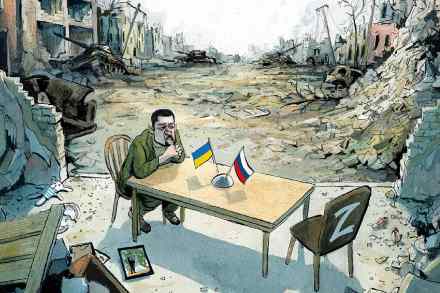
Over the six months since Russia invaded Ukraine, the ambitions of President Zelensky and his compatriots have only grown. From an early readiness to engage in talks – first in Belarus and then in Istanbul – Kyiv has progressed to an insistence that Ukraine can win, and from there to a definition of victory that includes not just a return to the status quo before the war, but the restoration of Ukraine’s post-independence borders, and now also the recovery of Crimea. Zelensky himself has often seemed slower than some in his entourage to expand the mission. But he has been adding his voice to those calling for the recovery of Crimea for a few weeks now, with Independence Day prompting these ringing words: ‘Crimea is Ukraine. And we will return it.

The strange morality of sponsoring weapons

From our UK edition

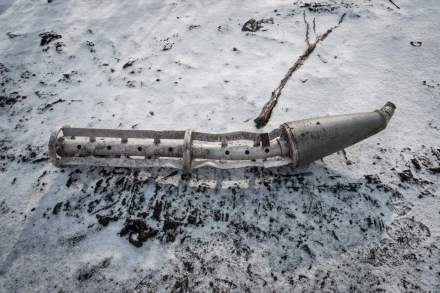
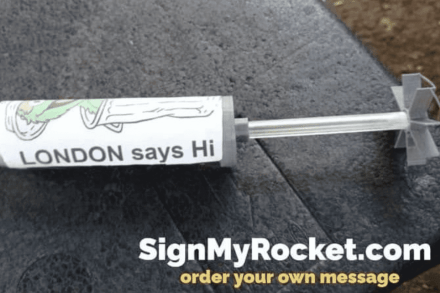
Forget fund-raising concerts donating spare clothes and offering your spare room to a refugee family. There’s a better way of showing your sympathy for Ukrainians: you can now sponsor weapons, and arm it with your very own message. For up to £2,500, Brits can send a personalised message to the crowdfunding site Sign My Rocket, who will then write it on a missile destined for the Russian army. Sending hostile messages to the enemy, of course, is not new, and may be as old as war itself. Dropping black propaganda leaflets from planes for the benefit of the enemy beneath has long been standard practice. Nor was it unusual for those on the production line at armaments factories or even those loading the ammunition to add their own special something.

Nick Clegg is right – being European is special

From our UK edition

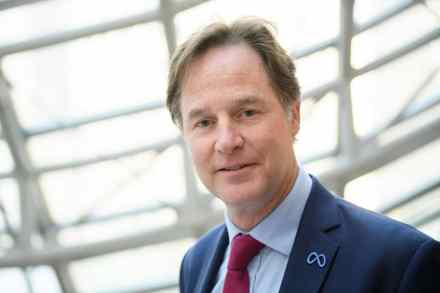
The theme of the week has to be 'coming home': first the women’s football trophy, and now one-time Deputy PM, Nick Clegg, who says he will share his time between the two sides of the Atlantic. He had recently hinted at a return, describing himself as 'at heart, European'. Some might question this as a reason for swapping continents. Why would anyone paid a multi-million dollar Silicon Valley salary, enjoying a multi-million dollar California mansion, with the cars, the staff and the space of the New World, even consider moving back to the Old Country, especially as the nights draw in and the (stratospherically priced) heating has to be switched on?

Liz Truss is right to look at family taxation

From our UK edition

Launching her campaign for party leader and prime minister, Liz Truss said something that barely registered amid the big tax-cutting promises, but made me prick up my ears in a very positive way. She talked about trying to make sure that parents and other carers were not penalised by taking time out of paid work. ‘To ensure people aren’t penalised for taking time out to care for their children or elderly relatives,’ she said, ‘we will review the taxation of families’, describing families as ‘a vital part of our lives and the crucial building block for a stable society’.

Why the Met Police keeps failing

From our UK edition

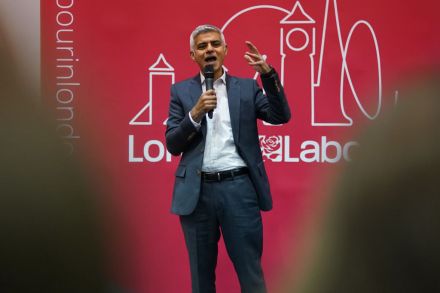
Much has been made of the decision to place the Metropolitan Police in what is often referred to as special measures, where it joins five other forces from England and Wales. The many ways in which the Met has fallen short have also been amply aired, from the murder of Sarah Everard by a serving officer to the botched investigation of serial killer Stephen Port, to the racist and sexist mindset laid bare at some London police stations. Many crime rates in the capital have been rising sharply, as – naturally – has public dissatisfaction. Nor should the blame game that has broken out between the Home Office and the Mayor of London, Sadiq Khan, come as much of a surprise.