Martin Vander Weyer

Martin Vander Weyer

Martin Vander Weyer is The Spectator’s business editor

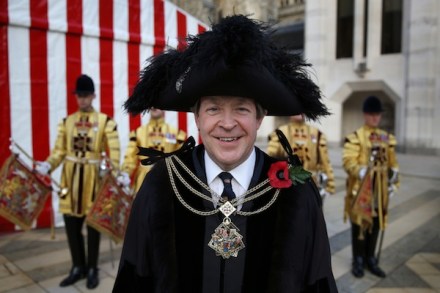
Is Lord Mayor Roger Gifford finally unleashing his inner Boris?

From our UK edition

A short stroll from Poultry to the Mansion House offers vistas of the old and new City. The fortress of the Bank of England awaits its new Governor while the Royal Exchange earns its keep, like much of the modern Square Mile, as an upmarket nest of boutiques and eateries. The Lutyens-designed headquarters of the long-gone Midland Bank stands apparently abandoned by its oligarch owner, facing the avant-garde pink edifice that replaced the Victorian ‘Mappin & Webb Corner’. The skyline gives glimpses of the Lloyd’s Building from 1986, the Gherkin from 2003 and the ‘Walkie-Talkie’ conceived in 2007, due to be completed next year; each a monument to the boom that preceded the bust.

It’s not just rich Russian that will share Cyprus’ pain

From our UK edition

In their second attempt to clean the Augean stables of Cyprus’s banking system without jeopardising the integrity of the euro, bailout negotiators seem to have heeded most of my advice from last week. After the 36-0 rejection by the Cypriot parliament of a first set of terms that included a levy on all bank deposits, large and small, the new €10 billion deal reached in the early hours of Monday protected depositors with holdings of less than €100,000 while letting the weakest of the island’s big banks, Laiki, go under in an orderly way. Laiki’s unprotected larger depositors will lose most, while those of Bank of Cyprus (which will absorb what’s left of Laiki) take a haircut of up to 35 per cent.

In Cyprus as in Britain, the prudent must pay for others’ folly – but not like this

From our UK edition

The Cypriots are the authors of their own misfortune, having turned their banking system into a rackety offshore haven for Russian loot and lent most of the proceeds to Greece. But it was madness on the part of bailout negotiators to shake confidence in banks across the eurozone by trying to impose a levy on deposits held by even the smallest Cypriot savers, in what was presumably an attempt to cream off a layer of ill-gotten foreign cash. And even if the proposal has been radically watered down by the end of the week, we now know the European powers-that-be are prepared to pull this device out of their toolbox if the subject government is too weak to resist.

Overseas aid – the alternative

From our UK edition

‘We have written to David Cameron to applaud his decision to stick to the UK’s commitment to overseas aid to the developing world, despite the tough economic times,’ begins a letter to the Financial Times from the bosses of major companies from BP to Vodafone, with PR maestro Alan Parker of Brunswick at the top of the list. ‘It is both humanitarian and in the interests of this country.’ But that’s not the view of seven out of ten respondents in a recent ITV ComRes poll. They think too much — £6.7 billion this year — is spent on overseas aid; only 7 per cent of them believe the government should abide by its aspiration to bring the Department for International Development’s budget up to 0.

Europe’s cap on bankers’ pay is merely a harbinger of the Great Persecution to come

From our UK edition

‘Possibly the most deluded measure to come from Europe since Diocletian tried to fix the price of groceries across the Roman Empire,’ was Boris Johnson’s assessment of the proposal to cap bankers’ bonuses at 100 per cent of base salary, or 200 per cent with shareholders’ approval. This blunt exercise in market interference was tabled by a committee of MEPs led by a British Lib Dem, Sharon Bowles (perhaps in revenge for the fact that she didn’t win the Bank of England governorship, for which she applied) as a condition of agreeing a new set of bank capital reforms. With the support of all member states other than the one most affected — that’s us — and despite token resistance from George Osborne, it will now pass into EU law.

Why aren’t more people unemployed?

From our UK edition

An unfamiliar noise floats over the town; an insistent, one-note metallic drone. Tracked to its source, it turns out to come from a sawmill in a hidden wooded valley a quarter of a mile from my house. Abandoned for the past year, the mill has suddenly come back to life. It is emitting great plumes of steam as well as a multi-decibel industrial racket. And men are working there — I can see only two or three, but still they constitute another little piece of the great employment puzzle. An uptick in demand for sawn timber matches reports of increased levels of activity in the construction and housebuilding sector.

London house prices are a better guide to how the world sees us than Moody’s ratings

From our UK edition

‘There are two superpowers in the world today,’ said the American columnist Thomas Friedman in 1996. ‘There’s the United States and there’s Moody’s bond rating service. The US can destroy you by dropping bombs, and Moody’s can destroy you by downgrading your bonds.’ Well, not any more. Last Friday’s removal of triple-A status from British government debt may have made for a tense weekend chez Osborne and provoked short-selling of sterling by traders who thought it an obvious bet at a time when the Bank of England would clearly prefer a cheaper pound to boost exports.

Privatisation is the only solution for Royal Mail

From our UK edition

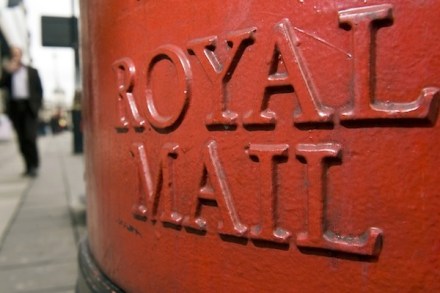
We have had a very high failure rate in deliveries of the catalogues for Emily Patrick’s exhibition,’ says an email from the painter’s husband. ‘Over 50 per cent have been lost in the post or inexplicably delayed.’ Come to think of it, my own most recent Amazon order, allegedly dispatched a fortnight ago, hasn’t reached Yorkshire yet — and neither has last week’s Spectator, although a large envelope posted to me from Old Queen Street on Wednesday did arrive on Thursday, but without its contents. Have aliens seized the sorting offices, or have Royal Mail managers been distracted by a ‘secret 62 per cent increase’ in their bonuses, revealed this week?

Here’s my strategic review, Barclays: see shareholders right and the rest will follow

From our UK edition

Antony Jenkins, the new-broom chief executive of Barclays, has the tone of a junior minister, not long in parliament, who finds himself promoted to high office after the big beast who preceded him was toppled by scandal. In fact he’s been in the bank 30 years, climbing the ladder so quietly that none of my contemporaries there (I coincided with him in Barclays for a decade) ever mentioned him as a man to watch before he was picked to follow Bob Diamond.

Remember the lesson of Shaun of the Dead: some zombies eventually come back to life

From our UK edition

Funny how little phrases go viral. Suddenly everyone’s talking about ‘fasting diets’, ‘zombie companies’ and ‘leadership plots’. As to the first, the idea of the ‘5:2 intermittent fasting diet’, I gather, is to eat as little as you can for two days a week. It’s all over the media, and any moment now someone will call George Osborne’s fiscal strategy ‘the 0:7 fasting diet that’s starving us of protein for growth’, or some such. There you are, Mr Balls: yours on a plate, as it were. But ‘zombie companies’ are not so easy to explain.

I look forward to using my pensioner’s pass on HS2 – and I’ve spotted the people to run it

From our UK edition

Investing £33 billion in HS2 — £46 billion if you accept the Taxpayers’ Alliance’s calculation — won’t boost us out of this triple dip, but it might ease the one after next, early in the reign of hugely popular, three-times-married King Harry, in whose favour his elder brother will abdicate, Dutch-style, after his 50th birthday. It’s a constant theme of this column that all prediction, even one year ahead, is (in Sir Mervyn King’s phrase) ‘a mug’s game’: every element of that first sentence may turn out to be bunkum.

Travel: Timeless island

From our UK edition

‘Hong Kong is the most Chinese city on earth,’ says my old friend Jo McBride, who has lived there for more than 30 years. That may come as a surprise to those who knew the place as a resolutely British enclave of colonial officers, traders and bankers — of whom, long ago, I was one — and to more recent visitors reassured by the hands-off regime of Beijing’s stooges in the 15 years since they took over from our last governor, Lord Patten. So hands-off, indeed, that most tourists still think of China as one destination and Hong Kong as another: a stateless stopover and giant shopping mall that constantly reinvents itself to the whims of global demand.

Greek tax-dodgers, Irish horse dealers and Chinese art cheats: please skip this column

From our UK edition

It’s only fair to warn you — especially if you’re Greek, Irish or Chinese — that this week’s column contains negative stereotyping. I’ll leave the transsexuals to Rod Liddle, but I’m still bracing for the  Twitter storm. My propensity to commit this category of thought crime was first pointed out to me by Giorgos Papaconstantinou, the socialist former finance minister of Greece. A graduate of the LSE, George to his friends, he was his country’s most fluent spokesman during earlier stages of its financial crisis — and last May I came up against him in a debate about the pros and cons of ‘austerity’.

Hardly a hammer blow if 800 jobs have shifted from Swindon to Solihull

From our UK edition

My item last week about brighter prospects for car makers looked forlorn by Friday lunchtime, when news bulletins were leading with a quote from one Tony Murphy of the Unite union to the effect that an announcement of 800 job cuts at Honda’s Swindon plant was ‘a hammer blow to UK manufacturing’. This was followed at the weekend by a rather less emphatic response to a press release from Jaguar Land Rover which included news of 800 extra jobs at Solihull, continuing a sustained expansion of its workforce that began two years ago. I was hoping Murphy might declare himself ‘over the moon’, but he left it to his assistant general secretary Tony Burke to issue a pious welcome making play of the fact that JLR is only offering one-year contracts.

Gnomes of Zurich will fall like skittles before US investigators finish with them

From our UK edition

So farewell, Wegelin & Co, the oldest bank in Switzerland and the one with the simplest strategy for growth — which was to offer secret accounts to American tax-evaders who could no longer obtain that valuable service from bigger Swiss banks such as UBS. Founded by a linen merchant in 1741, which makes it half a century younger than Coutts and Barclays, Wegelin last week pleaded guilty to helping US citizens evade tax on $1.2 billion, agreed to pay $58 million in fines and restitution, and announced that it is closing down.

Ex-editor sets banking agenda – and £100 says he’ll win the climate debate too

From our UK edition

The sun shines warmly in south-west France, and rabbit bouillabaisse is the pièce de résistance of a New Year lunch at which Nigel Lawson is a fellow guest. The former chancellor and Spectator editor divides his time between his home in the Gers, the Global Warming Policy Foundation which he chairs, and the Parliamentary Commission on Banking Standards on which he has been sitting alongside the new Archbishop, Justin Welby — who he calls ‘my new friend, an excellent man’. We agree that the argument on banking reform is moving Lawson’s way. As banks continue to rack up huge fines — £2.

Neither catharsis not cataclysm, but a year of mobile money and digital books

From our UK edition

In a recent Spectator panel debate titled ‘Review 2012, Preview 2013’, Matthew Parris startled an expectant audience by observing that in his view nothing very interesting had happened in the past 12 months, and not much excitement lies in wait for next year. Prediction, we know, is a mug’s game — those ancient Mayans who said the world was going to end last week must be feeling more sheepish than a flock of Treasury growth forecasters. Even predicting ‘not much excitement’ is to risk being horribly wrong if our banks turn out to be as under-capitalised as the doomsters suggest, and it all kicks off again like September 2008.

There may be troubles ahead, but here’s my Christmas recipe for keeping the pecker up

From our UK edition

I tried, I really did, right to the bitter end. No column has made more effort than Any Other Business to spot pinpoints of light on this year’s dark economic horizon. If there was a Spectator Optimist of the Year award, I’d walk it. But with the Chancellor and the Governor drowning out the carol singers with what has become a dirge-duet about the long, hard and winding road to recovery — and with evidence even I can’t deny of an autumn setback after the late summer bounce — my self-appointed role in the national conversation has begun to look more eccentric than ever. All I can do at this stage is invite you to charge your glass for a toast or two, and offer my Christmas recipe for staying cheerful against the odds. Here goes.

America’s hounding of BP no longer has much to do with Louisiana’s sad pelicans

From our UK edition

BP continues to pay a full price for the Deepwater Horizon disaster — deservedly so, you might say, given that 11 rig workers died in the April 2010 explosion that caused ‘the world’s worst oil spillage’ in the Gulf of Mexico. The contractor Halliburton and the rig operator Trans-ocean were also implicated, but blame has been heaped by all parties upon BP, which last month agreed a settlement with the Department of Justice that included pleading guilty to felonies and paying a $4.5 billion fine — to add to tens of billions paid in compensation to businesses along the Louisiana coast, manslaughter charges pending against BP executives, and the possibility of further huge fines for water pollution.

The Goldman Sachs candidate wins, but spare a thought for the popular loser

From our UK edition

So now we know. It’s not the popular insider, the All Souls professor or the Whitehall veteran. It’s not an Old Etonian — uniquely, they couldn’t find one for the shortlist. The winner of the Governorship stakes turned out to be the Goldman Sachs candidate, Mark Carney, currently at the Bank of Canada but formerly of the Wall Street investment firm, the ‘giant vampire squid’ whose tentacles get everywhere. And that’s just about the only jibe that anyone has found to aim at him, because his credentials are pretty outstanding. To call him ‘the best person in the world’ for the job, as the Chancellor did, is tempting fate — remember when John Browne of BP was repeatedly labelled ‘the world’s best business leader’?