Martin Vander Weyer

Martin Vander Weyer

Martin Vander Weyer is business editor of The Spectator. He writes the weekly Any Other Business column.

Google isn’t really evil, but our tax system is a muddle that breeds avoidance

From our UK edition

‘You are a company that says you “do no evil”,’ Margaret Hodge told Google’s Matt Brittin a fortnight ago, ‘I think that you do do evil.’ It was a soundbite of the kind we’ve come to expect from grandstanding select committee chairmen. Since then — I won’t labour the point — we’ve seen an example in Woolwich of what evil really looks like. But Mrs Hodge’s no doubt scripted jibe was enough to set off an argument that has been rumbling incoherently around Westminster ever since. Was it, as she also accused, ‘devious, calculated and… unethical’ of Google to book in low-tax Ireland the advertising deals sold to UK clients by UK-based sales reps?

Crossrail: transport miracle or public sector folly?

From our UK edition

Phyllis has gone to Tottenham Court Road, but Ada is having a day off. In fact she’s slumbering deep below us, just south of Bond Street station with her head under Grays Antique Centre. Phyllis and Ada are twin sisters, 140 metres long, weighing 1,000 tonnes each. I’m imagining them as domesticated versions of those monstrous sandworms on the planet -Arrakis in Frank Herbert’s Dune, with their crystal teeth and ‘bellows breath of cinnamon’. They are the tunnel-boring machines that are munching through London’s sub-terrain from Royal Oak to Farringdon where, some time in autumn 2014, they will bump into their cousins Elizabeth and Victoria, coming the other way from Limmo Peninsula in Docklands.

I’d rather be selling Tumblr than buying it

From our UK edition

I haven’t used Yahoo as a general search engine since an American friend introduced me to the miracle that was Google in November 2000, but I do use Yahoo Finance for share price data, and the clunky BT Yahoo email service. All this points me to one conclusion: Yahoo is as middle-aged as I am, and the decision by hot new ex-Google chief executive Marissa Mayer to seek brand rejuvenation by buying the unprofitable blogging site Tumblr for $1.1 billion may not end well. It’s like me deciding to get one of those big, wavy ‘tribal’ tattoos on my neck: it might get me laid, but more likely it will make me look even more out of touch with the young.

British banking would be poorer without a Co-operative challenge

From our UK edition

When the Manchester-based Co-operative Bank was announced last July as the buyer of 632 Lloyds branches, tripling the size of its own network, I hailed the news as a step forward for  ‘banking biodiversity’. In February, George Osborne was still praising the deal, codenamed Project Verde, as one that would ‘shake up the established players’. But last month it fell apart — and the superfluous Lloyds outlets, which Brussels insists must be disposed of as a condition of the 2008 Lloyds-HBOS merger, are now likely to be repackaged as a revived Trustee Savings Bank.

Bishop of London Richard Chartres on bankers, Occupy and Justin Welby

From our UK edition

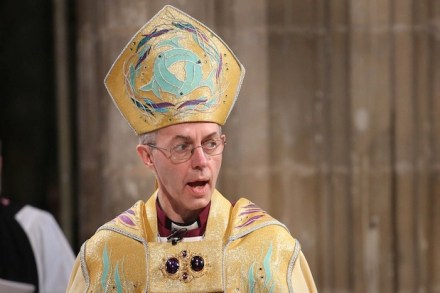
You may have gathered from last week’s column that I’ve been cruising the Med in search of fresh subject matter. It’s the sort of cruise that includes a programme of lectures, and the star turn on that front has been the Bishop of London, Dr Richard Chartres, enjoying a change of pulpit after his much-praised sermon at Lady Thatcher’s funeral. I had been struck by a passage in that address about the ‘prior dispositions’ required for a healthy market economy: ‘the habits of truth-telling, mutual -sympathy and the capacity to co-operate’. So as we steamed across the Ionian Sea I sent a note to the bishop’s cabin asking whether he’d care to elaborate, and he agreed to meet me in the library for tea (this really is a posh boat).

Why Greece isn’t recovering: the view from a cruise ship

From our UK edition

This column comes to you from the cruise ship Minerva in the Greek port of Piraeus. Why I’m aboard is a story for another day — and let me admit up front that, as financial-crisis reportage goes, observations provoked by a Homeric vista of islands and cocktails on the poop deck are unlikely to match Newsnight’s Paul Mason choking through tear gas outside a burning Athens bank. But still there are parables to be trawled from the placid Aegean waters. As the anti-austerity bandwagon gathers momentum, the Greeks seem to be in deep denial about the other element of the recovery equation.

Reinhart and Rogoff’s faulty spreadsheet doesn’t destroy the case for austerity

From our UK edition

Economists should always leave themselves a margin for error. When challenged that free-market policies on both sides of the Atlantic in the 1980s led straight from boom to bust, Milton Friedman argued that problems arose not when politicians applied his prescriptions too dogmatically, but because they only ever did so half-heartedly. John Maynard Keynes, the high priest of big government, changed his mind ‘when the facts change’ and was so magisterially flexible that he was able to express ‘deeply moved agreement’ with the moral stance of The Road to Serfdom, Friedrich Hayek’s sermon against the tyranny of the over-powerful state.

An upside to the gold rout

From our UK edition

Unless you bet your life savings on gold some time in the past three years — after its price had passed on the way up the level to which it has now fallen back — there’s no need to be distressed by headlines about a ‘gold rout’, nor even the prospect of a ‘bear embrace’. The impulses behind this sudden downward lurch are positive for expectations of economic revival. Gold is the timeless safe haven for those who distrust governments and fear inflation, so a stampede of sellers — on Monday there seemed to be virtually no buyers — indicates an ebb tide in those sentiments.

Britain’s energy crisis: when will the lights go out?

From our UK edition

The day Margaret Thatcher died was also the day Britain nearly ran out of gas. In late March, it was reported that stored reserves were down to just two days’ supply. As the cold spell continued, the BBC even reported the names of ships bringing liquefied natural gas from Qatar, each cargo representing six hours’ worth of urgently awaited heat and power for the nation: the Mehaines had just docked at the Isle of Grain, the Zarga had been sighted approaching Milford Haven. The worst-case scenario was that the last gasometer would be flat by 8 April, and since a third of UK electricity generation relies on gas, that would, or might, have meant temporary blackouts for businesses in some areas in order to maintain supply to homes, schools and hospitals.

Gold bugs have always been bores, but perhaps now they’ll be a bit quieter

From our UK edition

Unless you bet your life savings on gold some time in the past three years — after its price had passed on the way up the level to which it has now fallen back — there’s no need to be distressed by headlines about a ‘gold rout’, nor even the prospect of a ‘bear embrace’. The impulses behind this sudden downward lurch are positive for expectations of economic revival. Gold is the timeless safe haven for those who distrust governments and fear inflation, so a stampede of sellers — on Monday there seemed to be virtually no buyers — indicates an ebb tide in those sentiments.

Thatcher changed the City for the better – but human nature led it astray

From our UK edition

‘Margaret had no love for the banks,’ Nigel Lawson wrote in The View from No. 11. The idea that the amoral greed of the City and the banking crisis it fuelled should be blamed on Margaret Thatcher has been much bandied about this week. Let me try to put it in -perspective. In her early years in power, Thatcher thought of the City as another enclave of the ‘wet’ public-school types who so annoyed her in the Conservative party. The high-street banks were, in her view, a complacent cartel that reported over-large profits during the 1981 recession (hence the windfall tax), refused to contribute to Tory coffers, and did nothing to promote recovery.

Is Lord Mayor Roger Gifford finally unleashing his inner Boris?

From our UK edition

A short stroll from Poultry to the Mansion House offers vistas of the old and new City. The fortress of the Bank of England awaits its new Governor while the Royal Exchange earns its keep, like much of the modern Square Mile, as an upmarket nest of boutiques and eateries. The Lutyens-designed headquarters of the long-gone Midland Bank stands apparently abandoned by its oligarch owner, facing the avant-garde pink edifice that replaced the Victorian ‘Mappin & Webb Corner’. The skyline gives glimpses of the Lloyd’s Building from 1986, the Gherkin from 2003 and the ‘Walkie-Talkie’ conceived in 2007, due to be completed next year; each a monument to the boom that preceded the bust.

It’s not just rich Russian that will share Cyprus’ pain

From our UK edition

In their second attempt to clean the Augean stables of Cyprus’s banking system without jeopardising the integrity of the euro, bailout negotiators seem to have heeded most of my advice from last week. After the 36-0 rejection by the Cypriot parliament of a first set of terms that included a levy on all bank deposits, large and small, the new €10 billion deal reached in the early hours of Monday protected depositors with holdings of less than €100,000 while letting the weakest of the island’s big banks, Laiki, go under in an orderly way. Laiki’s unprotected larger depositors will lose most, while those of Bank of Cyprus (which will absorb what’s left of Laiki) take a haircut of up to 35 per cent.

In Cyprus as in Britain, the prudent must pay for others’ folly – but not like this

From our UK edition

The Cypriots are the authors of their own misfortune, having turned their banking system into a rackety offshore haven for Russian loot and lent most of the proceeds to Greece. But it was madness on the part of bailout negotiators to shake confidence in banks across the eurozone by trying to impose a levy on deposits held by even the smallest Cypriot savers, in what was presumably an attempt to cream off a layer of ill-gotten foreign cash. And even if the proposal has been radically watered down by the end of the week, we now know the European powers-that-be are prepared to pull this device out of their toolbox if the subject government is too weak to resist.

Overseas aid – the alternative

From our UK edition

‘We have written to David Cameron to applaud his decision to stick to the UK’s commitment to overseas aid to the developing world, despite the tough economic times,’ begins a letter to the Financial Times from the bosses of major companies from BP to Vodafone, with PR maestro Alan Parker of Brunswick at the top of the list. ‘It is both humanitarian and in the interests of this country.’ But that’s not the view of seven out of ten respondents in a recent ITV ComRes poll. They think too much — £6.7 billion this year — is spent on overseas aid; only 7 per cent of them believe the government should abide by its aspiration to bring the Department for International Development’s budget up to 0.

Europe’s cap on bankers’ pay is merely a harbinger of the Great Persecution to come

From our UK edition

‘Possibly the most deluded measure to come from Europe since Diocletian tried to fix the price of groceries across the Roman Empire,’ was Boris Johnson’s assessment of the proposal to cap bankers’ bonuses at 100 per cent of base salary, or 200 per cent with shareholders’ approval. This blunt exercise in market interference was tabled by a committee of MEPs led by a British Lib Dem, Sharon Bowles (perhaps in revenge for the fact that she didn’t win the Bank of England governorship, for which she applied) as a condition of agreeing a new set of bank capital reforms. With the support of all member states other than the one most affected — that’s us — and despite token resistance from George Osborne, it will now pass into EU law.

Why aren’t more people unemployed?

From our UK edition

An unfamiliar noise floats over the town; an insistent, one-note metallic drone. Tracked to its source, it turns out to come from a sawmill in a hidden wooded valley a quarter of a mile from my house. Abandoned for the past year, the mill has suddenly come back to life. It is emitting great plumes of steam as well as a multi-decibel industrial racket. And men are working there — I can see only two or three, but still they constitute another little piece of the great employment puzzle. An uptick in demand for sawn timber matches reports of increased levels of activity in the construction and housebuilding sector.

London house prices are a better guide to how the world sees us than Moody’s ratings

From our UK edition

‘There are two superpowers in the world today,’ said the American columnist Thomas Friedman in 1996. ‘There’s the United States and there’s Moody’s bond rating service. The US can destroy you by dropping bombs, and Moody’s can destroy you by downgrading your bonds.’ Well, not any more. Last Friday’s removal of triple-A status from British government debt may have made for a tense weekend chez Osborne and provoked short-selling of sterling by traders who thought it an obvious bet at a time when the Bank of England would clearly prefer a cheaper pound to boost exports.

Privatisation is the only solution for Royal Mail

From our UK edition

We have had a very high failure rate in deliveries of the catalogues for Emily Patrick’s exhibition,’ says an email from the painter’s husband. ‘Over 50 per cent have been lost in the post or inexplicably delayed.’ Come to think of it, my own most recent Amazon order, allegedly dispatched a fortnight ago, hasn’t reached Yorkshire yet — and neither has last week’s Spectator, although a large envelope posted to me from Old Queen Street on Wednesday did arrive on Thursday, but without its contents. Have aliens seized the sorting offices, or have Royal Mail managers been distracted by a ‘secret 62 per cent increase’ in their bonuses, revealed this week?

Here’s my strategic review, Barclays: see shareholders right and the rest will follow

From our UK edition

Antony Jenkins, the new-broom chief executive of Barclays, has the tone of a junior minister, not long in parliament, who finds himself promoted to high office after the big beast who preceded him was toppled by scandal. In fact he’s been in the bank 30 years, climbing the ladder so quietly that none of my contemporaries there (I coincided with him in Barclays for a decade) ever mentioned him as a man to watch before he was picked to follow Bob Diamond.