Martin Vander Weyer

Martin Vander Weyer

Martin Vander Weyer is The Spectator’s business editor

Michael O’Leary, my favourite anti-hero

From our UK edition

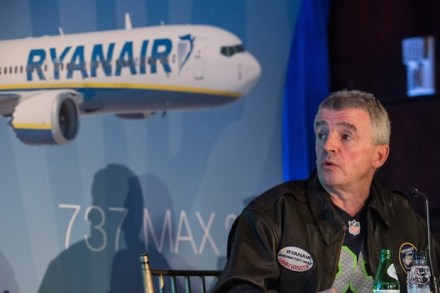
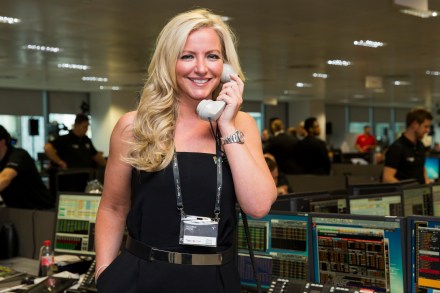
Michael O’Leary of Ryanair has long been an anti-hero of this column. I loved his airline when it was consistently rude to me as a passenger, because it set benchmarks of ruthless punctuality and rock-bottom fares that shook the whole European airline sector. I was suspicious of the idea that, having exhausted other routes to growth, he was going to polish up his customer service and stop ‘unnecessarily pissing people off’; but the new tone is a triumph, and Ryanair’s profit is expected to top €750 million for the current year. ‘If I’d known being nicer to customers was going to work so well,’ O’Leary says, ‘I’d have started many years ago.

What British start-ups are still missing

From our UK edition

This issue includes the new Spectator Money supplement, in which I hope you’ll find a bouquet of stimulating ideas. The cover piece by the enterprise campaigner Michael Hayman waxes lyrical on the important theme of investing in high-tech start-ups: important because it’s an exciting thing to do with the slice of savings on which you’re happy to take higher risks, but also because bold new businesses hold the key to future growth. At a dinner hosted by Hayman last week, I met a selection of business founders and early-stage investors. The mood was one of optimism in what’s seen as an increasingly benign UK arena for start-ups, buzzing with world-class ideas and underpinned by programmes such as the Seed Enterprise Investment Scheme.

How Italy failed the stress test (and Emilio Botín didn’t)

From our UK edition

Continuing last week’s theme, it was the Italian banks — with nine fails, four still requiring capital injections — that bagged the booby prize in the great EU stress-testing exercise, followed predictably by Greece and Cyprus, while Germany and Austria (with one fail each) fared better than some of us had feared. The most delinquent European bank turned out to be the most ancient, Banca Monte dei Paschi di Siena, which was judged to have a capital shortfall of €2.1 billion as a result of a very modern set of problems. Founded in 1472 as a kind of charitable pawnbroker, the bank which eventually became Italy’s third largest had a more or less blameless 527-year record until it listed on the Italian stock exchange in 1999.

The one economic indicator that never stops rising: meet the Negroni Index

From our UK edition

This dispatch comes to you from Venice — where I arrived at sunset on the Orient Express. More of that journey on another occasion, I hope. Suffice to say that if you happen to have been wrestling with the moral choice of bequeathing what’s left of your tax-bitten wealth to ungrateful offspring or spending it on yourself, don’t hesitate to invest in a last fling on this time capsule of elegant extravagance. Made up of rolling stock built in the late 1920s, the train itself symbolises everything that 20th-century Europe was good at — engineering, craftsmanship, style, cross-border connections — when not distracted by political folly and war.

John Humphrys and the BBC’s disdain for market capitalism

From our UK edition

Last week’s market tremor, provoked by renewed fears of eurozone stagnation and a slowdown in global growth, was serious enough for IMF chief Christine Lagarde to feel the need to pronounce, in her most soothing tone, that it was ‘maybe at this stage an over-reaction’. But if you were listening to the Today programme on Saturday morning, you might have thought it was all a bit of a joke — and one that served irresponsible investors right.

Storm warning: the world economy’s October troubles aren’t over yet

From our UK edition

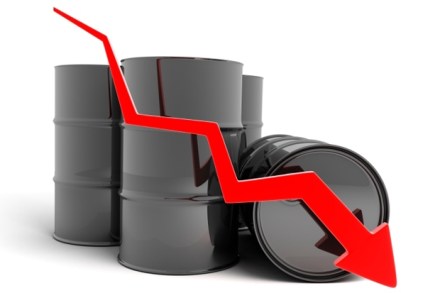
October is always a turbulent month, and I’m feeling uneasy about this one. The FTSE100 index, which looked set to break through 7,000 in September, has lost more than 500 points since then — and would have lost more but for manoeuvres in the mining sector. Pessimism stalks the bond markets, and even a falling oil price is read more as a harbinger of faltering growth than a stimulus for further recovery. Ebola is the new volcanic ash cloud, and attention is focused on the apparently incorrigible weakness of the eurozone — where the biggest problem is what was long seen as the most potent solution, namely the German economy. Fiscal discipline, strict wage control and relentless pursuit of export success made Germany the locomotive of Europe for the single-currency era; but a 0.

Yes, Wonga lent at shocking rates – but it was customers who lied

From our UK edition

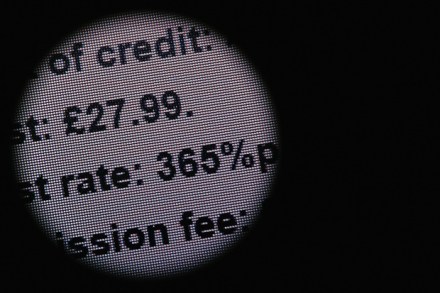
‘Payday Lady is not trading at this time,’ says her website, sounding a little like La Dame aux camélias. Indeed (since I could not find her anywhere) the message may indicate that Payday Lady is not just temporarily indisposed, but has given up the game altogether. I’ll be glad to hear from her if she hasn’t. Meanwhile I can report that her rival Cash Lady (who promises she’ll be ‘here to help you’ within three minutes) was still out there — despite having her television ads banned last year — and so were Purple Payday, Pounds to Pocket, Peachy Loans, PayDay Pig and CashCowNow, all at colossal ‘representative APRs’ that look relatively cheap compared with Wonga’s notorious 5,853 per cent.

Why the real winner from George Osborne’s ‘Google tax’ could be Nigel Farage

From our UK edition

George Osborne’s promise to crack down on multinational companies’ avoidance of UK taxes by the use of impenetrable devices such as the ‘Double Irish’ and the ‘Dutch Sandwich’ certainly has the support of this column. I have long argued that the ‘fiduciary duty’ (identified by Google chairman Eric Schmidt) to minimise tax bills within the law for the benefit of shareholders has to be balanced against a moral duty to pay at least a modicum of tax in every profitable territory.

Is the US using bank fines to bring allies into line against Russia?

From our UK edition

Here’s one for all you conspiracy nuts out there, prompted by readers’ comments on my recent item about whether BP has been unjustly targeted by the US political and judicial establishment. I gather there’s a theory that the hounding of non-US banks by the US Department of Justice for sanctions-busting and trading misdemeanours has a more sinister foreign-policy impetus behind it. Notably — according to Conflicts Forum, a website I’m told is breakfast reading for trainee spooks — the $9 billion fine imposed by US authorities on BNP of France for financing trade with Iran, Sudan and Cuba may also have been intended to punish the French for refusing to cancel their contract to build two Mistral-class amphibious assault ships for the Russian navy, about which I wrote in August.

Santander’s secret: to conquer the world, stay like a small-town bank

From our UK edition

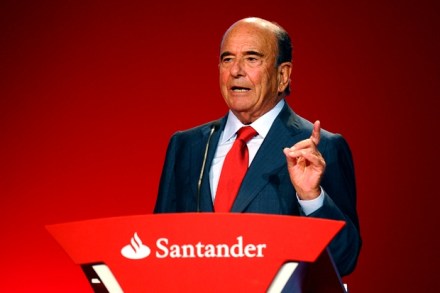
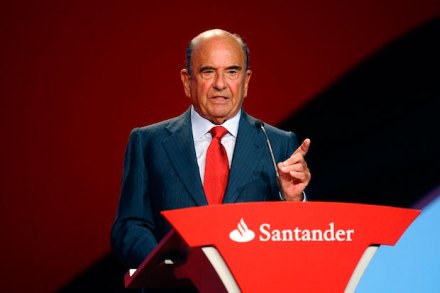
Four years ago, I wrote that I knew no dark rumours about Santander, the rising force in UK high street banking, but that history taught me banks which expand rapidly and globally ‘always come unstuck in the end… partly because the challenge of risk control across such vast portfolios becomes impossible… Banks that have been driven by one powerful personality also tend to lose management grip, and start finding skeletons in cupboards, as the big man comes to the end of his tenure.’ The big man in question was third-generation chairman Emilio Botín — who died in post last week, aged 79.

Scotland could never prosper under the SNP, because they don’t understand business

From our UK edition

No-nonsense businesspeople will be very much what’s needed in the aftermath of the Scottish Catastrophe, as it will surely come to be known whichever way the vote has fallen. No nation, independent or semi-autonomous, can hope to prosper on the basis of the wild welfare promises of the SNP, unsupported by any plan to attract investment and stimulate growth. Only a resurgent private sector can drag Scotland out of the tax-and-spend peat bog into which this referendum has driven it deeper than ever — and that will take quite some grit on the part of entrepreneurs, given the fundamental hostility of both the SNP and Scottish Labour. But grit —even granite ruthlessness — is a characteristic shared by the outstanding Scottish business builders of the past.

BP’s been punished enough – but not because Americans hate the Brits

From our UK edition

I should declare two connections before I start offering opinions about the latest US judgment against BP relating to the ‘Macondo’ disaster — the explosion on the Deepwater Horizon oil rig and subsequent spillage in the Gulf of Mexico in 2010. The first is that I’m occasionally invited to interview BP executives for its in-house magazine. That doesn’t mean I’m in their camp, but it does mean I have had the opportunity to discuss Macondo with, among others, chairman Carl-Henrik Svanberg, and I did not think he was merely parroting the corporate line when he told me, ‘We’re not going to let people take advantage of us, but we’re going to do what’s right and be a showcase of responsibility.

Rona Fairhead will be good for the BBC – but who was so keen to nobble her rival?

From our UK edition

Hats off to Rona Fairhead, the former Financial Times executive who will succeed Lord Patten as chairman of the BBC Trust. It requires a brave spirit to take on this poisonously politicised role — and Fairhead starts with the disadvantage that everyone thinks they know the roll call of candidates who might have been preferred but declined to apply, including her own former boss Dame Marjorie Scardino, for whose job as head of Pearson, the FT’s parent, Fairhead was passed over last year. But a mole tells me she’s ‘as steely as she’ll need to be’; and leading ladies of the non-executive circuit (she’s on the boards of HSBC and PepsiCo) are also full of praise, though one says: ‘She must like stress.

The real reason behind the BBC’s kicking of Nick Prettejohn

From our UK edition

This is an extract from this week's Spectator. Subscribe here: Hats off to Rona Fairhead, the former Financial Times executive who will succeed Lord Patten as chairman of the BBC Trust. It requires a brave spirit to take on this poisonously politicised role — and Fairhead starts with the disadvantage that everyone thinks they know the roll call of candidates who might have been preferred but declined to apply, including her own former boss Dame Marjorie Scardino, for whose job as head of Pearson, the FT’s parent, Fairhead was passed over last year.

Europe’s leaders worship Mario Draghi. They should listen to him instead

From our UK edition

European Central Bank President Mario Draghi secured a place in history by his demonstration, on 26 July 2012, of the power of words in a financial crisis. Not long in office, he had already shown willingness to act firmly, averting a liquidity crunch by providing three-year lending facilities for European banks. That day, he told a conference in London: ‘Within our mandate, the ECB is ready to do whatever it takes to preserve the euro. And believe me, it will be enough.’ While the rest of the speech was an opaque metaphor about the euro as a bumblebee — ‘a mystery of nature because it shouldn’t fly but instead it does’ — ‘whatever it takes’ was clear enough to steady the bond market and ease borrowing costs of eurozone governments.

The lefties are right: we really do pay our bosses too much

From our UK edition

The FTSE100 index stands precisely where it did in the first week of December 1999. Whichever way you look at it, shareholders — including pension funds — have had a rotten run on the economic rollercoaster of the past 15 years. So it’s reasonable to keep asking whether the rise in executive pay over that same period is justified: a report from the High Pay Centre says remuneration of the average FTSE100 chief executive is now at a multiple of 143 times that of the average worker in the same companies. In 1998 that multiple was 47, indicating a tripling of top pay relative to workforce earnings while shareholder returns have stayed flat. Of course this argument is not that simple.

It’s not just left-wingers who think the bosses’ pay boom is unhealthy

From our UK edition

The FTSE100 index stands precisely where it did in the first week of December 1999. Whichever way you look at it, shareholders — including pension funds — have had a rotten run on the economic rollercoaster of the past 15 years. So it’s reasonable to keep asking whether the rise in executive pay over that same period is justified: a report from the High Pay Centre says remuneration of the average FTSE100 chief executive is now at a multiple of 130 times (corrected from the report's original figure of 143 times) that of the average worker in the same companies. In 1998 that multiple was 47, indicating that top pay has almost tripled relative to workforce earnings while shareholder returns have stayed flat. Of course this argument is not that simple.

Why a City job should be graduates’ last resort

From our UK edition

August is the season for conversation about career choices. Every holiday party seems to include new graduates or next year’s graduands in need of grown-up advice. Many yearn to be pastry chefs, having devoted their student years to watching The Great British Bake Off. Some want to be journalists, and I tell them it’s more fun than having a secure job with a decent income. Happily I’ve only met one young man this summer who wants to go into financial PR, the métier in which I believe Satan himself did his first internship.

The man who could sell the British public on fracking

From our UK edition

Iain Conn, who will succeed Sam Laidlaw as chief executive of Centrica, would have been a dead cert for the top job at his current employer, BP, were it not for the Deepwater Horizon oil rig disaster in the Gulf of Mexico in April 2010. The subsequent PR fiasco terminated the BP career of the then chief executive Tony Hayward — who seemed crushed by the episode, but recovered to make a double fortune at Genel Energy and Glencore. Had Hayward served a full term, Conn (BP’s head of refining and marketing) would almost certainly have followed him. As it was, BP found it more politic to appoint an American, Bob Dudley, to repair relations in Washington while simultaneously arm-wrestling with the Kremlin-connected oligarchs who were BP’s co-investors in Russia.

These latest sanctions against Putin might just work

From our UK edition

‘Sanctions,’ said Kofi Annan, ‘are a necessary middle ground between war and words.’ Neither the EU nor the US will deploy troops or missiles to defend Ukraine against Russian-backed separatists, while Vladimir Putin basks in hostile Western words and turns them to domestic advantage. That leaves sanctions as the only means of seeking to influence him. But do they work? Evidence is not persuasive: in 200 cases studied by academics in Washington, from the League of Nations action against Italy’s aggression in Abyssinia in the mid-1930s to Russia’s assault on Georgia in 2008, sanctions were judged successful in one third of cases; in many of those, success was ‘partial’.