Martin Vander Weyer

Martin Vander Weyer

Martin Vander Weyer is business editor of The Spectator. He writes the weekly Any Other Business column.

After the Black Friday flop, shops can get back to what they do best

From our UK edition

The high street flopperoo that was ‘Black Friday’ may have something to do with terrorism fears, or even the downturn of the Chinese economy: in last year’s ugly scenes of bargain-hunters wrestling over televisions, Chinese tiger--shoppers seemed to win most of the spoils. But this year you could have held a picnic in the entrance of an Oxford Street store without fear of being trampled; trade had migrated massively online, where total UK sales are estimated to have passed £1 billion in a day for the first time and to have peaked (how sad is this?) between midnight and one in the morning. Amazon alone processed 7.4 million purchases in 24 hours.

We must play the blame game over HBOS. How else will bankers learn?

From our UK edition

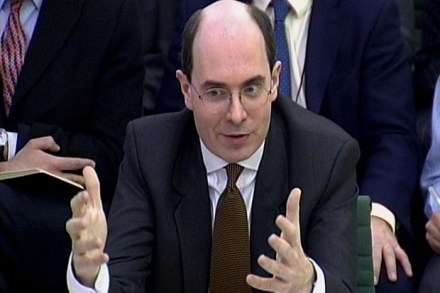
‘Everyone remembers the names of Applegarth of Northern Rock and Goodwin of RBS, but history may judge the HBOS men to have been the worst of the lot,’ I wrote four years ago. Judgment has arrived at last in a Bank of England report on the 2008 HBOS collapse — plus a second report, by Andrew Green QC, on the adequacy of investigations by the now-defunct Financial Services Authority. The Bank does not go as far as I did with ‘worst of the lot’.

The view from my Belfast bus: tribalism as the enemy of prosperity

From our UK edition

At Stormont on Saturday, we observed a minute’s silence for the dead of Paris. Our conference group of Brits and Americans had convened two days earlier to discuss conflict resolution, the idea that nationalism and tribalism are the enemies of peace and prosperity, and how all this might relate to the migration crisis; so the moment could not have been more poignant.

If the world economy crashes again, blame the central bankers

From our UK edition

Like the Christmas pudding sampled by Hercule Poirot at Kings Lacey — but six weeks early — our Spectator Money supplement contains a little treasure in every portion, and perhaps even a priceless gem. I particularly commend the essays by Warwick Lightfoot and Subitha Subramaniam on interest rates, and why central banks have become so hesitant to raise them. In recent days we’ve had an indication from Mark Carney of the Bank of England that UK rates will stay at their current low well into next year, maybe until 2017; in the US, strong job numbers have pumped expectations that the first rate rise for nine years will be delivered by Fed chairman Janet Yellen in December.

I may have to revise my view that crypto-currencies are Satan’s work

From our UK edition

I confess to being an out-and-out Luddite when it comes to bitcoin and other so-called crypto-currencies. To the extent that I think about them at all, I think that they are an ephemeral by-product of those creepy ‘virtual worlds’ in which obsessed gamers eventually go mad; that only such lost souls could seriously believe unregulated online money might eventually supplant the state-backed real thing; and that fashionable belief in them can only lead to fraud and loss. In short, I concluded some time ago, they are probably the work of Satan.

TalkTalk shows us the internet is only three clicks from anarchy

From our UK edition

I’m not a customer of TalkTalk, the phone company which revealed last week that a hacker had potentially compromised the personal data of four million users. But I feel I’m on the front line of the cyberwar nevertheless. In August, someone unknown to me tried to spend £1,200 at House of Fraser on my credit card account. The bank, to its credit, sniffed a fraud, rejected the transaction, cancelled the card and invited me to speak to a nice young man in India who talked me through the corrective procedure, including deleting a false email address inserted by the fraudster and setting up a new password to add extra security for future contacts.

Mark Carney should avoid the EU referendum and stick to plain monetary economics

From our UK edition

Governor Mark Carney is no orator, and whoever puts the fancy metaphors into his speech drafts really ought to desist. In his Mansion House address in June, it was about the legacy of the Great Fire and subsequent rebuilding — just like the great financial crisis, obviously. In last night¹s Cairncross Lecture at Oxford, it was the construction of the Sheldonian Theatre and the strengths of Wren's design supporting the art on the ceiling — just like the architecture of the European single market, except that 'they may in time need to be buttressed to realise the full creative potential of the peoples of the UK and Europe'. On both occasions, Carney looked briefly baffled by his own material.

Heathrow’s third runway could still be halted – here’s how

From our UK edition

The Great British Runway final between Heathrow and Gatwick is beginning to look like a game of two halves. The visit of China’s President Xi Jinping is a bonus for the west London team, who can claim that Chinese investors with bulging wallets are more likely to be impressed by landing at an urban mega-airport than an expanded flying club in Sussex. But the Volkswagen emissions scandal has been a gift for Gatwick, because as chief executive Stewart Wingate said: ‘Heathrow’s poor air quality already breaches legal limits and it’s difficult to see how expansion could legally go ahead with the millions of extra car journeys an expanded Heathrow would generate.

The spectre haunting George Osborne

From our UK edition

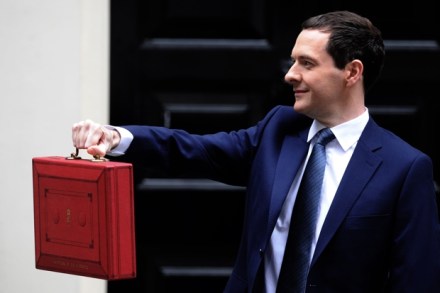
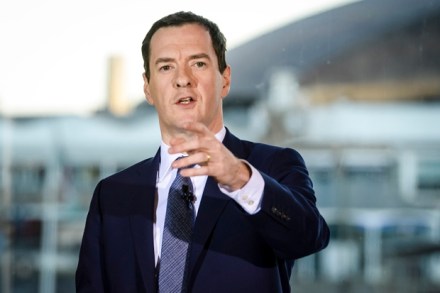
Rather more attention was paid last week to the strange position of George Osborne’s feet than to the dark shape lurking behind him. My own theory about his stance on the conference platform is that he was imagining himself as a operatic tenor, belting out an aria in praise the magic elixir he has administered to the formerly consumptive heroine, the UK economy, and pitching to be her next prince. But operas, like political careers, tend to end badly: so why the rumbling bass notes from the orchestra pit, and what is that sinister thing in the shadows? I’m not talking about Corbyn and McDonnell fighting in a sack with their own colleagues: they’re a comic subplot.

Finally, a business rates reform! If only I knew what it meant

From our UK edition

This column has repeatedly cried that something must be done about business rates. Yes, it’s fair to ask businesses, as well as individual citizens, to contribute to local public-sector provision — even though businesses can’t vote. But it was far from fair during the recession to go on collecting £26 billion a year from hard-pressed firms based on an arbitrary multiplier applied to out-of-date rental valuations, in many cases long after those values had slumped to the point at which the rates were a higher cost than the rents.

Denis Healey was one of the most entertaining lunch guests I’ve ever had

From our UK edition

Denis Healey and my father Deryk Vander Weyer — a big cheese at Barclays and spokesman for the high-street banks during Healey’s chancellorship — had a lot in common. Both were clever, cultured, iconoclastic products of good Yorkshire grammar schools; both wartime majors and post-war socialists (my father finally turned right when he began to appreciate the merits of Margaret Thatcher); both formidable in argument. ‘Now then, young Deryk,’ the then chancellor used to say, only half joking, ‘You’re the man to run the state bank for us after you’re all nationalised.’ Thirty years later, the mellower Healey of old age came north to Helmsley to give a talk about his photography.

VW and the truth of engineering: say what you do, do what you say

From our UK edition

Not that I was much of a boy racer, but the sexiest car I ever owned was a 1982 Volkswagen Scirocco with the lines of a paper dart and the cornering of a cheetah. I once drove it overnight from the City to Tuscany with a blind date who barely uttered a word, en route or afterwards. In an era when British factories could make nothing better than a laughable Allegro or a downmarket Escort, everyone coveted a German car — the top choice for twenty-somethings being the VW Golf convertible (Sciroccos were rarer) whose quality came as a revelation after years of broken fanbelts and burst radiators on unreliable Minis. These were machines that spoke of Teutonic perfectionism and the will to win in global markets that we Brits had lost.

Perfectionism isn’t the same as integrity – as Volkswagen has shown

From our UK edition

Not that I was much of a boy racer, but the sexiest car I ever owned was a 1982 Volkswagen Scirocco with the lines of a paper dart and the cornering of a cheetah. I once drove it overnight from the City to Tuscany with a blind date who barely uttered a word, en route or afterwards. In an era when British factories could make nothing better than a laughable Allegro or a downmarket Escort, everyone coveted a German car — the top choice for twenty-somethings being the VW Golf convertible (Sciroccos were rarer) whose quality came as a revelation after years of broken fanbelts and burst radiators on unreliable Minis. These were machines that spoke of Teutonic perfectionism and the will to win in global markets that we Brits had lost.

This will-they-won’t-they rate-rise saga has dragged on long enough

From our UK edition

When news broke last Thursday evening that the US Federal Reserve had decided to keep interest rates on hold, I happened to be surrounded by serious economists representing a range of viewpoints and nationalities. None seemed surprised by the decision, though the media had declared it to be on a knife edge. But I did sense disappointment, not so much because the assembled sages thought technical data pointed to a rise but because the whole will-they-won’t-they saga of the first US rate rise since December 2008 (or March 2009 in the case of UK rates set by the Monetary Policy Committee) now feels as if it has dragged on far too long.

The Living Wage is nifty politics – but let’s see more help for small business too

From our UK edition

What is George Osborne’s Living Wage? Is it a ploy to shift cost from the taxpayer to the employer by reducing in-work benefit claims; or a sop to Tory MPs who were bombarded with angry questions about earnings inequality during the election, as well as a neat way of turning one of Labour’s few effective lines of attack? Or is it a principled act of fairness, acknowledging that the lowest earners bore the brunt of the recent recession? Knowing how the Chancellor operates, it is probably all of the above except the last: he is, as Sir Samuel Brittan once remarked, ‘one of those people who do the right things without knowing why’. Either way, new research from the Resolution Foundation indicates that the cost of the Living Wage — £7.

All those boardroom codes still can’t catch rogues and incompetents

From our UK edition

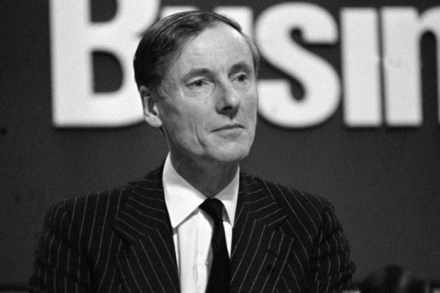
Sir Adrian Cadbury, who has died aged 86, is remembered as the author in 1992 of a first stab at a corporate governance code for public companies — which thereafter were expected to show ‘Cadbuarial correctness’ in the separation of chief executive and chairman and the powers of non-executive directors. Cadbury’s work was taken forward by the 1995 Greenbury report, the 1998 Hampel report, the Higgs review in 2003 and a subsequent drawing-together into a ‘Combined Code’. Finally Vince Cable, as business secretary, left his own mark by setting a target of 25 per cent women on FTSE100 boards by this year.

The Queen has proven herself to be a shrewd asset manager

From our UK edition

One person who has never shown much interest in corporate correctness is Her Majesty the Queen — but if you had been able to buy shares in 1952 in the royal ‘firm’ of which she has been executive chairman these past 63 and a half years, you would have made out like Warren Buffett. When she succeeded her father, the royal ­finances were not a matter for public discussion: the first estimate of her private wealth, at £60 million, did not appear in the press until 1969.

Cheer up: we’re robust enough to withstand a shock from China

From our UK edition

Home from the hot Aegean, huddled by the fire as rain ruins the bank holiday weekend, I’m thinking: what gloom has descended since I’ve been away — and doesn’t it call for a round-up of cheerful news? So here goes. The UK economy grew by 0.7 per cent in the second quarter and a respectable 2.6 per cent over the past year. US growth has been revised sharply higher to 3.7 per cent, scotching our claim to be the fastest growing western economy, but George Osborne can still say convincingly that ‘we’re motoring ahead’ — and weak first-quarter performance can be seen as a blip rather than the revelation of doom it was declared to be by Ed (‘Where is he now?’) Balls. Tax receipts are rising at an annual rate of 4.

Sorry, but I can’t join in the China panic

From our UK edition

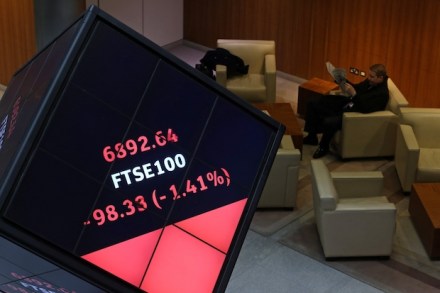
 MS Queen Victoria, 38°N 19°E I’ll do my best, but I’ve got to be honest: being surrounded by shining Ionian waters and convivial Spectator cruisers isn’t helping me channel the panic that has gripped global markets. So forgive me if this dispatch doesn’t have the apocalyptic tone you’re expecting. I’m as irritated as anyone that contagion from China’s share-gambling epidemic has knocked my modest interest in FTSE100 stocks back to where it stood in late 2012, but ask yourself: do you know anything about China or the global economy today that you didn’t know a month ago?

I can’t join in the China panic (especially not while I’m on a cruise)

From our UK edition

MS Queen Victoria, 38°N 19°E I’ll do my best, but I’ve got to be honest: being surrounded by shining Ionian waters and convivial Spectator cruisers isn’t helping me channel the panic that has gripped global markets. So forgive me if this dispatch doesn’t have the apocalyptic tone you’re expecting. I’m as irritated as anyone that contagion from China’s share-gambling epidemic has knocked my modest interest in FTSE100 stocks back to where it stood in late 2012, but ask yourself: do you know anything about China or the global economy today that you didn’t know a month ago?