Martin Vander Weyer

Martin Vander Weyer

Martin Vander Weyer is The Spectator’s business editor

A hot weekend for takeover deals and cycle racing

From our UK edition

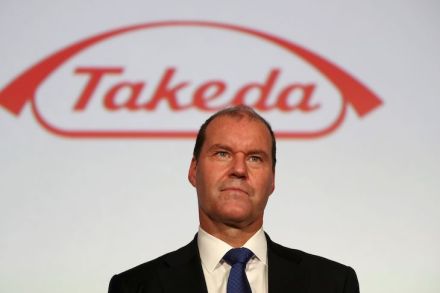
The bank holiday turned out to be a hot one, not least in the takeover arena. First, Shire Pharmaceutical accepted a £46 billion offer from Takeda of Japan — though the stock market did not seem wholly convinced that the deal will proceed. If it does, should we care? Shire is a FTSE100 company that began in the UK and ended up stateless. As a start-up in Basingstoke in 1986, it made calcium-based treatments for osteoporosis; since then it has grown by acquisition to become ‘the world’s leading global biotechnology company focused on serving patients with rare diseases’. In 2008, when it was the UK’s third biggest drug manufacturer, Shire shifted its domicile to take advantage of Ireland’s ultra-low corporate tax rates.

The UK economy isn’t all doom and gloom

From our UK edition

This is an extract from this week's 'Any Other Business' column.  The UK economy grew just 0.1 per cent in the first quarter, says the ONS, reflecting low construction activity, sluggish manufacturing, squeezed consumers, Brexit uncertainties and bitter weather. That’s the worst quarter since 2012 — so no wonder I had such a feeble response to my call a fortnight ago for evidence of feelgood. Two readers broke through the gloom, however. The first is a veteran banker who lends to small-to-medium UK corporate borrowers and describes himself as ‘miserable, cynical and pessimistic’ by nature and experience.

TSB’s new owners should have seen this computer catastrophe coming

From our UK edition

The systems breakdown at TSB is not (yet) the worst UK bank computer cock-up of all time: that prize is held by RBS, whose problems in 2012 afflicted customers for a month and attracted a £56 million fine. But the failure of TSB to migrate four million customers’ accounts from systems bequeathed by its former parent Lloyds to a streamlined IT structure, designed by new Spanish owner Banco Sabadell, is surely the fiasco that has been longest foreseen. It dates from 2009, when Brussels insisted that Lloyds dispose of part of its branch network as a condition for the bailout that followed its acquisition of HBOS during the financial crisis.

It’s time to shout at your bank chairman about branch closures

From our UK edition

This is an extract from Martin Vander Weyer's 'Any other business' column in this week's Spectator The season of high-street banks’ annual general meetings is with us and I urge you to turn up and make trouble. When I say ‘you’, I don’t mean the likes of New York ‘activist’ Edward Bramson — who holds 5 per cent of Barclays and may or may not agitate for a boardroom seat at next Tuesday’s gathering. I mean you, dear reader, the modest shareholder-customer who suffers rotten service, too-frequent computer glitches and negative returns on savings while directors on the platform congratulate themselves on the spurious performance measures that underpin their bonuses. This is your annual chance to make them squirm.

Bank AGMs are an opportunity to shout about branch closures

From our UK edition

The season of high-street banks’ annual general meetings is with us and I urge you to turn up and make trouble. When I say ‘you’, I don’t mean the likes of New York ‘activist’ Edward Bramson — who holds 5 per cent of Barclays and may or may not agitate for a boardroom seat at next Tuesday’s gathering. I mean you, dear reader, the modest shareholder-customer who suffers rotten service, too-frequent computer glitches and negative returns on savings while directors on the platform congratulate themselves on the spurious performance measures that underpin their bonuses. This is your annual chance to make them squirm.

Can WPP’s model survive without Martin Sorrell in charge?

From our UK edition

I said last week that WPP chief executive Sir Martin Sorrell was in ‘a very exposed position’. Sure enough on Saturday he resigned from the global advertising giant he created and had run for more than 32 years. ‘But he didn’t “create” it,’ one ex-employee told me, illustrating the internal resentments that seem to have contributed to Sorrell’s downfall. ‘He just made a lot of acquisitions and counted the pennies.’ Whatever he did or didn’t do, his departure was undignified and ill-explained.

I’m an optimist for trade despite the idiocies of politicians

From our UK edition

I’m proud to be a member of the 661-year-old Company of Merchant Adventurers of the City of York, having qualified on the strength of a first career spent trying to sell British financial services around the globe from Hokkaido to Gdansk. Before our annual feast last week we prayed optimistically for the discovery of ‘a better world’ from which we might bring back treasure, spiritual and material — and I couldn’t help thinking that UK trade prospects are a lot less straightforward today than they were in 1357, when the known world was eager to buy woollen cloth from English mercers as often as their little ships could cross the choppy North Sea.

How have the Russian oligarchs got away with swaggering around London for so long?

From our UK edition

A decade ago I commissioned an article about Vladimir Putin’s business cronies. Among other lines of enquiry, it sought to finger ‘a coterie of wealthy and politically influential industrialists, many believed to be former or current secret service officials’ who allegedly had shareholdings in Russian companies which, if we or anyone else had been able to prove that they were controlled by the president, might have evidenced a personal Putin fortune of tens of billions. Sensibly, The Spectator’s lawyer would not let me publish — but the US Treasury has now done its own version of the job by imposing sanctions on seven oligarchs and 17 senior Russian officials who are believed to form the innermost presidential clique.

The US shows London how to cold-shoulder Putin’s cronies

From our UK edition

A decade ago I commissioned an article about Vladimir Putin’s business cronies. Among other lines of enquiry, it sought to finger ‘a coterie of wealthy and politically influential industrialists, many believed to be former or current secret service officials’ who allegedly had shareholdings in Russian companies which, if we or anyone else had been able to prove that they were controlled by the president, might have evidenced a personal Putin fortune of tens of billions. Sensibly, The Spectator’s lawyer would not let me publish — but the US Treasury has now done its own version of the job by imposing sanctions on seven oligarchs and 17 senior Russian officials who are believed to form the innermost presidential clique.

What would a serious trade war between the US and China look like?

From our UK edition

This is an extract from Martin Vander Weyer's 'Any Other Business' column in this week's Spectator. 'Stocks plunge as China hits US goods with tariffs,’ said a headline after the long weekend, and the FTSE100 duly dipped below 7,000. But I wonder what a serious trade war would look like — and how markets would respond if the White House and Beijing took the gloves off. Last year, China exported $500 billion worth of goods to the US, while US exports to China amounted to $135 billion. Last month, President Trump announced import tariffs on $50 billion worth of Chinese steel and aluminium, 10 per cent of the total import bill.

A US-China tit-for-tat hardly amounts to a serious trade war

From our UK edition

‘Stocks plunge as China hits US goods with tariffs,’ said a headline after the long weekend, and the FTSE100 duly dipped below 7,000. But I wonder what a serious trade war would look like — and how markets would respond if the White House and Beijing took the gloves off. Last year, China exported $500 billion worth of goods to the US, while US exports to China amounted to $135 billion. Last month, President Trump announced import tariffs on $50 billion worth of Chinese steel and aluminium, 10 per cent of the total import bill.

Toys ‘R’ Us: the predator that became the prey

From our UK edition

I remember the arrival of Toys ‘R’ Us in Britain, because as a young banker in 1984 I was tasked with devising a menu of exciting financial products to offer a brash American retailer that was clearly going to take a bite out of our sleepy — and in those days still Christmas-seasonal — domestic toy market. How we sneered at that childlike reversed R in the logotype; likewise the Guardian, commenting on insatiable demand for Cabbage Patch dolls, derided the chain’s huge stores as ‘-cathedrals to kiddie gratification’. But however tacky its image, this was the ultimate ‘economic disruptor’, to use The Spectator’s current favourite phrase: a business that utterly transformed its marketplace.

We were never going to take back control of our fishing waters

From our UK edition

My decision to vote Remain was driven in part by an exercise in which I tried to identify anyone close to me in Yorkshire — family, neighbour, business owner, farmer — who was worse off as a result of UK membership of the EU. The only people uncontestably in that category, I concluded, were the east-coast fishermen whose livelihoods have been eroded by 45 years of punitive quotas and unfair competition. So I felt for them on Monday, when their interests were traded away yet again as part of the Brexit ‘transition’. Instead of being released from the Common Fisheries Policy in March 2019, as Environment Secretary Michael Gove proclaimed barely a week ago, our diminished fleet is stuck with the status quo until the end of 2020.

Announcing the Economic Disruptor of the Year Awards

From our UK edition

Human progress has depended on economic disruptors since long before the advent of the internet. The internal combustion engine was a hugely significant invention, but motor cars remained rare luxuries until a disruptor called Henry Ford perfected the assembly line that enabled the Model T to be mass-produced at a price the ordinary citizen could afford. If we define a disruptor as an entrepreneurial business that radically changes its own marketplace, numerous examples spring to mind, from the low-cost no-frills airline to the flat-pack, home-assembly bookcase. Today’s online auction, home-stay, ride-share and crowd-funding sites have generated markets and money flows that barely existed before, to the great benefit of providers and consumers.

Advice from the Institute of Directors: be prepared for the scandal tornado

From our UK edition

As ‘business lobby groups’ go, the Institute of Directors has always struck me as worthy but unexciting: a more authentic voice of mid-sized corporate Britain than the fat-cat smugfest that is the CBI; a fount of sound advice on governance, gender equality and ‘mental health at work’; and a handy Pall Mall watering hole for business folk up from the provinces. But as the storm of revelations about personal behaviour topples one pillar of respectability after another, the IoD has suddenly been reduced to reputational rubble following allegations of racism and bullying against its chairman, Lady Judge — who resigned in fury last Friday, shortly after being suspended by the IoD’s Council.

Unilever’s decision on their future will be highly symbolic

From our UK edition

This is an extract from Martin Vander Weyer's 'Any other business' column, in this week's Spectator.  Unilever, the consumer goods conglomerate formed in 1929 by the merger of Margarine Unie of Rotterdam with Lever Brothers of Port Sunlight, is a model of cross-Channel collaboration that pre-dates the European Union we’re about to leave. So the decision due this month as to whether the group will no longer maintain dual head offices — which means closing London but keeping Rotterdam — will be highly symbolic. If the move not only goes ahead but also entails doing away with dual fiscal entities and dual stockmarket listings, Unilever will henceforth be a wholly Dutch company with UK subsidiaries.

Donald Trump’s bone-headed populism

From our UK edition

On the matter of President Trump’s imposition of a 25 per cent tariff on US imports of steel and 10 per cent on aluminium, I cannot improve on the comments of the sage of Washington, the former Bank of England monetary policy committee member Adam Posen, who called it ‘straight-up stupid’ and ‘fundamentally incompetent, corrupt or misguided’. Indeed virtually all economically literate opinion was united in condemning a move which will hurt America’s steel-producing allies in Europe and South Korea without seriously impeding China’s advance, and will surely provoke a salvo of protectionist responses — contributing to a slowdown of global cross-border trade and investment that has been a visible trend since the beginning of this decade.

Can Theresa May really find time to be her own housing supremo?

From our UK edition

Theresa May has belatedly taken the advice I offered her here last May and named a supremo to tackle the housing crisis — which has been getting steadily worse since her campaign promise to ‘fix the broken market’. But the supremo isn’t Sajid Javid, the Communities Secretary who is, the prime minister says, doing ‘incredible work’ in this area; so incredible, she might have added, that she and the Chancellor have had to bin Javid’s more radical ideas. And it isn’t Boris, who was my own cunningly crafted suggestion for the job.

Running a bank’s tough. That’s no reason to start handing capital back

From our UK edition

A mixed bag of annual results from the big banks. RBS, still 73 per cent owned by the taxpayer, recorded a small profit for the first time since 2008 but took flak for a newly released report on the outrageous behaviour of its Global Restructuring Group, the team that mistreated struggling business customers in the post-crash phase. No wonder chief executive Ross McEwan looked tired, irritable and homesick for New Zealand. Lloyds, having served its time in the sin bin alongside RBS, is now by contrast the sector’s comeback star, with profits up 24 per cent to £5.3 billon (despite another hefty charge for PPI mis-selling) and promises of more lending to start-ups. No wonder chief executive António Horta-Osório — whose pay last year rose to £6.

Did Oxfam donors know they were funding a lefty think tank?

From our UK edition

Some time ago I labelled Oxfam ‘the anti-capitalist lobby group which is also a part-time aid charity’: my column has repeatedly highlighted the fact that donors have unknowingly funded a hard-left think-tank (recent publisher of a list of ‘the eight people who own as much wealth as the poorest half of the world’) as well as a Third World relief operation that has now been tainted by allegations of sex abuse. I also objected to the plague of its 650 charity shops, cannibalising the trade of established small businesses in struggling high streets. So I have scant sympathy for Oxfam’s embattled boss Mark Goldring.