Martin Vander Weyer

Martin Vander Weyer

Martin Vander Weyer is business editor of The Spectator. He writes the weekly Any Other Business column.

Are Boris’s hedge-fund pals conspiring to ‘short the UK’? I doubt it

From our UK edition

Minding my own business at 67 Pall Mall — the private members’ club favoured by oenophile West End hedge-fund managers that will serve as this week’s restaurant tip — I’m watching two tieless but well-tailored gents at the next table sampling different vintages of Château Pichon Longueville. And I’m thinking: ‘Bastards! These must be the friends-of-Boris who are conspiring to reap billions from a no-deal Brexit!’ It was former chancellor Philip Hammond who wrote recently of Johnson being ‘backed by speculators’, citing the PM’s sister Rachel who had spoken of the influence on him of ‘people who have invested billions in shorting the pound and shorting the country’.

Why Downing Street still hasn’t named a new Bank governor

From our UK edition

Private secretary: ‘The Bank of England governorship, Prime Minister… opposition MPs have been saying it’s a political stitch-up and calling for the shortlist to be made public. Have you had time to look at the file?’ Boris, distracted: ‘Stitch-up piffle! I thought we’d picked my economist chum Gerard Lyons — very sound on Brexit.’ ‘Treasury wouldn’t have him, Prime Minister. They’re trying to fix it for one of their own, Sir John Kingman, former second permanent secretary, now chairman of Legal& General.’ ‘And weren’t we going to pad the list with women and, ah, minorities? Like Baroness Wossername?’ ‘You mean Labour peer Shriti Vadera, chair of Santander UK, Prime Minister?

At least Thomas Cook’s fall allows ministers to look in control

From our UK edition

It’s not obvious that the state has a moral obligation to repatriate holidaymakers whenever a tour operator goes bust, as Thomas Cook did on Sunday night. Being briefly stranded in a sangria-fuelled resort is not like being left behind in a war zone, after all. But when large numbers of tourists are involved such situations will swiftly become consular crises if government does nothing to help. So there’s pragmatic reason for ministers to act — as well as political motives that might have been scripted by Armando Iannucci for The Thick of It. Here’s the scenario: a government in chaos under a prime minister who’s all over the Sunday papers for his ‘association’ with a blonde who is neither his wife nor his official mistress. Then: bingo!

2019 finalists lunch – Scotland & Northern Ireland

From our UK edition

Another fine lunch and a particularly fine Edinburgh venue for our encounter with finalists for the Scotland & Northern Ireland region of The Spectator’s Economic Disruptor Awards 2019. We’re in the Register Club, inside the Edinburgh Grand Hotel on St Andrew’s Square – a building which happens to have been the headquarters of Royal Bank of Scotland before its chief executive Fred Goodwin commissioned an extravagant new campus on the city outskirts. Fred’s name will forever be associated with RBS’s 2008 collapse, and guess what: we’re lunching in a handsome room that actually used to be his office.

An oil price spike doesn’t mean a recession is on the way

From our UK edition

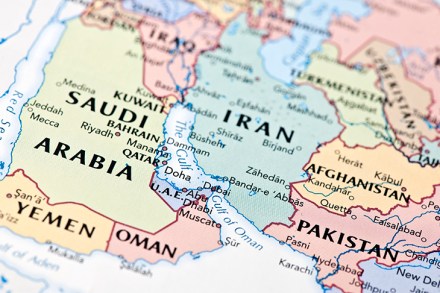
An oil price surge from $60 to $72 per barrel, as happened after the drone attack on Saudi Arabia’s Abqaiq refinery caused a sudden 6 per cent cut to global supply, would once have been taken as a sure signal of economic troubles ahead. A 1990s study of postwar oil prices plotted against employment and other data by Professor Andrew Oswald of Warwick University showed that every spike in energy costs had shortly been followed by recession. The theory still held in 2008: even though the ‘Great Recession’ was attributed to financial mayhem, it came soon after a speculative oil peak of $147.

WeWork is no more than an overhyped and overstretched landlord

From our UK edition

Long ago in my investment banking days I had a glimpse into the mind of the British Airways long-haul pilot. Chatting to an attendant on a flight from London to Delhi, I let slip what I did for a living. ‘The captain would like a word,’ she whispered a few minutes later. Up in the cockpit I found the pilot and co-pilot, feet up as the plane flew itself towards the lightning-lit Himalayan horizon, deep in discussion of their portfolios. ‘Heard we had an expert on board. Which way’s this stock market going, then?’ Those flying fat cats must now be comfortably retired on the final-salary pensions BA no longer offers their successors — who have been striking this week in pursuit of more than a current pay offer of an 11.5 per cent rise over three years.

2019 finalists lunch – North West and Wales

From our UK edition

Readers of my weekly ‘Any Other Business’ column know I occasionally find reason or excuse to slip a restaurant tip in amongst the financial commentary. In that spirit, let me start by saluting the venue for our encounter with North-West & Wales finalists for The Spectator’s Economic Disruptor of the Year Awards 2019. This was 20 Stories, a penthouse restaurant in Manchester’s Spinningfields district, which gave us everything we needed, including fine food, service that never cut across our conversation and a view that encouraged us to think in panoramic terms about the markets our entrants are seeking to disrupt.

The PPI scandal ends at last – but the nuisance calls will keep coming

From our UK edition

Of all the stains on the reputation of UK banks, the PPI scandal is surely the most shameful, the most revealing of low human behaviour and the one with the most far-reaching consequences. Between 1990 and 2010, some 30 million customers were sold Payment Protection Insurance, supposedly designed to cover them if they became unable to make debt repayments; no one knows what proportion of those policies were ‘mis-sold’, but compensation has so far amounted to more than £36 billion, plus £12 billion of admin costs for the banks. As the final claims deadline approached last Thursday, Lloyds — the worst offender, with RBS in second place — was still receiving PPI-related calls at the rate of 190,000 a week.

Now is the wrong time to tackle rising boardroom pay

From our UK edition

The average FTSE 100 chief executive earned £3.5 million last year — 117 times the £29,574 pay of the average full-time UK worker, according to new figures from the Chartered Institute of Personnel and Development. Other sources tell us that at the last count, 54 of those FTSE 100 chiefs were British, 21 held other EU passports, nine were Americans and 16 from the rest of the world. ‘So what?’ I hear you ask. These are global companies competing in a global market for management talent. Has not the average FTSE 100 chief’s pay actually fallen from £5.4 million since 2015, while UK wage rates have been rising this year at their fastest since the financial crisis?

Why you can’t let Brexit affect your life

From our UK edition

A couple with a first baby sought my advice: they had accepted a low offer for their cramped London flat and bid the asking price for a nice house in commuterland. But they need a bigger mortgage and if Brexit leads to a property crash, they could face negative equity and financial stress. Should they call the whole thing off? Emphatically I said they should not: buying a family home is a long-term choice, rarely regretted, in which fluctuating value matters far less than whether you love the house and whether (as in their case, I gathered) income is sufficient to support the mortgage. Conventional wisdom, perhaps, but I’m pleased to see the nation thinking the same way: the property website Rightmove reports a 6.

If investors are fleeing to gold this is not the time to be smug

From our UK edition

It came as no great surprise that the UK economy contracted by 0.2 per cent in the second quarter, following a first quarter in which growth had been artificially boosted to 0.5 per cent by stockpiling ahead of the original 29 March Brexit deadline. It’s fair to claim, as our editorial did two weeks ago, that the UK has performed better than expected for the past three years — particularly in terms of job numbers, which rose again in April to June despite the growth setback. True also that we’re in no worse shape than our European neighbours, and that our flexible, if painful, exchange rate will help us cope with a downturn.

2019 finalists lunch – Midlands

From our UK edition

This blog comes to you from the library of Hampton Manor, a Victorian mansion deep in the woods somewhere south of Birmingham. And if that sounds like the setting for a game of Cluedo, it isn’t: I’m here to meet three of the Midlands regional finalists for this year’s Economic Disruptor Awards. Our host is Mark Embley, regional manager for the Awards sponsor Julius Baer; with us as guest judges are Juliet Barratt, co-founder of the Grenade brand of ‘healthy snacks’, now a multimillion pound business, and Clive Bawden, a corporate financier who coaches entrepreneurs, has interests in sports administration, and is part-time COO of last year’s regional winner Warwick Music.

Should we be sad or happy that the pound has buckled?

From our UK edition

A wave to the FT team whose weekend feature on how the pound has been hit by fears of no deal began with this arresting sentence: ‘Sterling has finally buckled.’ I almost spilled my café crème as I read that in a sunlit French square and contemplated JP Morgan’s ‘conservative’ forecast of a $1.15 no-deal exchange rate, with a possible further 10 per cent fall beyond that, to compare with $1.50 before the referendum and ‘purchasing power parity’ (per UBS) of $1.57. As for the euro, more in a moment — but we’re already only a whisker from pound-euro parity. Should we be upset by this decline of a national symbol whose name, sterling, also means ‘excellent or valuable’?

2019 finalists lunch – London and The South

From our UK edition

We’re in the elegant City dining room of our sponsor, Julius Baer, hosted by Chief Executive Officer David Durlacher and joined by guest judges for London & the South: venture capitalist Kjartan Rist and serial-entrepreneur-turned-anti-plastic-campaigner Sian Sutherland. Nine regional finalists are with us to talk about their businesses, making for a tight discussion timetable, but this was one of our best sessions yet, introducing an amazing range of innovative business ideas. First, we heard from Ian Strang, founder of Beyond, the UK’s first price comparison website for funerals, which also offers other services, such as will-making and funeral finance, all designed to improve the consumer experience of everything around death.

Three more London & the South regional finalists

From our UK edition

Talking to entrepreneurs is so much more fun than the endless arguments about Brexit and Boris — the lot of jobbing journalists these days. This blog covers the three London & the South regional finalists for the 2019 Economic Disruptor of the Year Awards who were unable to join us this week for lunch at the offices of our sponsor, Julius Baer. I talked to them individually instead — and all three gave very persuasive pitches, particularly in terms of the social impact of their businesses. First, former aerospace engineer Mat Oram told me about AdviseInc, which helps Health Service procurement managers achieve better value for public money by gathering and analysing price data on up to two million products regularly purchased by the UK’s 230 NHS trusts.

Is ‘turbocharging’ the new code for Keynesian crisis spending?

From our UK edition

‘Turbocharging’: sounds exciting, doesn’t it? Two weeks ago, I noted that our incoming PM had deployed this power-word — with its subliminal reminder of his pedal-to-the-metal reputation as the former motoring correspondent of GQ — to describe what ‘free ports’ would do to regional economies. Since then, it has clearly been scrawled on Dominic Cummings’s Downing Street whiteboard: Foreign Secretary Dominic Raab and Chief Secretary to the Treasury Rishi Sunak were also bandying it around this week.

Meeting the North East Regional finalists 2019

From our UK edition

Our first regional finalists lunch took place in Leeds, at the subterranean Gaucho restaurant, whose black-and-silver decor contributed to a TV-studio ambience that made our North East finalists a bit nervous at first. But the mood relaxed thanks to the geniality of our guest judges — distinguished Yorkshire businessman Gordon Black and (representing the ‘true North East’) Caroline Theobald who chairs the advisory board of Newcastle Business School at Northumbria University. Caroline was quick to observe that all four of this year’s finalists happened to be from Yorkshire, having been picked ahead of several very interesting (but in some cases, too early-stage) entries from her own part of the country.

Bosses beware: one ill-chosen word can cripple your career

From our UK edition

The list of business leaders who have damaged their careers with a single word famously begins with Gerald Ratner, who wiped half a billion off the value of his jewellery chain in 1991 by describing one of its offerings as ‘crap’. Then there was Bank of England deputy governor Ben Broadbent, whose chance of succeeding Mark Carney plunged after he picked ‘meno-pausal’ to describe an economy past its productive peak. Now Standard Chartered chief executive Bill Winters has blighted his remaining time in post by telling shareholders they were ‘immature’ to have voted against his massive pay package.

Are Boris’s pro-business promises the defibrillator we’ve been waiting for?

From our UK edition

Back when Boris Johnson was editor of this magazine and MP for Henley, I was with him at a Tory party conference in Bournemouth. He was about to speak at a meeting on transport policy. An intern rushed up with some random downloaded pages, having evidently been told to Google ‘transport policy’. Boris grasped the papers, ran his hands through his hair, revved the rhetorical engine, launched into an old gag about how many times his bicycle had been stolen — and brought the house down. His improvisations swooped, soared, hit and missed for a hilarious quarter-hour before the big finish: ‘Jogging along your lovely seafront here in… ah, err, Bournemouth this morning, I came across a padlocked kiosk that bore a sign saying “This kiosk is alarmed”.

Deutsche Bank is right to return to its domestic roots

From our UK edition

Among the numbers attached to the restructuring of Deutsche Bank announced by Chief Executive Christian Sewing this week, the 18,000 job cull is most startling. But others tell the story just as vividly. First, the fact that the venerable institution, a pillar of Germany’s post-war economic resurgence, had raised €30 billion of new equity in the past decade in pursuit of a dream of becoming ‘Europe’s Goldman Sachs’ — but that sum is double its current shrivelled market capitalisation. Second, its most recent investment banking boss Garth Ritchie is leaving with an €11 million payoff, having collected ‘about €36 million’ over three years in which it became obvious his division was fit only for the axe.