Martin Vander Weyer

Martin Vander Weyer

Martin Vander Weyer is business editor of The Spectator. He writes the weekly Any Other Business column.

If taxes must rise, Sunak should pick on private equity instead

From our UK edition

It’s not axiomatic that taxes must rise to pay for the pandemic, if you seriously believe the surge in growth, jobs and prosperity that will follow the rollout of a hyper-efficient national vaccination programme will generate sufficient revenues for Rishi Sunak to stabilise the public finances, albeit at the highest level of debt ever seen in modern times. On the other hand, the Chancellor is surely pondering this question: in the current mood of public gratitude for the NHS and government support for the economy, there must be taxes I can tweak that won’t lose sackloads of Tory votes and might chip the peak off the debt mountain — so where are they?

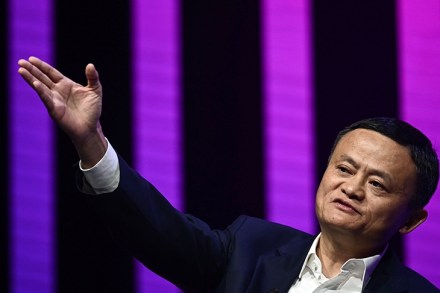
China’s rockstar-of-tech has fallen foul of Xi

From our UK edition

FTSE indices soared as the Biden Bounce met vaccine euphoria, underpinned by the Bank of England’s announcement of another £150 billion injection of quantitative easing. It was heartening to see shares in airlines, hotels and Rolls-Royce, the aero engine maker, perking up — and hardly surprising to see lockdown winners such as Ocado and Just Eat among the fallers. Across the Atlantic, even mighty Amazon shed 5 per cent on Monday. But stock markets are one thing and real life is another. What matters in the short term is whether Boris Johnson can get us out of the lockdown he clearly didn’t want before the tide of redundancies, heading towards 150,000 a month, crushes the prospects for a consumer-led recovery, even after vaccine distribution has begun.

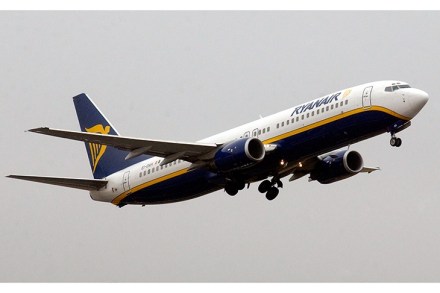
Ruthless Ryanair could show us the future of aviation

From our UK edition

Aviation, nuclear power and public transport — along with good restaurants, golden retrievers and hand-knitted bed socks — are, as Julie Andrews put it, a few of my favourite things. So in a week when the news is as depressing as I can remember since the dark winter of 1973-4, I might as well write about all of them. I’ll try to find points of light along the way but it’s not going to be easy. First the plight of airlines, now so extreme that it’s hard to foresee any outcome other than nationalisation for many major carriers. Even if the new ban on leisure travel ends, only pre-flight Covid testing and reduced quarantine can boost passenger numbers in the short term, while transatlantic routes will take years to recover.

What’s the point of trying to break up Big Tech?

The ‘antitrust’ law suit launched by US authorities against Google has been reported as a potential turning point in the dominance of Big Tech — and an echo of the courtroom dramas that diminished the excessive power of America’s late 19th-century oil, steel and railroad barons. But I wonder how much impact it will really have.The allegation, in brief, is that Google has created an illegal near-monopoly by paying large sums to Apple and other smartphone makers to secure its position as the default search engine for billions of consumers, its grip reinforced by ownership of Android, the phone operating system, and Chrome, the popular browser — all of which also gives it a stranglehold on the digital advertising market.

big tech

What’s the point of trying to break up ‘big tech’?

From our UK edition

The ‘antitrust’ law suit launched by US authorities against Google has been reported as a potential turning point in the dominance of ‘big tech’ — and an echo of the courtroom dramas that diminished the excessive power of America’s late 19th--century oil, steel and railroad barons. But I wonder how much impact it will really have. The allegation, in brief, is that Google has created an illegal near-monopoly by paying large sums to Apple and other smartphone makers to secure its position as the default search engine for billions of consumers, its grip reinforced by ownership of Android, the phone operating system, and Chrome, the popular browser — all of which also gives it a stranglehold on the digital advertising market.

Who’d want the job of vaccinating the nation?

From our UK edition

Is that a light at the end of the tunnel — or a second lockdown thundering unstoppably towards us? News of a viable vaccine is the one development in the Covid drama that could drag the national mood out of the current despair that’s pulverising economic recovery; it would also provoke a euphoric stock market rally. And it’s clearly getting closer. But how close? The chance of a magic potion for Christmas remains ‘slim’, according to Vaccine Taskforce chair Kate Bingham; spring next year is a safer bet, says chief scientific adviser Sir Patrick Vallance, adding that ‘we should not overpromise’.

Impossible to choose…

From our UK edition

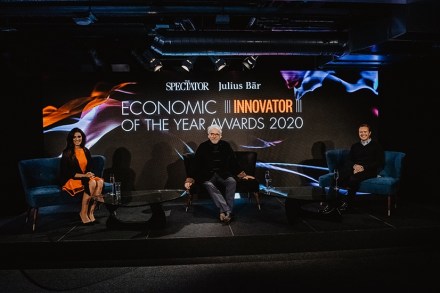
For The Spectator’s 2020 Economic Innovator of the Year Awards, sponsored by Julius Baer, we have introduced a new award for Social Impact to reflect the fact that today’s entrepreneurs, especially younger ones, tend to believe that business should aspire beyond profit (even though they recognise that profit is essential for any business to survive, grow and reward its investors) towards trying to make the world a better place. On that basis, it was no surprise that the vast majority of our almost-150 entrants this year ticked the box that indicated they’d like to be considered in this category, as well as on their merits as innovators and business-builders.

Why now is the perfect time to invest in art

From our UK edition

The Bank of England has told commercial banks to prepare for the possibility of negative interest rates. This last hypothetical spanner in the toolbox of monetary stimulus — since rates are stuck close to zero anyway and quantitative easing through bond-buying programmes has diminishing effects — sounds weird and worrying but has already been in use in Europe for some time. Its intended effect is to push the commercial banks to lend more to business by penalising them for depositing cash with central banks. But what on earth does it mean for personal savers? The fact is that all monetary policy since 2008 has been designed to stimulate moribund economies and keep companies alive on a broad front — with collateral impacts on individuals.

Solving 21st Century problems

From our UK edition

What a pleasure to be reunited (via Zoom, needless to say) with our genial judging panel for Scotland and Northern Ireland in The Spectator’s Economic Innovator of the Year Awards, sponsored by Julius Baer. Irene McAleese is co-founder and chief strategy officer of See.Sense, the Northern Ireland-based ‘smart bike lights’ and road-use data analysis venture that was our regional winner in 2018. Ian Ritchie CBE is a leading figure in Scottish tech circles, having been involved as an investor or director in more than 40 start-up businesses. Three finalists pitched to us, all with admirable clarity and passion – and all in different ways, solvers of 21st Century problems. One Year No Beer is an example of entrepreneurship with social purpose upfront.

The Blackburn brothers who are bringing Asda home

From our UK edition

What a triumph of entrepreneurial empire-building — if that’s still an acceptable phrase — is the £6.8 billion acquisition of the Asda supermarket chain by Blackburn-born self-made billionaires Mohsin and Zuber Issa. Sons of Gujarati immigrants, these brothers have advanced from a single petrol station in Bury to a chain of almost 6,000 in ten countries with convenience stores and coffee shops attached. Now their company EG Group has brought Asda back into British ownership after two decades as part of Walmart, the big-box monster of American shopping.

All life is here

From our UK edition

Our London & South East finalists for The Spectator’s Economic Innovator of the Year Awards 2020, sponsored by Julius Baer, really did cover the span of human life from conception to cremation – and many of the challenges of the 21st century in between. This region has more finalists (12) than our other regions simply because it attracts more entries – around 90 out of a total across the country of almost 150. In previous years we have brought them together to talk to our regional guest judges around Julius Baer’s elegant boardroom table in the City of London.

Could ‘clean tech’ save the aviation industry?

From our UK edition

What advice can I offer Alok Sharma, who took a pasting in the weekend press for his lacklustre performance as Secretary of State for Business, Energy and Industrial Strategy? While Rishi Sunak knocks up as many runs as he can on a difficult wicket with his job support scheme and VAT deferrals, Sharma is the ‘dead bat’ (in one business chief’s phrase) at the other end — accused of offering no Brexit clarity, not much personal energy and no strategy at all. In defence of this former City accountant, we might say that his rag-bag department, operating under many different names since 1979, has rarely been regarded as an engine of British enterprise.

The human touch, real and virtual

From our UK edition

The regional finalists in the West & South West Region of The Spectator’s Economic Innovator of the Year Awards 2020, sponsored by Julius Baer, were all, in very different ways, concerned with the human touch — though in two of the four entries, the business concept took us deep into virtual worlds. All four also offered ingenious solutions for marketplaces that are being rapidly changed by the pandemic. I’ll explain all that in a moment, but first, the setting and judges.

The end of the line for the rail franchise fiasco

From our UK edition

Good riddance to the passenger rail franchise system which has finally been killed off by Covid, though a majority of the travelling public might say it should long ago have been put out of its — and, more pertinently, their — misery. The complex scheme to privatise British Rail launched by the Major government in 1993 defied those who said it couldn’t be done and was designed by the Treasury to maximise proceeds to itself. In doing so, it fractured the industry into a myriad of separate owners, operators and service providers that rarely worked in harmony or created competition for the benefit of users. The consequences of this structural fiasco were as random as they were unsatisfactory.

It’s not all fluffed lines: the serious business of amateur dramatics

From our UK edition

The greatest pain of lockdown has been, for me, the absence of am-dram. In one half of my life I’m your financial columnist with a constant eye on the villains and heroes of the global business scene. In the other half, I’m the panto dame of my Yorkshire home town and the veteran of dozens of other stage roles — from Canon Chasuble in The Importance of Being Earnest to Mole in The Wind in the Willows — in the friendly little arts centre that we created for our community 30 years ago. My theatrical side-career over all that time has been creative, liberating, challenging and the fulcrum of my social life. But since I last trod the boards in February (in an Alan Bennett vicar sketch) it has, like so much else, been reduced to no more than an occasional Zoom.

A great start – even without lunch

From our UK edition

In previous years, regional judging sessions for The Spectator’s Economic Innovator of the Year Awards, sponsored by Julius Baer, have all taken place over convivial lunches – and readers of my weekly Any Other Business column know how much I enjoy throwing in a restaurant tip as part of an economic parable. This year, however, that hasn’t been possible, for obvious reasons, so like millions of other daily meeting participants around the world we have resorted to Zoom (plus snacks) to enable working-from-home judges and finalists to encounter each other through the small screen.

The Japan trade deal shows how desperate we are for investment

From our UK edition

A small cheer for Liz Truss’s treaty with Japan. It is, says the official press release, ‘the UK’s first major trade deal as an independent trading nation’ — and we must hope, the harbinger of much bigger deals to come. Even on the government’s own analysis, this one claims to deliver just £1.5 billion to the UK economy and an increase in UK workers’ wages of ‘£800 million in the long run’, whatever that means. What it highlights, I’m afraid, is the imbalance between the range of goods and services that the post-industrial UK is actually able to offer foreign partners — and how much more we need from them, chiefly in the form of inward investment.

Wrecking the Brexit talks won’t help our fishermen

From our UK edition

‘Every country has a political problem with its fishermen,’ wrote Peter Walker, the Conservative minister who negotiated the first effective EU-UK fishing deal in 1983. ‘Everyone sympathises with the tough life they lead. They all want to take as much fish as they can.’ And here’s Michel Barnier, still speaking as the EU’s chief Brexit negotiator in Dublin last week despite rumours he’s about to be sidelined: ‘Without a long-term, fair and sustainable solution on fisheries, there will simply be no new economic partnership with the UK.’ Those quotes encapsulate the bizarre fact that an industry which contributes just £1.

Now get off your sofa to help save the arts

From our UK edition

Along, cold weekend brought a haul of business news more bad than good. The worst was from aero-engine maker Rolls-Royce, which announced a £5.4 billion half-year loss — adverse currency movements plus a collapse in new orders and engine-repair work — and warned that in the ‘plausible downside scenario’ of an extended slump in global aviation, the company might cease to be a ‘going concern’. That’s a horrendous prospect for what’s left of British engineering. And unlike recent losses on a similar scale at BP, there’s no consolation in terms of long-term repositioning of the business: in short, the fewer jets flying, the grimmer Rolls’s future.

Zoom falling: has the video-call novelty worn off?

From our UK edition

A takeover battle for BT would bring much-needed excitement to the City — as well as a major political row. The privatised telecoms giant that rarely pleases its customers and regulators has seen its shares fall by four-fifths since late 2015. While many other tech-related stocks have rebounded, BT’s price is still down where it was when the market plunged in February — lockdown having interfered with BT Openreach’s broadband installation programme, slashed new orders from business customers and even knocked out the fixtures that might have been shown on BT Sport’s television channels. On top of all that, there’s a gaping hole in the pension fund.