Martin Vander Weyer

Martin Vander Weyer

Martin Vander Weyer is business editor of The Spectator. He writes the weekly Any Other Business column.

Don’t let China’s climate sins cloak its crushing of Hong Kong

From our UK edition

China’s failure to bring anything new to COP26 surprised no one. The world’s worst carbon emitter offered no advance on President Xi Jinping’s earlier promise to reduce coal use after 2025 and bring overall emissions to a peak in 2030 — thereby negating for at least a decade much of the rest of the world’s efforts to clean up the planet. But spotlighting China as a climate sinner should not be allowed to cloak its other villainhood, as an abuser of human rights: so let’s not forget Hong Kong. The fate of the once-British enclave and its future as an international business centre have been much on my mind lately.

Why paying more dividends could save the planet

From our UK edition

Climate emergency demands action, not rhetoric. So, on the eve of COP26, which UK news item promises to deliver the most positive impact for the future of the planet? Not, I suggest, Sadiq Khan’s extension of the Ultra Low Emissions Zone to the North and South Circulars, imposing stinging costs on owners of older diesels who can’t afford newer ones; nor Rishi Sunak’s £7 billion pledge for sustainable transport in cities outside London — only £1.5 billion of which turns out to be new money. No, the headline that matters more is the one that says dividend payments by UK companies are returning to normal.

Prince Harry is surfing an investment wave

From our UK edition

Does the economist David Blanchflower — who I described as the Bank of England’s ‘resident wacko’ during his 2006-09 tenure on the Monetary Policy Committee and who later served as an adviser to Jeremy Corbyn — have a former pupil on the editorial team of the Today programme? I can’t think why else he should have been afforded a soft six-minute interview with Mishal Husain (addressing him by his nickname ‘Danny’) in Monday’s prime slot between Thought for the Day and the eight o’clock news. British-born, US-based Blanchflower is best remembered for declaring in 2009 that if the then shadow chancellor Osborne’s proposed spending cuts were ever enacted, ‘five million unemployed or more is not inconceivable’.

Why we should all start hoarding cash and loo rolls

From our UK edition

If there’s anyone in Britain who knows how to keep grocery shelves stacked, it’s former Tesco chief executive Sir Dave Lewis, who has been named as Downing Street’s ‘supply chain tsar’. Application of Tesco’s mastery of logistics and fierce discipline on suppliers should keep delivery trucks moving, so long as they have drivers. But even Lewis won’t be able to avert the pre-Christmas surge of panic-buying which I’m told Cabinet Office planners fear — especially if it’s combined with a major outage in the banking system. Last week’s Facebook crash was a warning that blank screens are only a couple of burned-out circuits or a cyberhacker’s half-hour away.

Why stamp duty doesn’t add up

From our UK edition

‘Blame it all on business’ was the Tory strategists’ answer to petrol queues and the risk of a no-turkey Christmas that threatened to distract the party-conference faithful from adulation of the Prime Minister. As spin, it might have been shocking if it wasn’t so familiar. But as an explanation of the supply crisis, the idea that business has been deaf to years of warnings that it could no longer rely on immigrant labour is hogwash, rivalled only by the proposition that spiralling wages will lead us to a fairer society — rather than contributing to a bout of uncontrolled inflation in which higher pay actually buys fewer goods because all prices are rising.

Why scrapping business rates is a bright idea

From our UK edition

A worthwhile policy proposal amid the Labour conference dogfight? Now there’s a surprise. But shadow chancellor Rachel Reeves’s scheme to freeze and eventually scrap business rates, in the meantime boosting high-street survival by raising the threshold for small business rate relief and incentivising re-use of empty premises, was the brightest moment of the Brighton event. No matter that Reeves is likely to hold her post only as long as Sir Keir Starmer holds his and that anything promised today will resemble a Dead Sea scroll by the time Labour ever returns to power.

Is government preparing to shake the magic money tree again?

From our UK edition

Will my bath water still be hot by Christmas? That’s not a question I’d normally feel a need to share with you, but shortly after this morning’s ablutions I read that Bulb Energy — the UK’s sixth-biggest energy supplier with 1.7 million customers, including me — ‘is seeking a bailout to stay afloat amid surging wholesale gas prices’. The spike in the global gas-price graph is extraordinary, up 250 per cent since the start of 2021 and steeper in August. It has many causes beyond our shores, including depletion of stocks last winter, restricted supplies from Russia, hurricane-hit US refineries and increased Asian demand post-Covid.

The government should be helping, not hindering, start-ups

From our UK edition

I’m hugely enjoying meeting the finalists for The Spectator’s Economic Innovator of the Year Awards. This year’s bumper entry was strong on paths to decarbonisation — as you’d expect for the new era of climate action — and on ventures rocket-boosted by the pandemic, whether designed to take pressure off the NHS or in the ‘edutech’ field of online learning. By contrast, ‘fintech’ and consumer apps were less prominent than in earlier years, reflecting changed priorities. And come to think of it, common to all the entrants I’ve talked to so far is that not one has said: ‘We couldn’t have done it without the help we’ve had from government.

el salvador

El Salvador’s crackpot currency switch

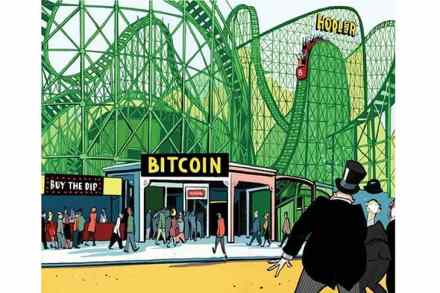
If you’re reading this in El Salvador, you’re probably taking a break from street protests against President Nayib Bukele’s adoption of bitcoin as legal tender, enacted last week. This small, heavily indebted Central American republic abandoned its own currency, the colón, 20 years ago in favor of using the US dollar — and has enjoyed relative financial stability ever since. The populist right-wing president’s insistence on shifting to the unregulated, ultra-volatile virtual currency favored by gamblers and money-launderers will supposedly bring savings of $400 million a year in commissions on the remittances from expatriate workers on which his economy depends.

What tea with the WI taught me about responsible investment

From our UK edition

Late-breaking exam results: many of the City’s top fund managers have failed a vital test of ‘stewardship’ — defined for this purpose as ‘the responsible allocation, management and oversight of capital to create long-term value for clients and beneficiaries leading to sustainable benefits for the economy, the environment and society’. That mouthful comes from the Financial Reporting Council’s UK Stewardship Code; asset management firms seeking to become ‘signatories’ to the code were asked to submit essays describing their own investment principles, highlighting their approach to hot-button ‘ESG’ (environmental, social and governance) issues.

How to solve the looming pigs-in-blankets crisis

From our UK edition

This is getting serious. Never mind global shortages of microchips, plastics, copper and container ships; now we’re running out of pigs in blankets. The British Meat Processing Association says its members are so understaffed that annual production of 40 million packs of this popular pork item for the Christmas market is under threat. The British public have so far stoically accepted occasional empty supermarket shelves as a pandemic knock-on, to be blamed in part on necessary pinging of key workers and delivery drivers and in part on neighbours’ stockpiling, rather than on systemic government cock-up. But if the succulent sausage-in-bacon delicacy is nowhere to be found, trouble will surely follow.

Rishi’s stamp duty gimmick did little but help greedy builders

From our UK edition

The Hundred — some sort of pimped-up cricket tournament, I gather — passed me by entirely, but I’ve been admiring the spin bowling of the Clayton, Dubilier & Rice team in another big contest, namely the bid battle for Morrisons. When CD&R made its initial 230p per share offer in June, there was much talk of the ruthless financial wizardry this New York private equity firm might apply to the supermarket group to extract maximum profit within a short timescale. But there was no more than a passing mention of the role as CD&R’s adviser of the former Tesco chief executive Sir Terry Leahy.

America abandoned this fight before the Afghans did

From our UK edition

39 min listen

On this week’s podcast:In the latest issue of The Spectator, we cover the Afghanistan issue extensively, looking at everything from why the West was doomed from the start, to how events in Afghanistan have transformed central Asian politics. On the podcast, journalist Paul Wood and our own deputy editor Freddy Gray, both of whom feature in this week’s issue, join Lara to talk Biden, Boris and the new 'progressive' Taliban. (00:37)'This is not your father's Taliban' - Paul WoodNext up, thousands of women whose menstrual cycles have been affected by the Covid vaccine have now come forward to make their symptoms known, including our host Lara Prendergast, who writes about her experience in this week's Spectator.

Head back to the office – it’s your patriotic duty

From our UK edition

Give or take a few leader-writing shifts and editing projects, I’ve been working from home for the past 30 years, so it may seem hypocritical to tell anyone else to return to the office. But it’s time to bring normality back to the world of work. I believe few people are capable of higher productivity in isolation than they are amid the shared energy and competitive pressure of a physical congregation of colleagues. Employers should not be allowed to use WFH as cover for cutting office space and certainly not for cutting wages. So on this issue I’m unusually but firmly at one with Goldman Sachs boss David Solomon, who said earlier this year that remote working is ‘not a new normal, it’s an aberration’.

Why I swapped my country pile for a tiny London pad

From our UK edition

‘Londoners searching for more space during Covid are buying up English country manors,’ said a Wall Street Journal headline in January — and that was certainly the trend reported by eager out-of-town estate agents. The middle classes,spurred by a temporary stamp-duty cut, were deserting the city in search of green pastures, home offices and the safety of low rural infection rates. Except for me, that is. I was going the other way, swapping my ‘country manor’ for a flat that’s as compact as it is uncompromisingly urban in the historic enclave of Seven Dials. Why?

Why filling Father Christmas’s sack will cost more this year

From our UK edition

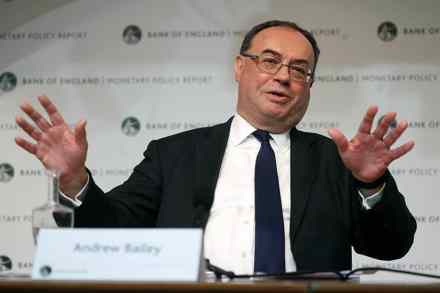
Bank of England governor Andrew Bailey looks increasingly uncomfortable as inflation notches upwards from ‘nothing to worry about’ towards the Bank’s latest prediction of a decade-high 4 per cent peak later this year and a possible ‘Oops, we’re back to the 1970s’ if spiralling wage and price pressures confound the forecasters. I wrote last week about the UK’s lack of lorry drivers, but that’s just one of many bottlenecks that need unblocking, as Bailey says, to bring ‘a wave of supply back on to the market’ and quell the blip. More significant globally, and much more difficult to resolve, is the logjam of shipping.

Is it time for a Dad’s Army of lorry drivers?

From our UK edition

Here’s a patriotic proposal: let’s form a Dad’s Army of lorry drivers, of which the Road Haulage Association reckons there’s currently a 100,000 shortage. Daily headlines tell us this is causing supply disruptions that have led to reduced factory output and half-empty supermarket shelves, slowing recovery and contributing to the blip in inflation. We need Walmington-on-Sea’s trusty platoon at the wheel to compensate for the million-plus exodus of foreign-born workers that has afflicted the economy from hospitality (see this week’s last item) to fruit farms, slaughterhouses and construction sites — compounded in haulage by delays to thousands of HGV tests for new applicants last year.

Is the airline ‘booking surge’ a load of hot air?

From our UK edition

Be glad you’re not in Dr Mike Lynch’s shoes. A London judge has ruled that the founder of the Cambridge-based software venture Autonomy can be extradited to the US to face multiple fraud charges in relation to the takeover of Autonomy in 2011 by Hewlett-Packard of California. This was, undoubtedly, a disastrous purchase: HP paid a huge premium over Autonomy’s market value, swiftly found all was not as expected, wrote off most of the $11 billion price and accused Lynch of having artificially inflated the company’s numbers. His fate now hangs in the legal balance. The Serious Fraud Office looked at the file but dropped it on grounds of insufficient evidence; meanwhile, judgment in a £3.8 billion civil action against Lynch is not due until September.

The clever radical who led the City’s transformation

From our UK edition

It’s a vivid example of unintended consequences that the swimming-pool builders of southern England should owe so much to Sir Nicholas Goodison, the former chairman of the London Stock Exchange who has died aged 87 and whose obituaries suggested little inclination to frivolity, poolside or otherwise. Head-and-shoulders the most cerebral of the Exchange’s leading members at the turn of the 1980s, he was also one of its most far-sighted and probably, as a noted connoisseur of 18th-century clocks, its most cultured. A traditionalist majority of his peers were content with the City’s clubbable old ways.

Could hydrogen power turn air travel green?

From our UK edition

Have you been scanning airline websites for exotic destinations to which your double-jabbed status might allow you to slip away in August? I certainly have, but I’ve ruled out the parts of Canada and the United States that are stricken by record-breaking heatwaves and forest fires — and I’m wondering what impact such extreme climate events will have on the aviation industry as it struggles back to life after the pandemic. Having survived a year of near-total shutdown, I suspect it will now face an onslaught of green rhetoric to which governments — positioning for November’s COP26 climate conference in Glasgow — will be forced to respond.