Martin Gayford

Pot heads

A friend of mine once owned a vase by the potter Hans Coper — until, that is, her teenage son had his friends around for a party. It wasn’t clear who knocked it off the shelf, but it was an expensive accident; a similar Coper pot sold last month at auction for almost £400,000. But then the tricky thing about studio pottery is where to put it — in more senses than one. It isn’t just whether it will be safer on the mantelpiece or in a cupboard. There is also the problem of how to categorise the stuff: is it art or is it craft, and what’s the difference? Such conundrums perplexed me as I walked around Things of Beauty Growing at the Fitzwilliam Museum, Cambridge.

The evanescence of everything

Think of the work of Claude Monet and water lilies come to mind, so do reflections in rippling rivers, and sparkling seas — but not buildings. He was scarcely a topographical artist — an impressionist Canaletto, even if Venice was among his themes. Nonetheless, Monet & Architecture at the National Gallery is an intriguing experience. Before I saw it, the suspicion crossed my mind that this was the solution to a conundrum that must puzzle many galleries. Namely, how to put together another Monet exhibition without it being the same as all the others? An institution such as the National Gallery could not just borrow a lorry-load of Monets and shove them up on the walls — although quite a lot of visitors might be happy enough with that.

Man of mystery | 12 April 2018

‘If you look at walls soiled with a variety of stains or at stones with variegated patterns,’ Leonardo da Vinci advised fellow painters, ‘you will therein be able to see a resemblance to various landscapes graced with mountains, rivers, rocks, trees, plains, great valleys and hills in many combinations.’ By an irony of history, Leonardo (1452–1519) has come to resemble that stained wall: a Rorschach blot in which viewers discern phantoms of their own imagination. This is, of course, to some extent the fate of all celebrities, and Leonardo was the first true artist celeb — the forerunner of a long line descending through his younger contemporaries Michelangelo and Raphael down to Picasso, Andy Warhol and Damien Hirst.

Greek idyll

In late April 1992, I was in Crete, interviewing the painter John Craxton. It was the week that Francis Bacon died. We heard the news on the BBC World service, and afterwards Craxton reminisced about his old friend. Craxton himself at that stage had almost disappeared into obscurity. He was living in a elegantly crumbly building overlooking the harbour at Chania. It wasn’t grand, but there was a small Matisse cut-out hanging on his sitting-room wall. In recent years Craxton has been undergoing a minor revival. There has been a book, a show at the Fitzwilliam; now this sizable exhibition — Charmed lives in Greece — devoted to him, together with the Greek painter Niko Ghika (Nikos Hadjikyriakos-Ghikas, 1906–1994), and the writer Patrick Leigh Fermor.

Time and motion

Andy Warhol would probably have been surprised to learn that his 1964 film ‘Empire’ had given rise to an entire genre. This work comprises eight hours and five minutes of slow-motion footage of the Empire State Building during which nothing much happens. Warhol remarked that it was a way of watching time pass or, you might say, the Zen of boredom. Much the same could be said of the films in Tacita Dean’s two exhibitions, Portrait and Still Life at the National Portrait Gallery and National Gallery respectively.

Being and nothingness | 15 March 2018

René Magritte was fond of jokes. There are several in René Magritte (Or: The Rule of Metaphor), a small but choice exhibition at Luxembourg & Dayan, 2 Savile Row W1 (until 12 May), that includes numerous variations, accomplished and disturbing, on similar ideas to his famous ‘Ceci n’est pas une pipe’ painting. ‘L’usage de la parole VI’ (1928) contains two amorphous brown patches resembling mud or merde or molten chocolate. They are labelled as if in a scientific diagram, one with the word ‘miroir’, the other ‘corps de femme’. It’s true that Magritte could be repetitive, but his early paintings are beautiful, and the humour had a serious point.

Faulty connections

In the mid-1940s, Frank Auerbach remarked, the arbiters of taste had decided what was going to happen in British art: Graham Sutherland was going to be the leading painter. ‘Then downstage left, picking his nose, Francis Bacon sauntered on. And the whole scene was changed.’ But how did it alter? What happened to figurative painting in London in the decades after Bacon exploded on to the scene? This is a question with which All Too Human at Tate Britain grapples. It is an old problem. When in 1976 R.B. Kitaj proposed that there was an important group of figurative artists at work here, a ‘School of London’, he defined them as ‘a herd of loners’.

Home is where the art is | 8 February 2018

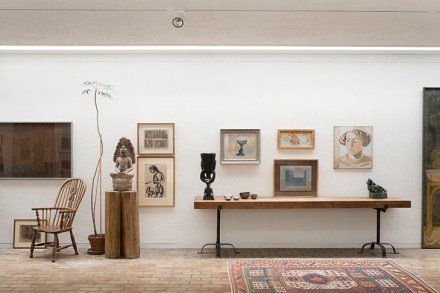
When I first visited Kettle’s Yard, Cambridge, I was shown around by Jim Ede, its founder and creator. This wasn’t an unusual event in the 1970s. I was an undergraduate, and in those days Ede — elderly, elegant and almost translucently ascetic — showed round anyone who rang his doorbell. It was rather as if Henry Clay Frick had given you a tour of his pied-à-terre on Fifth Avenue, or Sir Richard Wallace walked you through his collection. Except, of course, that they wouldn’t have done that — and Kettle’s Yard, as Ede (1895–1990) mused in a conversation with the artist John Goto, isn’t really a collection, ‘it’s a number of things perhaps’. In fact, it is much more than just a collection.

The bigger picture | 1 February 2018

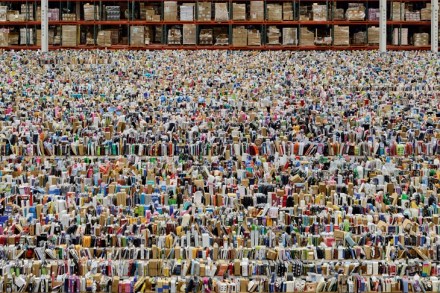
Walking around the Andreas Gursky exhibition at the Hayward Gallery, I struggled to recall what these huge photographs reminded me of. Gursky has built a career on colossal, panoramic pictures of subjects that are extremely ordinary — the view from a departure lounge of the empty runway at Schiphol airport, for example. Or, yet more exquisitely uninteresting, a wall-sized image of a section of beige carpet in an art gallery. Then I got the connection that had eluded me. These pictures were much like Martin Parr’s little books of Boring Postcards. These are collections of real cards made over the years by the British photographer, with separate volumes devoted to items from the USA and Germany (the latter entitled Langweilige Postkarten).

Crown jewels | 25 January 2018

Peter Paul Rubens thought highly of Charles I’s art collection. ‘When it comes to fine pictures by the hands of first-class masters,’ he wrote from London in 1629, ‘I have never seen such a large number in one place.’ In Charles I: King and Collector the Royal Academy has reassembled only a fraction of what the king once owned, yet even so this is a sumptuous feast of an exhibition. Some of what’s on show will be familiar to an assiduous British art-lover, since it comes from the Royal Collection and the National Gallery. But the sheer concentration of visual splendour is overwhelming and the installation spectacular. The Renaissance, like spring, came late to northern Europe — and last of all to distant Britain.

Living sculptures

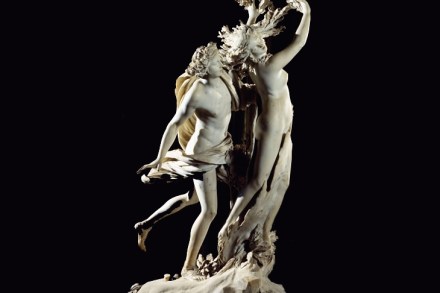
Seventeenth-century Roman art at its fullblown, operatic peak often proves too rich for puritanical northern tastes. And no artist was ever more Baroque than Gian Lorenzo Bernini, the supreme maestro of the idiom. But I love his work, which is why, on a spare afternoon in Rome before Christmas, I strolled over to the Borghese Gallery where the largest array of Bernini sculpture ever assembled is currently on view. Admittedly, the Borghese collection already contains the world’s finest collection of Bernini (1598–1680) and has done so ever since the artist’s lifetime. But on this occasion some 60 loans — including many full-scale marbles as well as paintings and terracotta models — have been added.

Renaissance man

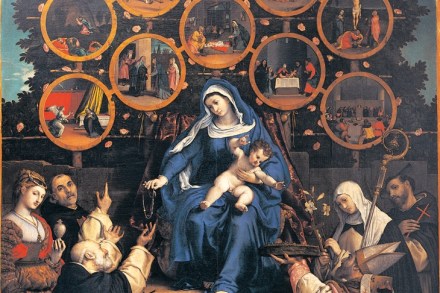
Lorenzo Lotto’s portraits — nervous, intense and enigmatic — are among the most memorable to be painted in 16th-century Italy, but his fellow Venetians didn’t see it that way. In a letter to Lotto of 1548, the poet and satirist Pietro Aretino wrote that he was ‘outclassed in the profession of painting’ by Titian. Now, though, with an exhibition of his portraits in store at the National Gallery next year, it looks as though Lotto’s time may finally have come. On a bright day this autumn my wife and I went on the trail of this most fascinating and idiosyncratic of Renaissance artists.

Oops! he did it again

‘It’s odd,’ Picasso once mused, ‘but you never see Modigliani drunk anywhere but at the corners of the boulevard Montmartre and the boulevard Raspail.’ He obviously suspected his friend of being a stage bohemian. There is, indeed, a touch of Puccini about Modigliani’s life — the poverty, his film-star good looks, the drink and drugs and poignant early death, all set against a picturesque Parisian backdrop of Montmartre and Montparnasse. It’s La bohème but with the painter himself, surely a tenor role, taking the place of the tragic, tubercular Mimì. Whether or not he lived out a cliché, Amedeo Modigliani (1884–1920) certainly painted to a set recipe — even if it was one largely of his own devising.

Sex and the city | 23 November 2017

‘I should like,’ Edgar Degas once remarked, ‘to be famous and unknown.’ On the whole, he managed to achieve this. Degas is after all one of the greatest names in European art, but there is much about him that remains enigmatic. Some of his works seem secretive, even surreptitious — the extraordinary monotypes he made in Parisian brothels, for example, or the many wax sculptures he created but neither cast nor exhibited. These and many other aspects of this curiously sympathetic man are explored in Degas: A Passion for Perfection by Jane Munro (Fitzwilliam Museum, £40), a fine book accompanying the current exhibition at the Fitzwilliam Museum, Cambridge (until 14 January 2018) marking the centenary of his death.

The apple of his eye

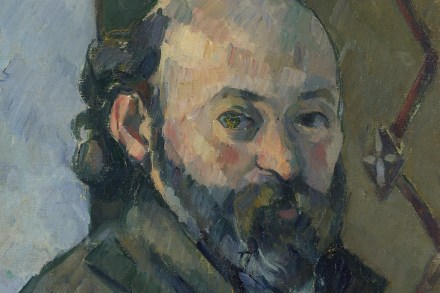
The critic and painter Adrian Stokes once remarked on how fortunate Cézanne had been to be bald, ‘considering the wonderful volume that he always achieved for the dome of his skull’. It’s a good joke, and all the better for being perfectly true — as is demonstrated by the superb sequence of self-portraits included in Cézanne Portraits at the National Portrait Gallery. These are the finest hairless craniums in the history of art. That, however, is only one of the attractions of the exhibition. This is the most impressive array of work, by one of the greatest of all painters, to be seen in London in more than 20 years. Cézanne once said, ‘I paint as I see, as I feel — and I have very strong sensations.

All black and white

Leonardo da Vinci thought sculpting a messy business. The sculptor, he pointed out, has to bang away with a hammer, getting covered in the process with a nasty mixture of dust and sweat. In contrast the painter can sit at his easel, dressed like a gentleman, and portray the whole wide world and everything in it. (Michelangelo, not surprisingly, disagreed.) Such spats were by-products of the paragone — a sort of Punch-and-Judy debate, much enjoyed in 16th-century Italy, about which of the arts was the most powerful. Intriguingly, the National Gallery has revived the paragone in one section of its new exhibition, Monochrome.

It’s the thought that counts

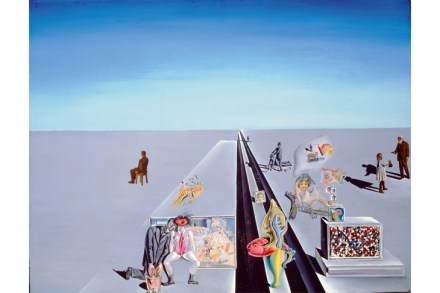
During a panel discussion in 1949, Frank Lloyd Wright made an undiplomatic comment about Marcel Duchamp’s celebrated picture of 1912, ‘Nude Descending a Staircase, No. 2’, in the presence of the artist. ‘I am sure he doesn’t himself regard it as a great picture now.’ At this Duchamp bridled, exclaiming in his excellent English, ‘I beg your pardon, sir!’ However, the architect had a point, as the exhibition Dalí/Duchamp at the Royal Academy bears out. I came away from it reflecting that Duchamp wasn’t a very good painter. This is not the point, obviously, that the RA intended to make.

Fickle fortune | 21 September 2017

Here’s an intriguing thought experiment: could Damien Hirst disappear? By that I mean not the 52-year-old artist himself — that would be sensational indeed — but the vast fame, the huge prices, the hectares of newsprint, profiles, reviews and interviews by the thousand. Could all that just fade from our collective memory into a black hole of oblivion? The answer is: yes, quite easily. Artists vanish all the time. Take the case of Hans Makart (1840–1884). He was a contemporary of Monet, Manet and Degas, but enormously more acclaimed in his lifetime than any of those. A period of Viennese life was dubbed the ‘Makart era’, a fashionable idiom was named the ‘Makartstil’. One reason for his success was that he was a master of PR.

Space odyssey | 14 September 2017

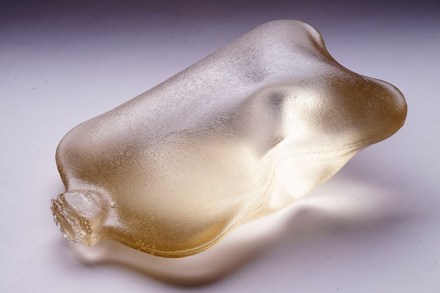
Rachel Whiteread is an indefatigable explorer of internal space. By turning humble items such as hot-water bottles and sinks inside out — that is, casting the cavities — Whiteread has accomplished one of the traditional tasks of art: revealing structure, beauty and mystery in the everyday. Her work is a remarkable contribution to an overlooked genre: the sculpture of inanimate things or still-life statuary. Nonetheless the large-scale, mid-career Whiteread retrospective at Tate Britain, which ought to be a triumph, does not quite come off. Ironically, since her idiom is derived from minimalism, the exhibition fails to observe the law that less is more.

Silent films

On 15 September 1888 Vincent van Gogh was intrigued to read an account of an up-to-date artist’s house in the literary supplement of Le Figaro. This described a purple house in the middle of a garden, the paths of which were made of yellow sand. The walls were glass bricks ‘in the shape of purple eggs’. Such aesthetic dwellings were all the rage; Van Gogh dreamed of having one himself in Arles. But as one learns from an exhibition at Leighton House, it was another 19th-century Dutch artist, Lawrence Alma-Tadema, who actually inhabited two such establishments — one off Regent’s Park, the other in St John’s Wood. On paper, Van Gogh and Alma-Tadema have a great deal in common.