Martin Gayford

Ivan Morozov: the Russian businessman with a passion for the avant-garde

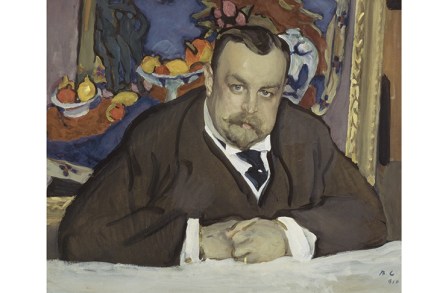
If you want to see the very best of Gauguin and Matisse, go east. That was the case in 1914 and it’s still true today. The reason, then and now, lay in the collecting habits, both discerning and extravagantly acquisitive, of two men: Sergei Shchukin and Ivan Morozov. The first of these has already been the subject of a notable book by Natalya Semenova; the present work is its sequel. Although long since ‘nationalised’, the pictures these two men owned are still among the principal treasures of the Hermitage in St Petersburg and the Pushkin Museum, Moscow.

Why the Royal Academy is wrong to consider selling their precious Michelangelo

How much does a Michelangelo cost? It is, as they say, a good question, meaning: nobody really knows. The reason for this odd state of affairs is that almost none of them have ever been bought and sold on the open market, which is how the prices of most things are established. It’s hard to think of many examples of his sculptures being traded in that way over the past 500 years. Strangely, the main exception is the ‘Taddei Tondo’, otherwise known as ‘Virgin and Child with the Infant St John’, which, reportedly, some members of the Royal Academy are suggesting the RA should sell. If that were to happen, which I very much hope it does not, we might learn the answer to the conundrum. Probably it would be a very large sum indeed.

Spectacular and mind-expanding: Tantra at the British Museum reviewed

A great temple of the goddess Tara can be found at Tarapith in West Bengal. But her true abode, in the view of many devotees, is not this sacred structure itself but the adjacent, eerily smoking cremation ground. There she can be glimpsed in the shadows at midnight, it is believed, drinking the blood of the goats sacrificed to her during the day. Many holy men and women live in that grisly spot too, adorned with dreadlocks, smeared with ash, and dwelling in huts decorated with lines of skulls painted crimson. As a domestic setting this wouldn’t suit everybody. But the varieties of religious experience (to borrow the title of a celebrated work by William James) are many and extremely diverse.

The beautiful upside-down world of Georg Baselitz

The hand is one of the first images to appear in art. There are handprints on the walls of caves in southern France, Indonesia and Argentina, made up to 50,000 years ago, which, although no doubt an illusion, seem to be waving at us across a vast gulf of time. The gigantic paintings of golden hands by Georg Baselitz at White Cube Mason’s Yard don’t quite do that, but the effect is still solemn and primeval. They dangle in front of you, fingers extended downwards, cut off at the wrist, each one the size of a whole body and glittering on a background of brownish black. There are also some drawings and sculptures of hands on view, but the star turns are the big canvases. They look like altarpieces dedicated to a cult of the hand and what it can do.

We’re wrong to think the impressionists were chocolate boxy

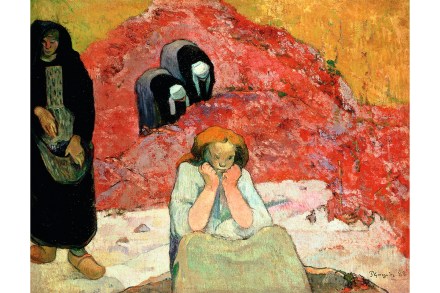
One Sunday evening in the autumn of 1888 Vincent van Gogh and Paul Gauguin went for a walk. They headed out of Arles into the countryside and when they looked back towards town they saw a sunset so splendid that each was inspired to paint a masterpiece. One of these, Gauguin’s painting bearing the timely title ‘Human Misery’, is among the star exhibits in a new exhibition at the Royal Academy. All the works in this show come from a delightful small museum in the northern suburbs of Copenhagen, housed in the early 20th-century mansion from which it takes its name, Ordrupgaard. This was the dwelling of Wilhelm Hansen (1868–1936), a mover-and-shaker in the Danish life insurance business and an avid collector of what was then modern art.

The joy of socially distanced gallery-going

Not long after the pubs, big galleries have all started to reopen, like flowers unfolding, one by one. The timing reminded me of an anecdote that Lucian Freud used to tell about a Soho painter friend he took into the National Gallery after it had shut (as some senior artists are entitled to do). They arrived after closing time in the drinking holes of Soho, and the painter friend was staggering and swaying so much that Lucian — who was not easily rattled — became alarmed that he was going to put one of his flailing arms through a Rembrandt. I wonder how those art-lovers of yesteryear would have coped with socially distanced visits. I think they may be an improvement, at least in some respects.

How John Constable got masterpiece after masterpiece out of a tiny corner of rural Suffolk

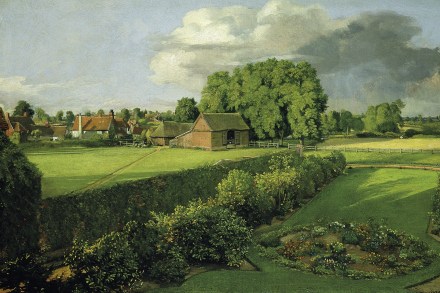
Before his marriage John Constable returned regularly in early summer to his native village of East Bergholt. When he wrote from there to his wife-to-be, Maria Bicknell, he almost always exclaimed that Suffolk was ‘in great beauty’. His enthusiasm was never more eloquent than on 22 June 1812, when he declared: ‘Nothing can exceed the beautiful appearance of the country at this time, its freshness, its amenity — the very breeze that passes the window is delightful, it has the voice of Nature.’ I often think about Constable (1776–1837) as I pace across the water meadows on my daily constitutional — partly because this too is an East Anglian landscape not unlike the one he was writing about: flat, leafy, watery, abounding in willows.

‘I think I’ve found a real paradise’: David Hockney interviewed

Spring has not been cancelled. Neither have the arts ceased to function. David Hockney’s marvellous exhibition at the National Portrait Gallery may be sadly shut, but the artist himself is firing on all cylinders. ‘I was just drawing on this thing I’m talking to you on,’ he announced when I spoke to him via FaceTime the other day. He was sitting in the sunshine outside his half-timbered farmhouse in Normandy. ‘We’re very busy here,’ Hockney explained, ‘because all the blossom is just coming out, and there’s a lot more to come. The big cherry tree looks glorious right now. Next the leaves will open, but at the moment the blossom is ravishing. The apple trees haven’t started yet!

Are there ways in which virtual exhibitions are better than real ones?

Six months ago I published a book about travelling to look at works of art. One such journey involved a round trip of about 6,000 miles to contemplate minimalist sculptures in the Texan desert. But the point wasn’t so much the distance as the importance of standing physically in front of the works themselves. Seeing the actual thing, I argued, was fundamentally different from looking at it in a book or on a screen. Nowadays, of course, unless you live within walking distance of a notable sculpture, that’s really all there is. A week ago my inbox was flooded with messages announcing that the art institutions of the world were closing until further notice. A few days later there was another deluge of announcements, but this time it was online exhibitions.

To ‘review’ such supreme paintings is slightly absurd: Titian at the National Gallery reviewed

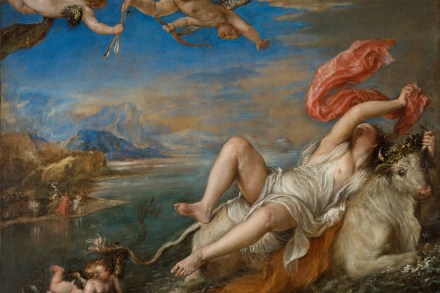
In 1576 Venice was gripped by plague. The island of the Lazzaretto Vecchio, on which the afflicted were crammed three to a bed, was compared to hell itself. In the midst of this horror Tiziano Vecellio, the greatest painter in Europe, died — apparently of something else. He was in his eighties and working, it seems, almost to the end. Titian: Love, Desire, Death, which was briefly on at the National Gallery, before it was closed down this week by our own plague, contained several of the greatest masterpieces of his old age — and also of European art. It comprises just seven canvases, all done for Philip II of Spain — a villain of English history, the man who launched the Armada, but as far as Titian was concerned his most discerning patron.

Strange, sinister and very Belgian: Léon Spilliaert at the Royal Academy reviewed

The strange and faintly sinister works of the Belgian artist Léon Spilliaert have been compared — not unreasonably — to those of many writers, Edgar Allan Poe among them. But as I walked round the Spilliaert exhibition at the Royal Academy, it was not any of these that came to my mind. It was the Father Brown detective stories by G.K. Chesterton. I wasn’t thinking of the neatly paradoxical plots, but rather of Chesterton’s mastery of atmosphere. Consider The Absence of Mr Glass (1914), which takes place in a ‘desolate’ seaside resort. As Father Brown investigates, ‘…the afternoon was closing with a premature and partly lurid twilight; the sea was of an inky purple and murmuring ominously’.

How Jan van Eyck revolutionised painting

We know tantalisingly little about Jan van Eyck, but one thing is sure. He once spent a week in Falmouth. In 1428 Philip the Good, Duke of Burgundy, sent a formal delegation of nobles and courtiers to negotiate his marriage with Isabella, daughter of the King of Portugal. One of these was Van Eyck. The official party set off from the port of Sluis in Flanders on 19 October, and arrived the next day in Sandwich, where they then spent a fortnight waiting for two Venetian ships to get there from London. Once embarked, they were driven by gales to take refuge in ports on the English coast, including Falmouth. In the surviving account of the trip, Van Eyck (d.1441) is described as ‘an exquisite master of the art of painting’.

Martin Gayford visits the greatest one-artist show on Earth

For a good deal of this autumn, I was living in Venice. This wasn’t exactly a holiday, I’d like to point out, but a suitable place to work while beginning a new book. The result was, though, that week after week, when I had finished writing, I went for a stroll around the neighbourhood, Dorsoduro, which very quickly came to feel like home. One thing I realised as I wandered around, between buying the groceries and admiring the view, was just how crammed the city was with works by Tintoretto. There must have been well over 70 within a few minutes of the apartment where I was staying. There are other painters who are rightly classed as ‘Venetian’ — Titian, Veronese, Giorgione and the Bellini family among them.

To fill a major Tate show requires a huge talent. Dora Maar didn’t have that

Dora Maar first attracted the attention of Pablo Picasso while playing a rather dangerous game at the celebrated left-bank café Les Deux Magots. She ‘kept driving a small pointed penknife between her fingers into the wood of the table’. From time to time she missed, and a drop of blood appeared on her gloves. This alarming form of digital Russian roulette was the basis for an early work by the performance artist Marina Abramovic, who will be featured at a major show at the Royal Academy next autumn. There is nothing so arresting in the large exhibition devoted to Maar’s work at Tate Modern as the images of the artist herself, and not only those by Picasso. There are some individuals who have an impact on the arts through sheer force of personality.

Remarkable and imaginative: Fitzwilliam Museum’s The Art of Food reviewed

Eating makes us anxious. This is a feature of contemporary life: a huge amount of attention is devoted to how much we eat, when we eat it, where it comes from, to toxic foods, organic and inorganic ones, environmentally damaging groceries, those that tot up too much mileage or cause damage to the rainforest. Some of these worries are relatively novel, but preoccupation with the nourishment we consume is not. A remarkable and imaginative exhibition at the Fitzwilliam Museum, Cambridge, Feast & Fast: The Art of Food in Europe, 1500–1800, documents just how obsessed our ancestors were with every aspect of their meals. At its heart are a series of recreations by Ivan Day, a specialist on the subject of what can only be described as edible art.

It’s yellow, not green, that’s the colour of jealousy

Making attributions to Leonardo da Vinci,  the great art historian Adolfo Venturi once remarked, is like ‘picking up a red-hot iron’. Those who wish to avoid injury, he advised, should exercise great caution. Whether or not the scholars who attributed the ‘Salvator Mundi’ to the great man are now suffering from badly burnt fingers — not to mention the buyer who paid $450.3 million for it — is a question of informed opinion. On the whole, Carmen C. Bambach, the author of the monumental Leonardo da Vinci Rediscovered (Yale, 4 Volumes, £400) votes against. In Leonardo da Vinci: The Complete Paintings in Detail (Prestel £65), Alessandro Vezzosi, also a noted authority on the artist, is more guarded.

The extraordinary paintings of Craigie Aitchison

One of the most extraordinary paintings in the exhibition of work by Craigie Aitchison at Piano Nobile (96–129 Portland Road, W11) is entitled ‘Georgeous Macauley in Blue against a Red Background’ (1968). It depicts the sitter, a Nigerian who was Aitchison’s favourite model of the 1960s and ’70s, wearing a peaked cap and double-breasted jacket. The catalogue quotes a reminiscence by the artist which provides a partial explanation of the headgear. ‘He wanted to be a traffic warden, and I said, “Why do you want to go about in the rain doing that?” And he said, “Because you get a uniform.”’ The art and life of Aitchison (1926–2009) were all like that: perfectly logical and at a unexpected tangent from normality.

Why Lucian Freud hated having his picture taken

One of Lucian Freud’s firmly fixed views about himself was ‘I’m not at all introspective’. This was, like many opinions we hold about ourselves, both true and not true. Perhaps it was more that he did not want to look within: his gaze was directed outwards. Lucian had trained himself to see everything — animate and inanimate — without preconceptions (one of his anxieties was that his own feelings would leak into a picture and spoil it). But looking at oneself and at another person are processes that are fundamentally dissimilar, both practically and psychologically. This puts his self-portraits, which are on show in an exhibition at the Royal Academy next week, in a separate category to the rest of his work.

The beauties of the universe are revealed in the paintings of Pieter de Hooch

In the early 1660s, Pieter de Hooch was living in an area of what we would now call urban overspill surrounding the commercial boom town of Amsterdam. It wasn’t the best of neighbourhoods. Nearby was a little street nicknamed ‘whorehouse alley’ (het hoerenpad). Tanners plied their trade thereabouts, which involved soaking hides in urine. But smells and sounds are not necessarily recorded in pictures, and in this 17th-century version of affordable housing, De Hooch painted images of utter domestic tranquillity. One such picture, ‘A Mother’s Duty’ (c.1658–60), is among the star exhibits in a delightful little exhibition of De Hooch’s work at the Museum Prinsenhof, Delft.

Pilferer, paedophile and true great: Gauguin Portraits at the National Gallery reviewed

On 25 November 1895, Camille Pissarro wrote to his son Lucien. He described how he had bumped into his erstwhile protégé, Paul Gauguin, who had explained to him how artists in the future would ‘find salvation by replenishing themselves’ from the works of remote peoples and places. Pissarro was not convinced. Gauguin, he grumbled, was always ‘poaching’ from someone. Once it had been Pissarro and his fellow impressionists, now it was the native peoples of Oceania. Plus ça change… Over the succeeding century and a quarter, Gauguin (1848–1903) has frequently been condemned.