Martin Gayford

Ignore the wall text and focus on the magnificent paintings: Tate Britain’s Hogarth and Europe reviewed

From our UK edition

There are, perhaps, two types of exhibition visitor. Those who read the texts on the walls and those who don’t. Personally, I instinctively tend towards the latter group, which is no doubt often my loss. In the case of Hogarth and Europe at Tate Britain, however, ignoring all the verbiage would be a huge advantage. This concentrates with anxious obsessiveness on the topics of empire and slavery (with a little condemnation of sexism on the side) and has infuriated several of my colleagues: ‘wokeish drivel’ (Sunday Times), ‘non-aperçus — which range from the crass to the asinine’ (New Statesman), ‘some quite drastic misreadings’ (Observer). Well, I’m not going to dissent from any of those judgments.

His final paintings are like Jackson Pollocks: RA’s Late Constable reviewed

From our UK edition

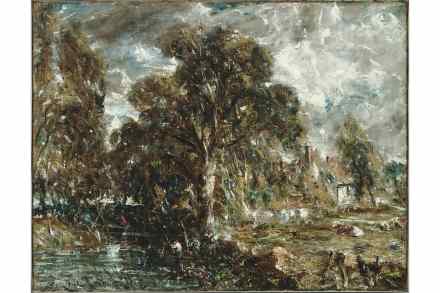
On 13 July 1815, John Constable wrote to his fiancée, Maria Bicknell, about this and that. Interspersed with a discussion of the fine weather and the lack of village gossip, he added a disclaimer on the subject posterity would most like to hear about: his art. ‘You know that I do not like to talk of what I am about in painting (I am such a conjuror).’ Perhaps by that he meant he did not like to give away how he did his tricks. As Late Constable, the magnificent exhibition currently at the Royal Academy, makes clear, he was a true magician with paintbrush and palette. Before your eye he performs astonishing transformations. Take, for example, the little oil sketch ‘Rainstorm over the Sea’, c.1824–8. It’s a picture of a sudden squall.

The supreme pictures of the Courtauld finally have a home of equal magnificence

From our UK edition

When the Courtauld Gallery’s impressionist pictures were shown at the Fondation Louis Vuitton in Paris in 2019, the Parisian public was so bowled over by the exhibition that some were inclined to claim Samuel Courtauld as an honorary Frenchman. This was not completely unreasonable; after all Courtauld (1876–1947) was a Francophile from an old Huguenot family. But it was even more of a compliment to the magnificent array of French art he had put together. In this city of impressionism, home to the Musée d’Orsay and the Orangerie, half a million visitors came to see it.

Albrecht Dürer was a 16th-century Andy Warhol

From our UK edition

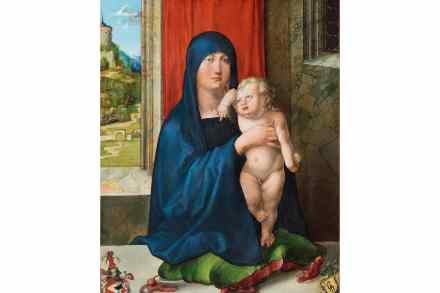
On 6 January 1506, Albrecht Dürer wrote from Venice to his friend Willibald Pirckheimer, who was at home in Nuremberg. The artist had already been in the city for a little while, and like many people who visit Venice he had spent a good deal of time shopping. Pirckheimer had asked him to buy some jewellery for him, ‘a few pearls and precious stones’, and the artist had been looking out for something suitable. There were, however, difficulties. For one thing, he says: ‘I can find nothing good enough or worth the money; everything is snapped up by the Germans.’ For another, Dürer complained, there were a lot of swindlers around. These ‘always expect four times the value for anything, for they are the falsest knaves’.

Antony Gormley & Martin Gayford: Sculpture from Prehistory to Now

From our UK edition

38 min listen

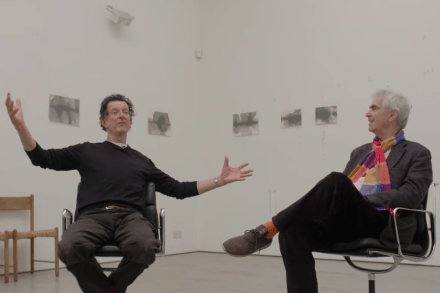
In this week's books podcast, I'm joined by the sculptor Antony Gormley and the art critic Martin Gayford to talk about their new book Shaping The World: Sculpture from Prehistory to Now. They talk about the special place sculpture occupies in the arts, the lines of connection between its ancient origins and the avant-garde, and their views on the new fashion for tearing down statues. Plus, Antony talks about his own work from Field to the Angel of the North — and why he and Martin can't see eye-to-eye on the Baroque.

The yumminess of paint

From our UK edition

‘Painting has always been dead,’ Willem de Kooning once mused. ‘But I was never worried about it.’ The exhibition Mixing It Up: Painting Today at the Hayward Gallery is crammed with work by 31 artists who likewise don’t allow the allegedly moribund state of their medium to keep them away from pigments and palette. This is well worth a visit, not only to see such good things as ‘Hold the Right Rail’ by the 87-year-old Rose Wylie, containing a patch of yellow curtain that somehow holds the eye and stays in the memory; the kind of magic that paint can work like nothing else. Elsewhere there is plenty of evidence on show of ebullient pleasure in the material itself, whether thick or thin, loose and free or applied with a delicate touch.

Titian meets Isabella Stewart Gardner

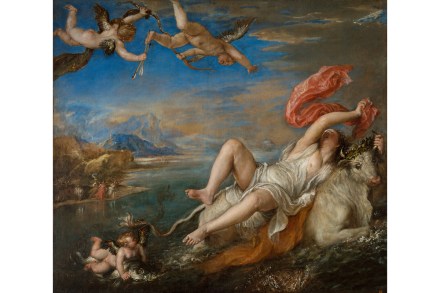
In 1576 Venice was gripped by plague. The island of the Lazzaretto Vecchio, on which the afflicted were crammed three to a bed, was compared to hell itself. In the midst of this horror Tiziano Vecellio, the greatest painter in Europe, died — apparently of something else. He was in his eighties and working, it seems, almost to the end. Titian: Women, Myth & Power, now on view at Boston’s Isabella Stewart Gardner Museum, contains several of the greatest masterpieces of his old age — and also of European art. It comprised just six canvases (a seventh was unable to travel to Boston), all done for Philip II of Spain — a villain of English history, the man who launched the Armada but, as far as Titian was concerned, his most discerning patron.

titian

Deserves to be much better known: Sophie Taeuber-Arp at Tate Modern reviewed

From our UK edition

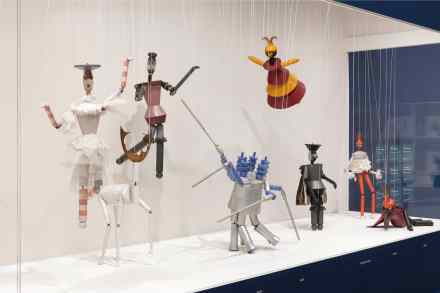
Great Swiss artists, like famous Belgians, might seem to be an amusingly underpopulated category. Actually, as with celebrated Flemings and Walloons, when you start counting you discover there are more of them than you thought. Paul Klee, for example, and Alberto Giacometti. A third, whose work is reassessed in a large exhibition at Tate Modern, was Sophie Taeuber-Arp. Clearly, unlike the other two, hers is far from being a household name even in fairly artistic homes. There are several reasons for this, one perhaps being the unwieldiness of that cognomen itself. She was born Sophie Henriette Gertrud Taeuber in 1889 at Davos, and as was then the custom, hyphenated her surname with her husband’s when she married Hans (or Jean) Arp in 1922.

Why I will miss our mighty cooling towers – and I suspect I am not alone

From our UK edition

One afternoon earlier this summer we drove through Rugeley in Staffordshire. There, looming above the A51, were the cooling towers of the power station: a pinkish red, resembling terracotta, with curving convex sides, like modernist vases on a pharaonic scale. At 385 feet high, they were a little taller than the dome of St Paul’s Cathedral. We remarked on how surprisingly good they looked as we passed them on 4 June, en route to a spot in the Staffordshire countryside where we were going to stay. On 6 June there was a distant rumble like thunder but we thought little of it. However, that evening when we glanced at the horizon there was a gap where the towers had been.

Full of masterpieces: Paula Rego at Tate Britain reviewed

From our UK edition

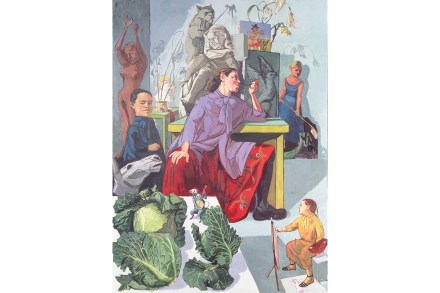
The Victorian dictum ‘every picture tells a story’ is true of Paula Rego’s works, but it’s only part of the truth. Rego has said that she hopes and expects that when people look at her pictures, ‘Things will come out that I’m not even aware of.’ And that’s right too: every marvellous picture tells so many stories, and is so charged with under- and overtones, that no one, including its creator, can be aware of everything that’s going on. That’s certainly true of many works in the Rego retrospective at Tate Britain. All notable painters and sculptors are, of course, sui generis. They don’t follow established rules; instead they make up a new set to suit their own creative personalities.

An immensely rich show – though it consists of only two paintings: Rubens at the Wallace Collection reviewed

From our UK edition

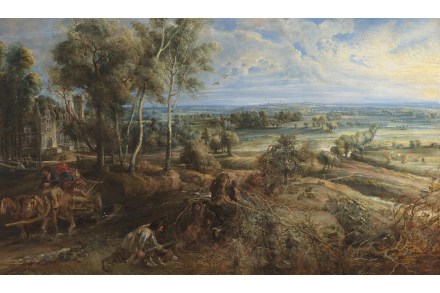
‘When pictures painted as companions are separated,’ John Constable wisely observed, ‘the purchaser of one, without being aware of it, is sometimes buying only half a picture.’ When he said those words at a lecture in Hampstead delivered on 9 June 1833, he had two great paintings by Rubens in mind: ‘A View of Het Steen in the Early Morning’ and ‘The Rainbow Landscape’. At that date they had already been split up, the first going to the National Gallery, the second eventually to be bought by the Marquis of Hertford. Because of the will of Lady Wallace, the eventual heir of the Marquis, or rather the way it was interpreted, the two have not been reunited since — until, that is, the current, marvellous display at the Wallace Collection.

Rodin was as modern as Magritte and Dali, but more touching and troubling than either

From our UK edition

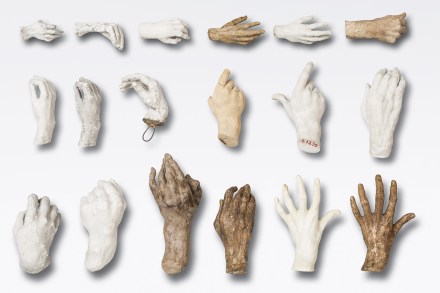
Rodin’s studio at Meudon in the suburbs of Paris is huge and filled with light — a sort of combined warehouse, factory and conservatory. It’s crammed with white plaster figures: battered, writhing and fragmentary. This strange, almost surreal effect has been recreated in The Making of Rodin at Tate Modern. The result is more interesting than beautiful. Few exhibits would normally be classified as finished pieces. Most are plaster casts of clay studies, ranging in scale from miniature to gigantic. Quite a lot aren’t even works in progress, more ingredients for art, bits and pieces he could play around with. Rodin called these ‘giblets’ (‘abats’).

From temple to labyrinth — the art museum today

From our UK edition

At a certain point, the critic Robert Hughes once noted, at the heart of American cities churches began to be replaced by museums. Much the same occurred elsewhere in the world in the later 20th and early 21st centuries. Museums have sprouted from the earth in many diverse forms and numerous places. Enormous sums have been lavished on them. Vast processions of visitors file through their doors like medieval pilgrims — or at least they did before the pandemic struck. Once, there was widespread agreement as to what should go inside these temples of the arts: old master paintings, ancient carvings, the best and noblest artefacts humanity has produced. This consensus, however, has evaporated.

How Algernon Newton made great art out of empty streets and dingy canals

From our UK edition

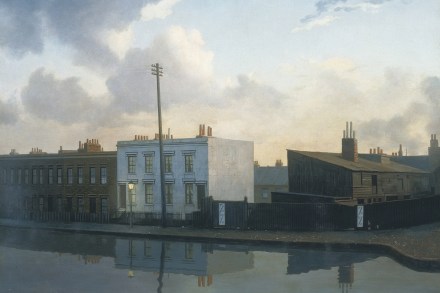
Quite late in life Walter Sickert paid his first visit to Peckham Rye. He was excited, apparently, because he had often heard about it but never actually been there. Evidently Sickert had a sense of London as an unknown city, full of potential. And he was far from being the only artist fascinated by the hidden recesses of this vast urban labyrinth. Algernon Newton, another case in point, was equally fascinated by unfashionable byways of the metropolis. For Sickert it was music halls and dingy bedrooms in Camden that seemed full of visual possibilities; for Newton it was terraced streets and urban water courses, their banks empty of people. Not for nothing was he dubbed ‘the Regent Canaletto’.

Francis Bacon: king of the self-made myth

From our UK edition

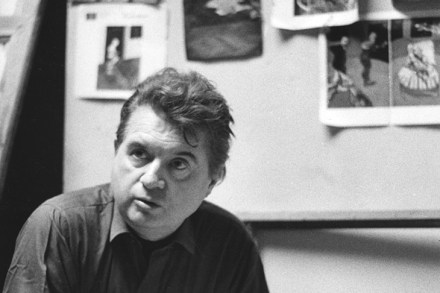
In 1953, Francis Bacon’s friends Lucian Freud and Caroline Blackwood were concerned about the painter’s health. His liver was in bad shape, he drank inordinately, his lover had recently thrown him out of a first-floor window in the course of a drunken row, he was taking too many amphetamines and his heart was ‘in tatters’, ‘not a ventricle working’. His doctor had warned if he took one more drink, he informed them over dinner at Wheeler’s restaurant in Soho, he might drop dead on the spot. Then, in ‘an ebullient mood’, the artist ordered champagne. Of course, Bacon (1909-92) didn’t expire on the spot. Instead, he lived, painted, drank and argued for another four decades.

On the trail of one of the first artists to paint ordinary things

From our UK edition

There are many marvellous things to be seen in the Musée des Beaux-Arts at Dijon. But when I paid a visit a couple of years ago (in those days you could just step on a train and do such things), it was a little picture of the Nativity that particularly caught my eye. Its date, artist and original owner are all uncertain, but its beauty and originality were clear at a glance. Here, for almost the first time in European art, the appearance of ordinary things and people were the subject of close, rapt observation. Not of course that there was anything ordinary about the Nativity itself, which was a miraculous, world-changing event — signalled in the painting by the bright golden sun rising over distant jagged hills.

Bright and beautiful: the year’s best art books reviewed

From our UK edition

When he was a student, the celebrated American modernist master Robert Rauschenberg once told me that his ‘greatest teacher’ — Josef Albers — would proclaim ‘art is svindle’ in heavily accented English at least ten times a day. By that provocative remark Albers probably meant not so much that art was a cheat but that intellectualising about it is usually bogus. He once thanked his lucky stars that his father was a painter-decorator rather than an intellectual. For him it involved simple forms, clear colours and no nonsense. Albers and his equally brilliant wife are the subject of a remarkable and visually beautiful joint biography, Anni & Josef Albers by Nicholas Fox Weber (Phaidon, £100).

Antony Gormley: why sculpture is far superior to painting

From our UK edition

Antony Gormley: In the beginning was the thing! The reason I chose sculpture as a vocation was to escape words, to communicate in a physical way. It was a means of confronting the way things were, of getting to know them in material terms. The origins of making physical objects go back to before the advent of Homo sapiens, earlier even than the appearance of our Neanderthal cousins. Sculpture emerges from material culture. At the beginning there was an urge to make objects and you could argue that making them was the catalyst for the emergence of the modern mind.

One of the greatest of all outsider artists: Alfred Wallis at Kettle’s Yard reviewed

From our UK edition

Alfred Wallis (1855-1942) should be an inspiration to all late starters. It was not until he had passed the age of 70 that, after his wife of many years had died and having previously worked as a sailor, fisherman and rag and bone merchant, he decided to take up art. ‘Aw! I dono how to pass away time,’ he explained to a shopkeeper in his native town of St Ives. ‘I think I’ll do a bit a paintin’ — think I’ll draw a bit.’ Three years later, his work was spotted by the leading British modernists Ben Nicholson and Christopher Wood. By and by, Wallis’s pictures were being exhibited in London, and Nicholson presented one to the Museum of Modern Art, New York.

Entertaining – but there’s one abomination: National Gallery’s Sin reviewed

From our UK edition

Obviously, we’re living through an era of censorious puritanism. Granted, the contemporary creeds are different from those of the 16th century. But the imperious self--righteousness is much the same — which gives the entertaining little exhibition at the National Gallery entitled Sin an unexpectedly contemporary edge. Personally, I’ve always thought that the doctrine of original sin has a great deal of explanatory power (it explains why history can’t ‘end’ and plenty of things will always go wrong — because that’s the way people are). Arguably, the medieval list of deadly failings — anger, pride, sloth, etc — provides a better summary of human nature than many later attempts.