Mark Palmer

Mark Palmer is a travel expert.

Political football | 24 May 2018

From our UK edition

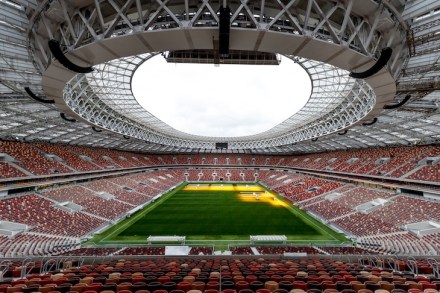
Politics and sport should never mix is the hoary old chestnut — but they always do. It’s a thrilling concoction. In just under three weeks, the World Cup kicks off in Russia and while I can’t vouch for the quality of the footie, the whole extravaganza is likely to be edge-of-the-seat stuff. At the end, Vladimir Putin will either be grinning like a creamed-up cat or grinding his teeth in rage, lamenting about what might have been. Never has there been a backdrop quite like this. A couple of months ago there were calls (including from Alan Johnson, the former Labour home secretary) for England to boycott the tournament altogether.
Good grief

From our UK edition

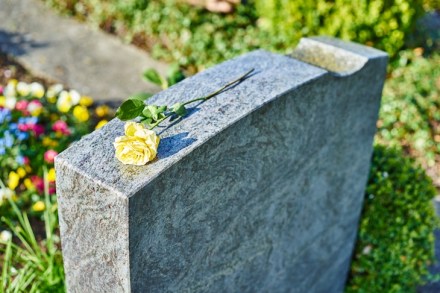
Just over a year ago, my best friend dropped dead. He was in his early sixties and many of us expected him to die, because he was hugely overweight and desperately unhappy — and the ciggies can’t have helped. ‘If you don’t look after yourself, we’re going to lose you,’ was the polite refrain from those who knew him well. Chris had no money, no real job, precious little hope. We first met as new boys aged eight at our boarding school, where he went on to become one of the best sportsmen the school had ever had and sat a scholarship for Harrow. Early success might have played a part in what was to come. We all know people who peak prematurely. On leaving school, Chris and I and then shared a tent while hitchhiking through Canada and America.

My football lesson

From our UK edition

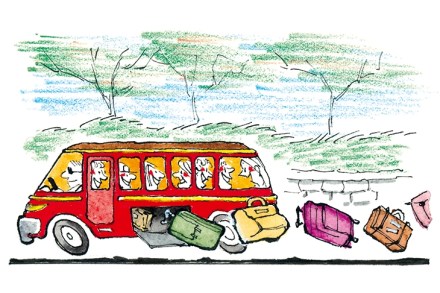
Every now and again my Tube ride to work on the District line is enlivened by children on a school outing. Presumably they are heading for the Science Museum or possibly the National Gallery. Often, they have different coloured badges stuck to their jumpers. As far as I can work out, if, for example, you are a red, then you’re meant to sit with other reds, and sometimes the teacher barks instructions such as: ‘Could the reds try to be a little quieter please?’, or asks: ‘Blues, how many more stops until we get there?’ This last question gives rise to a piercing shriek as a dozen or so blues shout out their answers, sometimes coinciding with the doors opening at Fulham Broadway, giving commuters just enough time to rush off in search of a child-free carriage.

‘I never had anything against Nancy’: coffee and cookies with Tonya Harding

The film I, Tonya, has been well-received and is even up for an Oscar or two. I’m pleased about that because I’ve met Tonya Harding and her story has always fascinated me, not least because to watch her skate in the run up to the 1994 Olympics (particularly in Oakland, California in 1991 at the Ladies Free Skate competition) is to witness sport, art and sheer guts come together in an unfathomable holy trinity. It all went terribly wrong, of course, and she became the most reviled ice skater in the world. https://www.youtube.com/watch?

Padel

From our UK edition

When we arrived, we discovered that our villa had a padel court. Few of us had seen one before and no one knew the rules, so we invented them as logically as we could and got on with it. Within a couple of sets we were hooked. Some people started to get up early to practise; others began watching matches on YouTube. Specialist websites were consulted to establish the basics, such as how many underarm serves you get (the answer is two) and whether the ball is out if it hits the back wall without bouncing first in the court. (Absolutely). What a game! It’s a cross between real tennis, regular tennis, squash and ping pong.

Low spirits

From our UK edition

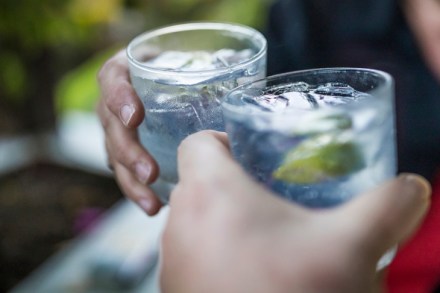
You may have noticed that we’re in the throes of a 21st-century Gin Craze. It’s not as serious as the one which began in the 1720s, when London was awash with the stuff, much of it adulterated with turpentine, alum and sulphuric acid, but it’s still an irritation with no signs of an imminent hangover. The big difference between then and now is that sales and marketing ‘creatives’ have been let loose to talk up ‘boutique’ distilleries with fancy names, trendy bottles and romantic back stories about Uncle Jack dusting off his great-grandfather’s rusting stills down a remote back alley. I found one gin, for example, with a tag line that says ‘intricately realised’.

The Britten Theatre

From our UK edition

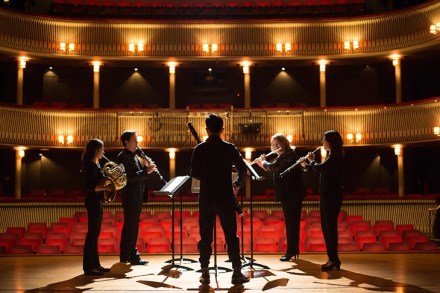
When friends from overseas with the slightest interest in music ask for recommendations about what to see in London, I always come up trumps. Boastful but true. In fact, even friends who’ve lived in London all their lives are impressed when I suggest a night of opera at the Royal College of Music’s Britten Theatre. Normally, that’s because they’ve never heard of it, never mind not knowing where it is or what it does. And what it does is the key. For this is the stage upon which some of the best young singers in the world prepare for stellar operatic careers, and it’s where you and I can listen to them in supreme comfort for a fraction of the cost of a ticket to the Royal Opera House.

A rugby legend

From our UK edition

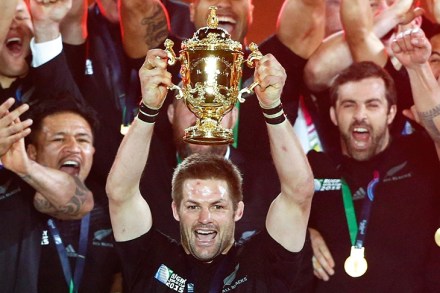
‘There’s a chance we’ll meet up with Richie McCaw in Christchurch,’ proffered the PR on our New Zealand press trip. The man from the Sunday Times and I let out a little gasp. We weren’t sports journos but we knew where McCaw stood in the pantheon of all-time greats. He is the most capped player in rugby union history, a World Cup winner on two occasions and arguably the best open-side flanker there has ever been. He captained the mighty All Blacks 110 times out of his 148 matches, and is probably the most popular living Kiwi. That’s all. Richie, as everyone knows him, retired from the game in 2015 after lifting the William Webb Ellis trophy at Twickenham.

They can’t handle the truth

From our UK edition

Every now and again I ask my daughter, who is a primary school teacher, if she is free for a curry after work. And almost always she replies that she can’t, as she has a ‘parents’ night’. Now, either she has become lazy in her excuses for not wanting to see me, or her school organises a great number of parents’ nights. Hoping it might be the latter, I consulted a friend called Lucy, a teacher at a primary near Guildford in Surrey. She said it was quite normal to have at least one parents’ night per term, plus two or even three ‘parents’ workshops’. These workshops are dedicated to specific themes such as ‘how to support your children’s homework’ or ‘how to support your child’s literacy development.

Bordering on insanity | 3 November 2016

From our UK edition

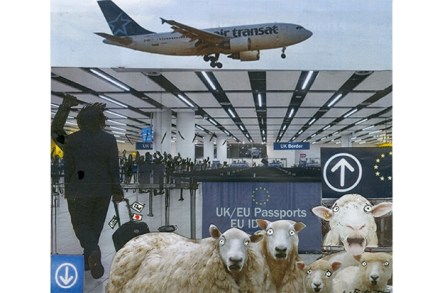
There are lots of signs at Gatwick about how it is unacceptable to be ‘rude or abusive’ to Border Force staff. One poster warns that losing your temper or gesticulating in a threatening manner could be a criminal offence. Keep a lid on it, is the-message. My wife Joanna and I recently had plenty of time to study these missives and just about kept a lid on it after returning from a weekend in Spain. It was a Monday evening that became a Monday night at Gatwick’s north terminal as thousands of travellers snaked back and forth for nearly an hour at passport control in an atmosphere that swung from anger to sheer astonishment at the incompetence of the government agency that mans the UK border at British airports.

A home from home at school

From our UK edition

The Earl of March, who owns the Goodwood Estate in West Sussex, said recently that he ‘hated’ Eton and ‘couldn’t wait to leave’. This came as a surprise to the interviewer, who immediately asked Charles March why on earth he then packed his own three sons off to his horrible alma mater. ‘Amazing, isn’t it?’ came the reply. ‘It’s completely different now to how it was in my day. Fathers and sons have a completely different relationship — warmer, loving. People I was at school with often barely had relationships with their fathers. Mine was different; my parents have always been modern, liberal thinkers.’ It didn’t make much sense. So what, really, was his problem? What had caused his unhappiness at school?

In defence of dinner parties

From our UK edition

In or out? Almost two months on and I’m afraid the great debate shows no sign of abating, certainly not in our divided household. And while we’ve had several referendums over the matter, the result is always a stalemate. The only upside is that this argument has nothing to do with Brussels. It’s far more rudimentary. The battle in Palmer Towers is whether we eat in or out when wanting to see friends. My wife Joanna — who, as it happens, was for In over the country’s EU membership — is a firm outer, while I, who voted Out on 23 June, am a determined inner. As with the EU conundrum, there are good points to be made on both sides.

White power

From our UK edition

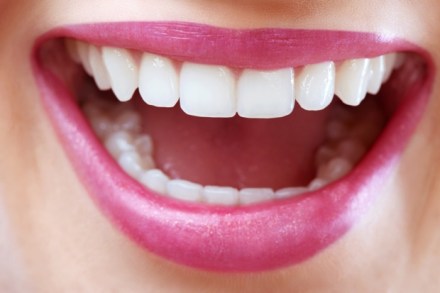
Ruby Wax makes the point (repeatedly but it still gets a laugh) that the British discovered the practice of brushing their teeth in the 1980s. I dare say our dental hygiene is the butt of more jokes throughout North America, where wearing a brace is something of a fashion statement. But something strange is happening on our side of the pond. This struck me — in fact, almost blinded me — a couple of weeks ago when a hotel manager introduced himself at a central London gathering and dazzled me. His teeth were super-white. They were super-straight, too, but it was the brilliance that startled me. It was as if someone had told the poor fellow to open wide and poured a pot of Dulux gloss into his mouth. I couldn’t take him seriously.

Blazers of glory

From our UK edition

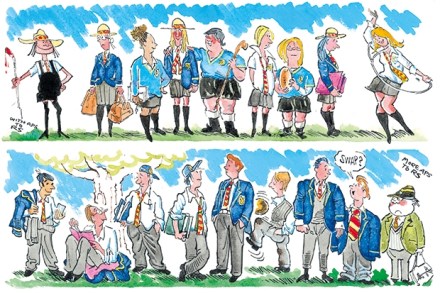
Most mornings on the way to work I pass students flowing out of Fulham Broadway tube station en route to the London Oratory School. They are an assorted bunch. Some seem more confident than others. One or two of the boys look immaculate, while others have clearly stirred their cornflakes with their ties. Some of the girls appear remarkably grown- up for their age — but presumably that’s my ‘how-come-policemen-are-getting-younger’ syndrome. What they share apart, obviously, from wishing they were still tucked up in bed, is a uniform chosen for them by the school, which they have adapted with varying success to their own personalities or moods on any given day.

Planet of the canapés

From our UK edition

Even the name is pretentious. And something of a misnomer, too. After all, a canapé comes from the French word for ‘couch’ — the idea presumably being that a garnish of some kind or other sits on top of tiny slices of bread or small crackers in the same way that tasty people plonk themselves down on a sofa. Except that the whole business of dainty finger food — as liberated Victorians used to call it — has got so out of hand that wherever you fetch up, chefs are going to extremes to outdo each other. During the preamble to new year, I attended one bash at a swish hotel in central London where the canapés kept coming (and heaven knows what they must have cost) but all they did was make everyone long for a proper dinner.

Maximum Bob

From our UK edition

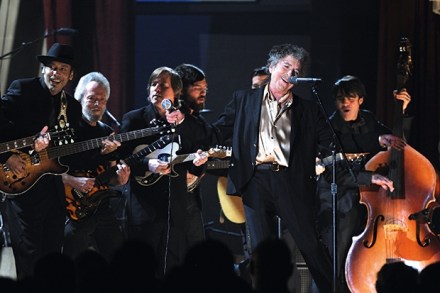
We were like four hapless contestants on University Challenge. None of us knew the answer. But just like they do on the telly, I leaned learnedly across towards my 28-year-old son, who in turn looked despairingly towards one of my stepsons, before my other stepson made his contribution with a shrug of the shoulders. So, it was up to me as captain of the team to take a guess as the first few bars wafted through the Royal Albert Hall. ‘“Tangled Up in Blue”?’ I proffered with as much enthusiasm as Jeremy Corbyn at a white-tie dinner. But, fingers on the buzzer, there were far bigger questions to be answered.

Bring back the bungalow!

From our UK edition

Sheila Pugh is 91 and in good health. She lives on her own in Congleton, Cheshire, where she takes pleasure in cooking for herself and moving about the place with a dustpan and brush, albeit a little gingerly at times. She has a private garden with a pond and views over arable land. A lot of her friends and a great number of people of a similar age have had to move into retirement or care homes, cashing in their savings and surrendering their independence in the process. Mrs Pugh’s good fortune and the difference between her and so many other ninetysomethings is simple: she lives in a bungalow. ‘It’s a real lifeline for her,’ says her daughter, who is a friend of mine. I get that.

The wonders of Zanzibar’s Stone Town

From our UK edition

Zanzibar has become a honeypot for honeymooners — with good reason. This exotic island is a mere six degrees south of the equator and is roughly 60 miles long and 25 miles wide. That means it’s toasty all year round, while being big enough for some exploration if you want it. Its white beaches are stupendous, its people desperately poor but rich in spirit. The sea is a glorious turquoise, with plenty of coral reef for divers, and when the tide is out on the eastern side of the island, the horizon is dotted with women in bright kangas (wraps) wading through the water, scooping up chunks of seaweed that are later weighed and shipped off elsewhere, often to pharmaceutical companies in China.

The ugly game

From our UK edition

What a terrific summer of sport it’s been: a wonderful Wimbledon, a rollicking Royal Ascot, an absorbing Ashes series that still has the best part of two Tests to go. And now along comes football, barging its way on to the back pages, shoving the other sports aside, sniggering all the way to the bank. Every August, the ‘beautiful game’ reasserts itself as the playground bully. Football is the most popular sport in this country — and the nastiest. It has become a cesspit of greed, debauchery and racism, especially in Britain. It is crude and overbearing and has all the subtlety of a disco at Holy Communion. I feel bad about this because I love football.

Letter from Cuba: The tourists are coming – but don’t expect Walmart just yet

From our UK edition

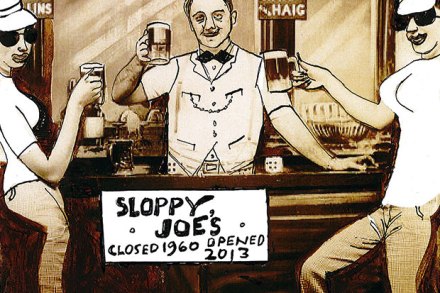
Sloppy Joe’s — which starred in the film of Graham Greene’s Our Man in Havana — was always likely to wither on the post-revolution vine. As the decadent hangout of unsavoury ‘imperialists’ whom Fidel Castro despised, it never stood much of a chance. Frank Sinatra, John Wayne and local hero Ernest Hemingway all used to call in from time to time, slaking their thirst at the 65ft-long mahogany bar. It closed in 1960 and no one expected to see mojitos and daiquiris being poured here again, at least not until Fidel and his brother Raúl were gone. But needs must. Double measures and double standards keep Cuba alive.