Mark Mason

Mark Mason talks about trivia via books, articles, guided walks and the pub.

Save village cricket!

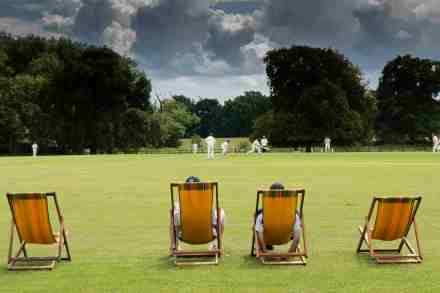
I once made a BBC radio feature calling for cricket to be banned. It was in response to the death of a boxer, who had sustained fatal injuries during a fight. There were the usual calls for the sport to be outlawed, so I pointed out that, as cricket killed more people than boxing, surely it too should be forbidden. Auberon Waugh played along, saying how beastly he’d found cricket at school, what with the viciously hard ball coming towards you at high speed and you being expected to catch it. Danny Baker cited the same reasons for his dislike of the sport.

The puntastic pleasures of wordplay

If you tweeted about a particular snooker referee being the ex-boyfriend of one of the women in The Human League, and a friend of yours replied with ‘Don’t cue want me baby?’, how would you react? Would you groan, sneer and dismiss the pun as the lowest form of wit? Or would you – like me – laugh out loud and feel a surge of joy at the beauty of the wordplay? If the latter, come and stand with me in defence of puns. Not in a ‘guilty pleasure’ way, either, but as a proud statement that puns are wonderful and important. I hate the snobbery that surrounds puns, the way they’re seen as second-rate language. A good pun – be it a joke, a newspaper headline or simply thrown into conversation – is everything language should be about.

The intoxicating illusion of Guinness Zero

Guinness Zero reminds me of the judge. I heard about him years ago. He was driving home from the golf club, seven G&Ts to the good. Or rather – he realised as he saw the flashing blue lights in his rear-view mirror – to the bad. This is it, he thought in horror, end of career. But he went through the motions, blowing into the breathalyser and, as he waited for the result, miserably contemplating how he was going to break the news to his wife. ‘Well, sir,’ said the policeman after a moment, ‘that all appears to be fine. Have a pleasant evening.’ Dumbstruck, the judge turned his car straight round and drove back to the golf club.

Janus and the back and forth of the new year

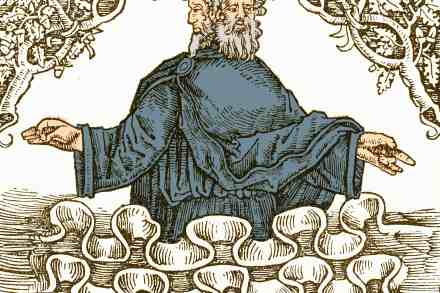
The Roman god Janus is about to play his annual trick on us. 31 December, the last day of the year, will be followed by 1 January, the first day of the year. We’ve ended up right back where we started. Frustrating, but at the same time reassuring. Janus, after whom the new month is named, was always pictured with two faces, one looking forward, the other back. He is the god of both beginnings and endings. The notion of returning to 1 January has always bothered me slightly, as though all that effort last year was for naught. Indeed the fact that each day of the year is a ‘copy’ of all the equivalent days in previous years seems troublesome too.

The joy of the little things

Whenever I hear the phrase ‘holiday of a lifetime’, I cringe. Same with ‘dream job’. You know they’re both going to disappoint. How can they not? Expectations have been allowed to build and build, way beyond the ability of reality to deliver. And even if your new job does make you happy for a while, it’ll soon go wrong. The job will change, or you will change, or both, and returns will diminish. No, forget the big stuff – you need to find your joy in little things. One of mine is letting the steering wheel slide through my hands. Every time I straighten out from a corner, and catch the wheel at just the right moment as it spins back round, I make a point of enjoying the moment. OK, it’s not a massive thrill – but that’s the point.

Why I’d take a close Ashes defeat over an easy victory

The Ashes start this week. If, as an England supporter, you were given the following two choices, which would you pick? First: England win the series 5-0. Second: the series ebbs and flows, the teams arrive in Sydney locked at 2-2, the match goes down to the final hour of the final day, and England lose. If you went for the second option, you’re my kind of fan. I’ve always preferred to see my team (or player) lose narrowly than win easily. Sport is there to entertain us. This is the supporter equivalent of ‘It’s not the winning, it’s the taking part that counts’. As a fan, you get excited by the process rather than the result. Nowhere is this truer than in Test cricket.

Embracing the occult, going underground & lost languages

34 min listen

Big Tech is under the spell of the occult, according to Damian Thompson. Artificial intelligence is now so incredible that even educated westerners are falling back on the occult, and Silicon Valley billionaires are becoming obsessed with heaven and hell. An embrace of the occult is not just happening in California but across the world – with ‘WitchTok’, a new trend of middle-class women embracing witchcraft. Is this spooky or just sad? And to what extent are they just following in the tradition of the Victorian charlatan? Host Lara Prendergast is joined by the Spectator’s associate editor – and host of the Holy Smoke podcast – Damian Thompson, alongside writers and Spectator regulators Arabella Byrne and Mark Mason.

How the Northern line brought T.E. Lawrence to The Spectator

If only the Northern line could get its act together. Last week saw further buffing of its reputation as the ‘Misery line’, with signalling problems that disrupted journeys for days and kept engineers baffled. But it could all be so different. The Northern could be famous for having the deepest station (Hampstead, 192ft), the highest point above ground level (the Dollis Brook viaduct, where the line runs 59ft above the road) and indeed the final station when the whole network is listed alphabetically (Woodside Park). It also has the only station with a single-syllable name. I’ll leave you to work that one out. Clue: it’s not, as someone once suggested to me, Oval. In fairness, the line’s delays have sometimes been for more charming reasons.

Best of Notes on…

29 min listen

The Best of Notes on... gathers the funniest, sharpest and most wonderfully random pieces from The Spectator’s beloved miscellany column. For more than a decade, these short, sharp essays have uncovered the intrigue in the everyday and the delight in digression. To purchase the book, go to spectator.co.uk/shop On this special episode of Spectator Out Loud, you can hear from: William Moore on jeans; Laura Freeman on Brits in Paris; Justin Marozzi on boxer shorts; Mark Mason on coming second; Michael Simmons on doner kebabs; Fergus Butler-Gallie on Friday the 13th; Hannah Tomes on rude place names; and, Margaret Mitchell on lobsters. Produced and presented by Patrick Gibbons, with an introduction from William Moore.

Confessions of an unmanly man

There’s a certain sort of chap who, when he hears you mention football, gets all earnest and starts talking about flat back fours. You try to stop him, attempting to steer the conversation away from tedious tactics and back on to the important stuff, such as the fact that there’s only one team in the top four English divisions whose name, when spelled in capital letters, contains no curves. He’ll look confused, disorientated, maybe even a little bit angry. Either he’ll persist with his talk of formations, or walk away completely. The correct reaction, of course, is to say: ‘Really? That’s brilliant. Let me try to work it out.’ This is when you know you’ve found a kindred spirit: an unmanly man.

John Power, Nick Carter, Elisabeth Dampier, Maggie Fergusson & Mark Mason

26 min listen

On this week’s Spectator Out Loud: John Power argues the Oxford Union has a ‘lynch-mob mindset’; Elisabeth Dampier explains why she would never date a German; Nick Carter makes the case for licensing MDMA to treat veterans with PTSD; Maggie Fergusson reviews Island at the Edge of the World: The Forgotten History of Easter Island by Mike Pitts; and, Mark Mason provides his notes on guided walks. Mark will also be hosting a guided walk for the Spectator, for tickets go to spectator.com/events Produced and presented by Patrick Gibbons.

Weimar Britain, the war on science & are you a competitive reader?

36 min listen

First: a warning from history Politics moving increasingly from the corridors of power into the streets, economic insecurity exacerbating tensions and the centre of politics failing to hold; these are just some of the echoes from Weimar Germany that the Spectator’s editor Michael Gove sees when looking at present-day Britain. But, he says, ‘there are grounds for hope’ – what are they? Michael joined the podcast to discuss.   Next: why did science succumb to the ‘culture wars’? Biologist and peer Matt Ridley bemoans the ‘cultification of science’, arguing that ‘left-wing ideological nonsense’ ended up permeating through all scientific disciplines.

The joy of guided walks

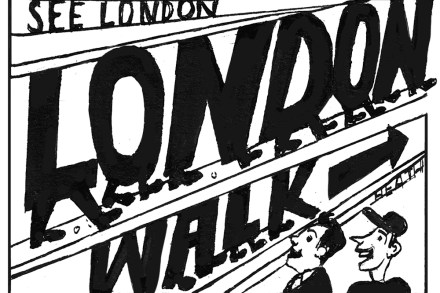
‘You should be pointing at things with an umbrella for a living,’ said my brother. He’d come to visit me in London and we’d been wandering the West End. The rain never appeared, but my umbrella seemed a natural implement with which to indicate the sights we passed. The Odeon Leicester Square, for instance, where I told Steve the story about Michael Caine (born Maurice Micklewhite) choosing his new surname: the cinema had been showing The Caine Mutiny. Or Piccadilly, so named because it was home to a tailor who’d made his fortune from pickadils, the ruffed collars worn by Elizabeth I, Walter Raleigh and the like. Or 3 Savile Row, on whose roof the Beatles played their last ever gig.

Svitlana Morenets, Michael Simmons, Ursula Buchan, Igor Toronyi-Lalic, Richard Morris & Mark Mason

37 min listen

On this week’s Spectator Out Loud: Svitlana Morenets says that Trump has given Zelensky cause for hope; Michael Simmons looks at how the American healthcare system is keeping the NHS afloat; Ursula Buchan explains how the Spectator shaped John Buchan; Igor Toronyi-Lalic argues that art is no place for moralising, as he reviews Rosanna McLaughlin; Richard Morris reveals how to access the many treasures locked away in private homes; and, Mark Mason provides his notes on bank holidays. Produced and presented by Patrick Gibbons.

Putin’s trap, the decline of shame & holiday rental hell

50 min listen

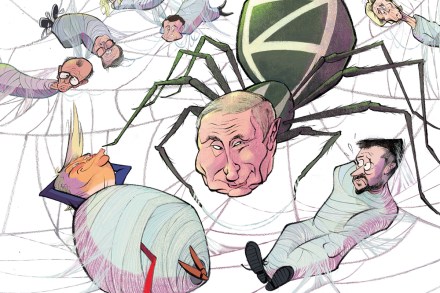
First: Putin has set a trap for Europe and Ukraine ‘Though you wouldn’t know from the smiles in the White House this week… a trap has been set by Vladimir Putin to split the United States from its European allies,’ warns Owen Matthews. The Russian President wants to make a deal with Donald Trump, but he ‘wants to make it on his own terms’. ‘Putin would like nothing more than for Europe to encourage Ukraine to fight on… and lose even more of their land’. But, as Owen writes, those who count themselves among the country’s friends must ask ‘whether it’s time to choose an unjust peace over a just but never-ending war’. Have European leaders walked into Putin’s trap? Owen joins the podcast alongside Gideon Rachman of the Financial Times.

The Liberal MP who put the ‘bank’ in bank holiday

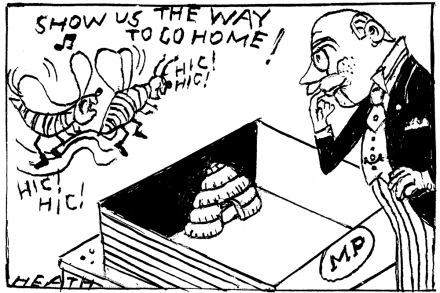
Why are you enjoying a bank holiday this month, as opposed to a ‘general’ or ‘national’ holiday? It’s because the man who invented them knew that employers might be tempted to ignore titles which were vague. But if the banks were forced to close, trade would become impossible. That man was the Liberal MP Sir John Lubbock, one of those 19th-century figures who sound as though they were invented by Michael Palin. He had three sisters and seven brothers, two of the latter playing for Old Etonians in the 1875 FA Cup final. Sir John was a friend of Charles Darwin – such a good friend, indeed, that when the naturalist became depressed, Lubbock was the only visitor allowed to see him.

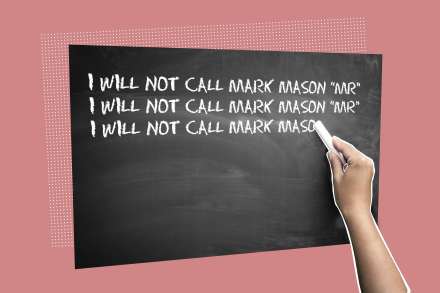
Don’t call me ‘Mr’

‘Please call me Mark,’ I’ve always said to the teachers at my son’s school. ‘If you call me “Mr Mason” it makes me feel 85 – and if I call you “Mrs Smith” it makes me feel seven.’ I know their first names, and always use them, in emails, phone calls and in person. A few return the compliment, but most keep it formal. It feels wrong, putting distance between us when we’re having a conversation, often an in-depth and important one, about my only child. The best teachers and staff have taught me fascinating things about how to deal with Barney. I’ve only been a parent once; they’ve encountered thousands of kids. It was the same at his primary school, starting with Sonja, when I was a volunteer helping with the class’s reading.

Mark Mason, Mary Wakefield, Matthew Parris and Philip Patrick

26 min listen

On this week’s Spectator Out Loud: Mark Mason reminisces about old English bank notes (00:33), Philip Patrick wonders whether AI will replace politicians in Japan (04:04), Matthew Parris wonders why you would ever trust a travel writer (10:34) and Mary Wakefield looks at the weird world of cults (17:42).

How the Bank broke Britain, Zelensky’s choice & the joys of mudlarking

49 min listen

First up: how the Bank of England wrecked the economy Britain’s economy is teetering on the brink of a deep fiscal hole, created by billions of pounds of unfunded spending – never-ending health promises, a spiralling welfare bill and a triple lock on the state pension, which will cost three times as much as originally estimated. Although politicians ‘deserve much of the blame for the economic state we’re in’, it’s Andrew Bailey – Michael Simmons argues in the magazine this week – who ‘has enabled their recklessness’. He joined the podcast to discuss who really broke Britain with Kate Andrews, Deputy Editor of The Spectator’s world edition and former Economics Editor. (01:15) Next: has Ukraine lost faith in Zelensky?

The wit and beauty of bank notes

William Shakespeare was the first to feature, in 1970. Alan Turing was most recent, in 2021. But the Bank of England is now asking whether anyone else should appear, ever. The Bank’s redesigning our bank notes and wants the public’s thoughts on replacing the famous people who currently grace them with buildings, animals, films, historical events or even food. However the redesign ends up, let’s hope the notes continue to display the wit and beauty they’ve traditionally had. The Churchill fiver, for instance. Look closely and you’ll see that Big Ben stands at 3 p.m., the hour that Winston made his first speech to the Commons as Prime Minister.