Mark Mason

Mark Mason talks about trivia via books, articles, guided walks and the pub.

The perfect pub

From our UK edition

Whenever one of those news stories appears about how many pubs have been forced to close in the last year, I always think of George Orwell. He would have had the correct reaction: lots of pubs are forced to close because they’re terrible. Yes, the pub is a wonderful British institution, with a long and noble history — but that doesn’t mean that any individual pub has a God-given right to stay open forever. If a landlord waters down his beer and scowls at his customers, as plenty of them do, they’ve only got themselves to blame when the bailiffs come knocking. We know Orwell had strong opinions on the subject because he wrote an article about it, setting out the qualities of the perfect pub, a sadly mythical place he called the Moon Under Water.

Old boys’ network

From our UK edition

Are you a man? Those of you who don’t fall into the category of ‘adult male’ will clearly answer no — but even those who do might not say yes. Do you apply the label ‘man’ to yourself? Are you happy using the phrase ‘I’m as [insert quality] as the next man’? You’re not? Me neither. At 43 I’ve spent a quarter of a century as a man in the eyes of the law, but still the word feels too grown-up for me to use it about myself. Several friends have admitted the same thing. Winston Churchill was a man. Floyd Mayweather is a man. We, on the other hand, are… well, what? Talking to a woman in her mid-twenties recently, I referred to one of her contemporaries as ‘a great girl’.

National Busking Day is an insult to real buskers

From our UK edition

This Saturday is National Busking Day, a series of events across the country proving that Britain’s arts establishment just don’t get it. The whole point of busking is that it’s free-spirited, independent, individualistic – exactly the sort of enterprise that doesn’t need or want a national day. ‘Let’s take something that lots of people do spontaneously, without any wish to be organised,’ goes the thinking, ‘and then organise it.’ First prize for Not Getting It goes to Gareth Powell of London Underground. ‘Busking on the Underground network,’ he says, ‘has been a rite of passage for London musicians for generations.’ Yes, Gareth – one that they pursued in spite of the Tube trying to stop them.

Political memorabilia

From our UK edition

My first reaction on hearing of Margaret Thatcher’s death in 2013 was: ‘Great — now my autograph from her will go up in value.’ This wasn’t callous. It was a simple application of demand and supply. As a child of the 1980s I had learned my lesson well. The Lady wouldn’t have objected to me viewing her signature as a pension plan. Indeed, it’s what she would have wanted. How many Caribbean villas, then, should I be thinking of buying? Because this is no ordinary autograph. I asked Mrs T. (as she then still was) to write out ‘There is no such thing as society’ and sign it. She embellished the quote, adding ‘…there are only individuals, it is we who bear the responsibility’.

‘A lot of bands know how to rock. Not many know how to roll’: AC/DC at Wembley reviewed

From our UK edition

The main thing that strikes you as you watch AC/DC whip 70,000 people into a frenzy at Wembley stadium is, of course, how very similar they are to David Hockney. And Peter O’Toole, come to think of it. Not to mention Beryl Bainbridge, Eric Morecambe and Sheridan Smith. What all these people share in common is perhaps the most important quality any artist or performer needs: the ability to take your work seriously without taking yourself seriously. It is very, very difficult to play guitar as well as Angus Young, or to hold an audience as well as Brian Johnson. Watch a pub band cover ‘Highway to Hell’ and you’ll realise just how good the originals are.

Poor form

From our UK edition

Not long ago, I woke up in hospital, in pain, with a damaged back, but grateful for the sleep that a couple of doses of morphine had secured. ‘Morning,’ said a sixtysomething man who appeared by the side of the bed. ‘I’m Derek, I’m a volunteer here.’ ‘Hello Derek.’ ‘I’ve bought you some cornflakes.’ I wanted to hug him. ‘Also…’ He produced a sheet of paper. Oh no. ‘There are a few questions here about how you’ve found your stay with us. I can fill them in for you if you want…’ Luckily I was too weak to get angry. ‘Could you just leave it there, Derek? I might look at it later.’ You can’t go anywhere these days without being hit by a feedback form.

Father’s Day

From our UK edition

No man ever watched a £20 note flutter from an opened Father’s Day card and thought: ‘How disappointing — not enough thought has gone into that.’ If you’re a son, you’ll know this already. But if you’re a daughter, remember that the sexes are different. Women want presents, actual objects, things that show your loved one has gone to the trouble of visiting a shop and making a choice, no matter how ill-advised and instantly destined for Oxfam. But men are a different country: we do things differently here. For a start, many men don’t want any more possessions, full stop.

Funny things happen on the way to the Scillies

From our UK edition

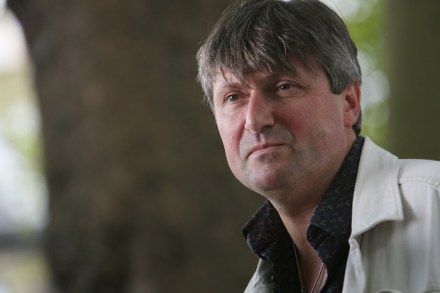
It’s a real skill, writing about a journey where nothing ever happens. We shouldn’t be surprised that Simon Armitage is so good at it: he’s a poet, and therefore used to reporting on nothing happening, or rather spotting the little things that are always happening but the rest of us are too busy to notice. His chosen route this time — the South West Coast Path through Somerset, Devon and Cornwall and on to the Scillies — is normally praised because it gets you away from everything. Yet while he’s there Armitage discovers … well, maybe not everything, but certainly a very entertaining book’s worth of stuff.

Dead expensive

From our UK edition

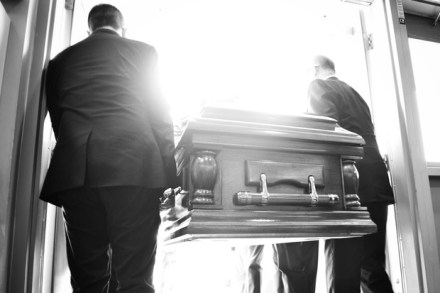
They say that death and taxes are the only two certainties in life. But there seems to be a third, linked to death and as painful as taxes. It’s the astronomical cost of organising a funeral. My partner’s father died recently, and for the honour of a bog-standard cremation in a far from fashionable part of East Anglia she was charged just over £4,000. Jo felt no shame in asking for the cheapest option (it’s what her father would have wanted — he was never a man to waste money), and so the answer came as something of a shock. When a figure has you imagining the cheeky little jaunt to the Caribbean it could fund instead, you know things have turned serious. ‘How the hell do they justify four grand?’ I asked. Jo went through the itemised list.

Dirty dealing across the board

From our UK edition

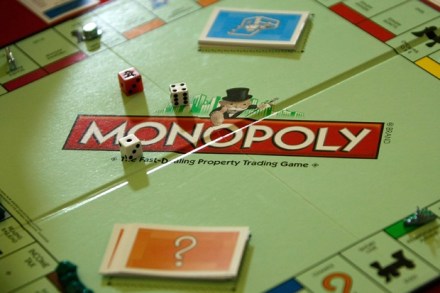
I knew there had to be a point to Monopoly. The game itself is tedium made cardboard, the strongest known antidote to the will to the live. There is a 12 per cent chance that any given game of Monopoly will go on for ever (the other 88 per cent just feel like that). In fact I’m still not convinced that the name isn’t a spelling mistake. The story of Monopoly, on the other hand — now there’s a thing. Specifically, the story of how it was invented. For decades the accepted version had down-on-his-luck Charles Darrow creating the game in the 1930s, as entertainment for his impoverished family and a reminder of happier times when they’d holidayed in Atlantic City.

Hell on wheels

From our UK edition

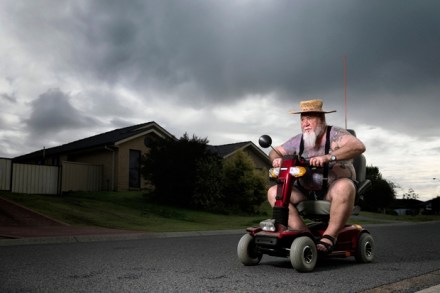
How many of the people driving mobility scooters these days actually need a mobility scooter? The invention of the vehicle was a great move forward (literally) for those who genuinely needed it: the disabled and the infirm. But then another group of users appeared. Rather slowly, admittedly, and wheezing as they did so, before settling their vast backsides into the soothing embrace of the scooter’s seat. Once there they sighed happily, popped another Kit Kat into their gob and contemplated a life where movement from A to B required a mere flick of the wrist, rather than all that tedious leg business. This supersized scooter squadron has conquered Britain with an ease that the Romans in their chariots could only have dreamed of.

Tourists are trickling back to Egypt – to beat the crowds, go now

From our UK edition

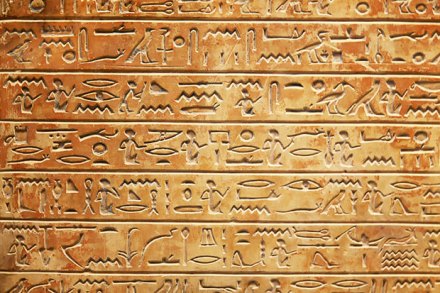
Egypt’s revolution of 2011 didn’t just get rid of President Mubarak: it did a pretty good job of clearing out the tourists, too. The political uncertainty since then has made people wary of visiting — meaning more space and lower prices for those who do make the trip. But you’d better be quick if you want to take advantage: this seems to be the year that Egypt is opening up again. BA are resuming their Sharm el-Sheikh flights in September, while Abercrombie and Kent are back up to three boats for their Nile cruises (they had been down to one). I started in Aswan, home to the alarmingly named Hotel Cataract. My guide, Alaa, explained that the word denotes a white water rapid on this stretch of the river: the medical sort sends the eye the same colour, hence the derivation.

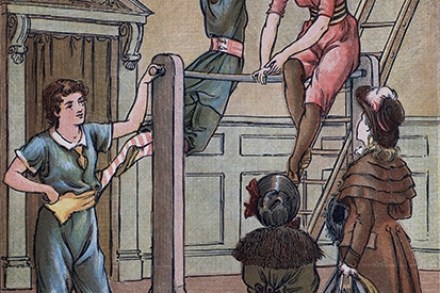
2,500 years of gyms (and you’re still better off walking the dog)

From our UK edition

My favourite fact about gyms before reading this book was that the average British gym member covers 468 miles per year and the average British dog walker 676. Eric Chaline’s history of the institution has offered up some competition on the fact front — but my cynicism remains undimmed. Chaline, a personal trainer and weightlifting instructor, certainly shows that ‘gym-bunny’ doesn’t have to equal ‘numbskull’. The book is learned and well-researched, and although this sometimes gives us sentences such as ‘The body plays a central role in the transformation of abstract social discourses into lived actions and identities’, it also furnishes some pretty interesting history.

Attack of the personal space invaders

From our UK edition

[audioplayer src="http://traffic.libsyn.com/spectator/Viewfrom22-19Feb2015.mp3" title="Mark Mason and Lara Prendergast discuss the personal space invaders" startat=1422] Listen [/audioplayer]It’s the shoulders you have to watch out for. If he’s pressing them back as his hand comes out to shake yours, then beware: you’re about to meet a Space Invader. It’s tricky, being an alpha male in polite 21st-century society. Gone are the days when you could expect other men to gather round, worshipping your medallion as it glistened on a bed of luxuriant chest hair. Now you have to subvert the genre. You have to go to them. You have to get in their face, literally.

Why tomorrow’s parents won’t want their children to go to university

From our UK edition

Could the current generation of parents be the first ones who won’t want their children to go to university? Until now that mortarboard photo on the sideboard has always been the dream, visual proof that your offspring have munched their way to the top of the educational food chain. Advancement by degree. But that was before tuition fees. Now there’s a price tag attached to your little one’s ‘ology’ (to quote Maureen Lipman in those BT ads), how many people will automatically see it as a good thing? Perhaps more of us will refuse to prostrate ourselves before the great god Uni? If so, that can only be a good thing. I attended Manchester University between 1989 and 1992.

A museum of dirty postcards and Britain’s coolest bulldog: visit the strange side of the Isle of Wight

From our UK edition

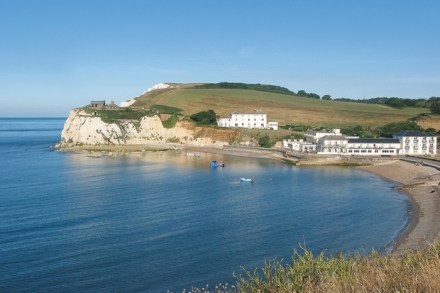
Every day the Isle of Wight becomes England’s smallest county: when-ever the tide comes in, the island steals the crown from Rutland, if only for a few hours. Taking the Wightlink ferry reminds you that the isle gave us the hovercraft, Christopher Cockerell’s early experiments there involving a hairdryer and some empty cat-food tins. Less successful as a seafarer was Lord Lucan, who once sank a powerboat off the Needles. It never surfaced, leading some to believe that when the time came to disappear he returned to the area and drowned himself. Current exports include most of the signage for the London Underground (A.J. Wells and Sons, vitreous enamellers of Newport), and all manner of garlic from the Garlic Farm in Newchurch (fresh, black, smoked, elephant).

Check yourself: have you succumbed to this corporate speak epidemic?

From our UK edition

You know how it goes with corporate speak. A strange new habit grows and spreads, creeping largely unnoticed into the language, until one day you hear a sentence so bizarre, so divorced from normality, that it brings you up short. It happened to me the other day. A call centre operative, in the middle of a prolonged display of not being able to help, had to check something with a colleague. Before doing so she said: ‘Would it be OK if I put yourself on hold?’ Just stop and consider that sentence for a moment. ‘Would it be OK if I put yourself on hold?’ The woman who uttered it was once, I’m sure, a normal little girl, learning to speak.

If you like The Godfather, you’ll love this

From our UK edition

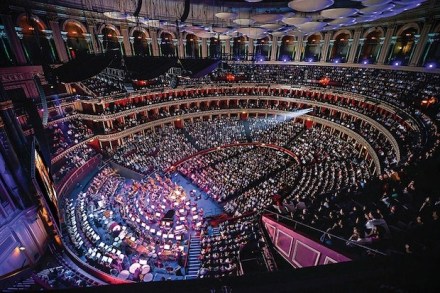
There can’t have been many trumpet players more nervous about their solo at the Albert Hall than the one who opened the performance there last night. His orchestral colleagues surrounding him on stage, a huge cinema screen hanging directly over his head, a full house waiting as the credits began to roll – and then he has to play the eight most famous notes in movie history. He utterly nailed them, five thousand spines tingled, and we were off. Showing The Godfather with a live musical accompaniment could feel like a gimmick, but actually it’s a wonderful way of refreshing a classic. We all know the film backwards, right down to its tiny imperfections: James Caan’s punch, for instance, several inches of daylight visible between his fist and the victim’s chin.

I’m a middle-aged man and I love colouring books

From our UK edition

A few years ago, you may remember, the distressing news went round that George W. Bush’s library had burned down. Both books had been destroyed, and what was worse he hadn’t yet finished colouring one of them in. The gag relied on a snobbery about what is in truth a wonderful and noble activity. The moment my son became old enough to use colouring-in books I was reminded of just how relaxing they are. Choosing the right colour, drawing the initial line that somehow seems to stop you going over the edges (how does that work?), getting annoyed when your three year-old goes over the edges. Ah, the joy of it. You can forget drugs and therapy, all I need to de-stress is an outline picture of a farmyard and a packet of Crayolas.

Life is full of little endings. We should pay them more attention

From our UK edition

The end of the year seems a good time to think about lasts. Not many of us ever do. Firsts are always landmarks: the first time you taste alcohol, drive a car, have sex. Then the first time your child talks, walks, goes to school. All are noted at the time, stored away in the mental file marked ‘life events’. But when do we ever notice, much less remember, a last? We’re doing them a disservice — in many cases they’re even more poignant than the firsts. One problem, of course, is that we often don’t know it’s a last at the time. You’ll register your last day in a job, or your last exit from a house you’ve owned. Recovering alcoholics note (though only in retrospect) the occasion of their last drink. But the last time you go to London?