Mark Galeotti

Mark Galeotti

Mark Galeotti heads the consultancy Mayak Intelligence and is honorary professor at the UCL School of Slavonic and East European Studies and the author of some 30 books on Russia. His latest, Forged in War: a military history of Russia from its beginnings to today, is out now.

Are Western companies heading back to Russia?

From our UK edition

Ever since Donald Trump's now-infamous phone conversation with Vladimir Putin last month, Russia has been buzzing with speculation that Western companies which left the country after the 2022 invasion, especially US ones, will be returning. For some, this is a dream, for others a nightmare. Either way, it seems to be an overblown prospect fuelled by a refusal to accept just how toxic the Russian market will be for the foreseeable future. Under the headline 'Now Hello Again? How American Companies Will Return to Russia,' the popular tabloid Moskovsky Komsomolets yesterday confidently asserted that 'American business wants to return to Russia, but now the game will be played by Russian rules'.

Zelensky may regret wishing for Putin’s death

From our UK edition

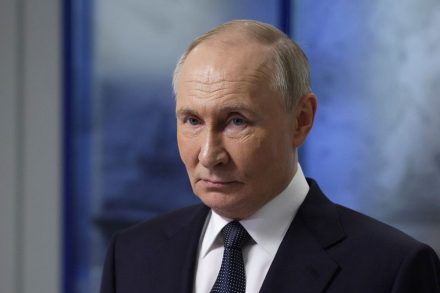
Ever since 2013, I’ve been hearing that Vladimir Putin is going to die any day. Is Volodymyr Zelensky now trying to spin the same line? At a press conference this week, the Ukrainian President said of Putin, ‘He will die soon – that’s a fact – and it will all be over', adding ‘I’m younger than Putin, so put your bets on me. My prospects are better.’ Admittedly, in actuarial terms, the 47-year-old Zelensky is likely to outlive the 72-year-old Russian leader. However, while the average life expectancy of someone born in the USSR in 1952, like Putin, is just 57, his grandfather Spirodon lived to the age of 86 and his father Vladimir Spirodonovich to 88.

Putin’s duo are spinning ceasefire talks to Russia’s advantage

From our UK edition

The delegation Moscow sent to ceasefire talks in Saudi Arabia was clearly well-chosen. Grigory Karasin, for example, the former diplomat (including a spell as ambassador to the United Kingdom, 2000-5) and Sergei Beseda, head of the Federal Security Service’s Fifth Service, especially responsible for penetrating and subverting Ukraine. They certainly seem to be doing a good job of advancing Russia’s interests at the talks. After Vladimir Putin reportedly acceded to a month-long moratorium on strikes against energy infrastructure (which both Moscow and Kyiv are already accusing the other side of breaking), the latest round of talks seem to have led to the acceptance of the other leg of this painfully limited ceasefire, on attacks on civilian shipping in the Black Sea.

Trump’s call with Putin has bought Ukraine time

From our UK edition

So who won from yesterday’s phone conversation between Donald Trump and Vladimir Putin? Arguably, no one did – but nor did anyone really lose. Efforts to end the fighting live, maybe to die, another day. Putin managed to find a third way between agreeing to an unconditional ceasefire – which the Russians believe would benefit Ukraine, and which would have infuriated the ultra-nationalists – and rejecting Trump’s proposals altogether. The moratorium he called on strikes against Ukraine’s energy infrastructure looks like a concession but actually has little real impact now that winter is past, and the drones and missiles which would have been hitting power stations are still targeting cities.

Has Ukraine called Putin’s bluff?

From our UK edition

12 min listen

Last night there was a huge breakthrough in Ukraine peace talks, with Zelensky accepting a US proposal for a ceasefire and placing ‘the ball in Putin’s court’, according to Marco Rubio. While getting Zelensky to accept is a huge diplomatic win, the proposal hinges on Putin agree to the terms of the ceasefire – which will last for 30 days but can be extended by mutual agreement. ‘I’ll talk to Vladimir Putin. It takes two to tango,’ said Donald Trump. Can Putin afford to reject the deal? And could this be the basis for a lasting peace? Meanwhile, Keir Starmer has been getting a lot of credit for his role in the Ukraine peace process and the perception that he has stepped up to meet the crisis.

Kyiv

Has Ukraine called Putin’s bluff?

Has Vladimir Putin’s bluff been called? It certainly looks that way. As long as the Ukrainians refused to consider a ceasefire, Moscow could portray them as the obstacle to the kind of quick deal Donald Trump appears eager to secure. Previously, Kyiv had floated the idea — after another unhelpful intervention from French President Emmanuel Macron — of a limited ceasefire covering only long-range drone attacks on each other’s cities, critical infrastructure, and operations in the Black Sea. But that was a non-starter, too transparently a trap for Putin, designed to make him look like the intransigent party if he rejected it. That certainly seemed to be Kyiv’s plan as of last night, when an unprecedented attack on Moscow involving some 140 drones killed three civilians.

Has Ukraine called Putin’s bluff?

From our UK edition

Has Vladimir Putin's bluff just been called? It certainly looks like it. So long as the Ukrainians were refusing to countenance a ceasefire, then Moscow could portray them as being the obstacle to the kind of quick deal Donald Trump appears eager to conclude. Kyiv had previously floated the idea – after another unhelpful intervention from French President Emmanuel Macron – of a limited ceasefire extending just to long-range drone attacks on each others' cities and critical infrastructure and operations on the Black Sea. But this was a non-starter that was too transparently a trap for Putin, hoping to make him look like the intransigent party if he turned it down.

Why Russia has shrugged off Trump’s sanctions threat

From our UK edition

While Donald Trump may be threatening Moscow with major new sanctions, as it continues to hammer Ukraine with drones and missiles, the Russians seem unfazed. They assume this is just rhetorical for now – and they are probably right. This week has seen the US progressively cutting off its support for Ukraine, first suspending arms shipments, then pausing intelligence sharing and even access to the satellite imagery used to help target Russian bases and arms depots far from the frontline.

Trump’s pausing of intelligence sharing will hit Ukraine hard

From our UK edition

The United States's decision to suspend all intelligence sharing with Kyiv is a less visible but almost as serious and more immediate blow to Ukraine as the pause to arms deliveries. It also raises worrying questions about the future of intelligence sharing amongst Western allies. Ukraine is used to supplies of military materiel coming in fits and starts, and can and does stockpile ammunition, spare parts and the like to cover the dry seasons. It will probably be a couple of months before the pause really begins to have an appreciable impact on their operations. Besides, while some items such as Patriot missiles cannot be duplicated, domestic production and European and other systems can fill some of the wider shortfall, especially in drones and artillery ammunition.

Where does Trump’s suspension of Ukraine aid leave Europe?

From our UK edition

13 min listen

Overnight President Trump made another extraordinary move in his ongoing attempt to broker a deal between Ukraine and Russia, suspending all U.S. military aid to Ukraine. Katy Balls talks to James Heale and geopolitical analyst Mark Galeotti about how serious this development is and where it leaves Ukraine's European supporters. Produced by Natasha Feroze and Cindy Yu.

What does Trump’s minerals deal mean for Ukraine?

From our UK edition

Has Donald Trump’s heavy-handed negotiation style scored a win, or have the Ukrainians managed to wrench a victory of sorts from the jaws of defeat? Although the details are still unclear, Kyiv and Washington are confirming that a deal on mineral rights has been agreed, and that Volodymyr Zelensky will be on his way to the White House on Friday to sign on the dotted line. Trump has abandoned his ludicrously overblown demand for a $500 billion (£400 billion) return on what has actually been no more than $120 billion (£95 billion) given in total aid, through revenue from Ukrainian oil, gas and rare earth metals. Zelensky had understandably rejected this, saying ‘I am not signing something that ten generations of Ukrainians will have to repay.

Is Trump’s hostile takeover of Ukraine a trap?

From our UK edition

That Donald Trump’s vision of the presidency is less statesman and more CEO of USA Inc. is evident in the terms of the deal he tried to foist on Ukraine last week. As talks begin between the US and Russia in Saudi Arabia, a leak reveals that Trump wanted Kyiv to sign away much of its mineral resources to Washington. Ukrainian President Volodymyr Zelensky has rejected this piece of blatant economic colonialism, but the Ukrainians expect further such demands to come. This is the essence of Trump’s brave new world The draft frames this as the establishment of a joint investment fund such that ‘hostile parties to the conflict do not benefit from the reconstruction of Ukraine’ – although after last week, one might wonder if this means Europe rather than Russia.

How seriously will Putin take Ukraine negotiations?

From our UK edition

We have no idea whether Vladimir Putin is serious about peace negotiations with Ukraine. He may simply be going through the motions while enjoying the spectacle of the West engaging in mutual recrimination and performative outrage, or he may genuinely feel there are grounds for some kind of agreement. More likely, given his track record as a tactician rather than a strategist, he is simply seeing what opportunities emerge. Nonetheless, his choices of format, venue and representatives may give us some sense of his intentions. His lead negotiator at abortive talks in Istanbul in 2022, for example, was Vladimir Medinsky.

Will flattery buy Zelensky help from Trump?

From our UK edition

For all the efforts on every side to manage expectations, there is a sense that some kind of Ukraine deal – even if more likely a ceasefire rather than some comprehensive settlement – is coming. With the risk that this is, as Vladimir Putin would prefer, a decision made between Moscow and Washington, over Kyiv’s head, the Ukrainians are scrambling to gain traction on the process. We have already had Volodymyr Zelensky’s suggestion that the United States could get priority investment access to Ukraine’s mineral wealth. Now in a set-piece interview with the Guardian, he has offered a finely-balanced mix of flattery and entreaty in the hope that even a ceasefire would come with proper security guarantees.

Has Putin picked up the phone to Donald Trump?

From our UK edition

So, did they speak? How often? What about? The very coyness around the question of whether Donald Trump and Vladimir Putin spoke on the phone – Trump says so, maybe more than once, while the Kremlin is neither confirming nor denying – suggests that pre-discussion discussions on the war in Ukraine are indeed already taking place. General Keith Kellogg, Trump's special envoy for the war, has stated that no peace plan will be unveiled at next weekend's Munich Security Conference (the Davos of the security set). But in some ways that is disingenuous. As one Foreign Office staffer suggested, 'It's not necessarily the time and place for a public reveal, but it is a great place to float some ideas and see who thinks what.

Russia’s quest to woo Africa is paying off

From our UK edition

The West may like to convince itself that it is, in the words of one American diplomat, 'strangling the Russian foreign ministry', but it ought to look south for a rather different perspective. On Tuesday, foreign minister Sergei Lavrov was in expansive mood as he announced the formation of a brand-new Department of Partnership with Africa. Recognising that for years Moscow had neglected Africa, Lavrov blamed in part the bankruptcy of the late USSR and Russia in the 1990s, when embassies had to be shut down and sold off. I remember one polyglot diplomat who, while serving in Nigeria, had taken to spending his mornings giving English, French and Russian classes to make ends meet because his salary was so often in arrears.

Can a second Kursk offensive give Ukraine bargaining power?

From our UK edition

In theory, the Kursk salient is one of the most militarily insignificant fronts of Putin’s war on Ukraine. However, war is ultimately all about politics, and the presence of Ukrainian troops on Russian soil is sufficiently problematic for President Vladimir Putin that Kyiv has decided to deploy more troops in a bid to reverse the slow recapture of the occupied territory. Having originally seized some 400 square miles in its lightning attack in August 2024, by last month, steady Russian pressure had shrunk Ukraine's grasp on territory to some 180 square miles. Although Ukraine still held the town of Sudzha – about the only significant settlement in this area – the front line had crept perilously close.

Has Ukraine just carried out another assassination in Moscow?

From our UK edition

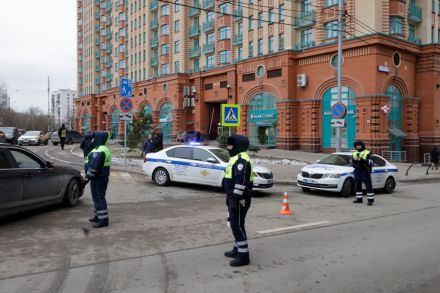
The Alye Parusa (Scarlet Sails) apartment complex in Moscow’s north-western Shchukino suburb bills itself as an exclusive place to live, and a safe one, too, with cameras, gates and 24-hour security. Neither this, nor his detail of bodyguards, saved Armen Sargsyan when, on Monday morning, a bomb with more than a kilo of explosive detonated as he was walking out the lobby. His leg was blown off, and although he was airlifted to hospital, he died shortly after. So far, this appears to be the latest in a campaign of assassinations carried out by Ukrainian intelligence. Sargsyan was a rather different figure to the last target in Moscow, Lt. Gen. Kirillov.

Britain is taking a punt on Ukraine’s future

From our UK edition

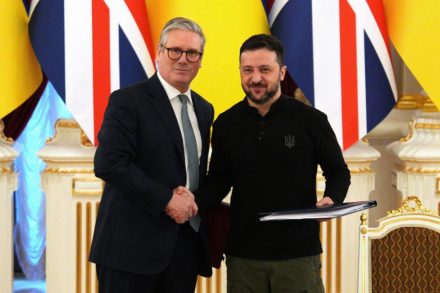
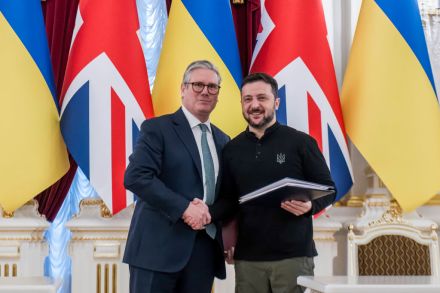
There is a perverse congruence of interests between the British and Russian governments, as both sides seek to talk up London’s level of influence in Ukraine. This was particularly visible in the new agreement signed between the UK and Ukraine last week – and Moscow’s response to it. To the Kremlin, after all, Perfidious Albion remains its most devious antagonist. True to form, the Russian embassy in London tweeted out that Prime Minister Keir Starmer's surprise visit to Kyiv represented 'a desperate attempt by British handlers to keep the agonising Kiev [sic] regime afloat' with 'new highly provocative UK plans, including the establishment of military bases within Ukrainian territory'.

Is Starmer doing enough for Ukraine?

From our UK edition

13 min listen

Keir Starmer is in Ukraine today, on his first visit to Kyiv since becoming Prime Minister. And he came bearing gifts: a 100-year partnership agreement between the UK and Ukraine, covering nine ‘pillars’ from culture to science. It is hoped that the new pact will define the relationship between the two countries well beyond the current conflict with Russia. This is all in the context of Donald Trump’s return to the White House, with his administration agitating for a peace deal. Is peace on the horizon? Also on the podcast, Kemi Badenoch's big speech – in which she criticised the decisions made by successive Tory prime ministers – was overshadowed by the announcement that there will be  government-backed inquiries into grooming gangs. Is this the right call?