Mark Galeotti

Mark Galeotti

Mark Galeotti heads the consultancy Mayak Intelligence and is honorary professor at the UCL School of Slavonic and East European Studies and the author of some 30 books on Russia. His latest, Forged in War: a military history of Russia from its beginnings to today, is out now.

Have we gone to war with Russia without realising?

From our UK edition

Has the world turned upside-down? Russia's former president Dmitry Medvedev, generally known for his toxic social media posts packed with threat and vitriol, is turning down the volume, while various Western public figures are determinedly turning it up. Yesterday, German chancellor Friedrich Merz, in what he called 'a sentence that may be a little shocking at first glance,' stated that 'we are not at war, but we are no longer at peace either.' Actually, this was relatively mild. Meanwhile, Polish prime minister Donald Tusk was describing the current confrontation between Europe and Russia as a 'new type of war' at the opening of the Warsaw Security Forum.
Why Putin’s military drills are good news for the West

From our UK edition

Another Russian military exercise is over, and some Western commentators would have us believe that we ought to be heaving a collective sigh of relief that Putin's legions didn’t use this as an excuse for another invasion. Of course, that was very overblown hype. Instead, what we saw was a Russian military still clinging to outmoded ways of war, as if its armoured columns had not been blocked and burnt when they rolled into Ukraine in 2022. The Zapad-2025 (West-2025) exercises, which concluded on Tuesday, involved perhaps 30,000 Russian and Belarusian soldiers in a wargame stretching from the Arctic Circle to Belarus. This was the latest iteration of a biennial series of exercises, although it was skipped in 2023.

Putin doesn’t want to live forever

From our UK edition

‘Rejuvenation is unstoppable, we will prevail,’ blared the editorial in the Chinese newspaper Global Times. The subject was China's resurgence, but it looked oddly apposite in light of an inadvertently overheard conversation between Vladimir Putin and Xi Jinping. Some Western journalists have mistaken this as evidence of Putin's hubris and his personality cult 'Biotechnology is continuously developing,' commented Putin as the two men walked towards the podium in Beijing's Tiananmen Square during the military parade to mark 80 years since Japan's surrender in World War Two. 'In the past, it used to be rare for someone to be older than 70 and these days they say that at 70 one's still a child,' the 72-year-old Xi replied to his similarly-aged counterpart.

Why is Putin so happy in China?

From our UK edition

The often dour Vladimir Putin is looking very cheery in China, which has just hosted the summit of the Shanghai Cooperation Organisation (SCO) in Tianjin to the north, and is preparing for a grand parade to commemorate the 80th anniversary of the end of the Second World War in Beijing tomorrow. Xi Jinping is clearly the man of the hour, Vladimir Putin seems to be having a good trip, too While Xi Jinping is clearly the man of the hour, Vladimir Putin seems to be having a good trip, too. Even as his Alaska summit saw him getting the literal red carpet treatment from Donald Trump, this is a chance to underline the degree to which Western efforts to isolate him really just mean that most European leaders are giving him hard stares.

Why has Putin gone after the British Council in Kyiv?

From our UK edition

Is Moscow targeting European institutions in Kyiv in the hope of ‘sabotaging peace’ as Keir Starmer has claimed? Putin probably thinks he’s actually doing the opposite. Last night saw another massive attack on Ukraine: 31 missiles and 629 drones, of which five and 66 got through the country’s air defences, respectively. Many hit Kyiv, where 15 civilians were reportedly killed, including four children. However, particular diplomatic furore has been generated by the two missiles which, at 5:40 a.m., hit a block on Zhylyanska Street, south-west of the centre. This block, stretching across the adjacent Korolenkivska Street, houses both the British Council offices and also the European Union delegation offices.

Why Putin wants Donetsk

From our UK edition

Will Ukraine’s fate depend on Sloviansk and Kramatorsk, Druzhkivka and Kostiantynivka? These may not be household names, but they are the four key ‘fortress cities’ in the remaining portions of Donetsk region that Vladimir Putin is reportedly demanding as the price for peace. Although the details are still unclear, it seems that the framework for a peace deal agreed in outline between Putin and Trump would see the Russians agreeing to freeze the current front line. They could maybe even hand back some small sections of the Sumy and Kharkiv regions they have conquered in return for Kyiv surrendering the much larger portion of Donetsk region it still holds.

How Russia is preparing for Putin’s meeting with Trump

From our UK edition

Amidst contradictory leaks and rumours coming from the US administration, no one is quite sure what to expect when Donald Trump and Vladimir Putin meet in Alaska on Friday – not even the Russian press. Nonetheless, they seem rather less convinced that Trump is about to stitch up the Ukrainians than the Western media. On every side there are cautions not to expect miracles Of course, there is satisfaction at the prospect of Putin’s first visit to the US since 2015.

Why Putin’s elites keep dying

From our UK edition

Although I suspect few readers’ hearts will bleed for them, it’s been a bad week for Russian elites. There has been a spate of real or apparent suicides and the arrest of a gold magnate as he prepared to leave the country. On Friday, Andrei Badalov, vice president of Transneft, Russia’s largest state-controlled pipeline transport company, fatally fell from the window of his apartment in Moscow. This makes him the eighth senior Russian figure to die in this way since 2022. Although the police say he left a suicide note, by now the suggestion that foul play is at work has become something of a tasteless meme.

Will Putin really rein in Russia’s defence spending?

From our UK edition

At the very time when those warmongering Nato nations are pledging to raise their defence spending substantially, that doveish peacenik Vladimir Putin is promising to reduce his. It’s hard to know which of these two commitments is less plausible, but those anticipating the cranking down of the Russian war economy any time soon are going to have to wait rather longer. At the recent St Petersburg International Economic Forum (SPIEF), Putin said that: We are planning to reduce defence spending.

Putin spies an opportunity in Trump’s attack on Iran

From our UK edition

Is Donald Trump's decision to join attacks on Iran's nuclear facilities an embarrassment, a provocation or an opportunity for Russia? The honest answer is that it is all three, but likely more of an opportunity than anything else, if Moscow is willing to play it cool. Iranian Foreign Minister Abbas Araghchi is in Moscow today to meet with Vladimir Putin, and before he set out, he was trying to sound bullish, asserting that 'Russia is a friend of Iran', and that he expected concrete measures in support. Yet one can question how far the two countries were ever truly allies, so much as frenemies who shared a series of common problems and antagonists.

No, Nato: Brits had not ‘better learn to speak Russian’

From our UK edition

It seems conventional wisdom by now that the public can only be convinced by hyperbole. As Nato Secretary-General Mark Rutte implies that Britain faces a choice between the NHS and Russian conquest, it is worth asking how much this actually damages democracy – and helps Vladimir Putin? The real threat Russia poses is less of direct military action but through its ‘hybrid war’ instruments of subversion and division Rutte is on tour in a bid to sell the new orthodoxy that Nato member states – many of whom barely, if at all, hit the previous target of spending 2 per cent of GDP on defence – must commit to spending 3.5 per cent directly on defence and 1.5 per cent on defence-related spending (such as resilience, R&D and support for Ukraine).

Has Serbia really fallen foul of Moscow?

From our UK edition

Is it getting harder for Serbian president Aleksandar Vučić to maintain his balancing act between Moscow and the West? Why else, after all, would Russia’s Foreign Intelligence Service (SVR) suddenly revive a year-old story about covert arms supplies to Ukraine? Back in June of last year, the Financial Times splashed the story that Serbia had exported around €800 million (£673 million) worth of ammunition to third parties that then ended up being transferred to Ukraine. At the time, Vučić did not try to deny this, but said that it had nothing to do with Serbia. 'We have had many contracts with Americans, Spaniards, Czechs, others,' he said. 'What they do with that in the end is their job.' This is a warning and a gift all in one This is nonsense.

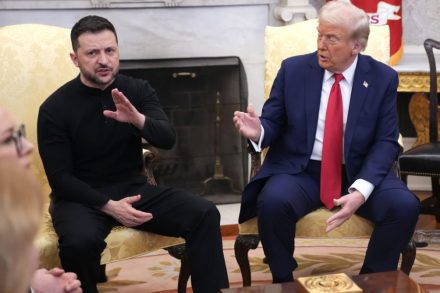
Putin and Zelensky just want to appease Trump

From our UK edition

Ceasefire then talks, or talks then ceasefire? This has emerged as one of the pivotal issues in the diplomacy around the war in Ukraine, even if one could question just how genuine both sides are in their respective positions. The proposed talks in Istanbul on Thursday may help clarify matters, but both sides seem more committed to appeasing the White House than talking peace. On Saturday, the usual suspects of Europe – the leaders of the UK, France, Germany and Poland – met in Kyiv and demanded Vladimir Putin call an immediate 30-day ceasefire, on pain of further sanctions. The usual pattern for peace talks is indeed a cessation of hostilities first, talks later, but there was no serious plan for negotiations in that span.

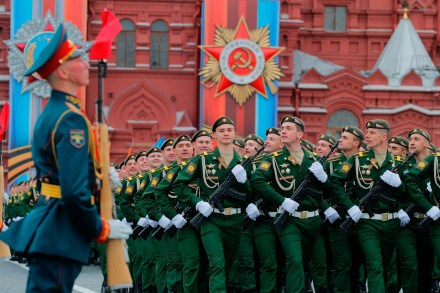
Victory Day has been a triumph for Vladimir Putin

From our UK edition

It was almost like old times, but also a sign of the new. Vladimir Putin’s Victory Day parade passed off without a hitch, rumbling and squeaking with armour, untroubled by Ukrainian drones, and watched over by foreign leaders there in a sign of support. Yet the efforts made to ensure the parade ran smoothly, the nature of the guest list, and Putin’s rhetoric all highlighted the new times. The most recent iterations of the parade had been distinctly reduced affairs, a single Second World War vintage T-34 tank substituting for the usual phalanx of tanks, and the guests largely confined to Putin’s clients.

Trump’s Ukraine minerals deal is pure extortion

From our UK edition

So the on-again-off-again US-Ukrainian resources deal has been signed. It is perhaps appropriate that it was done without fanfare, marked by emailed press release. While its terms are rather better than originally mooted, it still shows not that ‘the Trump administration is committed to a peace process centred on a free, sovereign, and prosperous Ukraine’ as US Treasury secretary Scott Bessent put it, but to neo-colonial exploitation. For all that, Kyiv has some reason to be satisfied by what it considers less of an economic deal and more a necessary piece of performative submission to keep Donald Trump engaged with their cause.

Putin is terrified Ukraine will sabotage Russia’s Victory Day

From our UK edition

Even by the elevated standards of Kremlin cynicism, Vladimir Putin's invocation of a three-day ceasefire across the span of the Victory Day celebrations commemorating the end of the second world war in Europe takes some beating. Putin is well aware of Kyiv's capacity to embarrass him on this of all days He has announced that ‘all military actions’ in Ukraine would be suspended between midnight on 8 May to midnight on 11 May, to cover the celebrations on 9 May (Russia celebrates a day later than the rest of Europe) which, because of the span of time zones across this huge country, lasts longer than 24 hours.

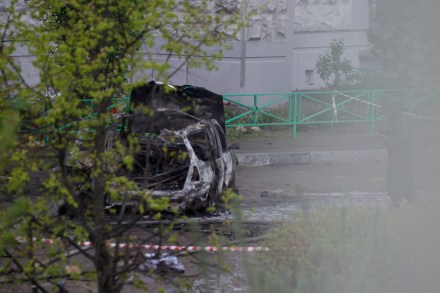
Will the assassination of another Russian general change anything?

From our UK edition

Friday morning, Lieutenant General Yaroslav Moskalik was heading out from his flat in Balashikha, a commuter town east of Moscow, when a car bomb exploded, killing him. There can be little doubt this is an operation by Ukrainian intelligence, another example of their capacity to launch skilful targeted assassinations in the heart of Russia. But will it actually change anything? That is more doubtful. It is hard not to assume this was another killing by the Ukrainians Moskalik was not a high-profile figure, but as deputy head of the General Staff’s Main Operations Directorate (GOU), he was a capable officer and potentially on a career track for even higher office.

What the exploding DHL packages tell us about the Kremlin

From our UK edition

The unfolding tale of incendiary devices planted in DHL packages across Europe not only highlights the dangers of Moscow’s campaign of direct measures against the West. It also suggests that, contrary to more alarmist claims, it is possible for such threats to be deterred and limited. In July of last year, a package bound for Britain ignited in the section of Leipzig airport devoted to DHL cargo freight. Another caught fire later that month in a DHL depot in Birmingham. Two more were found in Poland, one of which set light to a warehouse in Warsaw, while the other was successfully intercepted.

Why Putin is keeping Trump waiting for a Ukraine deal

From our UK edition

There is an odd contradiction in Russian attitudes to the current negotiations with the United States. On the one hand, a sense that the window of opportunity may be closing, on the other no real rush to take advantage of it, or at least to offer Donald Trump any concessions to show willing. Mikhail Rostovsky, a columnist in the newspaper Moskovsky Komsomolets, put it best when he noted that the window is likely to close at the end of this month, which marks the end of the first hundred days of Donald Trump’s second term: 'No one expected Trump to fulfil his boastful campaign promise and stop military actions during the first 24 hours of his presidency.

Putin’s cronies are enjoying needling the West

From our UK edition

Sergei Naryshkin, director of Russia’s Foreign Intelligence Service (SVR), is in many ways an uncomfortable and ephemeral spy chief, but an enthusiastic information warrior. In recent talks with the Belarusian dictator Alexander Lukashenko, he accused Nato of threatening Moscow and Minsk by increasing the size and activity of its forces on the border – or rather, certain nations within the alliance: We feel and see that European countries, especially France, Britain and Germany, are increasing the level of escalation around the Ukrainian conflict, so we need to act pre-emptively. We are ready for this.