Mark Bostridge

Landscapes of longing in illuminated Books of Hours

From our UK edition

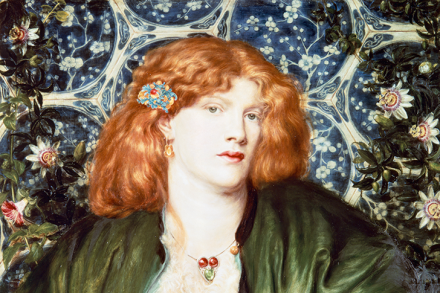
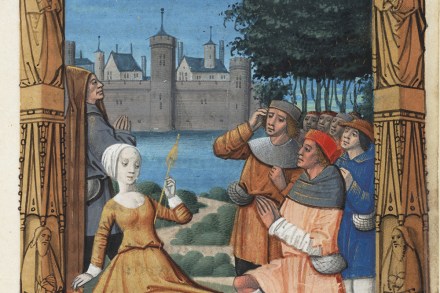
Christopher de Hamel is an outstanding salesman. At Sotheby’s, back in the 1990s, he brokered the sale of the 15th-century Sherborne Missal to the British Library for £15 million, a record-breaking sum. Over the past decade, his reputation as a salesman has fitted a much less conventional mould. In two dazzlingly illustrated books he has set out to sell to the ordinary reader the power and pleasure of medieval manuscripts. His approach combines enthusiasm with scholarly precision and a conversational style that sits surprisingly easily with the fund of knowledge he has gradually accumulated. Conscious that most of us will never encounter these closely guarded treasures at first hand, de Hamel is more than happy to settle down in a library and turn the pages for us.
The boundless enthusiasm of Asa Briggs

From our UK edition

It’s doubtful whether Asa Briggs ever had an idle moment in his life. Bestselling historian, pioneer of the new universities of the 1960s, chronicler of the BBC, champion of adult education, academic globetrotter and much more besides, he possessed phenomenal energy. He was a miracle of the kind of boundless enthusiasm that his Victorian hero Samuel Smiles had extolled in his book Self-Help. Short and tubby, with large glasses, Briggs effortlessly outpaced academic colleagues who tended to be left panting behind him. A joke did the rounds that if a word were to be coined for a unit of intellectual energy it should be an ‘Asa’. He was dubbed ‘the last great Victorian improver’ and ‘the Lord Macaulay of the Welfare State’.

Murder, incest and paedophilia in imperial Rome

From our UK edition

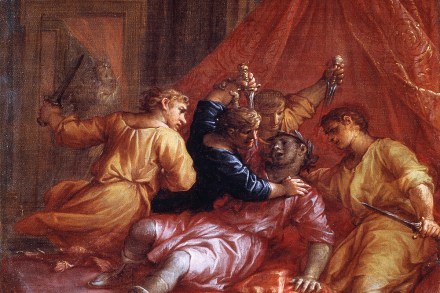
I came to Suetonius’s Lives of the Caesars as a schoolboy after watching I, Claudius, the BBC series based on Robert Graves’s pair of novels about imperial Rome. Incredibly, it’s almost half a century since this was compulsory Monday night viewing in our household. The mere sight of the snake slithering across the opening credits was enough to make my younger brother bury his head in a cushion. Graves had spiced up Suetonius’s racy accounts of violent murder, incest and poison. But, in the world before trigger-warnings, the BBC outdid him in bloodlust. The most gruesome scene in the TV drama – of Caligula doing some amateur surgery on his sister’s stomach to remove their unborn incestuous child from the womb – was pure invention by the screenwriter Jack Pulman.

How the Rillington Place murders turned Britain into a nation of ghouls

From our UK edition

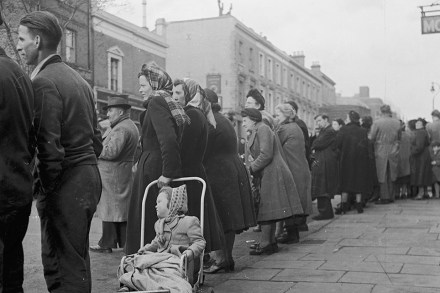
‘You never seem to get a good murder nowadays.’ With this ‘fretful complaint’ George Orwell imagined newspaper readers bemoaning the decline of the classic English murder. Gone were the ‘old domestic poisoning dramas’ – a solicitor or dentist killing his wife in a quiet suburban home – which made the perfect News of the World spread to curl up with after Sunday lunch. In their place was an altogether more brutish type of murder committed by ruthless serial killers. Everyone seemed to want to peep behind the curtains of 10 Rillington Place Orwell was writing in 1946. Seven years later, one of the most notorious serial killers in British criminal history was hanged at Pentonville.

Another mistress for Victor Hugo: Célina, by Catherine Axelrad, reviewed

From our UK edition

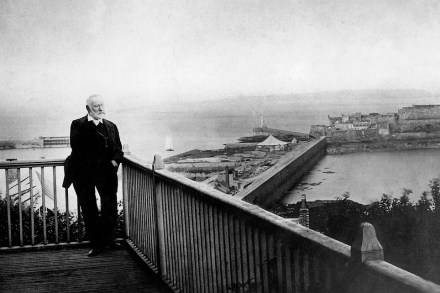
Recently I visited Hauteville House, Victor Hugo’s home on Guernsey, now magnificently restored, where he spent 15 years of exile in opposition to the autocratic regime of Napoleon III. His third-floor eyrie, a crystal cage with walls and ceilings of plate glass, resembles a greenhouse. Hugo wrote there, standing at a small, flat-topped desk, gazing out across the water at the distant coastline of France. He slept in one of two adjacent attic rooms. In the other slept a chambermaid, summoned by her master with a few light taps on the partition wall.

Mark Bostridge: In Pursuit of Love

From our UK edition

41 min listen

My guest on this week’s Book Club podcast is Mark Bostridge. In his new book In Pursuit of Love: The Search for Victor Hugo’s Daughter, Mark describes his quest to uncover the traces of Adele Hugo and the doomed love affair which cost her her sanity. He tells me how Adele’s story chimed in poignant ways with his own life and what it taught him about the unstable emotional contract between biographer and subject.

Sisterly duty: The Painter’s Daughters, by Emily Howes, reviewed

From our UK edition

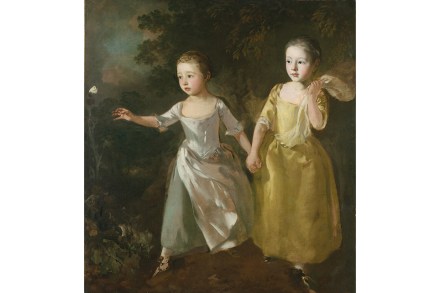
The painter in the title of Emily Howes’s first novel is Thomas Gainsborough, famous, of course, as a great portraitist – ‘the curs’d face business’, as he once called it – and landscape artist. His daughters by his wife Margaret were Molly and Peggy, immortalised in half a dozen double canvases by their father. These family pictures allow us to intrude upon the sisters’ special intimacy as we follow their development from carefree girls playing in their native Suffolk to their emergence as fashionable young women in Bath and London society.

‘Struck with the dart of love’: portrait of a marriage

From our UK edition

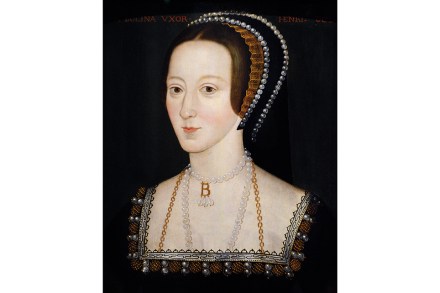
‘These bloody days have broken my heart.’ Thomas Wyatt’s words are an expression of his personal distress at the fall of Anne Boleyn, Henry VIII’s second wife and the woman for whom the king had defied the pope and proclaimed himself supreme head of the English Church. But they are also indicative of the shockwaves resonating around England in May 1536. Within just three weeks, Queen Anne, along with five men – among them her brother George, with whom she was accused of incest – were tried and convicted of treasonous adultery and beheaded in the Tower. Wyatt himself, narrowly escaping their fate, may have witnessed Anne’s execution from a slit in a window in the Bell Tower. She was swiftly dispatched by a swordsman from Calais.

Nursing grievances in the Crimean War

From our UK edition

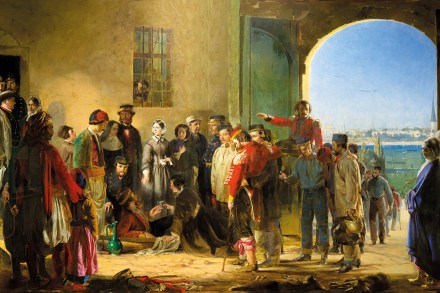
Most people know something about Florence Nightingale’s nursing expedition to Scutari and the Crimea during the Crimean War, and the ‘kingdom of horror’ that she and her nurses found there: unsanitary conditions in the hospitals, a broken-down supply system and British soldiers dropping like flies from disease rather than battle wounds. However, as Terry Tastard points out, one aspect of Nightingale’s Crimean nursing that is often overlooked is its reliance on the nuns who responded to the national outcry at the negligent care of the sick and dying.

The Bible exists in some 700 languages – so it still has a long way to go

From our UK edition

I’ve never met John Barton. But reading his books on the Bible I keep thinking of him as an early church father, perhaps St Jerome. Barton has the obligatory beard, he’s an ordained minister in the Church of England, and his writing is sage and measured, scholarly but accessible. Jerome was of course the translator of the Bible into Latin. In the fourth century his Latin Vulgate caused a riot in Tripoli, then part of the Roman empire, because Jonah was portrayed sheltering in the shade of a fast-growing ivy rather than under a gourd, as in the traditional rendering. (This accounts for the ugly spherical fruit dangling from the rafters, like one of those constant memories you’d rather forget, in Albrecht Dürer’s famous depiction of the saint in his study.

It is impossible to imagine Henrician England except through the eyes of Hans Holbein

From our UK edition

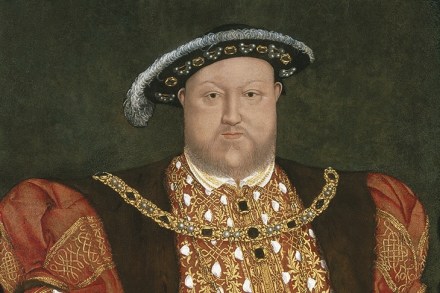
‘Holbein redeemed a whole era for us from oblivion,’ remarks the author of a trilogy of novels set at Henry VIII’s court. ‘He has forced us to believe that his vision of it was the only feasible one.’ This is a bit of a tease. It’s not written by Hilary Mantel, as you might be expecting, but by Ford Madox Ford, who, a century before Wolf Hall, published a sequence of novels about Henry’s fifth queen, Katharine Howard. Nevertheless, Ford’s point is irrefutable. It is impossible to imagine the England of Henry VIII except through the eyes of ‘the King’s Painter’, Hans Holbein.

Dark days for Britain: London, Burning, by Anthony Quinn, reviewed

Not long ago, a group of psychologists analysing data about national happiness discovered that the British were at their unhappiest in 1978. Reading Anthony Quinn’s enjoyable novel set in that year and early 1979, it’s not difficult to see why. In case you’ve forgotten, strikes were spreading like wildfire. The National Front were reaching a peak of popularity. Most alarming of all, the Provisional IRA were expanding their bomb attacks on mainland Britain. There were compensations. Kate Bush’s whiny lament ‘Wuthering Heights’ was released in 1978, and there was a new Pinter at the National Theatre (Betrayal). Punk rock was going commercial.

The inside story of working for Carmen Callil

From our UK edition

Forty-seven years ago, Virago paperbacks, with their stylish green spines and hint-of-the-transgressive colophons of a red apple with a bite out of it, revolutionised British publishing in a way that had not been seen since Allen Lane’s Penguins in the 1930s. It’s no exaggeration to say that the firm permanently altered a nation’s reading habits. Founded in 1973, three years after the Equal Pay Act and with the Sex Discrimination Act just two years away, Virago had a clear feminist objective. It wanted to produce books that gave a voice to the 52 per cent of the population under-represented in a world of mainstream publishing still largely run through the old boys’ network.

My short, bitter-sweet marriage to the radical historian Raphael Samuel

From our UK edition

In a telling moment early on in A Radical Romance, Alison Light admits that she once identified with the character of Jo March, the tomboy in Louisa May Alcott’s Little Women. Jo, it will be recalled, is the sister who marries a professor, years older than her, a German immigrant called Friedrich Bhaer, who is tender and warm and encourages her writing. In many ways it’s a model modern partnership. Light found her own professor in the shape of Raphael Samuel. In 1987 she married him, following a whirlwind courtship. He was in his early fifties, from a Jewish communist family that traced its roots back to Russia and Eastern Europe.

The loveliest girl in Vienna

From our UK edition

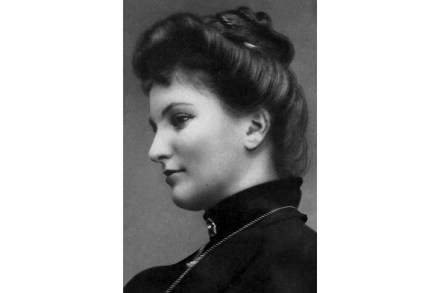
It must be rare for a popular song to have such a lasting influence on a posthumous reputation. However, this is the case with Tom Lehrer’s deliciously satirical tribute, ‘Alma’. Reading Alma Mahler’s obituary in 1964 — the ‘juiciest, spiciest, raciest’ he’d ever come across — Lehrer was amazed by her matrimonial CV and proceeded to immortalise it in a catchy lyric. Not only had Alma been married three times, to the composer Gustav Mahler, to Walter Gropius, the founder of Bauhaus, and, finally, to Franz Werfel, author of the runaway bestseller The Song of Bernadette, she’d also managed to bag as lovers some of the top creative men in the Europe of her time.

A brief period of rejoicing

From our UK edition

Reflecting on the scenes of celebration, the ‘overpowering entrancements’, that he had witnessed in November 1918 on the first Armistice Day, Winston Churchill wrote that their memory was all too fleeting, and that the spirit of wild rejoicing that had erupted at the end of the first world war was in a sense irrecoverable. Throughout Britain it had been a magical day, repeatedly described as ‘wonderful beyond words’. Yet the spontaneous outpouring of joy, intensified by sadness, the feelings of relief and brotherhood, together with the conviction of a better future, left no permanent legacy.

Princesses of Parallelograms

From our UK edition

It’s more than 160 years since the death of the computer pioneer Ada Lovelace, Charles Babbage’s ‘enchantress of numbers’ and self-proclaimed ‘bride of science’. Not the least of Lovelace’s fascination is the way in which her reputation and the claims for her significance have fluctuated so wildly during that time. She’s been hailed for her understanding of the potential of Babbage’s unbuilt Analytical Engine and for her far-reaching vision of the role of the technology of the future. This has unfortunately led to her being credited with everything from the invention of the CD to the foundation of Silicon Valley.

The great betrayal

From our UK edition

They were at sea for more than two months in desperately cramped conditions. The battered ship, barely seaworthy, pitched violently in storms where the swell rose to 100 feet. One of the beams cracked and there was talk of returning to England before it was temporarily repaired with a house jack. With spray in their faces so fierce that they could barely see, the small band of pilgrims invoked the words of Psalm 107, that God would make the storm calm and the waves still. Finally, on 11 November 1620, the Mayflower made landfall at Cape Cod, and some weeks later the settlers decided on the site of present-day Plymouth, Massachusetts, for their colony.

Embarrassing Victorian bodies

From our UK edition

The fetishisation of the Victorians shows no sign of abating. Over the past 16 years, since the centenary of the passing of the Victorian age, we have been treated to a never-ending stream of books about the monarch herself, the houses her subjects lived in, the railways they built and travelled on, their sexual peccadillos, the sensational murders that seized the headlines, and so on ad infinitum. Now we have a study devoted to that ultimate fetishistic object: the human body. According to Kathryn Hughes, biographical writing about the Victorians has been indifferent to their vital signs of life, movement, smell, touch and taste, behaving as if our ancestors were abstractions rather than men and women full of puff and fat who probably stank to high heaven.

The people’s prince

From our UK edition

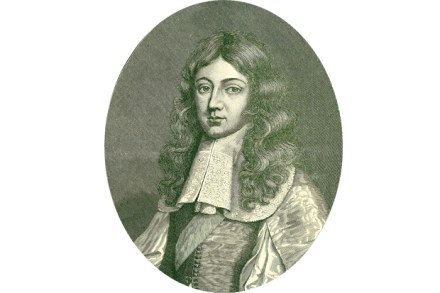
In Pepys’s famous words, James, Duke of Monmouth was ‘the most skittish, leaping gallant that ever I saw, always in action, vaulting, or leaping or clambering’. Reading Anna Keay’s biography of the adored illegitimate son of Charles II, this image of his energy appears paramount — as Monmouth seems to live his life at speed several times over before his death, by order of his uncle James II, at the age of 36, in a horribly botched execution on Tower Hill. Born only months after the regicide of Charles I, he was the product of his father’s brief liaison with Lucy Walter, infamous for loose morals and for having reputedly planned to murder her maid by stabbing a large upholstery needle into her ear as she slept.