Maggie Fergusson

A narrow escape in Britain’s most treacherous mountain range

Twenty-five years ago, my cousin Jock, a Scottish priest, rang in shock. Two priest friends, David and Norman, had been walking in the Cuillin in Skye. As Norman rounded a boulder, it dislodged and rolled him off the mountain. He screamed: ‘David, save me!’ They were his last words. The Cuillin — or Black Ridge — slice the island of Skye in two. On a map they are a Spaghetti Junction of deranged scribbles. Closer to, they rise up like the fangs of Mordor in dizzying spires with names such as ‘The Executioner’. ‘The Inaccessible Pinnacle’ is something like Orkney’s Old Man of Hoy, only rising not out of the sea, but off the top of a mountain.

Orcadian cadences: celebrating the reclusive poet George Mackay Brown

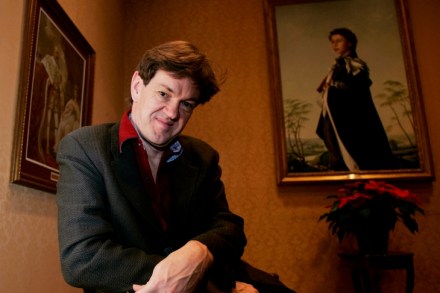
Few journalists can have conducted such a dismal interview as mine with George Mackay Brown in the summer of 1992. The Times had sent me to Orkney, and the night before we met I sat up in my B&B reading his poetry, spellbound. So much to ask him! But that first meeting was a disaster. Brown was so shy he answered my questions in monosyllables. After five minutes he sat back and rested his lantern jaw on long hands, silent. Seamus Heaney called Brown ‘the praise singer’. There was no singing that afternoon. But the next day I ran into Brown at Mass (he was that rare thing, an Orcadian Catholic). He invited the whole congregation — five of us — to tea. In familiar company he was transformed: a generous host, a brilliant raconteur.

One of the last men-only jobs left — offshore in the North Sea

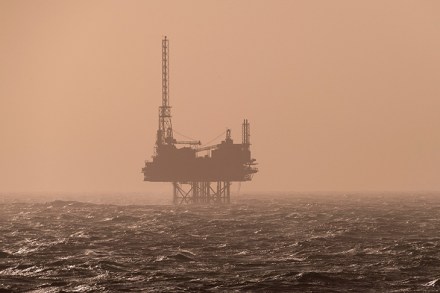
As a child, I loved the Ladybird ‘People at Work’ series. I had the ones on the fireman, the policeman, the fisherman and the postman; and just one on a woman, The Nurse. Now, of course, they seem absurd. Women are doing all those ‘man’s’ jobs, and many more. So where do you go to find a men-only workplace? A monastery, maybe. Or an oil rig. It’s not clear how Tabitha Lasley first fell in with riggers, but she was quickly enthralled. They are among the best paid blue-collar workers in the country — at the height of the North Sea oil boom even rig cleaners earned £300 a day — and they splash their money about like professional footballers on flashy clothes, state-of-the-art TVs, cocaine. ‘They were interesting.

Treasures or clutter? The problem of knowing what to keep

Every so often the past makes a pass at you. An old school report, a train ticket, a curl from a first haircut falls out of an envelope and sends you tumbling back through the decades. For most of us these things are flotsam and jetsam, of momentary interest, but for Rachel Morris they are vital. It is partly that she works in museums, so is deeply invested in the past, and partly that her family history is so mysterious, fragmentary and ‘soaked in sadness’ that she relies on ‘things’ to help her piece together where she came from, and who she is. This book has two strands.

Literarily a love affair

From our US edition

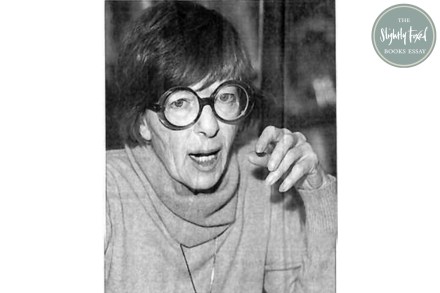
I thought I could never feel fond of Charing Cross Road, London. In 1988, when I was 23, I spent a miserable three months there doing a typing course on the bleak first floor of a building next to the Garrick Theatre. Secretarial instruction was delivered over headphones to classrooms full of women and as I tried to follow the disembodied tutorials my fingers kept slipping and jamming between the keys of a hefty, black manual typewriter.Fortunately for me, just as the course was finishing, a job as subeditor at Harpers & Queen fell into my lap.

hanff

Making feathers fly

They don’t look like a natural pair. First there’s the author, Kirk Wallace Johnson, a hero of America’s war in Iraq and a modern-day Schindler who, as USAID’s only Arabic-speaking American employee, arranged for hundreds of Iraqis to find safe haven in the US. In the process, he developed PTSD, sleepwalked through a hotel window, flung himself from a ledge and plunged, nearly, to his death. Then there’s the stranger-than-fiction Edwin Rist, a brilliant young flautist who, on a pitch-black night nine years ago, in pursuit of an obsession with rare bird feathers, risked years in jail in one of the most brazen and bizarre museum heists ever accomplished. Yet Johnson and Rist are made for one another. Within pages I was hooked. This is a weird and wonderful book.

Light at the end

It’s an irony of our secular age that the more we fear death, the more enticing we find it. The past few years have seen a slew of bestsellers on the subject — Atul Gawande’s Being Mortal, Julian Barnes’s Nothing to be Frightened Of, Paul Kalanithi’s When Breath Becomes Air, Henry Marsh’s Do No Harm (a title taken from the Hippocratic Oath —an oath no doctor actually swears). To this crowded field Robert McCrum brings a book both intensely personal — he reflects not only on his mortality but on the death of his marriage — and coolly objective. It’s proof, yet again, that death makes for lively reading. Twenty-one years ago, as readers of the memoir My Year Out will know, McCrum suffered a near-fatal stroke.

The gull’s way

In 1978, Adam Nicolson received three Hebridean islands as a 21st birthday present from his father, Nigel. The Shiants, each about a mile long, were uninhabited, with just one rat-infested bothy: not everyone’s idea of paradise. But, precisely because human beings had neglected them, wild life flourished — the islands were ‘thick with the swirl of existence’, thrumming with life and death, suffering and triumph, ferocity and conquest. Sea Room (2002) is Nicolson’s rousing love lilt to the Shiants, for him the most beautiful place on earth.

Tormented genius

Married as I am to an antiquarian book dealer, and living in a house infested with books and manuscripts, I’m constantly having to edit my own little library so as to be able to breathe. But three volumes have survived successive culls — Pax Britannica, Heaven’s Command and Farewell the Trumpets — Jan (or James as she was when these books were written) Morris’s trilogy about the British empire. It is, Morris says, ‘the intellectual and artistic centrepiece of my life’, and it opens on the morning of 22 June 1897 with Queen Victoria visiting the telegraph room at Buckingham Palace on the occasion of her Diamond Jubilee.

Doctor who?

On 25 July 1865, during a heatwave, Dr James Barry died of dysentery in his London lodgings. A charwoman came in to ‘lay out’ the body. She had known the deceased gentleman: a strange-looking fellow, about five feet tall, slight and stooped and with a large nose and dyed red hair. But nothing had prepared her for what she found when she folded back the bedclothes. Barry’s whole body — ‘the genitals, the deflated breast and the hairless face’ — was unmistakably female. And as if that wasn’t shock enough, the charwoman’s eye was drawn to pronounced striations in the skin of the belly. As a mother of nine, she recognised them immediately as the marks of childbearing.

That glowing feeling

On the morning of 15 October 1927, a dim, autumn day, a group of men foregathered at the Rosedale cemetery in New Jersey and picked their way through the headstones to the grave of one Amelia — ‘Mollie’ — Maggia. An employee of the United States Radium Corporation (USRC), she had died five years earlier, aged 24. To the dismay of her friends and family the cause of death had been recorded as syphilis, but, as her coffin was exhumed and its lid levered open, Mollie’s corpse was seen to be aglow with a ‘soft luminescence’. Everyone present knew what that meant. ‘My beautiful radium’, Marie Curie called the element she discovered in 1898.

The world of big brother

If the past is a foreign country, who governs it? Who has the right, particularly in dealing with his parents and siblings, to patent very private memories, and sell them to the public? These are questions that generally nag at the readers of family memoirs, and it is a measure of the quality of The Music Room that it does not provoke them. William Fiennes is driven neither by self-indulgence nor a desire to rub salt into old wounds, but by an urge to comprehend and dignify the past, in its joys and its sorrows; to give it shape and meaning. This is, essentially, a prequel to The Snow Geese, Fiennes’s highly-acclaimed, prize-winning first book in which he recorded a journey, both physical and spiritual, undertaken in his late twenties.