Maggie Fergusson

Weeds, bugs and lichens must now thrill the imagination

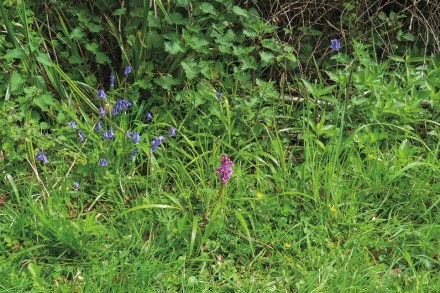
In the summer of 1992, the Times sent me to Orkney to interview the poet George Mackay Brown. He was notoriously wary of media interest – perhaps the only author ever to have asked his doctor for anti-depressants when shortlisted for the Booker prize – and I could hardly get a word out of him. His council flat didn’t yield much either: a sofa, a table – a Formica surface which Brown cleared of crumbs after breakfast and then wrote on till lunchtime. But behind his rocking chair, a huge banner, embroidered in bright wools, blazed out across an otherwise monochrome room: O let them be left, wildness and wet Long live the weeds and the wilderness yet.
I was a girl at Eton

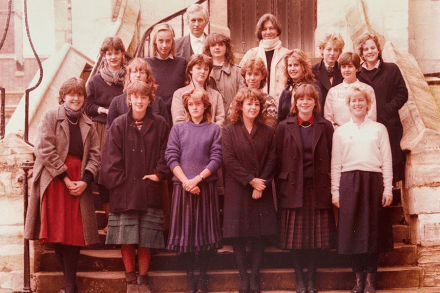
The godson of a friend of mine started at Eton last Michaelmas, and she recently told me how wonderfully it was suiting him. He’s a boy who has suffered from some academic and behavioural challenges, but very quickly these seem to have been ironed out. That school really knows its onions, my friend said. Of course I was pleased for the boy; but my reaction was mixed. Good old Eton, I thought, working its magic again. But why is this magic available to so few – for the most part, only those able to raise fees just shy of £65,000 per year – and none of them girls? Well, not quite none. You might think my reaction somewhat ungrateful if I tell you that I was briefly a girl at Eton, and that it changed my life.

Songs of murder, rape and desertion

A century ago, the Orkney poet George Mackay Brown was settling into his first term at Stromness Academy. His schooldays were to prove a dismal grind, but English lessons brought moments of magic. He was especially intrigued by poems – ballads, mostly – signed simply ‘Anon’. The name of the poet was lost – and perhaps there hadn’t been just one but a host of craftsmen in the making of each of these wonders. They were the creation of a tribe, the inheritance of a community, songs ‘seraphically free/ Of taint of personality’. Today, as publishers bust themselves to promote the cult of individual authors, it’s a thrilling, liberating notion.

John Power, Nick Carter, Elisabeth Dampier, Maggie Fergusson & Mark Mason

26 min listen

On this week’s Spectator Out Loud: John Power argues the Oxford Union has a ‘lynch-mob mindset’; Elisabeth Dampier explains why she would never date a German; Nick Carter makes the case for licensing MDMA to treat veterans with PTSD; Maggie Fergusson reviews Island at the Edge of the World: The Forgotten History of Easter Island by Mike Pitts; and, Mark Mason provides his notes on guided walks. Mark will also be hosting a guided walk for the Spectator, for tickets go to spectator.com/events Produced and presented by Patrick Gibbons.

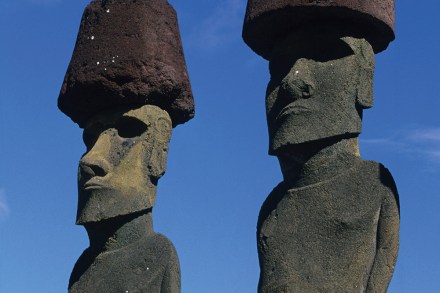
The mystery of Rapa Nui’s moai may be solved

Boris Johnson claims that in his first year at Oxford he attended just one lecture. Delivered in the crepuscular gloom of the Pitt Rivers Museum, it was about Rapa Nui, the tiny Pacific island 2,200 miles from mainland Chile. As a boy, Johnson had read the Norwegian adventurer Thor Heyerdahl’s Aku-Aku: The Secret of Easter Island and had become obsessed. No wonder. For although Rapa Nui – or Easter Island – is only half the size of the Isle of Wight, it has a haunting history teeming with questions. Who first discovered this speck in the Pacific? How did they get there? How did they manage to settle in this place battered by subtropical seas, rat-infested, with no permanent freshwater streams and whose only abundant resource was stone? Were they cannibals?

No stone unturned: the art of communing with rocks

At the age of 13, when some girls become passionate about ponies, Anjana Khatwa developed an infatuation with rocks. Growing up in a Hindu family in Slough, she had a moment of epiphany on holiday in south-east Kenya when she walked across an ancient lava flow and felt convinced that the rock beneath her feet was ‘an animate entity… alive with stories that needed to be heard’. From then on, rocks have been, well, her rock. More than a geologist, Khatwa calls herself an ‘earth scientist’. So, while there is plenty of geology in this book, some of it mildly challenging (‘Along with other silica-rich microcrystalline rocks such as obsidian and agate, flint breaks with a conchoidal fracture’), there is also mythology, folklore, ecology and spirituality.

It’s trust in English kindness that keeps the migrants coming

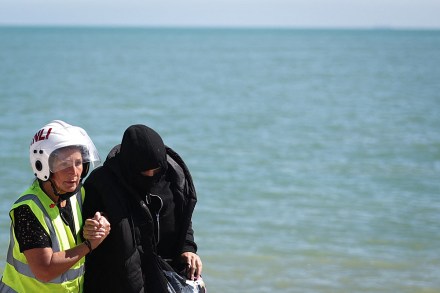
Halfway through The Shawshank Redemption, Andy and Red, sitting in their filthy prison yard, discuss hope. Red thinks it’s a dangerous thing, which can lead to despair if not fulfilled. But Andy insists on hoping for freedom, and his hope is finally rewarded. The astonishing thing about the migrants and refugees Horatio Clare meets in this short, powerful book – Sudanese, Afghans, Iraqis, Iranians, Ethiopians, Pakistanis, Moroccans, Syrians and Yemenis in Dover, Calais, Falmouth and Portland – is that, despite being some of the most helpless and vulnerable people in the world, most have not lost hope. In Calais’s fenced and guarded camps, the soundtrack is laughter.

Imperfections in wood lead to perfection in carvings

From our US edition

I am married to a wood snob. When we bought our house in 1999, my husband insisted that all the shelves (he is an antiquarian book dealer, so there are miles of them) should be made of “real” wood, with not an inch of Medium Density Fibreboard. The price made me squeal. But a quarter of a century on, while friends’ MDF shelving droops like cables between telegraph poles, ours remains beautifully strong and straight. Callum Robinson would understand why this matters, and he demonstrates it in his new book, Ingrained.

wood

Imperfections in wood can make for the loveliest carvings

I am married to a wood snob. When we bought our house in 1999, my husband insisted that all the shelves (he is an antiquarian book dealer, so there are miles of them) should be made of ‘real’ wood, with not an inch of Medium Density Fibreboard. The price made me squeal. But a quarter of a century on, while friends’ MDF shelving droops like cables between telegraph poles, ours remains beautifully strong and straight. Callum Robinson would understand why this matters.

The traditional British hedge is fast vanishing

Five years ago, a documentary about the Duchy of Cornwall featured the then Prince of Wales in tweeds and jaunty red gauntlets laying a hawthorn hedge. It was a brilliant piece of PR. If Charles was a safe pair of hands with a hedge – something as quintessentially English as a hay meadow or a millpond – he was surely a safe pair of hands full stop. A cuckoo in one breeding season needs to eat about 22,500 hairy caterpillars Focusing on a hedge in south-west Wiltshire, Hedgelands combines history, celebration, lament and warning. Christopher Hart is a companionable writer, and makes a powerful case that, at a time of ecological hazard, well-nurtured hedges can play an astonishing role in buttressing the future. First, though, the past.

We must never lose the treasured Orkneys

When, last summer, a group of Orcadians declared they’d like to leave the UK and join Norway, it became clear just how little most of us in the south understand Orkney. Friends who know I go there often ask me where it is (somewhere near the Hebrides?), how many Orkney islands there are, and whether they are mountainous or flat. As Peter Marshall explains at the start of this astonishing tour de force, the 70-odd Orkney islands lie just 25 miles north of Scotland, separated from the mainland by the Pentland Firth – the point, he says, at which ‘the North Sea meets the Atlantic, a place of hidden, treacherous whirlpools, and one of the world’s most powerful tidal currents’.

Four months adrift in the Pacific: a couple’s extraordinary feat of endurance

It is every writer’s dream to glimpse, peeping out from behind a news story or feature, the contours of a book. Brian Masters was eating his breakfast on 12 February 1983 when he read in the morning papers reports of the arrest of a mildly spoken Jobcentre employee accused of strangling a number of men with whose flesh he had blocked the drains in his flat in Muswell Hill. Masters wrote to Dennis Nilsen. Nilsen wrote back: ‘Dear Mr Masters, I pass the burden of my life on to your shoulders.’ After Nilsen had filled 50 prison notebooks, Masters embarked on Killing for Company, surely the grisliest yet most poignant biography of a serial killer ever written.

The man who loves volcanoes

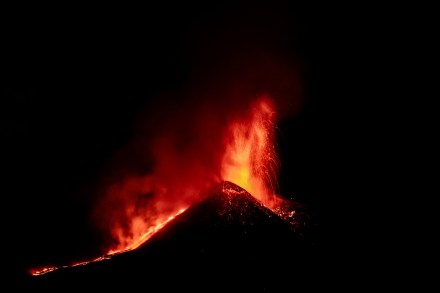
Being a volcanologist demands a quiverful of skills. You need to be in command of multiple branches of science, including geophysics, geochemistry and seismology. But you must also understand people for whom science matters less than sorcery: people living near volcanoes, for whom they are sacred places, homes to ancestors, sites of miracles, mountains where God’s intervention in human affairs is made manifest in ash, fumes and flame. And you have to be brave. When it comes to studying volcanoes, risk and reward go hand in hand. So a volcanologist must be willing to peer over the edge of a crater, breathing in smoke ‘inconvenient to respiration’, crying acid tears.

The company of hens could be the best cure for depression

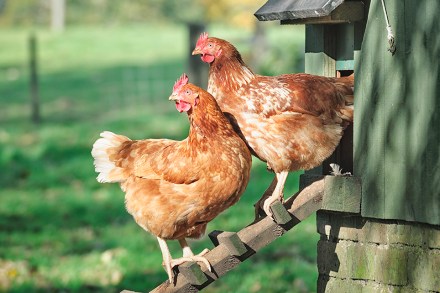
A friend of mine, an inspirational teacher, says that one of the best things parents can do is to allow children to believe that their dreams can come true. Arthur Parkinson met his first chicken as a toddler, growing up in a former mining town, and from that moment he longed for a brood of his own. So his father set to, building a handsome ark-shaped hen house, poring over Ad-Mag to find amusing poultry for sale, driving Arthur around country lanes at weekends in search of rare breeds.

The stone boats of Celtic saints inspire a bizarre pilgrimage

‘Islands of stone’ would have been a good name for the Orkney archipelago, George Mackay Brown once wrote. The salt Atlantic winds mean that very few trees grow there, so stone provides for the dead – in the burial chamber at Maeshowe, for example – and the living. Less than a century ago, there were Orcadians sleeping in stone box beds. For Beatrice Searle, one Orkney stone proved life-changing. While still a teenager, she felt the stirrings of a vocation to work with stone. It spoke to her, almost literally: ‘There is information to be found in the sound of the stone, just-audible messages from the deep past to be drawn out.’ She attempted to eat it (but ‘nothing about stone eating is instinctive’).

All the art you’d pay not to own

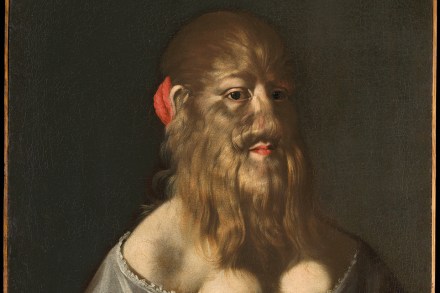
‘To my mind,’ Renoir once wrote, ‘a picture should be something pleasant, cheerful and pretty. There are too many unpleasant things in life as it is.’ What would he have made of Edward Brooke-Hitching’s The Madman’s Gallery? Of the 100-plus artworks it examines, few are cheerful and fewer pretty. Often you turn the pages of an art book wondering which painting you most covet, but with this one it’s more a question of which you’d pay not to own: the 13th-century ‘Penis tree’ maybe? The 90 cans of excrement sealed up by Piero Manzoni in 1961 and now selling for up to €275,000 apiece? Or, most repellent, the ‘Portrait of Barbara van Beck’(c.1640), her whole face sprouting thick, luxuriant hair?

If buttons, balloons or premature burial terrify you, rest assured you’re not alone

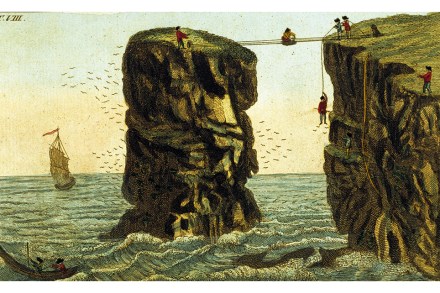
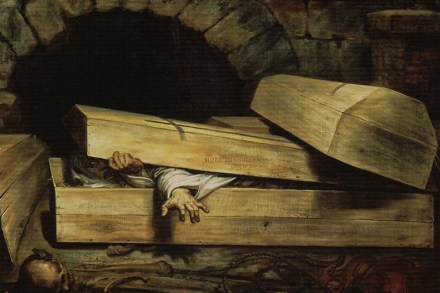
Every summer, during our holiday in Orkney, there is a moment of panic. We’re standing on a dizzying cliff – looking across a sleeve of sea at the Old Man of Hoy, maybe – and I’m consumed with a longing to fling myself over. It’s not suicidal. I just yearn to feel the wild rush of air against my cheeks: I want to fly. I’ve never met anyone who shares this compulsion, but The Book of Phobias and Manias assures me it’s quite common. Indeed, it has a name: acrophobia. Kate Summerscale understands it perfectly: ‘The whirl of vertigo,’ she says, can ‘seem like the giddiness of yearning.’ A new book from Summerscale is always a treat.

Poor parenting is at the root of our failing schools

When it comes to education, I’m in two minds, maybe three. I was sent to private schools, including, for my ‘Oxbridge’ term, Eton, where the teaching was life-changing. But when it came to my children, no amount of cheeseparing was going to make private fees possible. From the age of three to 18, they went to our local state schools. They flourished academically, made lots of friends and enjoyed two advantages I never had: they walked to school, and mixed comfortably with children from every background. Why pay fees? I wondered. State schools were best. Alison Colwell makes me think again. In 2014, she was appointed head teacher at Ebbsfleet Academy in Kent, then one of the most challenging schools in the country.

Max Jeffery, Kate Andrews, Maggie Fergusson

16 min listen

On this week's episode, we hear from Max Jeffery on his first impressions visiting Israel. (00:45)Then Kate Andrews on her difficult relationship with Newcastle Football Club. (04:58)And finally, Maggie Fergusson's review of the new book Blacksmith: Apprentice to Master: Tools and Traditions of an Ancient Craft.

The revival of the blacksmith’s craft — a new generation goes at it hammer and tongs

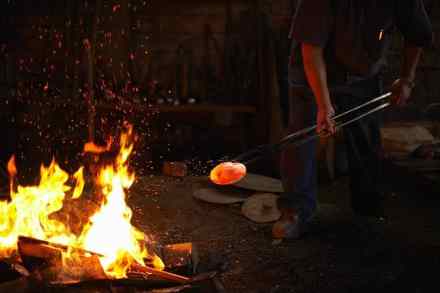
At Intelligent Life, the Economist magazine where I worked for some years, it was easy to feel intellectually challenged. Even the interns all seemed to have Oxbridge Firsts. What a breath of fresh air, then, when the deputy editor’s son decided he didn’t want to go to university, and would instead apprentice as a blacksmith. During the industrial revolution, Alex Pole tells us in this eccentric and enchanting book, there were 25,000 smiths working in the UK. Now, there are fewer than 2,000. As Ronald Blythe noted more than 50 years ago in Akenfield, far more villages have a cottage called The Olde Forge than a blacksmith.