Madeline Grant

Madeline Grant

Madeline Grant is The Spectator’s assistant editor and parliamentary sketch writer.

Rupert Lowe on Reform turmoil, Chagos ‘treason’ and taking the Tory whip

From our UK edition

50 min listen

The Spectator’s editor, Michael Gove, and assistant editor, Madeline Grant, interview Rupert Lowe, MP for Great Yarmouth and notorious Westminster provocateur. Earlier this year, Lowe was suspended from the Reform party amid claims of threats towards the party's chairman, Zia Yusuf and a souring relationship with Nigel Farage. Following his political ‘assassination’, he now sits as an independent MP and continues to be one of the most energetic parliamentarians in challenging the Westminster orthodoxy.

Max Jeffery, Tanya Gold, Madeline Grant, Matthew Parris and Calvin Po

From our UK edition

29 min listen

On this week’s Spectator Out Loud: Max Jeffery tracks down the Cambridge bike bandit (1:10); Tanya Gold says that selling bathwater is an easy way to exploit a sad male fetish (5:38); Madeline Grant examines the decline of period dramas (10:16); a visit to Lyon has Matthew Parris pondering what history doesn’t tell us (15:49); and, Calvin Po visits the new V&A East Storehouse (23:08).  Produced and presented by Patrick Gibbons.

Nigel wants YOU, secularism vs spirituality & how novel is experimental fiction?

From our UK edition

52 min listen

How Reform plans to win Just a year ago, Nigel Farage ended his self-imposed exile from politics and returned to lead Reform. Since then, Reform have won more MPs than the Green Party, two new mayoralties, a parliamentary by-election, and numerous councils. Now the party leads in every poll and, as our deputy political editor James Heale reveals in our cover article, is already planning for government. The party’s chair, tech entrepreneur Zia Yusuf, describes the movement as a ‘start-up’; and like a start-up, Reform is scaling up at speed. Among the 676 councillors elected last month, a number are considered more than ready to stand as MPs.

Leave our period dramas alone!

From our UK edition

It is a truth universally acknowledged that any article about Jane Austen must begin with a mangled, platitudinous variation on her most famous line. Irritating though this is, it’s rather a good metaphor for the state of the wider treatment of Austen – and her near contemporaries – by popular culture. When it comes to adaptations of novels from the Georgian, Regency and Victorian periods, and even longer ago, we find ourselves in a deep trough. If you want mangled, platitudinous variations, you now need look no further than today’s costume dramas. And this year being the 250th anniversary of Austen’s birth, we should brace ourselves for a barrage of them. Many of those behind the upcoming slough of modern takes on Austen et al hardly inspire confidence.

It didn’t take Starmer long to morph into Brezhnev

From our UK edition

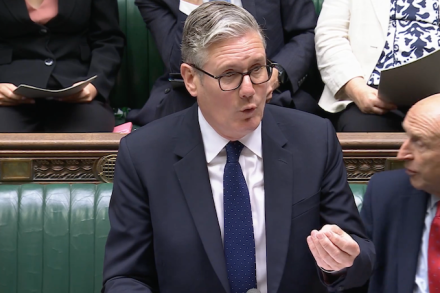
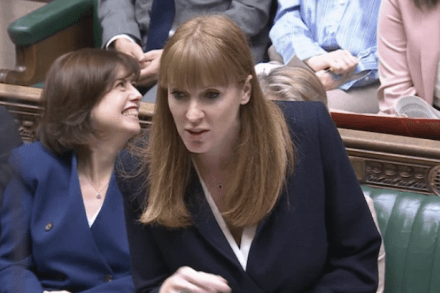
It has taken Sir Keir Starmer just under 11 months to enter his Brezhnev era. Portly, autocratic and reliant on past glories, the Prime Minister began today's PMQs by reading a list that would make Borat proud of the infrastructural benevolences to make benefit glorious region of Red Wall. In Sir Keir’s world, there is no decay or decline: the economy is booming, pensioners and children are well cared for and the streets are safe. Notable by her absence was the Deputy Prime Minister: those windows of Downing Street won’t measure themselves The praesidium – sorry, Front Bench – lapped this up. Or those who turned up did.

Make Bond great again

From our UK edition

One of the great recurring James Bond tropes is to make it look as though 007 has actually been killed before the film’s title credits. You Only Live Twice, From Russia with Love and Skyfall all begin with Bond in a position where his demise seems inevitable. Of course, he always turns up alive. (Quite what the rest of the film would consist of if he didn’t is anyone’s guess: perhaps Moneypenny dealing with probate or M arranging one of those ghastly direct cremations.) Now, however, we may have reached a danger from which even Bond cannot wriggle out. Amazon, the company responsible for one of the biggest flops in TV adaptation history, the Middle-earth prequel series The Rings of Power, has paid more than $1 billion to take ‘creative control’ of the Bond franchise.

What is Russia’s plan to unleash chaos?

From our UK edition

39 min listen

As the long-awaited Russia report is released this week, we discuss Russia's plan to unleash chaos (00:45). Plus, does Boris Johnson have a management problem with his new MPs? (14:30) And last, the pains of dating during lockdown (28:30). With Russia journalists Owen Matthews and Mary Dejevsky; the Spectator's deputy political editor Katy Balls; Conservative Home's editor Paul Goodman; Sunday Telegraph columnist Madeline Grant; and author James Innes-Smith.Presented by Cindy Yu.Produced by Cindy Yu and Pete Humphreys.

How Covid has changed the dating game

From our UK edition

Just before lockdown began, Matt Hancock and Dr Jenny Harries presented the nation’s daters with a stark dilemma. Non-cohabiting couples, they advised, should either move in together for the duration or stay physically apart. Couples who barely knew each other’s surnames were catapulted into levels of intimacy that would normally have evolved over years and the enforced lovebirds were soon living like old-style pensioners, spending every moment in each other’s company, arguing over hand sanitiser brands and giving one another dodgy haircuts. For the large pool of existing singletons, the picture was radically different. Gone was the usual flurry of social engagements, and even the possibility of meeting someone at work.

Choose ten lockdown friends and family? No thanks

From our UK edition

The latest rumblings from Westminster suggest that ministers might be about to relax 'stay at home' restrictions by allowing people to socialise in narrow 'clusters' or 'bubbles'. Under these proposals, households could draw up an unchangeable list of friends and family – maximum ten people per group – with whom they are permitted to congregate for meals and social activities. Other European countries are considering similar measures. Let’s try to imagine the social repercussions of such a policy. For some, the groupings will be obvious. Older couples with well-established friendship circles will choose their cluster from familiar bridge club or doubles pairings, or use the new freedom to socialise with elderly relatives whose company was previously forbidden.