Luke McShane

Luke McShane is chess columnist for The Spectator.

Detecting vulnerabilities

From our UK edition

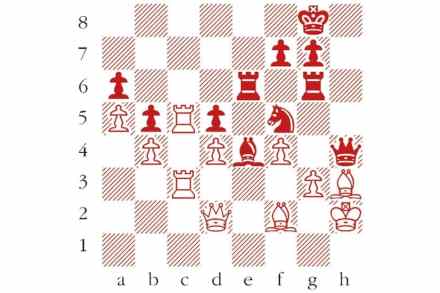
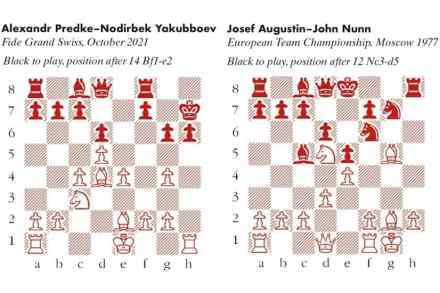
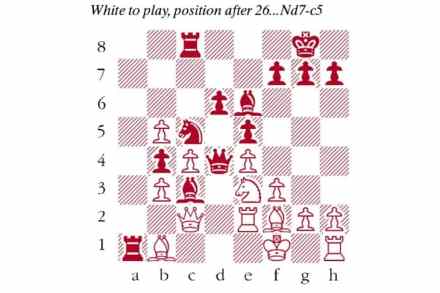
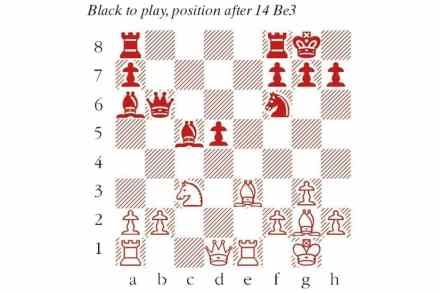
I suspect many players perceive the chess board in rich contrast, like a heat map. Glowing bright red are those pieces which are attacked but not defended. A gentler shade applies to pieces which are vulnerable to attack in future, or squares that are ripe for occupation. In the diagram below, the intrusion 10 Nd5-e7+ is tempting, to win rook for knight. But Wesley So’s stunning move 10 Nf6+ showed an exquisite sense for the soft spots in Black’s position. The key point is that after 10…gxf6 11 Qh6, Black’s awkward clump of pieces have almost no way to influence the f6-square, so Qh6-f6 and Be1-c3 is very hard to meet. It is remarkable that the attack is viable even when White’s supporting pieces have yet to leave the barracks.

Puzzle no. 670

From our UK edition

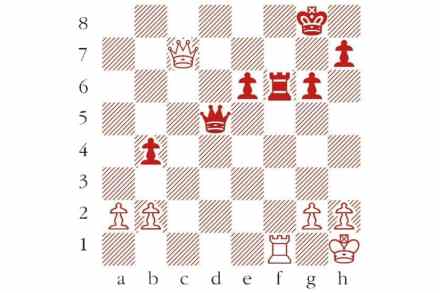
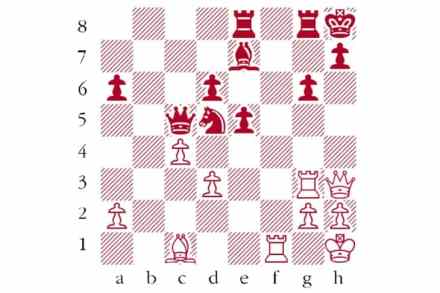
White to play. Harvey–Roberson, Northumbria Masters 2021. Black’s last move, 37…Kf7-e7 looked plausible, but walked into a clever tactic. What was White’s next move? Answers should be emailed to chess@spectator.co.uk by Monday 13 September. There is a prize of £20 for the first correct answer out of a hat. Please include a postal address and allow six weeks for prize delivery. Last week’s solution 1 b4+ Qxb4 2 Qa2+ Kb5 3 Qxb2 and the f6-pawn decides the game. Or if 1…Kxb4 2 Qe7!

Titles bonanza

From our UK edition

At the beginning of August, seeing his outstanding performance at the Fide World Cup in Sochi, I wrote that Ravi Haria ‘must now sense that the grandmaster title is well within reach’. But who could expect that he would achieve two more grandmaster ‘norms’ before the month was out? Haria, 22, now has all three norms (tournament results at grandmaster standard) he needs, and requires just a small boost to his international rating before he is awarded the title. Over-the-board chess has sprung back to life this summer, and Haria is one of many players making up for lost time.

Puzzle no. 669

From our UK edition

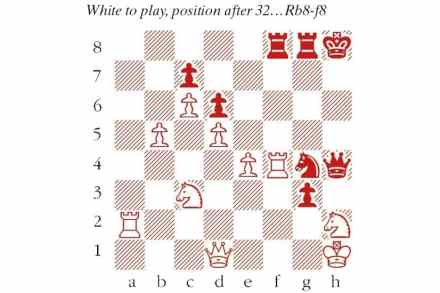
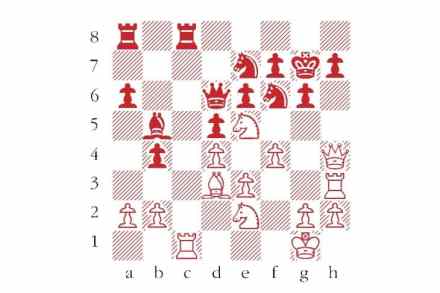
White to play. Swiercz–Xiong, Sinquefield Cup 2021. 1 Kxb2 allows a perpetual check. But forcing an exchange of queens would allow the f6-pawn to decide the game in White’s favour. Which move did Swiercz play to bring that about? Email answers to chess@spectator.co.uk by Monday 6 September. There is a prize of £20 for the first correct answer out of a hat. Please include a postal address. Last week’s solution 1… Qg6+! 2 Qxg6 Rxe1+ 3 Kh2 hxg6 leaves Black an easy win. Not 1…dxe4? 2 Rxh5, nor 1….Rxe4?

Best-laid plans

From our UK edition

A popular conceit among chess authors, particularly dead ones, is to describe a fine game as the execution of a multi-stage plan. In fact, a close inspection often reveals that the plan could only have been mapped out in hindsight, and the loser’s fate was entirely avoidable. Grand plans are overrated, but modest plans are indispensable. I like to wonder, what would I do with two or three moves? If I could place this piece anywhere on the board, where would it go? What would a prettier version of my position look like? Most of these ideas should be pruned ruthlessly, as they won’t survive contact with the enemy. But when you hit upon something the opponent can’t comfortably prevent, that’s a plan!

Remembering Evgeny Sveshnikov

From our UK edition

There be dragons! What we now call the Sveshnikov variation of the Sicilian defence was, in the 1970s, largely uncharted territory, and viewed with deep suspicion. Its modern name immortalises the Russian grandmaster whose pioneering analytical efforts, and practical success, put the variation on the map. Evgeny Ellinovich Sveshnikov died on 18 August at the age of 71. After his graduation in 1972, Sveshnikov worked towards a PhD at the Department of Internal Combustion Engines in the USSR. But his career turned towards chess, and in 1976 he was part of the Soviet team which won gold medals at the World Student Team Championship. The following year he was awarded the grandmaster title, and he went on to participate in nine USSR championships.

No. 668

From our UK edition

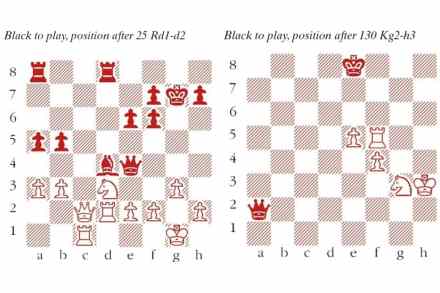
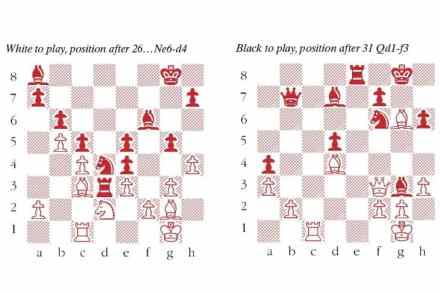
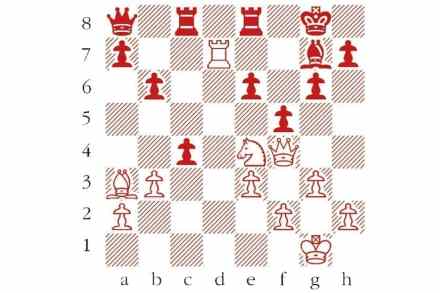
Black to play. Geller–Sveshnikov, USSR Ch 1978. Geller’s last move, 34 Rb1-e1 looked clever, since Black cannot safely capture the queen. But Sveshnikov’s next move exposed a critical flaw in Geller’s idea. What did he play? Answers should be emailed to chess@spectator.co.uk by Monday 30 July. There is a prize of £20 for the first correct answer out of a hat. Please include a postal address. Last week’s solution 1 Rh1 Qe8 2 Ke1 Qa8 3 Kf1 Qa6+ 4 Kg1 and Black cannot progress, since 4…Qc4 is stalemate.

No. 667

From our UK edition

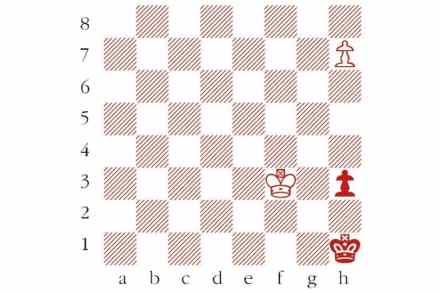
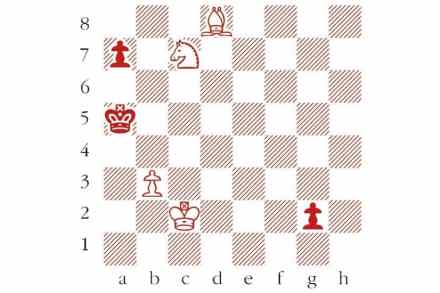
White to play and draw. The conclusion of an endgame study composed by J. Hašek (1951). Black is preparing a queen infiltration via a6. But with the right move, White can ensure that is not fatal. What should White play? Answers should be emailed to chess@spectator.co.uk by Monday 23 August. There is a prize of £20 for the first correct answer out of a hat. Please include a postal address and allow six weeks for prize delivery. Last week’s solution 1 Ra8+ Bxa8 2 Nc8+ Ka6 3 Rb6 mate. Last week’s winner Andrew Espley, Masham, N.

Containment

From our UK edition

‘Exchange chess’ (also known as bughouse) is the chess equivalent of a three-legged race. It is played in teams of two, on adjacent boards with opposite colours, and it works best when nobody takes it seriously. The only essential rule is that when you capture an opponent’s piece, you hand it to your partner, who may later plonk it down on an empty square in lieu of moving a piece. A checkmate on either board wins, no matter how dire the adjacent situation. A long time ago, when we couldn’t convene a foursome, a friend taught me to play ‘one-board exchange chess’. This variant, which I now see is listed as ‘Replacement chess’ in the Classified Encyclopedia of Chess Variants, requires just two players.

No. 666

From our UK edition

White to play. Abdusattorov–Durarbayli, Sochi 2021. The endgame looks tricky, but White found a way to force a quick mate. What did he play? Email answers to chess@spectator.co.uk by Monday 16 August. There is a prize of £20 for the first correct answer out of a hat. Please include a postal address and allow six weeks for prize delivery.
Calculated risks

From our UK edition

Two years ago, the brilliant young Polish player Jan-Krzysztof Duda made a baffling decision. In the second game of his knockout match with Wesley So at the Moscow Grand Prix, Duda needed just a draw to advance to the next round, having won the first game with remarkable ease. Perhaps he was mindful that when one only needs a draw, excessively timid play is rarely rewarded. Even so, it was an eccentric choice to employ one of the wildest variations in the Sicilian Dragon. Duda’s risk barometer looked all out of whack — like a diner who has decided the mussels look a bit dodgy, and orders the pufferfish instead. (He went on to lose the game, and later the match.

The Fide World Cup

From our UK edition

As I write this, the Fide World Cup is underway in Sochi, the Black Sea resort in Russia which hosted the 2014 Winter Olympics. It’s a thrilling event for spectators, who get to watch high-stakes chess in all its forms — fast, slow, wonderful and blunderful. The main knockout event began with a field of 206 players (with 50 seeded into the second round), while the women’s event had half that number. Each match sees two classical games on consecutive days, followed by a day of tiebreaks at fast-paced time limits. It is a brutal competitive environment, and those who reach the final stages have spent almost a month in fear of that one mistake which would put them on the next flight home.

No. 665

From our UK edition

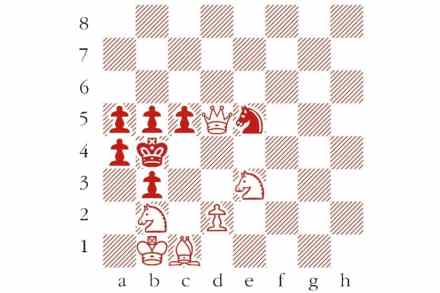
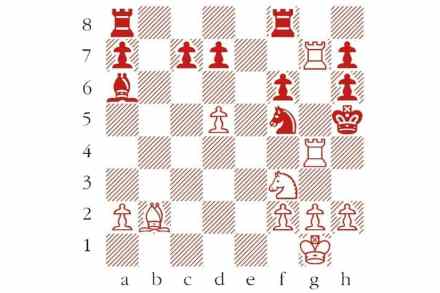
White to play. Adhiban–Delgado Ramirez, Sochi 2021. White has more than one good move, but Adhiban found a spectacular way to force mate in four. What did he play?Answers should be emailed to chess@spectator.co.uk by Monday 9 August. There is a prize of £20 for the first correct answer out of a hat. Please include a postal address and allow six weeks for prize delivery. Last week’s solution 1 Nc6+ Nxc6 2 Qe8 mate. Not 1 Bd5 Bd6!
No. 664

From our UK edition

White to play. Greco–NN, 1620. The centre is a dangerous place for the king. Which move does White play to force mate in two moves? Answers should be emailed to chess@spectator.co.uk by Tuesday 3 August. There is a prize of £20 for the first correct answer out of a hat. Please include a postal address. Last week’s solution 1 Qf4+ Kd5 (1…Kd3 2 Qg3+ is similar) 2 Qg5+ Qxg5+ 3 Kxg5 Ke6 4 Kg6 Ke7 5 Kg7! and White’s h-pawn soon queens. Not 1 Qe6+ Kc3!

The king of no castling

From our UK edition

In the body of chess rules, castling is a clumsy protuberance. Once per game, you get to move king and rook at the same time, with a bewildering list of exceptions. (One dreads having to broach these gotchas with a novice opponent who has castled improperly.) Despite its convoluted logic, castling is nothing more than a convenience, and the game could function perfectly well without it. Five hundred years ago, the rules of chess were still evolving, with significant regional variations. The ‘king’s leap’, a precursor of modern castling, permitted the king to make one move as a knight jump (perhaps from e1 to g2), while in other forms it could step two squares any which way (so, for example, e1 to g3 was also on the menu).

Kasparov’s tailspin

From our UK edition

In a game between top players, the opening moves signify not only the battleground they have embraced, but also the terrain they have avoided. In his prime, Garry Kasparov’s opponents would often duck the most critical choices, fearing the champion’s formidable advantage in home analysis of complex positions. But those who yielded an inch at the outset faced an uphill struggle of a different sort, and Kasparov won countless games from that psychological vantage point. Since his retirement in 2005, Kasparov has made sporadic appearances in speed events against the world elite, with respectable results. But his appearance earlier this month at the Grand Chess Tour’s blitz event in Zagreb was disastrous, as he scored just 2.5/18. What went wrong?

No. 663

From our UK edition

White to play. A variation from Grandelius – Xiong, Fide World Cup, Sochi 2021. With an accurate queen check,White can force an exchange of queens and march the h2-pawn. Which check should White choose? Answers to chess@spectator.co.uk by Monday 26 July. There is a prize of £20 for the first correct answer out of a hat. Please include a postal address and allow six weeks for prize delivery. Last week’s solution 1 Qa8! After 1...Rg7 2 Qh1# or, 2 Qg8# against any other move. Last week’s winner Bernard T.

No. 662

From our UK edition

White to play and mate in two. Composed by Sam Loyd, Sunny South, 1885. Nearly all Black’s legal moves can be met by Qg8 mate, but White must prepare a response against 1…Rg7. What is the key first move? Answers should be emailed to chess@spectator.co.uk by Monday 19 July. There is a prize of £20 for the first correct answer out of a hat. Please include a postal address. Last week’s solution 1…Re2 threatens perpetual check with Re1-e2. After 2 Qxg4 Rg2+! it was draw agreed in view of 3 Kxg2 Rf2+! and stalemate soon follows.

Lock-picking

From our UK edition

In his autobiographical book Surely You’re Joking, Mr Feynman! the late American physicist Richard Feynman described how he amused himself by cracking open the safes at Los Alamos, which stored design papers for the Manhattan Project. He started out picking locks, which he describes like this: Now, if you push a little wire gadget — maybe a paper clip with a slight bump at the end — and jiggle it back and forth inside the lock, you’ll eventually push that one pin that’s doing the most holding, up to the right height. The lock gives, just a little bit, so the first pin stays up — it’s caught on the edge. Now most of the load is held by another pin, and you repeat the same random process for a few more minutes, until all the pins are pushed up.

The rise of outdoor chess

From our UK edition

A giant chess board appeals in much the same way as a giant cake. Rationally, one realises that the size doesn't affect the essence of the thing. But the inner child knows that the jumbo version is just more fun. So I'm excited that a game of 'human chess', in which actors take the place of chess pieces, will be played on a giant board in London's Trafalgar Square later this month. I'm expecting a strong showing from the Red Queen and the White Knight, as the costumes draw inspiration from Lewis Carroll's 'Alice Through the Looking Glass' which celebrates its 150th anniversary this year. Their performance will pay tribute to the 'Immortal game', one of the most celebrated in history, which was played 170 years ago, just a couple of minutes down the road at Simpson's in the Strand.