Luke McShane

Luke McShane is chess columnist for The Spectator.

No. 768

From our UK edition

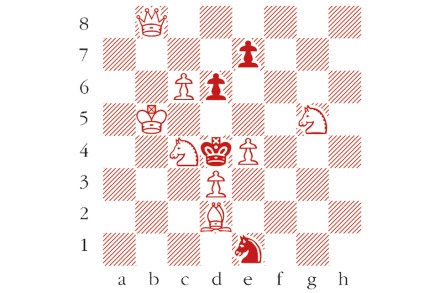
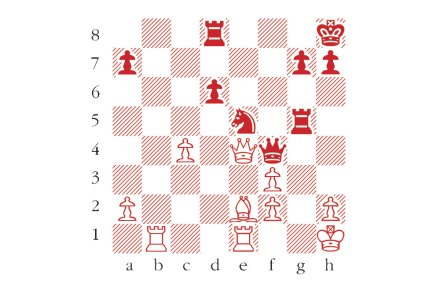
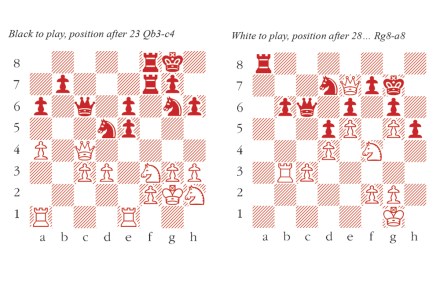
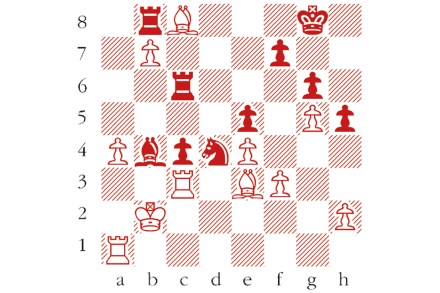
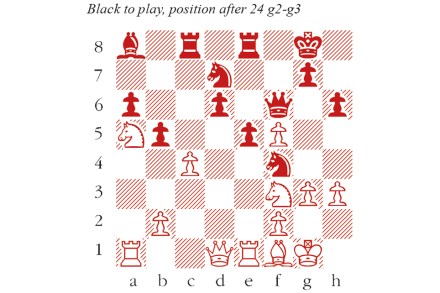
Black to play. Wall-Raczek, Northumbria Masters 2023. Black’s next move brought the game to a swift close. What did he play? Answers should be emailed to chess@spectator.co.uk by Monday 11 September. There is a prize of £20 for the first correct answer out of a hat. Please include a postal address and allow six weeks for prize delivery. Last week’s solution 1 Nd5! Qxb5 2 Nc7#, or 1…Qxd6 2 Nf6+ wins. The game continued 1…exd5 2 Qe2+ Ne5 3 Qxe5+ Kd7 4 Qxh8 and Black resigned a few moves later.

Norm score

From our UK edition

‘How do you become a grandmaster?’    ‘You must climb the mountain, and defeat the opponent at the top.’ Alas, the answer is not nearly so succinct, and when I get asked the question, I remind myself to spare the finer details. The gist is that you must outperform an ‘average’ grandmaster over the course of an event of around ten classical games. Each time you clear that bar you earn a ‘norm’, and racking up three norms earns you the title. There is no limit on the number of grandmasters in the world, and since their introduction in 1950, a couple of thousand players have attained that level. By definition, achieving a norm involves surpassing one’s current abilities, which are measured with great precision by the international rating system.

No. 767

From our UK edition

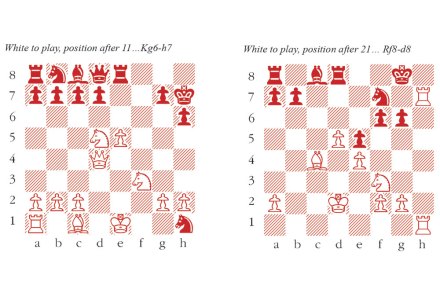
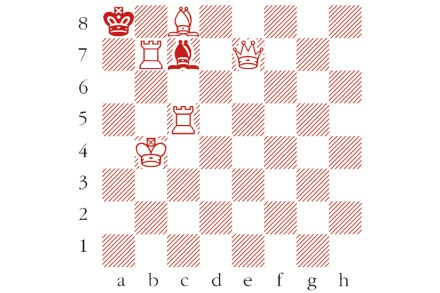
White to play. Liu-Adhiban, Abu Dhabi Masters2023. White’s next move secured a decisive advantage. What did he play? Answers should be emailed to chess@spectator.co.uk by Monday 4 September. There is a prize of £20 for the first correct answer out of a hat. Please include a postal address and allow six weeks for prize delivery. Last week’s solution 1 Rxd4! Then 1…exf4 2 Qf4+ or 1…Rxd4 2 Qc8+ Ka7 3 Qc5+ Ka8 4 Qf8+. White wins the Rh6 in either case.

Back to Baku

From our UK edition

A fortnight ago, I wrote about Magnus Carlsen’s narrow escape against the German teenager Vincent Keymer at the Fide World Cup in Baku. That brush with mortality seemed to galvanise the world no. 1, who coasted to the final with convincing victories in his next three matches, against Ivanchuk, Gukesh and Abasov. His next opponent was another exceptional talent, 18-year-old Rameshbabu Praggnanandhaa from India, and Carlsen’s triumph in the tiebreak secured victory in perhaps the only major event which he had never managed to win before.    Nevertheless, Praggnanandhaa had perhaps even more reason to be satisfied with his own performance. His achievement became front-page news in India and drew praise from Narendra Modi.

No. 766

From our UK edition

White to play. Steiger-Stebbings, European Senior Team Championship, 2023. White played 1 h2-h4, and a draw was agreed a few moves later. What opportunity did he overlook? Answers should be emailed to chess@spectator.co.uk by Monday 28 August. There is a prize of £20 for the first correct answer out of a hat. Please include a postal address and allow six weeks for prize delivery.

Senior teams

From our UK edition

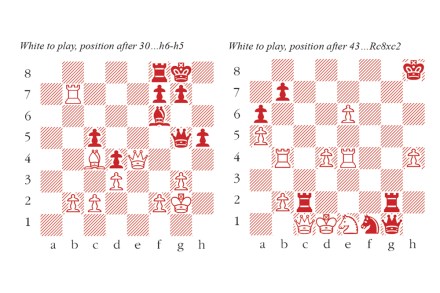
England teams brought home a raft of medals from the European Senior Teams Championship, held last month in Swidnica, Poland. England’s first team were top seeds in the over-50s event, with an all-grandmaster lineup (Mark Hebden, John Emms, Keith Arkell, Glenn Flear and Chris Ward). They faced a serious challenge from Slovakia, whom they defeated in the final round by 2.5-1.5. Mark Hebden was the standout performer, winning the individual gold medal on top board with a 7.5/8 score. His game against Jonathan Hill, from England’s third team, had a neat finish. Jonathan Hill–Mark Hebden European Senior (50+) Team Championship In the diagram position, capturing the rook on Rc2 would allow the a7 pawn to promote. Instead, Hebden sowed confusion with 52… e2.

No. 765

From our UK edition

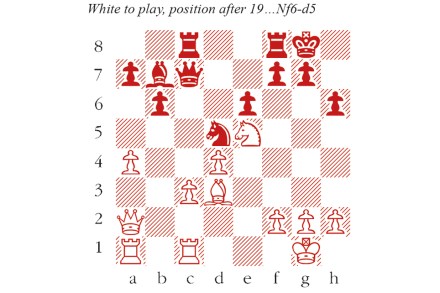
White to play. Erigaisi-Azarov, Baku 2023. The Bh6 looks in trouble, but Erigaisi found a powerful move to decide the game in his favour. What did he play? Answers should be emailed to chess@spectator.co.uk by Monday 21 August. There is a prize of £20 for the first correct answer out of a hat. Please include a postal address and allow six weeks for prize delivery. Last week’s solution 1 Qg4.

Baku burner

From our UK edition

If you love chess enough to play hundreds of tournaments you will, sooner or later, play like a numbskull. You lick your wounds, go to bed, and hope the engine belches into action the next day. As a wise man once told me, the great comfort of a knockout tournament is that if you play badly, at least you get to go home. Except that doesn’t apply to Magnus Carlsen, or at least not yet. The world no. 1 is the top seed at the Fide World Cup, currently underway in Baku, Azerbaijan. But he suffered two serious glitches on consecutive days in his fourth round match against Germany’s Vincent Keymer, one of the world’s top juniors.

No. 764

From our UK edition

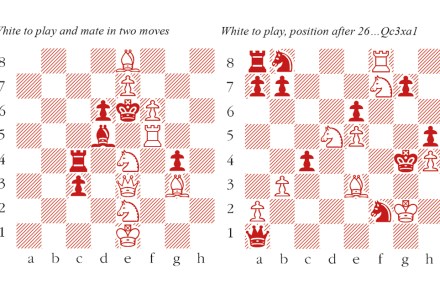
White to play and mate in two. Composed by Sam Loyd, Lynn News, 1859. Answers should be emailed to chess@spectator.co.uk by Monday 14 August. There is a prize of £20 for the first correct answer out of a hat. Please include a postal address and allow six weeks for prize delivery. Last week’s solution 1 Rf8+! Rxf8 2 Qh8+! Kxh8 3 exf8=Q mate.

Funding matters

From our UK edition

Three cheers for last week’s news leak, indicating government plans to support English chess. According to Dominic Lawson, the president of the English Chess Federation (ECF) and The Spectator’s former editor, his conversation with Rishi Sunak, setting out the significant role played by chess players in the wartime codebreaking effort at Bletchley Park, proved particularly compelling. The plans include expanding chess in schools and public parks, as well as £500,000 of funding over a couple of years for the ECF to develop the men’s and women’s international teams.  As I wrote in April, chess has been starved of funds due to not being officially classified as a sport.

No. 763

From our UK edition

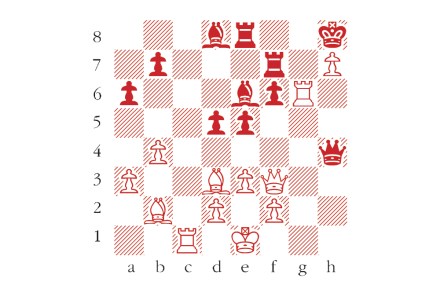
White to play. Edward Jackson-John Merriman, British Championships, 2023. Black has just captured a rook on e2 with a pawn on f3, presumably expecting imminent resignation. Which move allowed White to turn the tables? Email answers to chess@spectator.co.uk by Monday 7 August. There is a prize of £20 for the first correct answer out of a hat. Please include a postal address. Last week’s solution 1 Ne4! Qxe1+ 2 Qxe1 Bxe1 3 Nc5 threatens mate on d7. 3…bxc6 4 Ba6! and mate is inevitable.

British champions

From our UK edition

Three protagonists shaped the action at the British Championships, held at De Montfort University in Leicester last month, with sharply different stories to tell. ‘Business as usual’ was a fair description of the top seed Michael Adams’s performance, who was undefeated on 7.5/9 and secured his eighth championship title by a comfortable margin. His closest pursuer for much of the event was Daniel Fernandez, whose energetic play earned him six wins in the first seven games. But his tournament unravelled in the penultimate round when he succumbed to a mating attack from a tense middlegame. In the final round, Fernandez was a heavy favourite, at least on paper. But his opening play looked impulsive, as if the previous day’s disappointment still weighed heavily.

No. 762

From our UK edition

White to play. Navara-Bassem, Biel 2023. This arose from a game of ‘Chess960’ where the pieces are shuffled on the back ranks at the start of the game. Navara’s rook is attacked, but which move allowed him to score a quick win? Email answers to chess@spectator.co.uk by Monday 31 July. There is a prize of £20 for the first correct answer out of a hat. Please include a postal address. Last week’s solution 1 Kg4! threatens mate with Rf2-h2+.

Getting a grip

From our UK edition

In the 12th and final game of the women’s world championship, a pivotal role was played by a modest knight retreat from China’s defending champion Ju Wenjun. Her immediate purpose was to restrain a dangerous passed pawn. But that simple measure set in motion a deeper plan, which challenger Lei Tingjie was unable to prevent. Ju used both her knights to establish an unshakeable central blockade, and Lei’s immobile pawns were destroyed a few moves later. The match was a triumph of tenacity for Ju, who was outplayed by her compatriot in exemplary style in the fifth game, and trailed at the halfway point. Thereafter, play moved from Shanghai to Chongqing, where Ju seemed to gain in confidence, equalling the score in game 8.

No. 761

From our UK edition

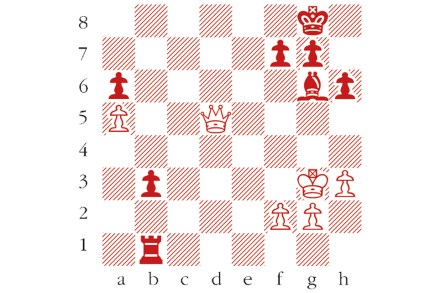
White to play. Rapport-Caruana, Grand Chess Tour Rapid, Zagreb 2023. Caruana’s last move, 61…Bd6-e7, was a decisive mistake. Which move allowed Rapport to take advantage? Email answers to chess@spectator.co.uk by Monday 24 July.There is a prize of £20 for the first correct answer out of a hat. Please include a postal address. Last week’s solution 1 Bg6! e.g. 1…Ra8 2 Bf8#, 1…Ra7 2.Bg7# 1…Ra5 2 Bg5# etc or 1…Kh2 2 Bf4#. But not 1 Bg7 Kh2!

Blitz

From our UK edition

Nine wins in a row. What are the chances? That’s how Magnus Carlsen began on the first day of blitz (fast) chess at the the Zagreb Grand Chess Tour. My guesstimate is that Carlsen wins no more than half of his blitz games against the standard of opposition that he faced in Croatia, where his toughest rivals included Alireza Firouzja, Fabiano Caruana and Ian Nepomniachtchi. So I think you would be more likely to see a coin land on heads nine times in a row than for Carlsen to repeat that achievement. (In slower games, where decisive games are less frequent, his chances would be lower still.

No. 760

From our UK edition

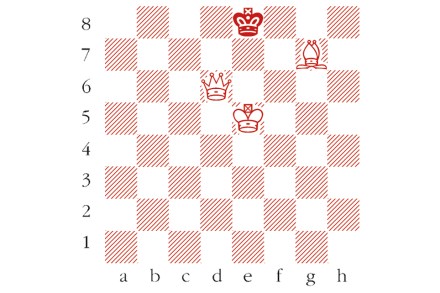
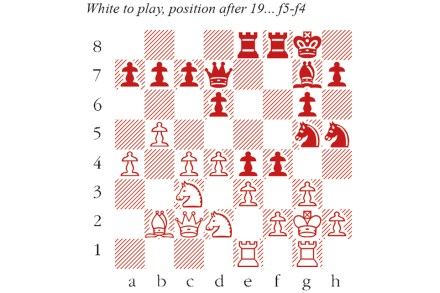
White to play and mate in two moves. Composed by Michael Lipton, the Jerusalem Post, 1960 Answers should be emailed to chess@spectator.co.uk by Monday 17 July. There is a prize of £20 for the first correct answer out of a hat. Please include a postal address and allow six weeks for prize delivery. Last week’s solution 1 Rf8+! Kg7 2 Rg8+ Kf7 3 d8=N+ Ke7 4 Re8+ Kd6 5 Nf7+ and at least Rxe2 to follow.

Mate in two

From our UK edition

‘Lipton’s writing is characterised by its rigour, and though his working through of alternative hypotheses can be demanding for the reader, his positions are always stated with great clarity’. That line is taken from an obituary of Michael Lipton, published in the Financial Times, who died in April at the age of 86. Lipton was a development economist whose early work was based upon a close observation of farming techniques of the rural poor. Rather disarmingly, the CV on his website attributed his education to ‘the people of Kavathe village, Satara district, Maharashtra, India 1965-66’ right after Haberdashers’ School, Balliol College, Oxford and MIT.

No. 759

From our UK edition

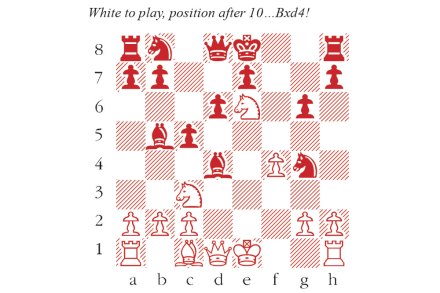
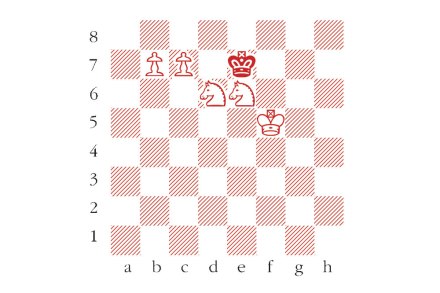
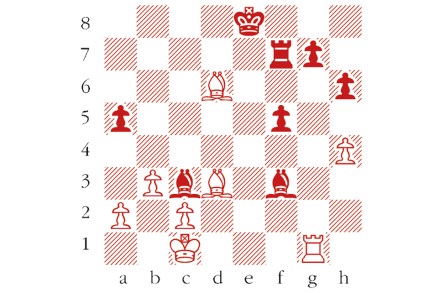
White to play. Petursson-Damljanovic, New York Open, 1988. Which move decided this battle of passed pawns in White’s favour? Answers should be emailed to chess@spectator.co.uk by Monday 10 July. There is a prize of £20 for the first correct answer out of a hat. Please include a postal address and allow six weeks for prize delivery. Last week’s solution 1 Bf5! gxf5 2.Kc5 soon leads to mate or a decisive skewer, e.g. 2…f6 3 Kd6 Rg8 4 Ke6 Kf8 5 Kxf6 Ke8 6 Ra8+ wins.

Sorcery

From our UK edition

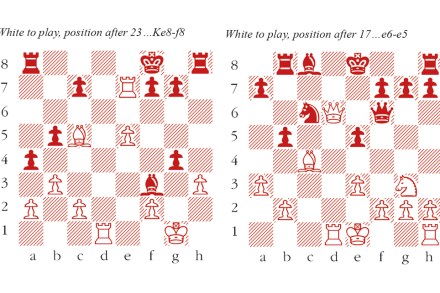
Magnus Carlsen broke into a smile while pondering his 64th move. Vishy Anand grinned back at him, both players revelling in the tension and complexity of their game from the Global Chess League, held in Dubai last month. They were down to less than a minute each, and India’s five-time world champion had just pulled a rabbit out of a hat, with a sacrificial promotion which seemed to ensure a draw by stalemate. Carlsen paused before summoning some even more powerful sorcery, which left Anand only the narrowest chance of escape. In the first diagram below, 59…b4 looks promising, but 60 Nf1+! wobbles the Black king off its ideal spot, and 60…Kd3 61 cxb4 c3+ 62 Kc1! is a dead end.