Lucy Vickery

Read all about it | 23 May 2013

From our UK edition

In Competition No. 2798 you were invited to choose one of the following real headlines from regional newspapers — ‘W. Norwood “Curry Cat” murder latest’, ‘Badger shot by St Ives locksmith’, ‘“Smug” Swans attack dalmatian’ — and to submit the full report behind one of them. ‘Smug Swans attack dalmatian’, from the Ham & High, features in a collection of choice local-paper headlines entitled Whitstable Mum in Custard Shortage (other nuggets include ‘Oven removed from home’ and ‘Road stays open’). The winners earn £25. Adrian Fry takes £30.

Do your worst

From our UK edition

In Competition No. 2797 you were invited to  think of the worst possible title for a poem and then write that poem.   Oh, for more space! This challenge brought in a large and excellent entry that fizzed with the spirit of McGonagall and McKittrick Ros.   I don’t have space to commend all I’d like to, but take a bow, Chris O’Carroll (‘I taste better than I smell’), Jerome Betts (‘From Verrucaria Maura to Parmelia Saxatilis’), Josh Ekroy (‘Ode on a Teenage Problem Child’), George Simmers (‘The Niceness of Jimmy Savile’), Graham King (‘I floss my nostrils daily’) and Adrian Fry (‘Your Oblong Face’). The winners take £25; W.J. Webster £30.

Malade imaginaire | 9 May 2013

From our UK edition

In Competition No. 2796 you were invited to submit a poem about a minor ailment written by a hypochondriac. Brian Dillon, in his book Tormented Hope: Nine Hypochondriac Lives, gives a vivid description of the hypochondriac’s mental and emotional landscape: ‘You listen constantly, in a kind of trance, for communications from your body; it is as if you have become a medium, and your organs a company of fretful ghosts, whispering their messages from the other side.’ Among the body parts that whispered especially insistently and alarmingly in the entry were noses, feet and fingers. I was entertained by Rob Stuart’s double dactylic contribution and impressed by Sylvia Smith, Anne du Croz, John Whitworth, Carolyn Thomas-Coxhead, Annette Field and Paul Evans.

Palinode

From our UK edition

In Competition No. 2795 you were invited to submit a palinode (a poem retracting a previously expressed opinion) on behalf of a well-known poet.   We’ve done this before and the results were so impressive I thought we should give it another go. This time round I reluctantly disqualified some extremely funny, well-made poems because they didn’t quite meet the brief. Unlucky losers included Martin Parker, Mae Scanlan, Ray Kelley, John Whitworth and Robert Schechter, whose pithy Bardic about-turn raised a chuckle: ‘Shall I compare thee to a summer’s day?/ Nah’.   Chris O’Carroll takes the extra fiver. The rest earn £30. Again upon my couch I lay. My mood was vacant, even pensive. What blissful inward-eye display Awaited? I was apprehensive.

On second thoughts

From our UK edition

In Competition No. 2794 you were invited to give a helping hand to Sebastian Faulks, who will write the first-ever authorised Wodehouse sequel, and submit a scene from an imaginary sequel in which Wodeshousian characters of your choice debate the wisdom of such an enterprise. This was a mean assignment, given that Wodehouse imitators are doomed to failure. Faulks himself acknowledges that he has his work cut out — and by and large you agreed. Honourable mentions go to Francis Macleod, Mike Morrison and Pauline Love. The winners take £30 each. D.A. Prince bags £35. The Wooster brow crumpled like a punctured balloon. ‘I don’t like it, Jeeves. This fellow — Forks, is it? — unsettling the Drones.’ ‘Yes, sir.

Chill factor

From our UK edition

In Competition No. 2793 you were invited to submit a short story featuring an animal written in the style of James Herbert. Herbert, much loved by teenage boys of a certain generation, died last month and the tributes came in thick and fast. Crime writer Ian Rankin spoke for many when he tweeted: ‘Sad news about James Herbert — as a teen, I scared myself silly reading him. He led me to King, Barker, others. RIP.’ Herbert’s first novel, The Rats, published in the mid-Seventies, sold 100,000 copies within the first fortnight. Its stars were flesh-eating mutant rodents the size of dogs. Your contributions to the genre featured vampire tortoises, homicidal magpies and vengeful badgers. On the whole, you captured the Grand Master of Horror well.

Pen portrait

From our UK edition

In Competition No. 2792 you were invited to submit a portrait, in verse, of one poet by another. Gerard Benson wondered if I’d had in mind Richard Greene’s description of Chaucer when I set the challenge. In fact, it was Mallarmé’s pen portrait of his friend Manet — ‘a virile innocence in beige overcoat, beard and thin blond hair, greying with wit’— that sparked the idea. There was a huge entry with winners enough to fill several pages. After lengthy deliberation, I narrowed it down to the five below, who earn £25 each. Chris O’Carroll, Charles Curran, Anne du Croz and G.M. Davis were unlucky losers. The bonus fiver goes to Basil Ransome-Davies.

Another country | 4 April 2013

From our UK edition

In Competition No. 2791 you were invited to provide a poem in praise of a country other than the United Kingdom. Thanks to John Whitworth, who suggested the topic. It generated a wave of love-thy-neighbourliness, albeit with an undercurrent of mischief, that is a welcome antidote to the prevailing mood of xenophobia. I liked Ray Kelley’s hymn to Australia — ‘Oz, Oz, glorious Oz,/ Got-the-lot country if ever there was!’ — and was equally impressed by Nigel Mace, Rob Stuart and  Charles Curran. The winners, below, earn £25. Basil Ransome-Davies takes £30. Michael Myers Leslie Nielsen Gotta love ’em, haven’t you? Raymond Burr and Leonard Cohen David Cronenberg woo-hoo.

Johnsonian

From our UK edition

In Competition No. 2790 you were invited to take inspiration from Samuel Johnson’s A Dictionary of the English Language of 1755 and come up with some suitable Johnsonian definitions for modern times.   Thanks to Michael Williamson from Australia, who suggested that I invite competitors to put themselves in the Good Doctor’s shoes and imagine how he might have responded to our 21st-century world.   It is a tall order indeed to follow in the footsteps of such a towering figure. His elegant definitions, which often resemble mini exercises in moral instruction, are shot through with his defiantly un-PC prejudices, yet leavened with wit and utterly without sanctimony.

That’s life

From our UK edition

In Competition No. 2789 you were invited to supply the facts of life as explained by a well-known figure from history or the character from a well-known novel. Most of you chose characters from novels. Godfrey Ackers presented a gloriously pithy Mr Micawber: ‘Nightly coition five, rigidity positive — result happiness; Nightly coition nil, flaccidity perpetual — result misery.’ While at the other end of the spectrum John Whitworth finds Humbert Humbert on expansive form: ‘The facts of life, my chickabiddies! The birds, my own sweet birds of youth a-flutter, and the bees, my hot honey-bunches, bristling, whistling, rustling, hustling all abuzz!’ Commendations also to Steve Baldock and Peter Goulding.

It’s all relative

From our UK edition

In Competition No. 2788 you were invited to submit a poem about a relative. A popular one, this, and long lines mean there is space only to award the winners £25 each and the bonus fiver to Bill Greenwell. Commendations go to Dorothy Pope and Jayne Osborn.   Till seventeen, I didn’t know of Nell (two miles or nearer) — a great-aunt, who was seen aslant. A class thing. In that era, the nicest people were ignored because the rules were firmed. My mother said she’d not been wed when she’d seen Nell. I squirmed, and off we drove (my Dad asleep) to see her. Mum knew where. Nell, ninety, had just baked a cake. She didn’t turn a hair. She set aside the hymns she played, though twenty years had missed her: The protocols were fol-de-rols.

Ghostwritten

From our UK edition

In Competition No. 2787 you were invited to submit a Shakespearean soliloquy delivered by the ghost of Richard III reflecting on the discovery of his bones in a Leicester car park. The last Plantagenet king is, it seems, even further from the psychopath conjured up by Shakespeare’s pen than previously thought. Psychologists who have spent 18 months studying historical records from the period spanning the monarch’s life have come up with the rather unglamorous alternative diagnosis of ‘intolerance to uncertainty’ syndrome. The rollcall of unlucky losers is long: Caroline Gill, Carolyn Thomas-Coxhead, John Renwick, Neil McEwan and Godfrey Ackers narrowly missed the cut. Those printed below earn £25, except Alan Millard who takes £30.

Foundling Hospital tokens

From our UK edition

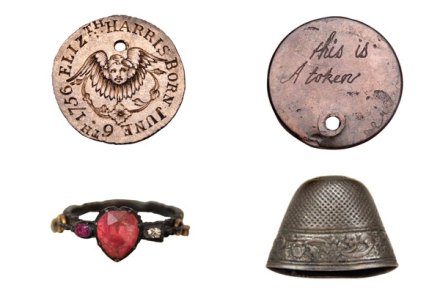
‘Dear Sir, I am the unfortunate woman that lies under sentens of Death in Newgatt...’  So begins a letter of 1757 addressed to the powers that be at the Foundling Hospital in  London’s Bloomsbury. Written in a strong hand, it contains the poignant petition of a woman on death row, Margaret Larney, that her children, who have been admitted to the hospital separately, might ‘know one and other’. Even if the younger child hadn’t died shortly after admission, Margaret’s eloquent plea would certainly have been in vain. When an infant entered the hospital, its former identity was erased and siblings remained ignorant of their blood ties. But now, some 250 years later, Margaret is getting a second hearing.

Voyagers

From our UK edition

In Competition No. 2786 you were invited to submit a feature for a travel supplement as it might have been written by a well-known novelist, living or dead.   Derek Morgan’s George Orwell is in Paris and insufficiently down-and-out: ‘Although I would have preferred to haul my suitcase on foot from Gare du Nord, a taxi whisked me to Place des Vosges and my nearby four-star hotel with its sickeningly servile staff.’ I also liked Johannes Kerkhoven’s Cannery Row-inspired take on the Argentinian city of Tilcara, and Adrian Fry’s evocation of a Spanish ghost town filtered through Ballard’s dystopian lens. It was a cracking entry. Congratulations all round. The winners take £25. The bonus fiver is Chris O’Carroll’s.

Love rules

From our UK edition

In Competition No. 2785 you were invited to submit poetic advice on how to woo a member of either sex. What better instructor can there be than Ovid, whose Ars amatoria gives guidance on the art of romantic conquest that knocks modern seduction manuals such as The Rules into a cocked hat. Two sections are addressed to men on how to get your girl and how to keep her, and one to women on how to hook your man. There are tips on personal hygiene (Don’t let those long hairs sprout/ In your nostrils. . .’) as well as on the bestowal of compliments and much else. You didn’t quite match the master’s lightness of touch, but it was a fine entry. The best earn £20; overall champ Chris O’Carroll takes £25. Behold him ready to be captivated.

Come, friendly bombs

From our UK edition

In Competition No. 2784 you were invited to  rewrite John Betjeman’s poem ‘Slough’, substituting the target of your choice. The poet Ian McMillan sprang to Slough’s defence in 2005 with ‘Slough Re-visited’, an antidote to Betjeman’s jaundiced take on the town: ‘Come friendly words and splash on Slough!/ Celebrate it, here and now/ Describe it with a gasp, a “wow!”/ Of Sweet Berkshire breath’. But according to Betjeman’s daughter, Candida Lycett-Green, her father regretted having written the 1937 poem, a fact acknowledged by Frank Osen and several others besides. Mr Osen takes £30; the rest £25.

Kraftwerk at Tate Modern

From our UK edition

Quite what it was that was so spellbinding about a quartet of middle-aged German blokes in skintight bodysuits standing at neon-lit consoles is difficult to articulate. They didn’t even seem to be doing very much up there on stage. But the audience of 1,000 for round two of Kraftwerk’s eight-night retrospective in Tate Modern’s Turbine Hall were mesmerised for two hours solid. The high priests of electronica, whose bittersweet retro-futurism sowed so many of the seeds of modern pop music, performed their 1975 album Radio-Activity against a backdrop of 3D visuals (specs provided) that were always engaging and occasionally jaw-dropping.

Short story | 7 February 2013

From our UK edition

In Competition No. 2783 you were invited to submit a short story entitled ‘Death of a Ladies’ Man’. The title — shared by an unadmired, Phil Spector-produced album by Leonard Cohen and an as-yet-unproduced screenplay by the literary and erudite rocker Nick Cave — connects two of pop music’s masters of melancholy. Rock music didn’t feature in the entry but ladies lavatories loomed large. You also drew inspiration from history — Henry VIII, Lord Byron — and from the natural world. Sid Field, Lynn Haken, Juliet Walker, Alan Millard and John MacRitchie earn honourable mentions. The prizewinners, printed below, take £25 each except Frank McDonald, who has £30. He was born to be infatuated by the opposite sex.

Supersize me

From our UK edition

In Competition No. 2782 you were invited to submit a poem in praise of fatness. Thanks to John Whitworth for this magnificent and timely topic. What better, at this self-flagellatory time of year, than a celebration of the consequences of festive excesses? My heart went out to Basil Ransome-Davies, who bemoans the metamorphosis of Sophie Dahl from plushly plump to fashionably slender: But farewell to the Rubens plumpness Sophie used to flaunt, For fashion’s sake now traded for the skeletally gaunt. And I enjoyed Charles Curran’s entry, which finishes with this rousing couplet: Three cheers for every man with XL trousers! We’ll never join the calorie-counting grousers! The prizewinners below take £25 each. D.

Return to sender

From our UK edition

In Competition No. 2781 you were invited to devise a riposte to a nauseating Christmas round-robin letter that would deter the author from ever sending another. My favourite of Lynne Truss’s half-dozen responses to persistent round-robiners, broadcast on Radio 4, was take six: ‘I’ve decided, finally, to try a more direct approach. Here it comes. PLEASE STOP SENDING ME THESE NEWSLETTERS.’ But perhaps the whole exercise is ill judged. After all, these compendiums of boasts, bad jokes, inappropriate intimacies and inconsequential information contribute enormously to festive cheer, providing much merriment at their authors’ expense. We may mock, but how we would miss them. This week’s extra fiver goes to Adrian Fry. The rest take £25 apiece.