Lucy Dunn

Lucy Dunn

Lucy Dunn is The Spectator's political correspondent. She is a qualified doctor from Glasgow.

What’s left of the Tories?

From our UK edition

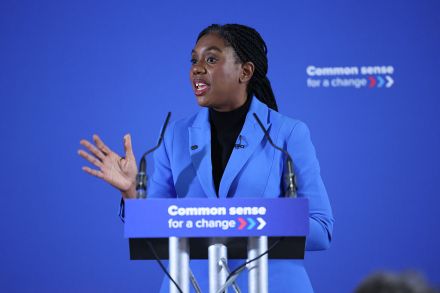
The Commons is closing down for the summer, but Kemi Badenoch has treated us to a shadow cabinet reshuffle. At the beginning of the year, Badenoch’s team were keen to stress stability, dismissing talk of an early reshuffle. But, as so often in politics, events have forced her hand. Ed Argar, the shadow health secretary, had a health scare earlier this summer. He has today stepped back from the frontbench to focus on his recovery. Badenoch is therefore using his departure as the chance to make what she calls ‘a few changes to my frontbench.’ The headline is that Sir James Cleverly, former foreign and home secretary, is returning to the front bench as shadow housing secretary. Is his new position designed to take on Angela Rayner?
Doctors’ strike on as Streeting fails to win over the BMA

From our UK edition

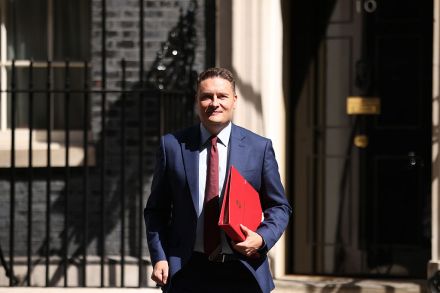
Despite Health Secretary Wes Streeting’s efforts, the British Medical Association (BMA) has announced this afternoon that the doctors' strikes are on. From 7 a.m. this Friday until 7 a.m. next Wednesday, medics across England will stage a walkout – the first of Keir Starmer’s premiership – over pay disputes. The announcement by the doctors’ union comes after Streeting wrote to members today in an 11th-hour attempt to halt the strikes and conduct more talks about improving working conditions. It was to no avail, however, with resident doctors deciding today that Streeting’s offers simply ‘did not go far enough’.

Can Wes Streeting avert the junior doctors’ strike?

From our UK edition

In just a few days, doctors across England will stage strikes for five days. Hospitals are preparing for staff shortages from Friday until next Wednesday, hoping that bulked-up locum rates will attract enough ‘scabs’ to mitigate the walkouts. But now the BMA has taken aim at NHS bosses, warning that the decision not to cancel all routine appointments between 25 and 30 July will mean consultants are ‘spread too thinly’, leaving patients at risk.  The Health Secretary’s refusal to budge on pay makes any other package a harder sell During the last round of industrial action – which spanned 44 days across 2023 and 2024 – 1.5 million appointments were cancelled, with the strikes costing the health service around £1.5 billion.

Scottish Greens publish Holyrood candidate list amid party infighting

From our UK edition

As the 2026 Holyrood election looms, parties are scrambling to get their candidate lists finalised. Today the Scottish Greens have released their regional list names – with some rather interesting selections amid party splits. One of the most significant decisions sees the current MSP for the North East region, Maggie Chapman, demoted on the list as her rival Guy Ingerson secures the top spot. While Chapman is second on the list, party insiders have admitted they are not expecting to elect two MSPs in the area – which would mark the end of the eco-activist’s five-year career in frontline politics. Attempts were made to oust outgoing co-leader Patrick Harvie from the top of the Glasgow list by a new group of radicals called the 'Glasgow Faction'.

Reform turns tough on crime

From our UK edition

11 min listen

Nigel Farage has unveiled the party's policy proposals for tackling crime should they get into government. The Reform leader said that his entire policy platform would cost £17.4 billion, and suggested that a Reform government would introduce a 'three strikes' system for repeat serious offenders. Lucy Dunn speaks to James Heale and Tim Shipman about the policy pledges, how the Tories should respond and what Britain can do about its failing water industry.

Why shouldn’t 16-year-olds get the vote?

From our UK edition

On 18 September 2014, Scotland went to the polls to decide its future in the United Kingdom. While the outcome was decisive – 55 per cent of voters couldn’t bring themselves to back independence – the turnout for the poll, at 85 per cent, was one of the highest recorded in Britain. The significance of the ‘one-off’ vote (plus anxieties on either side of the debate about the outcome coming down to the wire) saw full-throated campaign efforts deliver a swathe of voters to polling stations. A number of these were under 18-years-old, including me – with my birthday falling just six days before the poll. It was the 2012 Edinburgh Agreement that allowed the Scottish parliament to choose who could vote in an independence referendum.

Will 16 year olds vote Labour?

From our UK edition

16 min listen

Lots to discuss today, between Diane Abbott being suspended (again) and Labour handing the vote to 16-year-olds just before we head into recess. Abbott’s suspension comes after she was accused of ‘doubling down’ on previous claims that Jewish people experience racism differently from black people. She is the latest Labour troublemaker to be left out in the cold, with seven MPs punished this week for voting against the government – four of them suspended from the party. Is Starmer confusing toughness with strength? And will Abbott’s suspension stick this time? Elsewhere, 16-year-olds have been given the vote.

Physician associates must be better regulated

From our UK edition

Recent years have seen an explosion of a new kind of medical role across the NHS: physician’s associates (PAs). Yet while their numbers are increasing in hospitals and GP practices – and all major political parties have committed to expanding the role further – today’s review into the job role have revealed some rather disturbing findings.  The report by the president of the Royal Society of Medicine, Professor Gillian Leng, found that despite approximately 4,000 physician and anaesthesia associates working across England and Wales, there remains limited data on whether the staff were safe or unsafe.

Amanda Spielman on the SEND row and Labour’s Ofsted blind spot

From our UK edition

22 min listen

As Labour looks to get a grip on public spending, one rebellion gives way to another with the changes to the Special Educational Needs and Disabilities (SEND) system threatening to become welfare round two.  On this week’s Saturday edition of Coffee House Shots, Lucy Dunn is joined by The Spectator’s Michael Simmons and former Ofsted chief Amanda Spielman to explore what the government is planning – and why so many Labour MPs are worried. Is the system failing the children it's meant to support, or simply costing too much? And can Labour afford to fix it without tearing itself apart? Listen for: Amanda on the unintended consequences of the 2014 SEND overhaul; why teaching assistants may not be the silver bullet schools think they are; and Labour’s mess over Ofsted.

Sacré bleu! We have a migration deal with France

From our UK edition

15 min listen

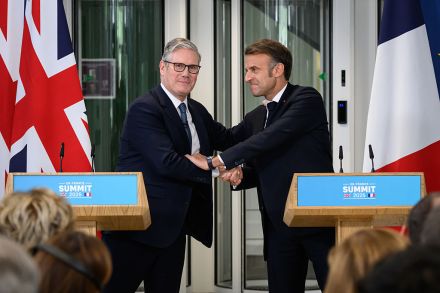
On today’s podcast: sacré bleu – we have a one-in, one-out migration deal with France. In a press conference yesterday, Keir Starmer and President Macron announced a deal they hope will curb Channel crossings. But, as ever, the devil is in the detail, with some key concerns about the numbers and the time frame. Digital ID cards are also back on the agenda – after an intervention from former MI6 boss Alex Younger on Newsnight. The argument is that they could deter the ‘grey labour force’ and make it harder to work in the UK for those arriving via unauthorised means. It’s the Blairite policy that refuses to go away – but, as Michael Simmons argues, we may already have the infrastructure.

Starmer announces ‘one in, one out’ migrant deal

From our UK edition

After days of intense discussions and slightly-less-intense boozy dinners, Keir Starmer has struck a ‘one in, one out’ migration deal with France’s President Emmanuel Macron. The returns deal will allow up to 50 small boat migrants to be sent back to France each week, with the pilot to begin in the coming weeks. At a press conference this afternoon, the Prime Minister defended letting any migrants into Britain at all, telling reporters: ‘We accept genuine asylum seekers because it is right that we offer a haven to those in most dire need. We simply cannot solve a challenge like stopping the boats by acting alone and telling our allies that we won’t play ball.

Infected blood scandal delays leave dying patients ‘in limbo’

From our UK edition

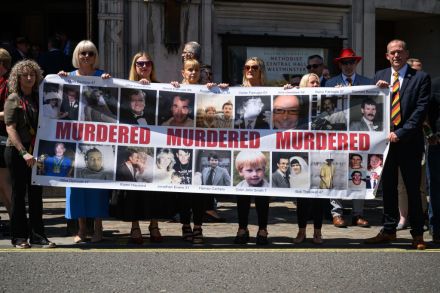
Infected blood victims have been ignored, inquiry chair Sir Brian Langstaff told survivors and their families at London’s Westminster Chapel this afternoon. A new 200-page report into the scandal was published today, delivering a damning verdict on the actions – or lack thereof – of politicians in the rollout of the compensation scheme announced last year. Langstaff lamented today that delays to payouts have resulted in victims infected with contaminated blood products between the 1970s to 90s with HIV and hepatitis C being ‘harmed further’.

Wes Streeting takes on the doctors

From our UK edition

The public won’t forgive and nor will I, said Health Secretary Wes Streeting of plans by junior doctors to strike over his refusal to cave to demands for 29 per cent pay rises. Speaking to the Times he said: ‘There are no grounds for strike action now. Resident doctors have just received the highest pay award across the entire public sector. The Government can’t afford to offer more and it wouldn’t be fair to other NHS workers either, many of whom are paid less’.  Is Wes Streeting right? And who's going to come out on top – the Health Secretary or the junior doctors?

Corbyn is back! … or is he?

From our UK edition

13 min listen

Some sore heads on Coffee House Shots this morning, after last night’s Spectator summer party. But while we were having fun, a drama was brewing in the Labour party after it was finally confirmed that Jeremy Corbyn is starting a new left-wing party... or is he? The news was broken last night by another MP: Zarah Sultana, a long-time admirer of Corbyn. Elected as a Labour MP in 2019, she lost the whip last July for voting to lift the two-child-benefit cap. However, after discussions with figures within the Labour party, it has become apparent that Sultana took many of those involved completely by surprise. She has, in the words of one, ‘completely jumped the gun – no ideas had been properly decided’. It has plunged the new party into a crisis even before its creation.

NHS reforms: Labour puts on a brave face

From our UK edition

14 min listen

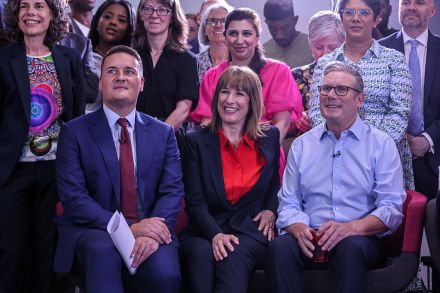
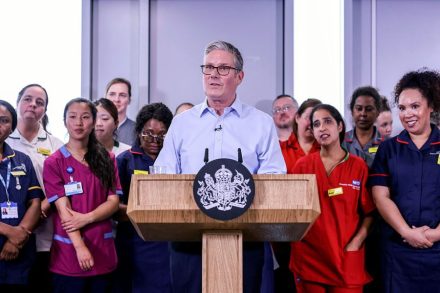
Today Wes Streeting – with the help of Keir Starmer and Rachel Reeves – announced his 10 year plan for curing the NHS. It’s all about creating a ‘Neighbourhood Health Service’, but what does actually mean in practice?  Much of the plan was leaked in advance: first, focusing on preventing disease before it becomes too late; second, improving community healthcare services to help reduce pressure on hospitals; and third, embracing the tech revolution to bring the NHS into the ‘digital age’. One of the glaring omissions is a chapter on how this will all be delivered. Perhaps the most notable part of today’s launch was the decision to include Rachel Reeves – last seen in the Commons looking distraught as the Prime Minister (brutally) failed to back her.

Labour’s 10-year NHS plan is full of promise – and hurdles

From our UK edition

Labour’s decision to launch its 10-year health plan at the Sir Ludwig Guttmann centre in Stratford this morning made sense as a bid to exemplify the unit’s multi-service approach. On health grounds, however, there seemed a real chance the presser might push up NHS waiting lists as spectators fought to remain conscious in the suffocating heat. It wasn’t just the fainting risk that was concerning attendees: the appearance of Rachel Reeves was a surprise after her teary PMQs session yesterday, with the Chancellor having to smile nonchalantly through countless variations of ‘are you alright?’.

Welfare vote: how many will rebel?

From our UK edition

14 min listen

It’s D-Day for Labour’s welfare reforms. MPs will vote tonight on the party’s watered-down benefits cuts. Work and Pensions Secretary Liz Kendall formally announced Labour’s climbdown yesterday, telling MPs that the government had ‘listened carefully’ and was bringing in ‘positive changes’. Well, that’s one way of putting it. Even so, Labour is braced for a rebellion from dozens of MPs. We’ll know the full number at around 7pm, but it is not expected that there will be the 83 required to overturn the government’s majority. On today’s podcast, we take you inside the debate including some of the most notable speeches and what the fallout could be for the government. Can we expect a reshuffle in the near future? Should Keir Starmer watch his back?

Welfare rebellion: why Starmer – and Reeves – should be worried

From our UK edition

17 min listen

Keir Starmer is facing war on both fronts. He is in the Netherlands to talk about defence and announce a major change in the UK's nuclear posture in response to rising challenges in the Middle East. But everyone in Westminster wants to talk about a different kind of warfare: the warfare over welfare. MPs will vote on the government’s controversial welfare bill, after more than 120 MPs signed a reasoned amendment that would effectively stop the bill in its tracks. What has been most concerning for the government is how organised the rebellion appears, with many picking up on the mutinous mood since Kim Leadbeater’s assisted dying bill. The government is increasingly looking like it will lose the vote. Are Labour going to pull the bill?

Iran: ‘what the f***’ is going on?

From our UK edition

14 min listen

It is rare to see the President so visibly frustrated (see The Apprentice, circa 2004), but after Iran and Israel seemingly ignored his ceasefire announcement – and his plea on Truth Social, ‘PLEASE DO NOT VIOLATE IT!’ – Donald Trump has come down hard on both sides. In a clip taken this afternoon he exclaimed: ‘These are countries who have been fighting so long and so hard, that they don't know what the f*** they're doing.’ Succinctly put by the President. The exchange of fire could be the expected tit-for-tat seen after the announcement of ceasefires in other global conflicts, but it has dampened the mood at Nato, which world leaders were approaching with cautious optimism, believing the road to de-escalation was clearing. What happens next?

MPs back assisted dying: what next?

From our UK edition

13 min listen

MPs have voted – by a narrow 23-vote margin – in favour of legalising assisted dying. Bizarrely, the 51.9 to 48.1 per cent breakdown is the exact same as the 2016 referendum result, although hopefully this issue doesn't divide the Labour party in the same way that Brexit did for the Tories. The whole process is far from ‘Parliament at its best’, as it has often been claimed. Despite hours of passionate and emotional debate, key concerns about the drafting of the bill forced some who would naturally back assisted dying to oppose it. The overwhelming feeling is that a private member’s bill was not the right forum for this kind of legislation. So what comes next? The bill will now pass to the House of Lords, after which comes the business of putting the measures into practice.