Lucy Dunn

Lucy Dunn

Lucy Dunn is The Spectator's political correspondent. She is a qualified doctor from Glasgow.

Why junior doctors in Scotland voted to strike

From our UK edition

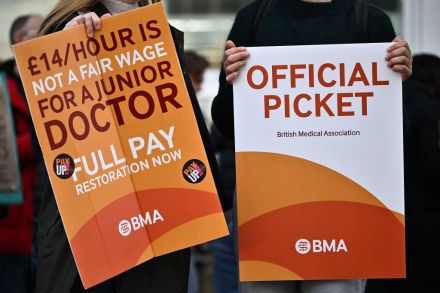
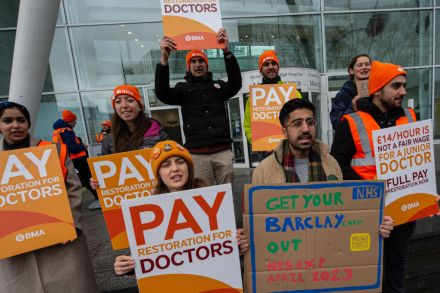
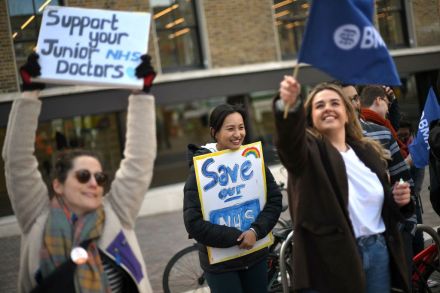
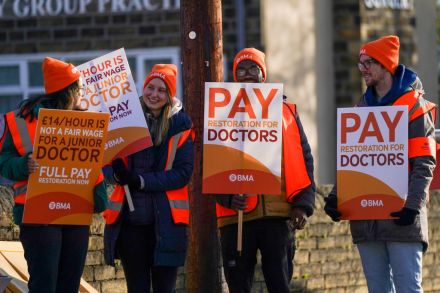
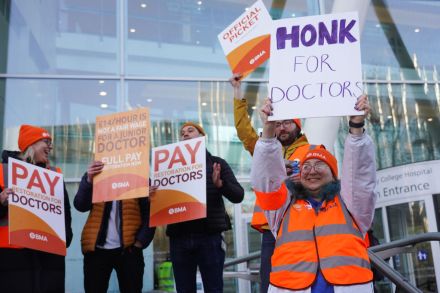
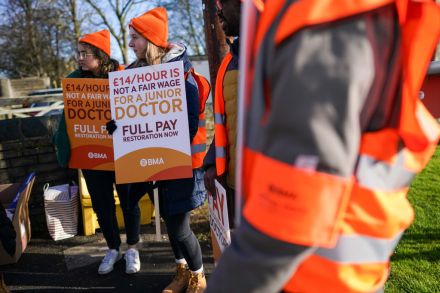
Junior doctors in Scotland will strike for three days in July after rejecting the Scottish government’s pay offer. Two thirds of eligible junior doctors turned out to vote on the pay deal, and 71 per cent rejected the offer.  The 72-hour strike will take place from 7am on Wednesday 12 July to 6.59am on Saturday 15 July unless, the doctors’ union says, ‘an improved offer that the BMA believes it could credibly put to members’ is made by the Scottish government.  Last month, Scotland’s junior doctors were offered a 6.5 per cent pay rise for this coming year. It was described as a 14.5 per cent pay increase by the SNP government, broken down into an extra 3 per cent increase added to an already agreed 4.5 per cent rise for the 2022/23 period – plus the 6.
Young people are being failed by Scotland’s mental health services

From our UK edition

Has there ever been a positive sentence that contains both ‘the SNP’ and ‘waiting lists’? New data reveals that under Scotland's SNP government list lengths for children and young adults’ mental health services have risen this year, leaving just under 8,000 young people in limbo. Waiting lists nosedived in 2022, going from over 10,000 people long to around 7,500. But the trend hasn’t continued, leaving First Minister Humza Yousaf’s new government with more problems. While 7,701 young people wait for treatment, the number of referrals is rapidly rising. In the last year, over 500 more young people have been referred to mental health services; those from the most deprived parts of the country were disproportionately affected.

Thousands died waiting for NHS treatment on Yousaf’s watch

From our UK edition

NHS Scotland has been hit with more bad news as new figures reveal that 18,390 patients died last year while stuck on NHS waiting lists. The numbers come just days after Public Health Scotland found that the equivalent of one in seven Scots are languishing on NHS wait lists. The latest stats show that Scotland’s health crisis is far from under control and present First Minister, and former health secretary, Humza Yousaf with a rather sizeable headache. Scotland’s central belt appears worst affected: Greater Glasgow and Clyde’s health board saw 3,276 patients on waiting lists die last year, while NHS Lothian (which includes Edinburgh) saw 5,995 and NHS Tayside (which includes Dundee) recorded 2,036 deaths.

NHS Scotland waiting lists reach record levels

From our UK edition

Scotland’s NHS has seen its waiting lists, once again, reach record levels. New figures from Public Health Scotland reveal that the equivalent of one in every seven Scots is on a waiting list. Care targets aren’t being met either, and the NHS is falling short on targets set for inpatient and day case waits.  A lot of the blame is being directed at Scotland’s new First Minister Humza Yousaf. From the time he took over as health secretary to the month he left the role, there was an increase of over 175,000 patients on NHS waiting lists, with 779,533 patients on lists at the end of March. Worse still, over 72,000 of the patients currently on waiting lists have been stuck on them for over a year.

England’s junior doctors to go on third strike this year

From our UK edition

England’s junior doctors will go on strike for the third time this year after talks with the government broke down yesterday. The industrial action will last 72 hours, taking place between 14 and 17 June. So far, BMA members have staged two walkouts, one for three days and another for four. In the last strike, which lasted 96 hours, just under 200,000 routine appointments and procedures were cancelled. With a record 7.3 million people on NHS waiting lists, the health service does not have the capacity to deal with staff walkouts. But the BMA has been frank with the government: the union has said it will continue strike action for at least three days a month until their legal mandate runs out in late August, before which time they will have to ballot their members again.

Will junior doctors accept the Scottish government’s pay deal?

From our UK edition

Junior doctors in Scotland have been offered a 6.5 per cent pay rise for this coming year after voting in favour of industrial action over a fortnight ago. Scotland’s health secretary Michael Matheson says he is ‘delighted’ to have reached an agreement with BMA Scotland, but doctors across the country are less enthusiastic.  In Scotland, 97 per cent of the junior doctors who voted in the BMA’s ballot did so in favour of strike action, with a high turnout of 71 per cent. They are looking for full pay restoration, which amounts to a 23.5 per cent pay increase above inflation, or an uplift of just under 35 per cent on current levels. Today’s offer falls some way short of that.

What is the point of the SNP’s independence convention?

From our UK edition

Ash Regan came third place in the SNP’s leadership contest, but the party's ‘rebel’ candidate is still fighting hard for her policies – and yesterday she saw a glimmer of success. The SNP has announced that on 24 June it will hold an ‘independence convention’ to take the place of a de facto referendum conference planned by former first minister Nicola Sturgeon. Though she only received 11 per cent of the first preference membership vote, Regan has not sat still since her defeat in March.

Scotland’s NHS is facing a retention crisis

From our UK edition

Junior doctors in Scotland want change. They want better pay, kinder working conditions and for the Scottish government to take their demands for full pay restoration of just under 35 per cent seriously. Otherwise, they say, they’ll simply up and leave to greener pastures – or hotter beaches, as the exodus to Australia continues. It was revealed last week that 97 per cent of those medics who had voted in the BMA strike ballot cast their votes in favour of industrial action. The turnout was high at 71 per cent but could have been higher still, as it is understood that Civica, the external organisation in charge of posting ballot papers, ran into problems meaning an as yet unquantified number of medics never received their voting cards.

NHS waiting lists hit record high

From our UK edition

NHS waiting lists are getting longer and the government’s targets are still not being met. New NHS data released today has found that the number of patients on NHS waiting lists has hit a new all-time high of 7.3 million. The government has also failed to meet its target to eliminate 18-month waits by April this year. Although Prime Minister Rishi Sunak has said that the government is delivering on his promise to cut waiting lists, it’s clear the Tories have quite a way to go yet. The number of patients waiting longer than 18 months for hospital appointments and procedures has certainly fallen, decreasing from 54,882 in January to 10,737 by April, and by over 90 per cent since September 2021.

Can pharmacies help solve the NHS crisis?

From our UK edition

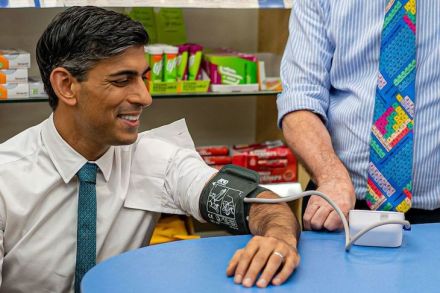
High street pharmacists in England will, for the first time, be able to prescribe medication, Prime Minister Rishi Sunak announced today. Minor conditions that require simple treatments may no longer involve prolonged waits at the GP – and patients requiring routine checks, like blood pressure measurements, will also be able to access these at their local pharmacies.  This simple shift will help ease the pressure on local health services: it is predicted to free up 15 million appointments and ensure that GPs have more time to deal with complex patients. It will also have a knock-on effect on hospital waiting times and, hopefully, the numbers on waiting lists – which have hit highs of seven million.

The Scottish Tories can’t continue to rely on SNP failures

From our UK edition

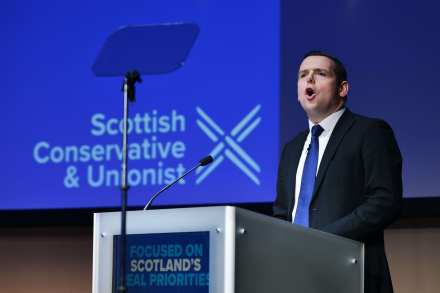
The Scottish National party's implosion brings good news for the Scottish Conservatives. At the Tories' party conference in Glasgow, delegates had a spring in their step about their party’s rising chances. Poll results show that the Unionist parties are seeing their support gradually increase, while the SNP’s grip on power looks to be weakening, Meanwhile, support for the Greens, though not especially high to begin with, has halved.  Scottish Tory leader Douglas Ross was joined in Glasgow at the weekend by an all-star cast from Westminster, including Prime Minister Rishi Sunak, secretary of state for Scotland Alister Jack and levelling up secretary Michael Gove.

SNP Westminster leader says the party must ‘do better’

From our UK edition

Is the truth about the ignorance of key SNP figures being exposed? Or is the party's 'inner circle' even smaller than first thought? It certainly appears to have been the norm for senior figures to only become aware of party dealings after the fact. First Minister Humza Yousaf has said he didn’t know about the purchase of a £110,000 motorhome until after he became SNP leader. Former treasurer Colin Beattie initially said he didn’t know about the buy, despite his name appearing on the SNP’s 2021 balance sheet (though he has, this evening, clarified that he ‘became aware of the transaction via the 2021 annual accounts’ – still indicating that over a year went by before he found out).

What junior doctors really earn

From our UK edition

16 min listen

Striking junior doctors are demanding a 35 per cent pay rise. Is that realistic? And are junior doctors really underpaid? Lucy Dunn is joined by economics editor Kate Andrews and Spectator contributor James Kirkup.

When will Steve Barclay compromise with striking doctors and nurses?

From our UK edition

Nurses in England have today rejected the government’s pay deal and have announced a fresh round of strike action. The next strikes will take place over 48 hours from 8.p.m on 30 April to 8.p.m. on 2 May, with no emergency cover. The Royal College of Nursing ballot showed that 61 per cent of eligible voters turned out. The vote was close: 54 per cent voted to reject the government's offer - of a pay rise between 4.5 and 5 per cent - while 46 per cent voted to accept the deal. The staffing crisis only exacerbates the pressures felt by junior doctors. Many tell me how consultants and hospital managers alike have resorted to intimidation in attempts to force juniors to cover rota gaps.

How damaging will this junior doctors’ strike be?

From our UK edition

Across England, around 50,000 junior doctors are currently taking part in industrial action over a long-standing pay dispute. The doctors’ union, the British Medical Association (BMA), has calculated that junior doctors have watched their wages fall by 26 per cent in real terms since 2008. Now, they are striking for pay restoration of 35 per cent to compensate for 15 years of below-inflation wage increases.  Predicted to be the 'most disruptive' strike to hit the NHS so far, the four-day walkout has been condemned by senior health service officials for the high risk of ‘real harms’ it will cause by putting patient care ‘on a knife edge’. Hospital leaders have admitted they are ‘more concerned about clinical safety than at any time during Covid surges’.

Will public support for junior doctors wane?

From our UK edition

18 min listen

On the day that junior doctors begin a four-day strike over pay and working conditions, Lucy Dunn, The Spectator's social media editor and qualified doctor speaks to Kate Andrews and Fraser Nelson. Will public support for the strikes turn if patient safety is put at risk? Also on the podcast, Kate takes a look at the latest IMF forecast for the UK.

The party’s top figures are losing faith in the SNP

From our UK edition

More keeps pouring out about the Scottish National party’s culture of secrecy. As revealed by the Times today, deputy leader Keith Brown suggested in 2021, four months after the police investigation into party finances - Operation Branchform - had commenced, that the SNP should produce a monthly summary of income and expenditure. Two key figures, Douglas Chapman and Joanna Cherry, had already resigned from their posts over concerns about party transparency, while several members of the finance committee had also quit. Yet Peter Murrell, chief executive of the SNP, shut down Brown’s plans. Brown compiled a 40-page transparency report for the party which concluded: ‘It is imperative that the workings and decisions of the party are transparent and accessible.

Nicola Sturgeon’s husband arrested in SNP finance investigation

From our UK edition

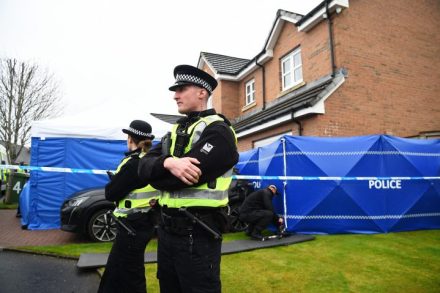
Peter Murrell, the former chief executive of the SNP and the husband of Scotland’s former first minister Nicola Sturgeon, was arrested at 7.45am this morning in connection with an investigation into the SNP’s finances. Murrell was later released from police custody at 6.57pm without charge, pending further investigation. Police raided the SNP’s head office this morning. They cordoned off an area outside Sturgeon and Murrell’s home before Murrell was taken into police custody for questioning by detectives. Searches of the property are understood to be taking place as part of an investigation into a ‘missing’ £600,000. The police search is understood to have expanded outdoors, and detectives have been seen in the garden.

Scotland’s cancer crisis has been laid bare

From our UK edition

Scotland’s cancer wait times have hit the worst levels on record, as shown by a Public Health Scotland report that was released today. Under 72 per cent of eligible patients received their first cancer treatment within 62 days of being urgently referred in the quarter ending 31 December 2022, while the target is 95 per cent. This revelation comes less than a week after new health secretary Michael Matheson was appointed to Humza Yousaf’s cabinet, and will make for uncomfortable viewing. Of 4,262 eligible patients who were referred urgently for cancer treatment, over 1,200 were left waiting for more than 62 days after they had been referred before they received their first dose.

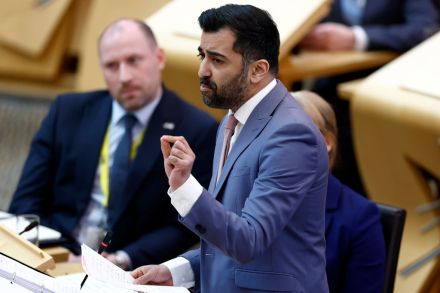
Humza Yousaf’s debut FMQs descends into chaos

From our UK edition

Humza Yousaf's debut at First Minister's Questions was never going to be straightforward. The First Minister's questionable track record in government offered, to use his own words, an ‘open goal’ to his opposition. Scottish Labour’s Anas Sarwar was quick to point to Yousaf’s ‘incompetence’, while Scottish Conservative’s Douglas Ross belittled the new cabinet. But what made Yousaf’s FMQs debut even more chaotic were seven serial interruptions by climate activists. When the protests eventually stopped – after the public gallery was, in an unprecedented move, cleared bar two groups of schoolchildren – the attacks against Yousaf continued while today's guest, the ambassador to Iceland, looked on.