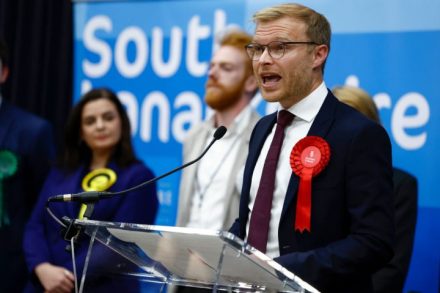
Lucy Dunn

Lucy Dunn

Lucy Dunn is The Spectator's political correspondent. She is a qualified doctor from Glasgow.

Are Scottish Tories causing trouble for Rishi Sunak?

From our UK edition

10 min listen

Lucy Dunn speaks to James Heale and Katy Balls about the slightly muted reaction to the budget. Labour has compared the announcements to Liz Truss's unfunded tax cuts and Scottish Tories have criticised the chancellor’s decision to extend the windfall tax on the profits of North Sea oil. But is this really the pre-election budget?
Is Rishi Sunak facing a Scottish rebellion?

From our UK edition

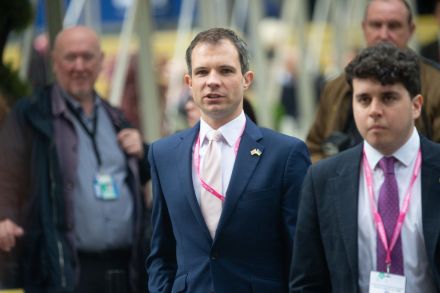
The Chancellor will be anxiously preparing himself this evening for tomorrow's papers, waiting to see how his Budget lands. He won’t need to wait quite as long to hear how his own party members have received it, however. And the verdict is already in from the Scottish Tories. It isn't good. Jeremy Hunt's decision to extend the energy profits levy, which taxes the profits of oil and gas companies, to 2029 has left Scotland’s Tory MPs furious. Never mind bad press, might the Chancellor have inadvertently landed a Tory rebellion in Sunak’s in-tray? Scottish Tory leader Douglas Ross was the first to hit out by announcing that he will not vote with the government to pass the legislation.

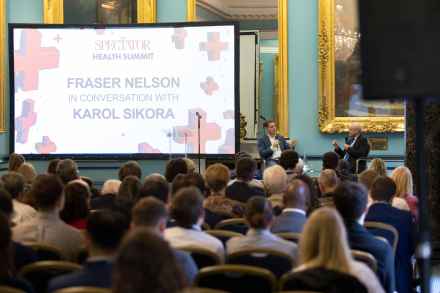
Fraser Nelson in conversation with Karol Sikora

From our UK edition

Professor Karol Sikora was supposed to be a guest on a Spectator panel last year when one sponsor said they would pull their funding unless he was dropped. Instead the sponsor was dropped, Sikora stayed and today he was back again, opening The Spectator’s Health Summit with our editor Fraser Nelson.  Does it matter if the UK has world-beating cancer treatment if the structure to implement it isn’t there? Or if the UK is the sixth highest funded country in the OECD if it’s one of the worst countries for patient outcomes? The organisational problems in our health service, Professor Sikora says, are worsening its performance. The senior oncologist began by listing off failures: ‘The infrastructure is falling apart. The access is so poor to the NHS for the average patient.

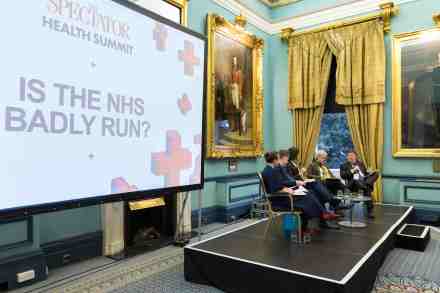
Is the NHS badly run?

From our UK edition

You don’t often hear calls for more managers to solve the crisis in the NHS. But at The Spectator’s Health Summit held in Westminster this week, a panel hosted by Isabel Hardman asking ‘Is the NHS badly run?’ came to that conclusion. Conservative MP and chair of the Health Committee Steve Brine, Labour’s shadow health minister Karin Smyth MP, NHS chief strategy officer Chris Hopson and director of the Reform think tank Charlotte Pickles all agreed that managers might be the answer. 'The NHS is actually woefully under managed in terms of operational performance,' said Pickles. 'And that is an issue. And yes, in some instances you do want clinicians as managers and some you don't. You want people who are really good managers.

Are Scots tiring of devolution?

From our UK edition

As Scottish devolution celebrates its 25th anniversary, are voters losing faith in Holyrood? A quarter of the country believes devolution has been bad for Scotland, with almost half of 'No' voters in the independence referendum now disillusioned. New polling for the Sunday Times finds that over a fifth of voters didn’t know if devolving powers to Scotland had been positive or negative, while 50 per cent still believe that overall devolution had been good.  There was a clear split on the devolution question based on how a person voted in the 2014 referendum, while age provided another dividing line: devolution was unpopular with half of those over 75 years old compared to only 14 per cent of 16-24 year olds.

McMafia: inside the SNP’s secret state

From our UK edition

40 min listen

On the podcast: gangsterism or government?  The Covid Inquiry has moved to Scotland and, in his cover story for the magazine, our editor Fraser Nelson looks at the many revelations uncovered by Jamie Dawson KC. Fraser describes how civil servants were enlisted into what he calls an ‘SNP secret state’ and how SNP corruption is threatening devolution. Joining us to discuss is the Coffee House Scots team: Times columnist Iain Macwhirter, The Spectator’s data editor Michael Simmons and The Spectator’s social media editor Lucy Dunn who coordinates our Scotland coverage.

The political motives behind the SNP’s Covid strategy

From our UK edition

What motivated the Scottish government to take a more cautious approach to lockdown? Deviations from the UK government's approach meant that those living north of the border often had to live with harsher restrictions compared to those in England, decisions that were widely assumed to be made on the basis of scientific advice. But now the Covid Inquiry has disclosed conversations that took place at the heart of government — and revealed how top academics were left confused by the SNP's strategy. Mark Woolhouse, professor of infectious disease epidemiology at Edinburgh University, told the inquiry on Wednesday that he ‘did not understand’ the Scottish government’s ‘very, very cautious’ pandemic strategy during the summer months of 2020.

Would strike talks be different under Labour?

From our UK edition

15 min listen

As junior doctors begin the longest strike in history, Lucy Dunn speaks to Isabel Hardman and Kate Andrews about whether public support for industrial action is starting to wane, and how talks might be different under Labour.

Four graphs that expose the state of Scotland’s NHS

From our UK edition

Today’s Scottish government budget was tax-rise heavy – to the dismay of both individual earners and businesses — in the name of public service support. But while finance secretary Shona Robison spoke of her government’s ‘values’ of equality, opportunity and community, as well as the importance of its ‘social contract with the people of Scotland’, she failed to acknowledge the state her country’s public services are in.  Robison mentioned the NHS over ten times throughout her speech, using it to justify the contents of today's budget. But Scotland’s health service is struggling more than ever; some hospitals are so congested that it is becoming the norm for dozens of patients to spend the night in corridors.

NHS waiting lists are still far too high

From our UK edition

The NHS waiting list has fallen, although not by much. The number of patients waiting has fallen from 6.5 million to 6.44 million, while the number of ‘waits’ for procedures and treatments has fallen by just 60,000, from 7.77 million to 7.71 million. On the face of things, this sounds like good news: it is the first fall in the waiting list since November last year. But look a little closer and there isn’t all that much to celebrate. There are still half a million more waits now than at the start of the year.  Today’s numbers are bleak. A number of NHS targets are being missed: most concerningly, waits of over 78 and 104 weeks should have been eliminated by now. Instead, there are 10,500 and 190 patients waiting on these lists respectively.

Wes Streeting’s ‘tough love’ approach to saving the NHS

From our UK edition

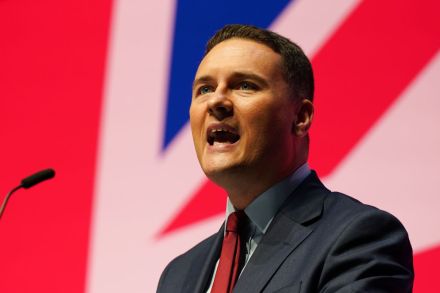
The NHS faces an institutional and structural problem in the way it works, Wes Streeting believes. ‘Unless it changes, it’s not going to survive.’ The shadow health secretary’s ‘tough love’ philosophy suggests NHS bosses are very much mistaken if they expect much more generous health spending under a Labour government. Instead, Streeting has slammed the health service for using winter crises as an ‘excuse’ for funds.  Streeting’s interview in today’s Sunday Times comes as the health service is facing record high waiting lists of over 7.5 million and record waiting times (with 3.2 million waiting over 18 weeks for care).

Will NHS consultants vote to stop the strikes?

From our UK edition

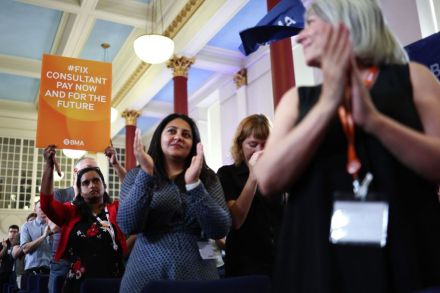
After months of protest and four rounds of strike action, NHS consultants could finally be close to reaching a pay deal with the UK government. British Medical Association (BMA) reps will present the offer to their members that will see the pay of an average consultant increase — while the time it takes to reach the top salary range shortens by five years.  ‘All of us are planning our exit strategy,’ one consultant admitted — and the data suggests this isn't hyperbole. Only last year, the BMA warned of a 'major exodus' of senior clinicians. In an offer that has been described as a ‘disguised’ wage rise, consultants will also see their pay structures reformed and modernised. Consultants’ starting salary will increase, and the top level of pay will rise.

NHS waiting list reaches record high – again

From our UK edition

Rishi Sunak pledged in January that his government would cut waiting lists by 2024 — but the latest stats show the PM is failing to meet his target: the NHS waiting list has hit a record high of 7.8 million waits, according to figures released this morning. 6.5 million patients are languishing on lists, with around 15 per cent waiting for more than one thing. The bad news for patients – and for the Prime Minister – is that things are likely to get worse before they get better. October has been the busiest month for A&E attendance so far this year with over 2.2 million people showing up at emergency departments for treatment.

A ban on laughing gas is long overdue

From our UK edition

The recreational use of laughing gas has been banned in the UK from today. We are only the second country in the world to make the possession of nitrous oxide illegal – users of the now-class C drug will get up to two years in prison while dealers face jail time of up to 14 years. Though two government-led reviews concluded that the substance wasn’t dangerous enough to make it illegal, the growing evidence of insidious and long-lasting side effects suggests otherwise.  On the surface, laughing gas appears to be a fairly harmless drug. It doesn’t have a giveaway smell or any obvious adverse side-effects – and it’s cheap. Post-pandemic there has been a huge rise in the number of teenagers and young adults taking it: today there are more than 600,000 regular users in the UK.

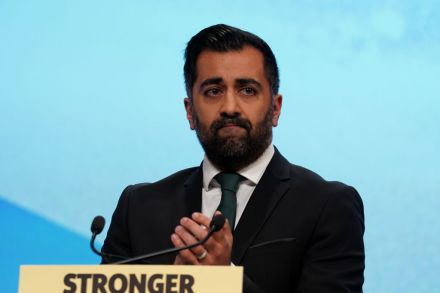
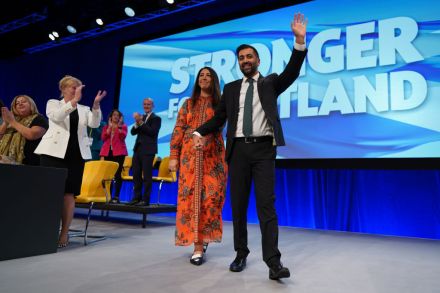
Will Humza Yousaf’s conference promises save the SNP?

From our UK edition

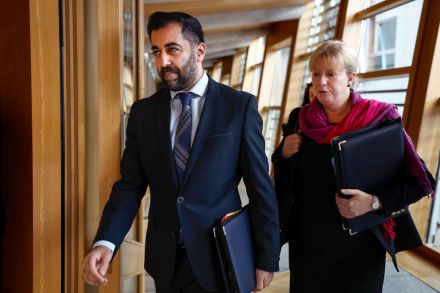
Humza Yousaf took SNP politicians and activists to the blistering cold of Aberdeen this week to host his first party conference as SNP leader. Yousaf was under great personal stress with his wife’s family currently trapped in Gaza and the event had a sombre tone to it, not helped by an audience turnout that didn’t quite manage to fill the main hall. Off the back of a disappointing defeat in the Rutherglen by-election, a defection of one of his own MPs to the Tory party and polling predicting that Yousaf’s party might lose over half of their Westminster seats to Labour next year, there was a lot hinging on the Aberdeen meet. So, six months into his premiership, has Yousaf’s conference managed to turn the SNP’s fortunes around?

Has Humza Yousaf turned things around?

From our UK edition

15 min listen

At his first speech as SNP leader at the party's conference, Humza Yousaf gave a policy-filled address. He hasn't had an easy start to his leadership, but can he turn things around? Katy Balls talks to Lucy Dunn and Iain Macwhirter. Produced by Oscar Edmondson and Cindy Yu.

Why did Lisa Cameron defect to the Tories?

From our UK edition

11 min listen

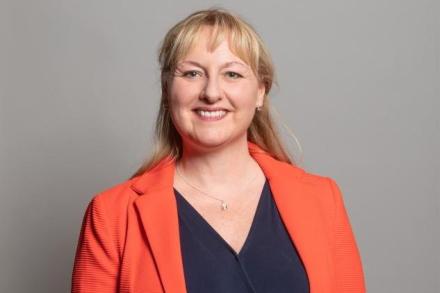
Lisa Cameron MP has quit the SNP to join the Conservative party, just days before the SNP holds its party conference in Aberdeen. What does this say about the state of the Scottish National Party under Humza Yousaf? James Heale talks to Isabel Hardman and Lucy Dunn. Produced by Max Jeffery and Cindy Yu.

Labour’s plan to save the NHS – on a budget

From our UK edition

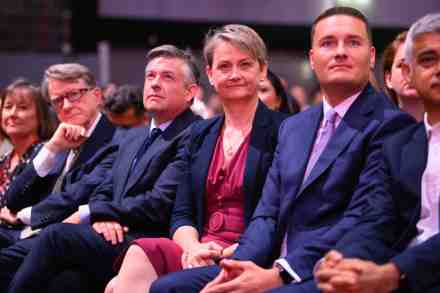
Wes Streeting interprets his job as shadow health secretary as being a ‘public service role and an economic role’. ‘There is a direct relationship between the health of the nation and the health of the economy,’ he told a Policy Exchange event at the Labour party conference on Monday. Echoing the sentiment of his shadow chancellor Rachel Reeves, Streeting makes clear that while a Labour government would work to preserve the health service, it would approach NHS funding with iron discipline. And it doesn’t really seem like Labour would have much other choice. As one Tory MP remarked during the Conservative party conference: ‘What can Labour offer? They can’t offer more money – because we’ve spent it all!

Douglas Ross: ‘The Scottish Tories could have a really good general election’

From our UK edition

The SNP wasn’t the only loser last week when Labour triumphed in the Rutherglen and Hamilton West by-election with a 20 per cent swing – the Scottish Conservatives also had reason to feel short-changed. Their vote collapse was so dire that Tory candidate Thomas Kerr only won 3.9 per cent and lost his £500 deposit. While the party insists that the Rutherglen result is not representative of Scotland more generally, it shows the tricky terrain the Scottish Tory leader Douglas Ross faces. ‘You're going to see Conservative gains at the next general election,’ he insists, when we met in Manchester at the Conservative Party Conference. Sheltering from the rain in a fringe event tent, Ross explains why an SNP implosion could work in his party’s favour.

Labour’s Rutherglen victory is just Starmer’s first step to power

From our UK edition

The question wasn’t about whether Labour would win the Rutherglen and Hamilton West by-election, but by how much. A good win would involve a swing in the double digits, Sir John Curtice confirmed yesterday evening, while a moderate win would suggest that Keir Starmer’s party would have its work cut out in fighting for a majority in the next general election. The true result of the by-election however, announced in the early hours of this morning, was nothing like Labour had predicted. ‘Seismic,’ veteran Labour MSP Jackie Baillie mouthed as the numbers came through: ‘Stonking.’ With 17,845 votes to the SNP’s 8,399 and 1,192 for the Scottish Tories, Scottish Labour came away with a majority just short of 10,000 – and over 50 per cent of the vote.