Louise Levene

Wayne’s world

From our UK edition

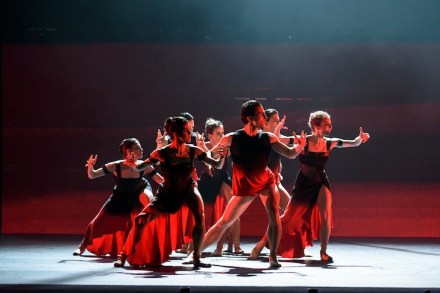
Ballet would have been an obvious revenue stream for Sadler’s Wells when it reopened back in 1998 but straight-up classics have been few and far between over the past two decades — the Rothbart of the Royal Ballet of Flanders’ Swan Lake wore a live owl on his head. And yet, while the theatre’s programming fights shy of tutus and toe shoes, its fiercely contemporary output can sometimes bridge the notorious gulf that has traditionally divided classical and contemporary audiences. Wayne McGregor has been resident choreographer at the Royal Ballet since 2006 but combines this role — and countless international projects — with his directorship of his own company, whose Autobiography premièred at the Wells earlier this month.

Pretty vacant

From our UK edition

Alice is at it again. Christopher Wheeldon’s 2011 three-act ballet began another sell-out run at Covent Garden last week. It’s a joy to look at and packed with featured roles that show off the Royal Ballet’s strength in depth. If only it weren’t such a bore: thinly written characters; anodyne choreography and zero dramatic tension. To be fair, the episodic dream logic of the original doesn’t make for a coherent or involving narrative. Wheeldon and his scenarist, Nicholas Wright, have done their best to correct for this by tacking on a Wizard of Oz-style prologue in which the Caterpillar, Dormouse et al. are human guests at an Oxford tea party.

Not vintage Mariinsky

From our UK edition

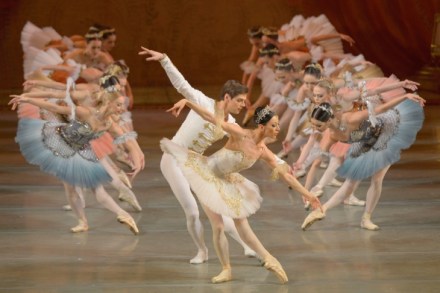
Not really a vintage Mariinsky season — an odd choice of repertoire and some hit-and-miss male casting — but the Covent Garden run ended on a glorious high. Marius Petipa’s La Bayadère is a lightly curried love triangle about a handsome warrior torn between his betrothed (a Rajah’s daughter) and a beautiful temple dancer. Old-fashioned? You bet. But the scenery is chewed with such relish and the choreo-graphy delivered with such radiant commitment that the three hours roll by in a lime-lit haze — you half expect an audience in dress uniforms and tiaras.

Mad about the boy | 3 August 2017

From our UK edition

Tall, handsome boys with long legs and beautifully arched feet do not grow on trees (if only). Every ballet director knows this and yet tall, handsome Xander Parish spent five years blushing unseen in the Covent Garden chorus. The London critics soon spotted him — a rogue tulip in the ensemble — but it was only when the Mariinsky’s Yuri Fateyev was guest coaching the Royal Ballet in 2010 that his potential was realised. Within months he had joined the Mariinsky in St Petersburg — the first British dancer ever to do so. After four years he was made soloist, then first soloist and, last Thursday, on the Royal Opera House stage, he was promoted to principal after a performance of Swan Lake.

Triple thrill | 8 June 2017

From our UK edition

Thrilling debuts, starry guests and a tear-stained farewell at Covent Garden this week as the Royal Ballet closed the season with a triple bill of works by Sir Frederick Ashton. The company’s founder choreographer could often be spotted lurking at the back of the house during Marius Petipa’s Sleeping Beauty enjoying ‘a private lesson’. Today’s would-be narrative dancemakers could gain similar benefits from The Dream, which distils Shakespeare’s five acts into 55 minutes of witty, characterful dance. Steven McRae’s Oberon made short work of Mendelssohn’s Scherzo with icy pirouettes melting into deep penchées and turns chained so tight and fast he should wear asbestos slippers.

Scarlet women

From our UK edition

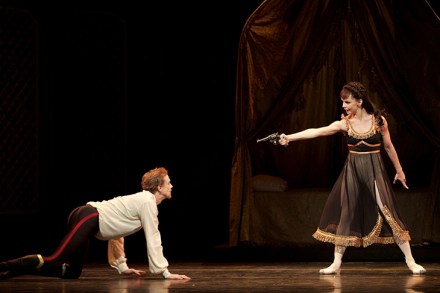
A Covent Garden barfly was scanning her programme during the first interval: ‘Oh yes, the one about the gynaecologist.’ She meant Strapless, of course, an attempt to tell the back story to John Singer Sargent’s ‘Portrait of Madame X’, which scandalised the Paris Salon of 1884. ‘Madame X’ was Amélie Gautreau, a Creole beauty who became the trophy wife of a Paris banker (and bat-guano importer). Impressed by Sargent’s striking portrait of her lover, the surgeon and saloniste Samuel-Jean Pozzi, Mme Gautreau agreed to let the fashionable young artist immortalise her own cadaverous allure. Bad idea. Her brazen pose and the fallen strap of her low-cut gown caused lasting damage to her reputation.

The unhappy Prince

From our UK edition

A tragic flaw is one thing — every hero should have one — but Mayerling’s Rudolf, a syphilitic drug addict with a mother fixation and a death wish, is a very hard man to love. Kenneth MacMillan’s 1978 ballet, currently being revived at Covent Garden, tells the complex tale of the Crown Prince of Austria-Hungary and his 1889 suicide pact with his teenage mistress. The narrative unfolds in flashback with cinematic sweep to a cunning patchwork of 30 Franz Liszt compositions invisibly mended by John Lanchbery. The grandeur of the Viennese court is deftly sketched by designer Nicholas Georgiadis. Vast interiors are evoked with a swath of fabric and the women’s gowns suggest the bulk of bustles without cramping MacMillan’s style.

First Bourne

From our UK edition

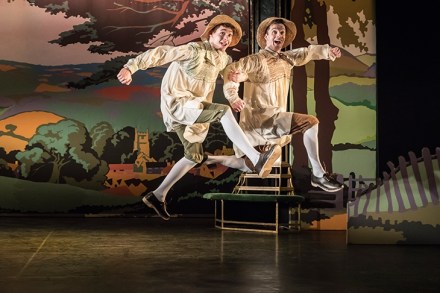
‘Modern’ dance was no laughing matter in 1987. Harold King, director of the now-defunct London City Ballet, cattily typified it as ‘lesbians in bovver boots playing a mouth organ and banging a drum on the banks of the Thames’. Camp, funny and unashamedly ‘accessible’, even Matthew Bourne’s earliest efforts were a far cry from the earnest output of his more contemporary contemporaries as his 30th anniversary retrospective, Early Adventures, reminds us. Bourne’s early pieces were conceived on a modest scale with taped music and only a handful of dancers, but the works in the current triple bill show that his gift for creating character and narrative was evident from the start.

Dazzled by Balanchine

From our UK edition

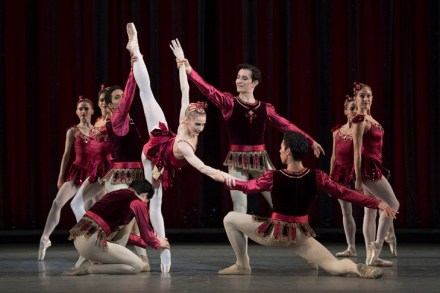
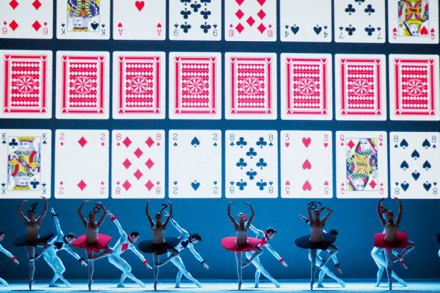
A trio of dazzling scores, the soft clack of gemstones on hips and collarbones, a glittering parure of solos, duets and ensembles: George Balanchine’s Jewels returns to the Covent Garden repertoire to celebrate its 50th anniversary. The ballet’s three plotless elements celebrate the various facets of classical dance. ‘Emeralds’, set to snatches of Gabriel Fauré, pays lyrical homage to ‘the France of elegance, comfort, dress, perfume’. The American-accented ‘Rubies’ riffs on Stravinsky’s 1929 Capriccio for piano and orchestra, and ‘Diamonds’ joins forces with Tchaikovsky in an exultant hymn of praise to the classical ballerina (a role shared on Saturday by Lauren Cuthbertson and a sublime Marianela Nuñez).

Bravura bling

From our UK edition

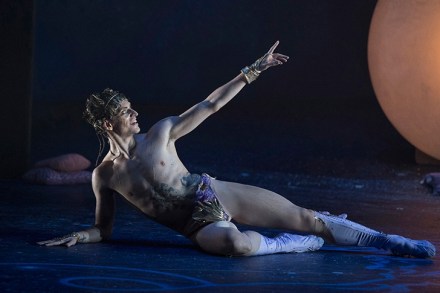
There was a nasty sound of pens being sharpened last week as Royal Ballet runaway Sergei Polunin prepared to unveil his latest venture. The reviews were as dire as the show but the overriding mood was one of regret that so great a talent should have lost its way. Project Polunin’s triple bill was cannily timed to coincide with the release of the documentary film Dancer, which follows the young Ukrainian prodigy’s progress after his snap resignation from the Royal Ballet in 2012. The film’s director, Steven Cantor, had no dance background and was a pushover for all the bravura party tricks that dominate the movie’s dance footage.

Mirror, mirror | 16 March 2017

From our UK edition

The exit signs were switched off and the stalls were in utter darkness. One by one, 15 invisible dancers, their joints attached to tiny spotlights, began to colonise the far end of the hall, forming fresh constellations with every pose. The audience smiled in wonder, like tots at a planetarium. Tree of Codes, which had its London première at Sadler’s Wells last week, was originally commissioned in 2015 for the Manchester International Festival. It combined the talents of Wayne McGregor, resident choreographer of the Royal Ballet, mixer and DJ Jamie xx and the Danish/Icelandic artist Olafur Eliasson.

Mistaken identity

From our UK edition

The Romanovs were a hot topic in 1967: it was the 50th anniversary of the Russian Revolution, memories of Ingrid Bergman’s Oscar winning Anastasia were still fresh and Robert Massie’s Nicholas and Alexandra was on every bestseller list. Kenneth MacMillan was ‘sick to death of fairy tales’ and his one act treatment of the Anna Anderson story, with its groundbreaking use of archive film and uncompromising Martinu score, was a ballet for grown ups that wrestled with the very nature of human identity. Lynn Seymour, the greatest dance actress of her generation, created the role of the mental patient who might (or might not) be a Grand Duchess and the production, made for Berlin’s Deutsche Oper, was an immediate critical and popular success.