Louise Gray

The rise of avocado anxiety

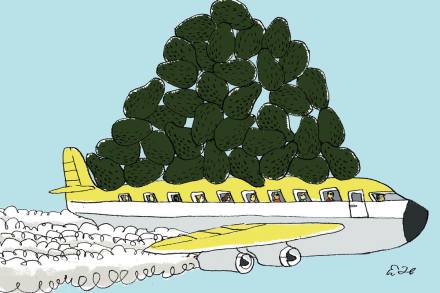
When the gastronomes of the future come to choose the food that best represents our age, they will choose the avocado. The ubiquitous fruit is everywhere: in smoothies, on toast, served at breakfast, lunch and dinner, on t-shirts and all over social media. It represents our ingenuity in supplying exotic fruit to every corner of the globe all year round, our obsession with “clean” eating, our aspiration to eat brunch and our love of anything that — even passingly — tastes a little bit like butter. But it also represents our greed, our hypocrisy, our vanity and our overwhelming anxiety.
avocado

Why are COP26 delegates turning their noses up at haggis?

From our UK edition

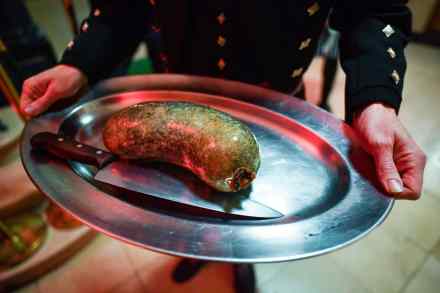
As if negotiating a global climate deal into the early hours was not enough, delegates at COP26 have to worry about whether the haggis, neeps and tatties they enjoyed for lunch is destroying the planet. The COP26 menu tells delegates that each serving of the traditional Scottish dish generates 3.4kg of carbon dioxide equivalent (CO2e). It is the heaviest carbon footprint on the COP menu, worse even than the Scottish beef burger (at 3.3kg CO2e). Unsurprisingly, many climate-conscious delegates in Glasgow are turning their noses up at the Scottish national dish, and not just because they realised it was lamb offal. Perhaps they have good reason to be snobby?

Can you have your grass-fed beef and eat it?

From our UK edition

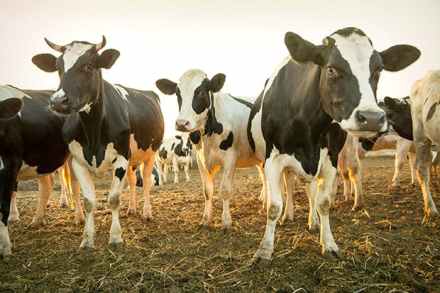
Grass-fed beef just came off the North London dinner party menu. A report by the Food Climate Research Network at the University of Oxford dismissed claims by Prince Charles and others that grazing animals on permanent pasture can reduce carbon dioxide emissions. The old argument was that the carbon dioxide absorbed by growing grass outweighed the greenhouse gas emissions generated from the stomachs of the cows. But a comprehensive study by FCRN found that this is only the case in a very small number of well-managed farms. In most cases the amount of methane in a cow’s burps far outweighs the carbon stored in the soil through allowing grass to grow. Dr Tara Garnett, lead author of the study, says that no-one is getting a ‘climate change free lunch’.

Why Brexit could be a boon for GM crops

From our UK edition

Genetically modified crops could be grown in England following a split from the European Union. But will it be good for Britain to forge ahead with a science that many consider to be dangerous for the environment, and potentially our health? George Eustice, the agriculture minister, revealed in a written parliament answer that as part of plans for Brexit, the government was looking at the regulation of genetically modified crops.  It has come as no surprise to the farming world, which has been campaigning for years for a more relaxed approach to GM. Many in Westminster already support the planting of GM crops on a commercial scale – although the situation is different in devolved administrations.

The government can’t be relied on to rear happy farm animals

From our UK edition

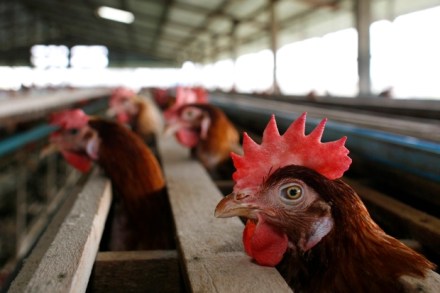
Yesterday, the government abandoned its plans to scrap farm animal welfare codes, but if you think that means the cheap chicken you buy is ethical, you’re a bird brain. The embarrassing u-turn was made after animal rights charities pointed out that asking the industry to come up with its own guidelines wasn’t going to work. The poultry industry is hardly going to introduce new rules that ensure chickens have more space to roam in if it might impact on profits. Pardon the pun, but it’s a bit like asking turkeys to vote for Christmas – they simply won’t. But can you really trust the government to ensure high standards of farm animal welfare? Not really, is the simple answer. At the moment, animal rights are governed by EU laws.

If you really hate wind farms, David Cameron won’t help you

From our UK edition

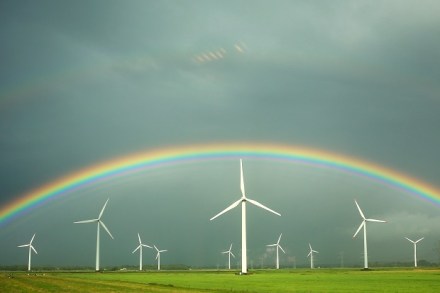
The Prime Minister is planning to cap the total number of onshore wind farms in Britain. But what would limiting the number of wind farms to those in existence or already in the planning system mean? The UK already has 7.1GW worth of turbines spinning away. There are 1.8GW under construction and some 4.3GW approved but not yet built. Once all these are up and running it will bring the total to 12.2GW. The government plans to install between 11GW to 13GW of onshore wind by 2020. If they were to limit turbines to those built or in the process of building, it would make precisely no difference at all. And, while we are number crunching, there is a further 8.3GW in the planning system but not yet approved. According to the industry, 1GW is enough to power 535,000 homes.

Don’t blame climate change for flood damage, blame David Cameron

From our UK edition

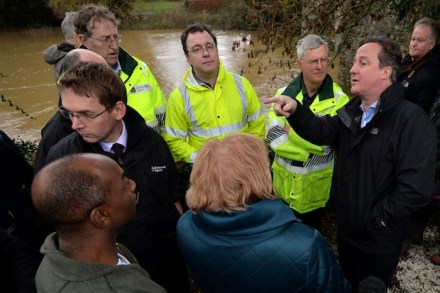
I’m sure the families clearing up after the Christmas and New Year floods have neither the time nor inclination to wonder if the floods were caused by climate change or not. Nevertheless the question has come up, as it inevitably seems to every time there is an extreme weather event nowadays. So, let’s look at the facts. Met Office data shows that four out of the five wettest years on record have been since year 2000. Official reports have repeatedly warned that the risk of flooding is becoming worse because of global warming. The Department for the Environment Food and Rural Affairs (Defra) Climate Change Risk Assessment warns 'floods and coastal erosion are already serious risks in the UK, and they are projected to increase as a result of climate change'.

Are climate change talks getting dirty?

From our UK edition

Warsaw - As reports flood in of devastation in the Philippines,  pressure is growing on ministers attending United Nations talks in Poland to prove that on-going climate change talks are not a waste of money. While it is impossible to blame a single event on climate change, the World Meteorological Organisation has warned that warming oceans and rising sea levels make the impact of ‘super storms’ like Typhoon Haiyan far worse and, perhaps, more frequent. So, what are our leaders doing about it? Well, 10,106 people have gathered in a football stadium in Warsaw to produce more hot air discussing a global deal to cut emissions. The annual UN jamboree is not known for being whiter than white when it comes to jumping into bed with the enemy.