Lois McLatchie Miller

Lois McLatchie Miller is a writer and commentator

Why Trump’s attacks on the Pope are backfiring

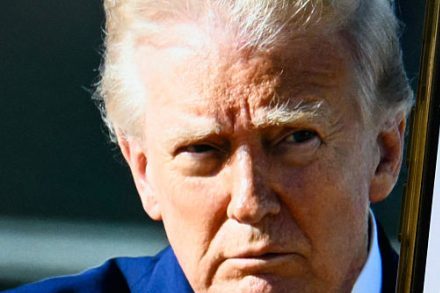
They told us religion would fade. That as the 21st century matured – more educated, more technological, more 'enlightened' – faith would retreat politely from public life. God would be, at most, a private hobby.  As the war of words between Donald Trump and Pope Leo XIV is proving, these people couldn’t have been more wrong. We are no longer secularising. If anything, this – alongside other recent world events – shows we are re-Christianising. And nowhere is that more evident than among the very generation that was supposed to abandon faith altogether.  Across both Britain and America, Gen Z is showing signs of renewed interest in Christianity. The long decline has stalled. Churches report a noticeable influx of younger faces.

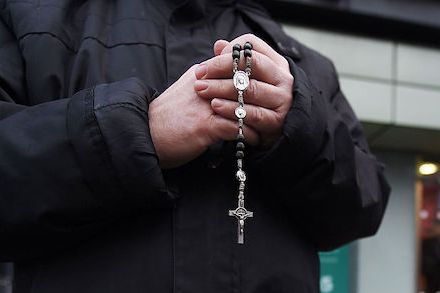
When is prayer in public a crime in Britain?

When thousands gathered in Trafalgar Square last week to break their Ramadan fast, we were told this was Britain at its best. The message was that the UK is diverse, tolerant, and confident enough to make space for public expressions of faith. Islamic prayers were performed openly and unapologetically. Mayor of London, Sadiq Khan, took part, and Labour MPs, including Keir Starmer and Stella Creasy, defended the event vigorously on the grounds of a person's right to freely express their religion. The asymmetry could not be starker.

Can Reform really make Britain Christian again?

Lent has barely begun, yet on the right of British politics the resurrection has already arrived. God, it seems, is back on the ballot. In the great schism of parties beginning with “re”, Rupert Lowe has launched his bid to “Restore Britain”, positioning himself as the more muscular alternative to Nigel Farage’s Reform. Restore promises to go further and faster – particularly on immigration and cultural decay – and faith has been placed front and centre. On launch day last week, Lowe declared: “Britain is a Christian country, and under a Restore Britain Government – it will remain a Christian country.” Reform swiftly discovered its own ecclesiastical zeal Not to be outdone, Reform swiftly discovered its own ecclesiastical zeal.

Surrogacy isn’t something to celebrate

Pop star Meghan Trainor posted a photograph this week skin-to-skin with her newborn daughter, 'Mikey Moon', who was still slick with fluids from the birth canal. The image was tender and maternal. What changed the dynamic was the caption. Trainor revealed she had not actually delivered her daughter, but had her gestated by another woman via a surrogacy arrangement. The online reaction was deeply uneasy and critical. View this post on Instagram A post shared by Meghan Trainor (@meghantrainor) This would have been unthinkable a decade ago. Surrogacy used to be framed as glamorous, progressive, even beautiful. Magazine spreads showed radiant celebrities cradling babies 'made possible' by another woman’s womb.

The SNP have crossed the line on abortion

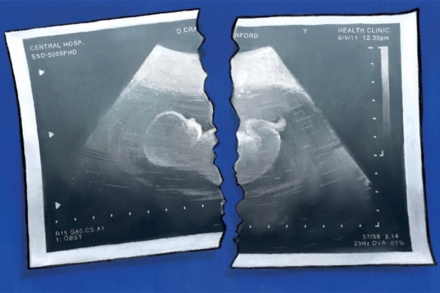
For years, the SNP has relied on a particular political alchemy. It takes on extremely liberal social positions to appeal to the left, while dangling independence as a carrot to those on the right. But with the publication of a recent abortion law review, it appears to have gone too far. In attempting to make Scotland one of the most permissive abortion regimes in the world, the review has not simply drifted from public opinion – it has rocketed past it. It is astonishing that this has been commissioned by a government that claims to champion women’s rights The proposals are extreme by any measure. At present, abortion is available in Scotland for almost any reason up to 24 weeks of pregnancy.

Taylor Swift has shattered feminism’s fragile lie

Taylor Swift’s new album, The Life of a Showgirl, has done more than dominate the charts. It’s reignited one of the oldest – and fiercest – battles in modern womanhood. Once again, the pop icon has found herself cast as both heroine and heretic in the (pop) culture war’s endless inquest into what women should want. In The Tortured Poets Department, the mask began to slip as Swift tore into her non-committal 'forever-boyfriend' But this time, the controversy isn’t over her style or sound. It’s over something far more dangerous in 2025: her desire for love, marriage, and children. Swift’s confession in track five, 'Eldest Daughter' – 'When I said I didn’t believe in marriage, that was a lie' – has startled her audience.

Across the world, Christians are being silenced

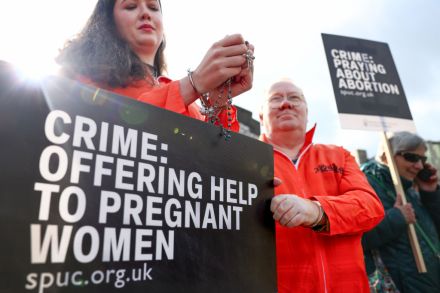
Last week, a 75-year-old Christian grandmother was bundled into the back of a police van outside a Glasgow hospital. Her alleged crime? Conversation.  Rose Docherty wasn’t spray-painting walls or blocking doorways. She wasn’t shouting or shoving leaflets into anyone’s hands. She simply held a sign offering a listening ear: 'Coercion is a crime. Here to talk, only if you want.' In the eyes of the state, this made her a criminal.  Under Scotland’s new 'buffer zone' laws, even the possibility of 'influencing' a passerby outside an abortion facility is treated as criminal behaviour. Rose wasn’t standing with an influential message. She was giving people the choice: walk on or stop and chat.

Can Taylor Swift make marriage great again?

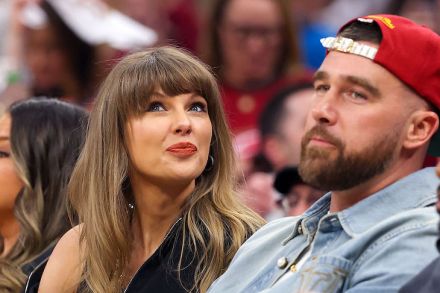
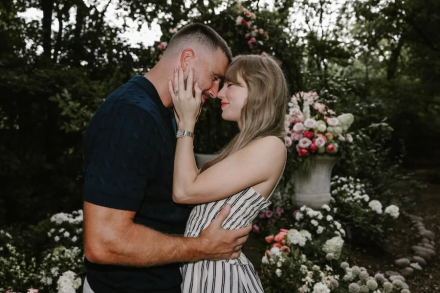
Taylor Swift is engaged – and women the world over are rejoicing. Not merely because they care about Kansas City Chiefs tight end Travis Kelce or the Ralph Lauren shorts he wore at the proposal, but because, in a profound way, her story has become theirs. Swift is not just the world’s biggest pop star; she is the diarist of millennial womanhood. Her lyrics have chronicled the teenage daydreams, the disillusioned twenties, the bitterness of wasted years, and now, at last, the rediscovery of commitment. When she said 'yes', millions of women projected onto her their own longing for permanence – and their own disillusionment with the cultural script they were handed. For six years, Swift lived with British actor Joe Alwyn in a quiet domestic partnership.

Vance is right — Britain really has ‘thoughts-and-prayers’ policing

From our US edition

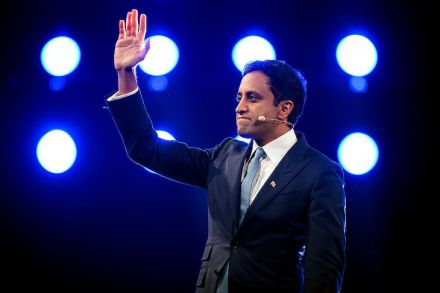
"Free speech, I fear, is in retreat," said Vice President J.D. Vance to an audience of world leaders at a security conference in Munich on Friday, with a rhetorical punch comparable to Reagan's "Mr. Gorbachev, tear down this wall!" Vance pointed to various censorial "hate speech" policies spewed out from Brussels and across Europe, and to the troubling arrest of a Christian in Sweden who used his freedom of expression to burn a Qur’an. Building to a crescendo, Vance then highlighted the "most concerning" case of Adam Smith-Connor — the British army veteran and father of two who was convicted in November 2024 for praying silently, for a few minutes, on a public space across the road from an abortion facility.

j.d. vance

The wrong-sightedness of ‘buffer zones’

As of today, in Britain, it will be illegal to ‘intentionally or recklessly influence any person’s decision to access... abortion services’ within approximately 500 feet of the building. If the national law mirrors local prototypes, it may even prohibit silent prayer, or offers of help. Politicians voted to implement these localised bans – known as ‘buffer zones’ – under the guise of needing to restrict harassment near abortion clinics. A noble cause, yet one without a basis of need. Harassment is already illegal in the UK. A government review proved that in mild-mannered England, instances of harassment near clinics are ‘relatively few’, and easily policed under existing laws. Instituting buffer zones would ‘not be a proportionate response’, the review concluded.