Lloyd Evans

Lloyd Evans

Lloyd Evans is The Spectator's sketch-writer and theatre critic

WEB EXCLUSIVE: Review of Spectator arts funding debate

From our UK edition

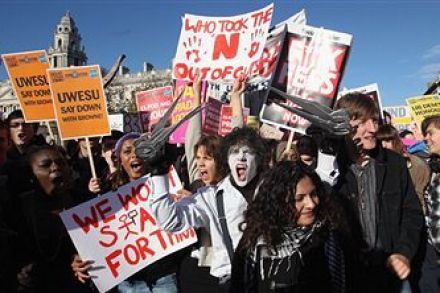
‘Time for the arts to stand on its own two feet and stop sponging off the taxpayer’ From the start, the combatively worded motion came under attack. Culture secretary Ed Vaizey called it ‘brutal, vulgar, left-wing, and hostile to excellence and quality.’ He urged us not to think of the arts as a layabout teenager watching Neighbours and eating cold pizza all day. The arts doesn’t sponge off the taxpayer, he said, it’s the other way around. The subsidy supports the burgeoning tourism market. He revealed that the independent arts sector welcomes stated-funded art and regards it as a research and development department. He defended free entrance to museums with this economic parable.

Killing joke

From our UK edition

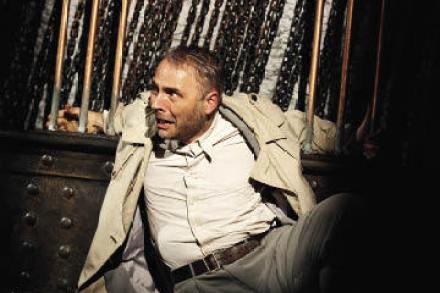
Ira Levin’s name isn’t nearly as well known as his titles. Ira Levin’s name isn’t nearly as well known as his titles. Rosemary’s Baby and The Stepford Wives, both originally novels, are his most celebrated works. He also wrote quite a few Broadway hits. In his 1970s play Deathtrap he tries to imagine how an author of murder mysteries might fare as a real-life killer. This idea is entirely preposterous or, if one were being ungenerous, entirely insane, but never mind. It might be fun. We open with Sidney Bruhl, a famous playwright whose best work is behind him, discovering a great new play by an unknown dramatist. It’s a surefire hit. He feels it in his bones. ‘Even a gifted director couldn’t ruin it.

Double exposure

From our UK edition

I never thought I’d write these words. I never thought I’d write these words. This book is unclassifiable. It belongs to a whole new genre. The field of literature has been extended! And I saw it happen. Martin Gayford, who writes for The Spectator and whom I’ve never met, kept a diary during the seven months he spent sitting for the painter Lucian Freud in 2003/4. The book is a journal, an act of confession, a character study of Freud, a piecemeal survey of art history and an investigation into the practicalities of portraiture. It’s also a hostage drama. Gayford has no idea how many months or years the painting will take, and his abductor-cum-immortaliser asserts his right to abandon the project at any moment, without warning.

Citizen Castro rains on Comrade Hattie’s last parade

From our UK edition

There was praise for Fidel Castro – of all people – at PMQs today. That the tribute came from a Tory MP must make this a unique event in the annals of parliament. Castro’s recent admission that Cuba’s state monopolies might profit from a little nibbling around the edges gave Priti Patel, (Con, Witham), a bright idea. She asked the prime minister if the Marxist cigar-enthusiast might visit the TUC Conference to share his economic vision with the brothers. The PM, who seemed calm, fresh and genially bullish today, caught the joke and ran with it. He offered his own tribute to the semi-retired dictator. ‘Even Comrade Castro is on the same planet as the rest of us. Now we just need to get Labour and the unions across as well.

Vexed issues

From our UK edition

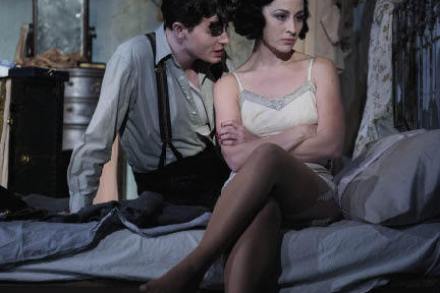
Clybourne Park Royal Court, until 2 October Tiny Kushner Tricycle, until 25 September Bash the bourgeoisie is a game the Royal Court likes playing and I’m always keen to join in. Bruce Norris, a brilliant American satirist, delighted us a few years back with The Pain and the Itch, a hilarious exposure of middle-class hypocrisy. Clybourne Park is a pair of plays set in a house in the prosperous Chicago suburbs. We start in the 1950s when black families are just arriving in the neighbourhood. We then fast-forward 60 years and see prosperous whites returning after decades of poverty and neglect. The earlier play feels very wonky. The dice are overloaded against the whites. As well as their black servants, they have a deaf friend and a kid next door with Down’s syndrome.

We are not amused

From our UK edition

Let’s face it. This wasn’t a classic. Today’s PMQs featured a duel of the deputies. Nick Clegg, who leads part of the government, faced Jack Straw who’s so far from leading anything that he isn’t even a candidate in the race to head his currently driverless party. Unfortunately, Mr Straw had left all his good questions at home. He had to improvise at the last moment. Andy Coulson was all he could think of. He asked if Nick Clegg ‘was entirely satisfied’ that Coulson knew nothing about phone-tapping while he was editor of the News of the World. The only thing Nick Clegg is entirely satisfied with is himself and he fended off Straw’s feeble attacks by saying, effectively, ‘oh we’ve phoned the police so just shut up.

Let Hester fester

From our UK edition

In the Blood Finborough, until 4 September Zelda Leicester Square Those who oppose state-funded theatre in Britain sometimes imagine that America, with its far smaller subsidised sector, is spared the sort of pious, jokeless, grind-yer-nose-in-it plays which our handout theatres use to punish audiences for the sin of being affluent. But American theatre turns out to be richly contaminated with underclass miserablism too. Suzan-Lori Parks is a supreme purveyor of the goods and, like many second-rate talents from minority backgrounds, she’s been given more prizes than Chekhov. She’s won the Pulitzer. She’s been nominated for a Tony.

How to deal with hecklers

From our UK edition

It began like any other Edinburgh gig. A cellar bar at midnight. An Australian compère warming up the crowd. ‘Anybody here from overseas?’ A voice shouted ‘I’m from Amsterdam!’ in a gnarled Glaswegian accent. It was supposed to be funny but no one laughed. The compère, sensing a challenge in the man’s voice, delivered an instant put-down. ‘So you’re homeless. And you’re a drug addict. Keep your troubles to yourself, mate.’ This got a big laugh, though on the page it doesn’t even look like a joke. Translation: Amsterdam equals drug addict. Glasgow equals homeless. The combination equals big fat loser. With the room jeering at him, the Glaswegian fell silent.

Bad, good and ugly

From our UK edition

Uber Hate Gang Underbelly Little Black Bastard; Stripped Gilded Balloon The Tailor of Inverness Udderbelly Pasture Ginger and Black Pleasance And it’s getting bigger. Amazing as it sounds, the Edinburgh Festival keeps expanding like a slum landlord. Every year half a dozen cobwebbed halls and disused assembly rooms are forced open, spruced up and pressed into service for the ragamuffin hordes of wannabe superstars. It’s getting harder to find your way round, too. Luck was against me when I set off for Uber Hate Gang, an acclaimed masterwork from ‘Britain’s hottest young theatre company’ at the Underbelly. I found it all too easily.

Beneath the Fringe

From our UK edition

Lloyd Evans joins the hopeful hordes seeking fame and fortune in Edinburgh Wonderful, Edinburgh. Isn’t it magical? The artistic world has descended on Scotland’s magnificent capital for three weeks of self-expression and glorious creativity. Or so everyone wants everyone else to think. When people speak of Edinburgh they reach whoopingly for a peculiar grammatic mode, the puerile tense. Delightful, daring, courageous, uplifting, inventive, risk-taking, inspirational, sublime. Yes, maybe. But take off the kindergarten dolly-goggles and you’ll find other qualities, other adjectives, lurking. Vain, greedy, embittered, jealous, self-obsessed, megalomaniac, drunk, stoned and bankrupt. This is the true Edinburgh.

Playing it straight

From our UK edition

The Sun Also Rises Royal Lyceum The Cage Pleasance Borderline Racist The Canons’ Gait The Edinburgh International Festival, respectable elder brother of the drop-out Fringe, takes its art very seriously indeed and expects the audience to do the same. It gives us the exotic, the challenging, the eclectic, the mesmeric. It gives us, in a word, the Mickey Finns. Usually we get Palestinian ghost-lore or Slovakian puppet-theatre or sub-Saharan tribal epic or Lesotho revenge drama or Apache creation myth. Sometimes we get all five, in Finnish, with subtitles and video projections, and an on-stage bongo squadron to keep us from our slumbers. But this year, in a stunning reversal of tradition, we’ve got a straight play adaptated from a bestseller by a well-known author.

Rural targets

From our UK edition

The Great British Country Fête Bush, until 14 August The Great Game: Afghanistan, Part 1 Tricycle, until 29 August Russell Kane, a rising star of stand-up, has penned a musical satire with an inflammatory theme. His play opens in a Suffolk village where the locals have risen up against Tesco’s attempts to blight the community with a thumping new shopping hub. Excellent subject! Rabid, thoughtless expansionism by supermarkets inspires rage in every corner of the country (apart from London, which couldn’t care less). After this superb set-up, the show goes wrong immediately and stumbles off in search of easy targets, facile rustic caricatures — the randy vicar, the gay farmer’s boy, the thick ferret-fancier, the racist lady from the WI, and so on.

German challenge

From our UK edition

The Prince of Homburg Donmar, until 4 September Danton’s Death Olivier, in rep until 14 October Welcome to London. This month we’re hosting the world’s very first, but probably not its last, Useless German Playwright Festival. Here’s a scribbler you may not have heard of. Heinrich von Kleist, born in 1777, angered his Prussian family by quitting the army and setting up as a dramatist. After an energetic start he decided he had better things to do with his life and killed himself. His final play, The Prince of Homburg, shows that he still had much to learn before his premature exit.

Young blood

From our UK edition

Spur of the Moment Royal Court, until 21 August The Beauty Queen of Leenane Young Vic, until 21 August Henry IV Part 2 Shakespeare’s Globe, until 3 October It used to be policemen, now playwrights are getting younger too. Spur of the Moment is a debut work by Anya Reiss, who hasn’t left the sixth form yet. Her play takes us into a nice middle-class home where wars over money and sex are raging. Dad has blundered at work. An office fling has earned him the sack, left him in debt and turned his wife into a cauldron of jealousy. The family has taken in a lodger, Daniel, a wan and handsome 21-year-old student.

Turn on, tune in, drop out

From our UK edition

Don’t knock daytime TV, says Lloyd Evans. It may be mindless and banal, but it is entertainment in its purest form It’s happening right now. I just had a flick-through and it’s all going on. You wouldn’t believe it. A Labrador called Pongo has been squashed by a tractor and is having his broken paw fixed at the vet. A grandmother from Dartford is trying to raise funds for her daughter-in-law’s wedding by auctioning a trunkload of heirlooms. And Mandy and Oona (in the blue), are hoping to make a bigger profit at the car-boot sale than Vaughan and Sanjay (in the red). It’s gripping stuff, take my word for it.

Easy listening

From our UK edition

The Prisoner of Second Avenue Vaudeville, until 25 September Lingua Franca Finborough, until 7 August Neil Simon has received more nominations from Oscar and Tony than any other dramatist in history, so his comedies ought to be playing constantly in London. But revivals of his plays are rarities. Something of the Simonian essence seems to fall off the plane mid-Atlantic. Perhaps it’s the awareness that we’ve seen his favourite terrain, bourgeois anguish, charted more vividly and tellingly by homegrown talents. Simon’s conception of human character is fundamentally soppy. More trickster than magician, he builds his drama by postulating secure, loving relationships and smothering them in frothy layers of petty bickering.

Clegg’s revolution

From our UK edition

At last, Nick Clegg got his chance to pretend to be PM today and he used it to give a dazzling impression of Gordon Brown.  Opposing him, Jack Straw was off-colour. Hoarse of throat and hunched of stance, he did his best to bring some clarity to Britain’s new mission in Afghan - Operation Leg It. He asked if the exit date of 2014 was ‘absolute or conditional’. Keen to offer value for money Clegg responded to a single question with two answers. He expected ‘no troops in a combat role’ by 2015 – not 2014 – although our departure was dependent on the Afghans’s ability to secure their own country. ‘Conditional then,’ said Straw repeating his question. Clegg repeated his double answer.

Pick-and-mix fantasy

From our UK edition

Welcome to Thebes Olivier, in rep until 18 August La Bête Comedy, booking to 4 September My mind didn’t just boggle. My whole body did. Every sensory organ joined in the process — ears, eyes, nose, teeth, tongue. All boggled. Even my left shoulder started boggling at one point, although this turned out to be the oscillating snuffles of my neighbour as he dozed serenely against my arm. The source of these disturbances was Moira Buffini’s reconfiguration of Sophocles’ Antigone, which is currently chasing its tail around the Olivier. The setting is a hyper-muddle. We’re in Thebes, a failed third-world state, where kids armed with machine guns strut about the place jabbering in the gangsta patois of east London.

A lap of honour for the Hatwoman

From our UK edition

This is amazing. People could scarcely believe it. No less an organism than the Big Society was spotted briefly at PMQs today. Angie Bray, Tory member for South Acton, asked David Cameron to praise a voluntary programme which enables her constituents to share skills and expertise with their neighbours. ‘This is what the Big Society is all about,’ declared Bray, (with the quietly jubilant tone of one who knows her elevation to government will not be long delayed.) Cameron’s delight was palpable. He beamed at everyone. Then his eager ears picked up the groan of a Labour cynic opposite and he instantly switched into a mode of preachy dismay which he may well have learned from Nick Clegg.

Bercow’s screech

From our UK edition

Speaker Bercow needs to be stopped. His management of PMQs is becoming a scandal. Having menaced MPs last night with a speech complaining about unruly behaviour in the house, (‘the screech of scrutiny’), he added a coded threat to sin-bin any member who offends his sense of decorum. Today he found the chamber as quiet as a slapped puppy. Perhaps that delighted him. It dismayed viewers at home. We watched the dullest PMQs of the year. Perhaps for several years.   The exchanges between Harman and Cameron lacked tempo or bite. Both leaders sensed that their parties had been doped with fear by Bercow.