Lionel Shriver

Lionel Shriver

Lionel Shriver is a columnist at The Spectator and author of We Need to Talk About Kevin, among other books.

The real plan for inflation? To let it rip

From our UK edition

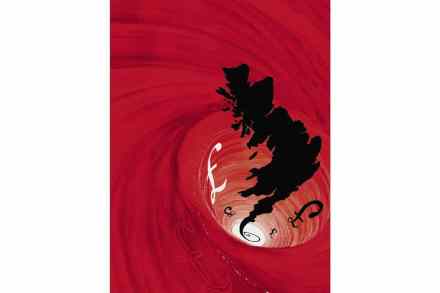
Check out these hyperventilating headlines from last week: ‘What the Fed’s largest interest rate hike in decades means for you’ (PBS.org). ‘Federal Reserve interest rate hike opens new era for economy’ (Washington Post). ‘The Fed delivers biggest rate hike in decades to fight inflation’ (National Public Radio). ‘Fed goes for inflation’s jugular with 75bps rate hike’ (Schwab). While it’s true that the US Federal Reserve has not hiked its funds rate by 0.75 percentage points in one go since 1994, the figure prominently missing from those bug-eyed bulletins, and bizarrely unmentioned in all the television news coverage of this ostensibly bold move that I encountered, is what the Fed raised its interest rate to: a miserable 1.
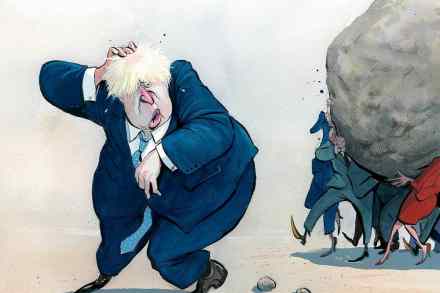
How the rebels plan to finish off Boris

From our UK edition

45 min listen

In this week’s episode: Is the Prime Minister a dead man walking? Spectator Political Editor James Forsyth and MP Jesse Norman who expressed no confidence in Monday's vote discuss the future of Boris Johnson and the Conservative Party. (00:45)Also this week:Why is there so much virtue signalling in modern advertising? Spectator Columnist Lionel Shriver and veteran copywriter Paul Burke discuss its origins, its prevalence, and its effectiveness. (20:20)And finally:Is the dinner party dead? Gus Carter writes in The Spectator this week about how he is never invited to any. He’s joined by Mary Killen to give him some tips on planning a sophisticated bash on a budget.

Does advertising matter?

From our UK edition

‘Stop! Don’t fast-forward. I love this advert!’ How often do you say that? Considering that some commercial breaks run to five minutes, not often enough. How about, ‘Oh no, not again, I can’t stand this advert’? Mm… nightly? According to recent research by the Pull Agency, a brand consultancy, promotion that strains to impress consumers with a company’s progressive imprimatur is off-putting. You always suspected it, but now it’s official: woke advertising backfires. In a survey of 2,000 representative Britons, 68 per cent of respondents were either ‘uneasy’ or ‘unsure’ about brands supporting fashionable left-wing causes such as climate change, BLM, LGBTQ+, diversity, equality, and female body confidence.

Douglas Murray, Lionel Shriver, Julian Glover and James Bartholomew

From our UK edition

20 min listen

On this week's episode, Douglas Murray says the world is becoming claustrophobic, (00:55) Lionel Shriver struggles to get through South African airport security, (08:29) Julian Glover maps out the countryside battle lines, (16:52) and James Bartholomew buys a tank. (22:13) Produced by Angus ColwellEntries for this year's Innovator Awards, sponsored by Investec, are now open. To apply, go to: spectator.

Why are there so many mass shootings?

From our UK edition

40 min listen

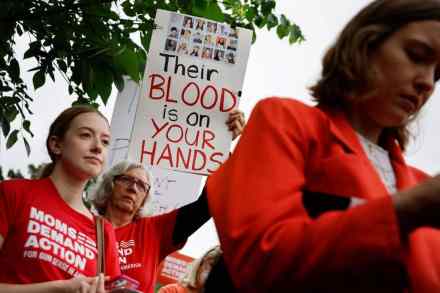
Freddy Gray speaks to award-winning author and Spectator columnist Lionel Shriver about mass shootings and gun culture in the United States, in the wake of the tragedy at Robb Elementary School in Uvalde, Texas.

Why I was almost thrown out of South Africa

From our UK edition

On my 2 p.m. arrival for a week-long work trip to South Africa a fortnight ago, an immigration agent flapped my passport while inquiring as to the purpose of my visit. ‘To appear in the Franschhoek Literary Festival’ clearly meant nothing to this woman, but hey, lit fests aren’t exactly Glastonbury. I only grew, shall we say, concerned when she announced that because my passport lacked two sequential completely clean pages, she was denying me entry to the country. ‘You’re kidding me,’ I said – quietly; I didn’t shout. Yet this reflex expression of disbelief was all it would take for the entire team of Cape Town’s gatekeepers to blackball me as a reprobate with a bad attitude. ‘You think I am joking you?

My list of Britain’s national character flaws

From our UK edition

Before we start, let’s firmly establish my long-standing affection for the United Kingdom. Why, some of my best friends are British. Yet at the risk of overgeneralisation, recent events have exemplified a few shortcomings in the otherwise sterling national character. Nitpicking pettiness. We’ve whole front pages dedicated to the Labour leader’s carryout curry one evening during lockdown; to between which hours (8.40 p.m. to 10 p.m.) the offending curry was consumed (Keir Starmer’s failure to reveal if it was lamb korma or chicken vindaloo is deeply troubling); and to which other eateries were then still open. Thanks to this rigorous coverage, we all know that Starmer’s hotel was serving food outdoors until 9 p.m.

America has betrayed its young

From our UK edition

Two articles last weekend made me feel sorry for American young people. We in the anti-woke brigade can be awfully hard on kids. But having been born in the 20th century turns out to have been a stroke of good fortune. On Sunday, the New York Times ran a feature about soaring mental illness in American teenagers. Between 2007 and 2018, suicide rates among people aged ten to 24 rose by 60 per cent. Between 2015 and 2019, prescriptions for antidepressants for teenagers rose 38 per cent. Between 2009 and 2019, emergency room visits for self-inflicted injuries among people aged ten to 19 doubled for both sexes; for girls, they more than doubled.

A question of bravery

From our UK edition

Joe Biden announced in November: ‘Transgender people are some of the bravest Americans I know.’ When Conservative MP Jamie Wallis came out as trans last month, Boris Johnson hailed the revelation as having taken ‘an immense amount of courage’. Mr Wallis says that he was subjected to sexual violence after having ‘hooked up’ with another man in the autumn, which raises the question of whether the parliamentarian might be plain old gay. But then, nowadays being gay is dull. In fact, homosexuality having become a big snooze is one of this century’s healthiest turns of the cultural wheel. ‘There’s something you should know’ – freighted pause – ‘I’m gay.’ OK, fine.

How to avoid heating your house

From our UK edition

Spring commonly augers a quickening warmth, but for Britons this year the season coincides with a chilling marker: a 54 per cent rise in the energy price cap, bringing the average annual bill to nearly £2,000. By the next increase this autumn, that average will soar to £3,000. Thus what was, until recently, my annoying eccentricity could soon become standard practice: refusal to switch on the heating. Our gas-fired combi boiler functions pretty much as a water heater only. Above our thermometer downstairs I’ve taped a snipped-out Evening Standard headline, ‘Couple die in freezing home’. The joke wore off long ago. My husband is a moderate, civilised person. This perverse policy of turning the thermostat not down but off is all my fault.

Lionel Shriver, Kate Andrews and Nicholas Farrell

From our UK edition

20 min listen

On this week's episode, we'll hear from Lionel Shriver on if western populations would fight to defend their homeland in the way we have seen the Ukrainians have. (00:53)Next, Kate Andrews on the real reasons behind the rise in the cost of living. (09:17)And finally, Nicholas Farrell asks if the war in Ukraine will boost populism? (13:50)Produced and presented by Sam HolmesSubscribe to The Spectator today and get a £20 Amazon gift voucher.

Why are so few Americans willing to defend their country?

From our UK edition

For many of us war voyeurs watching the news with a glass of sherry, admiration of the little-engine-that-could Ukrainian fighters is underwritten by unease. As families escape to safety, plenty of feisty Ukrainians are remaining behind to battle a far more powerful aggressor, and they’re not all men, either. The question nags, then: in the same circumstances, would we stick around to defend our homelands, or would we cut our losses and get out? Earlier this month, that’s precisely what a Quinnipiac poll asked Americans. Some 7 per cent answered ‘Don’t know’. But an astonishing 52 per cent of Democrats predicted that they’d skedaddle. Among Republicans, a full quarter would carpool with the hightailing ‘to hell with this!

Freddy Gray, Lionel Shriver and Philip Patrick

From our UK edition

21 min listen

On this week's episode, we'll hear from Freddy Gray on his time spent on the Poland–Ukraine border. (00:52)Next, Lionel Shriver on the return of actual badness. (06:28)And finally, Philip Patrick on the strange east Asian practice of hiring a ‘White Monkey’. (15:13)Produced and presented by Sam HolmesSubscribe to The Spectator today and get a £20 Amazon gift voucher.

The return of Actual Badness

From our UK edition

In the spring of 2020, I advanced an abnormally hopeful proposition: that one blessing that might arise from a pandemic with otherwise few redeeming features was a cultural sobering-up. Maybe we’d regain a sense of perspective about the trivial non-problems of identity politics once finally faced with a proper problem. Boy, was I wrong. Instead, what proved a relatively mild disease, in the big, smallpoxian picture, fostered an even greater frenzy of ineffectual pettiness – park benches wrapped with police tape, government edicts about Scotch eggs, fisticuffs in supermarkets over thin, gap-prone facial napkins.

What’s to become of Africa’s teeming youth?

From our UK edition

Demographers are attached to their theories. The field’s most enduring is the ‘demographic transition’, whereby modernisation inexorably lowers a society’s once-high fertility to replacement rate. Unfortunately, reality is obstreperous and doesn’t always obey the rules. The United Nations Population Division bases population projections on the assumption that all countries will eventually follow the pattern of plummeting birth rates first observed across the West. Edward Paice’s Youthquake addresses the exception so far: Africa. The continent is hardly a minor asterisk.

Our monetary bubble is about to burst

From our UK edition

OK, I finally watched Netflix’s Don’t Look Up. Surprisingly, I enjoyed it — especially before its effective subtitle for us thickos, THIS IS A METAPHOR FOR CLIMATE CHANGE, YOU F-ING MORONS. Otherwise, the film might have playfully dramatised the more general phenom of fiddling with celebrity bodices while Rome burns. The comet at which I’m looking up could arrive far more immediately than perilous global warming. Money is in trouble. I’m not only referring to a cost-of-living crisis. Money itself is in trouble. Let’s contemplate, to coin a phrase, a basket of deplorables. US inflation just hit 7.5 per cent, the highest in 40 years. UK inflation, now 5.5 per cent and the highest in 30 years, is expected to reach 7 per cent by spring.

The looming monetary apocalypse

From our UK edition

OK, I finally watched Netflix’s Don’t Look Up. Surprisingly, I enjoyed it — especially before its effective subtitle for us thickos, THIS IS A METAPHOR FOR CLIMATE CHANGE, YOU F-ING MORONS. Otherwise, the film might have playfully dramatised the more general phenom of fiddling with celebrity bodices while Rome burns. The comet at which I’m looking up could arrive far more immediately than perilous global warming. Money is in trouble. I’m not only referring to a cost-of-living crisis. Money itself is in trouble. Let’s contemplate, to coin a phrase, a basket of deplorables. US inflation just hit 7.5 per cent, the highest in 40 years. UK inflation, now 5.5 per cent and the highest in 30 years, is expected to reach 7 per cent by spring.

Kamala Harris and the problem of affirmative action

From our UK edition

In lauding Joe Biden’s promise to fill the upcoming vacancy on the US Supreme Court with a black woman, last week the commentator Jonathan Capehart effused on PBS NewsHour that any black woman was bound to duplicate the retiring Justice Stephen Breyer’s famous pragmatism, because ‘there is no more pragmatic people in the world, of necessity, than a black woman (sic)’. With no other knowledge of the prospective nominee beyond her race and sex, Capehart trotted out confidently that she will ‘probably be more impressive, have more qualifications, be more brilliant than the folks who have come in before her, because people used her race to downgrade and belittle and not think much of her simply because she was black’.

How bad was President Biden’s first year?

From our UK edition

34 min listen

Freddy Gray and Lionel Shriver discuss Joe Biden's first year at the helm of the United States, and whether he is capable of tackling the challenges poised by Vladimir Putin, rampant inflation and his own capacity for gaffes.

Joe Biden’s Civil War re-enactment

From our UK edition

We can’t blame American progressives for yearning to relive the civil rights movement. Those were heady days. Opposition to segregation — real ‘structural racism’ — placed you conspicuously on the proverbial right side of history. Joining the cause was like shooting up moral heroin. So maybe it’s predictable that when talking up his two voting rights bills in Atlanta last week, Joe Biden evoked the 1963 bombing of a black church in Alabama and MLK’s storied march in Selma two years later. Yet it’s one thing to wax nostalgic, quite another to insist that it’s still 1965 — much less 1865.