Lionel Shriver

Lionel Shriver

Lionel Shriver is a columnist at The Spectator and author of We Need to Talk About Kevin, among other books.

The government could tackle immigration – if it really wanted to

I’m fascinated by the subject of immigration because I’m a sucker for moral complexity. For decades, too, I’ve been an immigrant myself, though I’ve played by the rules (at some cost), and I’ve never been a burden on the state (to the contrary). Besides, I am by nature territorial. Even having perfectly agreeable house-sitters in London during my summers in Brooklyn has been painful, and the first thing this Goldilocks has always done on returning home is expunge every reminder that bears have been sleeping in my bed and eating my porridge. That said, we’re all territorial. Hence the moral complexity. So I’ve developed an unhealthy addiction to reading comment threads after articles about immigration. I never comment myself; this is a spectator sport.

Progressives appeal to base emotions

In public events, I’ve sometimes given an unexpectedly appreciative nod to the hard left. It’s laudable, I allow, to stick up for the disadvantaged. Young people naturally hope to revamp the creaky, hypocritical institutions they inherit, just as my generation did in the 1960s. Fairness – a more complex concept than it first appears – is inherently appealing. Thus the initial impulse to embrace identity politics is often benign. This concession is calculated. Being charitable carves out space for me to rip this odious ideology to shreds thereafter. Yet given that when younger I was a fervent liberal American Democrat, my token peace offering has always been sincere. I take it back.

What did Hamas think was going to happen?

Much misfortune the woebegone couldn’t have seen coming: a raging fire in the house next door that spreads to yours. The invention of some kooky technology called ‘the internet’ that puts your travel agency out of business. Yet other calamities are foreseeable. If you suddenly stop filing tax returns without a good excuse – like, dying – it’s a virtual certainty that the all-seeing computer will come after you. So when compounding fees and interest leave you skint, our sympathies are apt to be scant. What did you think was going to happen?

Keep your politics à la carte

It’s a truism that the Anglosphere has developed a ‘tribalism’ that rivals the divisions between the Kikuyu and Luhya in Kenya. One pernicious aspect of mutually hostile groupsterism is prix fixe politics. Your side shares a rigid, prescribed collection of beliefs, and joining the club entails embracing every single one, while despising a compulsory roster of enemies and backing the folks on your team – whatever friend or foe may say, whatever friend or foe may do. As in French restaurants, there are no substitutions. Letting go of indefensible positions your gang is ‘supposed’ to maintain is a relief Rarely has set-menu morality been put on more vivid display than last week.

Battle begins

40 min listen

This week: Katy Balls writes in her cover piece that after Tory conference the battle lines have now been drawn between the two main parties. She says we should prepare for a 'presidential campaign' ahead of the 2024 election and joins the podcast alongside The Spectator’s editor Fraser Nelson to discuss the dividing lines between Labour and the Conservatives. (01:17).  Also this week: In her column Lionel Shriver says that she is leaving the UK for the sunnier climes of Portugal. She argues that Britain has lost its way both economically and culturally and is joined by another American expatriate Kate Andrews, The Spectator’s economics editor. (15:37).  And finally: Matt Ridley writes that we are entering a new age of gullibility.

I’m leaving Britain – and I feel guilty

I’m torn between headlining this column ‘Why I’m moving to Portugal’ and ‘Why I’m leaving the UK’. Exhausted, shadowed by tippling towers of cardboard, once more unable to put my hands on a black marker when I bought a whole box or to locate a tape gun when we have bloody four of them, in all having perversely disassembled a working household into a shambled heap, I am hard-pressed to answer either question. Why have I done this to myself? Remind me. If the UK is falling on hard times, isn’t it when you’re down on your luck that your mates should rally round? On the positive side, I have knocked together a thumbnail for friends.

Shoplifters need to feel shame

This is my brother’s story and, like many telling stories, it’s small. Tim lives in Iowa, as our mother’s family did, a lightly populated state smack in the centre of the US, and breadbasket to the world. Its rolling hills, panoramic skies and cornfields stippling to the horizon exude what I can only call wholesomeness. This is a place that produces not simply words, ideas or transient technologies, but tangible commodities that keep the human race alive at scale. Historically, Iowans have been friendly, open and guileless; farmers have tended to look out for one another. However much coastal urbanites may disdain the rubes who raise the cattle feed for their sirloins, this classic flyover country should harbour the true moral heart of America, were such a thing to remain anywhere.

Children need protection from adult madness

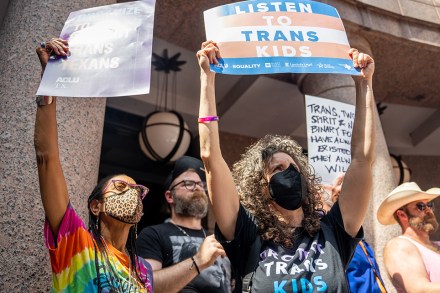
The Texas Supreme Court just upheld a state law banning so-called gender-affirming care for minors, to explosive consternation from predictable quarters. Progressive commentators portray this and similar laws passed by more than a dozen Republican-controlled state legislatures as ‘anti-LGBTQIA+’. In truth, the laws are aimed not at that whole bramble of capital letters, but solely at the ‘T’.

Therapy has turned on itself

Were I to overcome a lifelong scepticism about the healing powers of talk therapy, I imagine languishing on a psychiatrist’s divan and whimpering something along these lines: ‘All this “woke” stuff – I’ve even come to hate the word. Resisting its idiocies is taking over my life. I worry that I’m not setting my own agenda. When you decry something as stupid, aren’t you still babbling about something stupid? It’s a big, wonderful world out there, and “wokery” is killjoy, reductive and mean. I feel trapped.’ Yet according to the recent essay collection Cynical Therapies, I’d elicit an icy response. ‘Look here, Karen,’ my hypothetical therapist charges with a scowl. ‘Your only claim to my sympathy is being female.

How the West plays up to Putin’s caricature

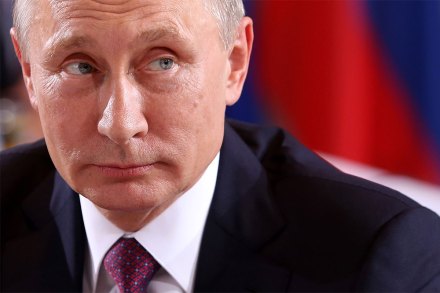
In an outstanding article in the New York Times, Roger Cohen recounted his experience of travelling across Russia for a full month, and hats off to the veteran journalist for risking a shared cell with the Wall Street Journal ‘spy’ Evan Gershkovich. Cohen explains that Vladimir Putin is successfully flogging his war in Ukraine to the Russian people as a battle against the whole spiritually depraved West, no longer the home of ruthless capitalism but of ‘sex changes, the rampages of drag queens, barbaric gender debates and an LGBTQ takeover’.

The problem with the Bibby Stockholm barge

For British taxpayers perturbed by their £6 million daily bill for housing asylum seekers in hotels, New York City mayor Eric Adams has the solution: handbills. Exasperated by a sudden influx he characterises as a ‘disaster’, Adams plans to dispense police-tape yellow flyers both at the city’s 188 sites for housing migrants and at America’s overrun, purely notional southern border. The leaflets warn in English and Spanish: ‘Since April 2022, over 90,000 migrants have come to New York City. There is no guarantee we will be able to provide shelter and services to new arrivals. Housing in NYC is very expensive. The cost of food, transportation, and other necessities is the highest in the United States.

Heritable guilt is in vogue

I made a poor excuse for a Presbyterian even as a kid. I resented religious indoctrination every precious school-free Sunday. Yet despite my apostatic nature, any number of biblical tenets with broad secular application have become touchstones. Of particular value during our post-Floydian festival of flagellation is Ezekiel 18: ‘The son shall not bear the iniquity of the father, neither shall the father bear the iniquity of the son: the righteousness of the righteous shall be upon him, and the wickedness of the wicked shall be upon him.’ Ergo, while we can’t take credit for our forebears’ virtues and achievements, at least whatever horrors our ancestors got up to is not our fault.

The truth about ‘affirmative action’

I’ve never cared for the expression ‘affirmative action’, which puts a positive spin on a negative practice: naked, institutionalised racial discrimination – that is, real ‘systemic racism’, which was initiated in the United States long before the expression came into fashion. After all, following the Civil War, the 13th, 14th and 15th amendments to the constitution were expressly added to establish equality under to law for Americans of all races, and a raft of Congressional civil rights legislation has since reinforced this colour-blind principle. Perhaps I risk sounding ungrateful.

The unspeakable truth about housing

Earlier this year I was a panellist for Any Questions, and a young man in the audience asked what could possibly be done to make it easier for Britons his age to buy currently unaffordable property. I said what none of my fellow panellists was foolish enough to venture on the radio: scarcity always raises prices, and the UK’s housing shortage is overwhelmingly caused by high rates of immigration. Reduce newcomers, ease the problem. I’ve appeared in enough public forums to read the room. A sudden pin-drop silence followed by murmurous resettling in chairs conveyed shock, then palpable unease. Clearly I had just broken a fierce social taboo. Once upon a time, taboo-breaking entailed saying something incorrect, tasteless or immoral.

The weather isn’t ‘climate change’

I was in New York while the smoke from Canadian wildfires filtered over the city for three days last week, and I took a guilty pleasure in the aesthetic thrill. Midday, the light assumed the roseate hue of sunset. A cloudless sky appeared overcast, and the ghostly sun was so occluded one could look straight at it. Honestly, the atmosphere of anomaly was electrifying. New Yorkers advertised their sense of snow-day exceptionalism by driving even more atrociously than usual. Despite hysterical health warnings to batten ourselves in our homes with closed windows, I played three daily hours of tennis throughout the respiratory emergency – though it was nice to have a ready excuse when I botched another cross-court forehand.

The case against Ulez – by a cyclist

Whether you’re more afraid of the forces of order or the forces of chaos is generally a matter of disposition. A natural anti-authoritarian who despises being told what to do – especially when told to do something stupid – I’m more horrified by excesses of order. Granted, my greater fear of the state may simply betray that I’ve largely lived in an orderly western world, and after a few dog-eat-dog nights of mayhem and carnage I might change my tune. Nevertheless, during the Covid lockdowns, for example, I was less distressed by the odd neighbour who dared to invite a friend to tea than by most Britons’ blind, bovine compliance with an economically self-destructive, socially disastrous, politically despotic and medically idiotic regime.

The myths around immigration

After the media bigged up the expiration of America’s Covid-era Title 42, which enabled the US to block entries into the country, the anticipated stampede across the southern border doesn’t seem to have occurred. No worries, then? Behold the miracle of social adaptation. Before the handy illegal immigrant ejection seat was retired last week, illegal entries from Mexico had risen to 11,000 per day – if sustained, more than four million per year, and that’s after 2.3 million southern border apprehensions last year. The record-breaking influx had already become a stampede, and apparently people can get used to anything.

I’m a sucker for Tucker Carlson

I was asked on Tucker Carlson Tonight only once, while in New York about two years ago, and I turned the invitation from America’s most popular cable news commentator down. Did I worry that while discussing my previous Spectator column, I might put my foot in it? The subject of immigration is always a minefield. No, I believed computer modelling of the astonishingly high number of illegal immigrants really living in the US had attracted far too little press, and a sympathetic host would have given these staggering figures a wider airing.

Sam Leith, Lionel Shriver and Angus Colwell

23 min listen

This week: Sam Leith explains how he’s been keeping up friendships by playing online scrabble (00:55), Lionel Shriver questions Nike and Bud Light's recent marketing strategy (06:52) and Angus Colwell reads his review of the V&A Dundee’s tartan exhibition (15:24).